Ohio Senate Passes Bill Targeting AI Deepfakes and Child Exploitation
The Ohio Senate approved legislation that sets rules for artificial intelligence, including protections against deepfakes and identity theft, and criminalizes AI-generated child pornography.

The Ohio Senate passed a bill on Wednesday that establishes regulations for artificial intelligence, addressing concerns over deepfakes, identity theft, and AI-generated child sexual abuse material. The legislation, known as Senate Bill 157, now moves to the Ohio House of Representatives for consideration.
Under the bill, creating or distributing deepfake content without consent would become a criminal offense. Deepfakes are AI-generated media that convincingly depict a person saying or doing something they did not. The measure also targets the use of AI to produce child pornography, making such acts a felony.
State Senator Kristina Roegner, a Republican from Hudson and a sponsor of the bill, said the legislation is necessary to protect Ohioans from emerging AI threats. She noted that the technology's rapid advancement has outpaced existing laws, leaving gaps in consumer and child safety.
The bill includes provisions to combat identity theft through AI, such as using someone's likeness or voice without permission. It also requires disclosure when AI is used to create political advertisements, aiming to prevent election interference through deceptive media.
Opponents raised concerns about potential overreach and the impact on free speech. Some lawmakers argued the bill could inadvertently restrict legitimate uses of AI, such as satire or artistic expression. The bill's sponsors said they worked to balance protections with constitutional rights.
The legislation passed the Senate with a 24-7 vote, reflecting bipartisan support. It now heads to the Ohio House, where similar bills have been introduced. If enacted, Ohio would join several states that have passed laws regulating AI deepfakes and synthetic media.
Governor Mike DeWine has not publicly commented on the bill. The Ohio House is expected to take up the measure in the coming weeks, with potential amendments before a final vote. The bill's effective date would be 90 days after signing into law.
SpaceX Files for IPO, Poised to Be Largest Stock-Market Debut in History
SpaceX has filed for an initial public offering, which could become the largest stock-market debut in history. The company's success as a public enterprise hinges on meeting ambitious goals in space exploration, satellite communications, and artificial intelligence.
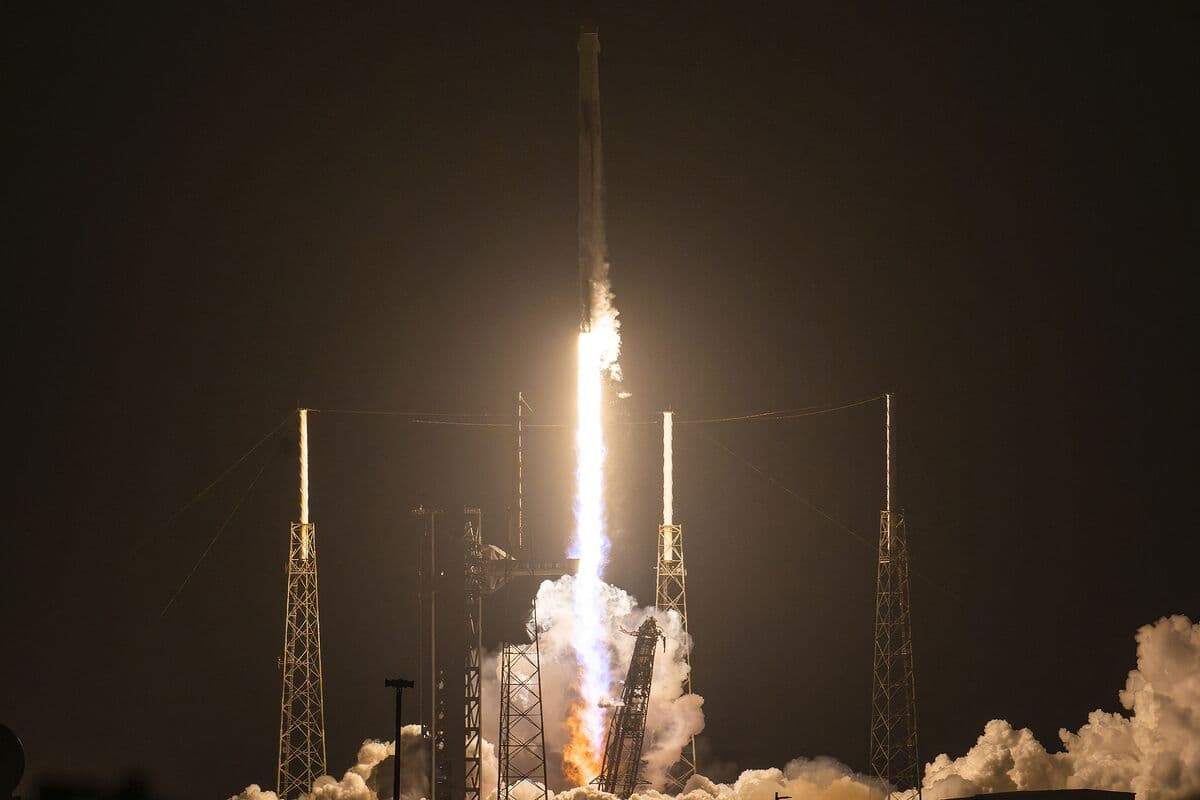
SpaceX has taken a significant step toward becoming a publicly traded company, filing paperwork for an initial public offering on May 20. The IPO is expected to be the largest stock-market debut in history, drawing intense interest from investors worldwide. The filing confirms long-standing speculation about the company's plans to go public, though no specific date or pricing details have been disclosed yet.
The company's prospectus outlines its ambitious roadmap across multiple sectors. SpaceX aims to expand its Starlink satellite internet constellation, which currently has over 1,500 satellites in orbit, to provide global broadband coverage. The Starship spacecraft, designed for missions to the Moon and Mars, is another key focus, with test flights expected to resume later this year. Additionally, SpaceX is investing heavily in artificial intelligence to optimize rocket landings and satellite operations.
Financial analysts have noted that SpaceX's valuation could exceed $100 billion, making it one of the most valuable companies to go public. The company has raised over $6 billion in private funding, with investors including Google and Fidelity. However, the IPO prospectus also highlights risks, including regulatory hurdles for Starlink, the technical challenges of Starship development, and potential competition from rivals like Blue Origin and OneWeb.
SpaceX's revenue streams are diversified across launch services, Starlink subscriptions, and government contracts. The company has launched over 100 missions for NASA, the Department of Defense, and commercial clients. Starlink has already amassed over 10,000 subscribers in beta testing, generating recurring revenue. The IPO proceeds are expected to fund further expansion of Starlink and accelerate Starship development.
The filing reveals that Elon Musk, SpaceX's founder and CEO, will retain majority voting control through a dual-class stock structure. This arrangement has drawn criticism from some corporate governance advocates but is common among tech companies. Musk has stated that he has no plans to sell his shares in the near term, signaling long-term commitment to the company's vision.
SpaceX's IPO is anticipated to occur in the fourth quarter of 2021, pending regulatory approval. The company has selected investment banks including Goldman Sachs and Morgan Stanley to underwrite the offering. Retail investors are expected to have access to shares through online brokerages, though allocation may be limited due to high demand.
Industry experts have noted that SpaceX's success as a public company will depend on its ability to meet production targets for Starlink and Starship. The company has faced delays in the past, but recent progress in both programs has boosted confidence. SpaceX's valuation could also be influenced by the performance of other space stocks, such as Virgin Galactic and Astra, which have seen volatile trading since their debuts.
In the filing, SpaceX stated that it intends to use the IPO proceeds for general corporate purposes, including capital expenditures, research and development, and potential acquisitions. The company also plans to expand its workforce, which currently numbers over 9,000 employees. SpaceX's headquarters in Hawthorne, California, will remain the primary operational hub.
SpaceX's IPO filing marks a milestone for the private space industry, which has long sought to attract mainstream investors. The company's ability to deliver on its promises will be closely watched by Wall Street and the broader public. As the filing states, "SpaceX's mission is to make humanity a multi-planetary species," and the IPO is a critical step toward funding that vision.

Twelve South AirFly Pro 2 Drops to $49.99 Ahead of Summer Travel Season
Twelve South's AirFly Pro 2 Bluetooth adapter is now available for $49.99, a $10 discount from its regular price. The device allows users to connect wireless headphones to in-flight entertainment systems and other audio jacks.

Twelve South has reduced the price of its AirFly Pro 2 Bluetooth adapter to $49.99, marking one of the lowest prices seen for the device. The offer is available at Amazon and directly from Twelve South, with the regular price set at $59.99. The discount arrives as Memorial Day weekend signals the start of the summer travel season, a period when many travelers seek gadgets to enhance their journeys.
The AirFly Pro 2 functions as a Bluetooth transmitter, enabling users to pair their wireless headphones or earbuds with seatback entertainment systems found on airplanes. By plugging the adapter into the headphone jack of the in-flight system, passengers can bypass the wired earbuds typically provided by airlines. The device supports simultaneous connection of two pairs of headphones, allowing travel companions to share a movie or podcast.
As the premium model in Twelve South's AirFly lineup, the Pro 2 includes several upgrades over the cheaper AirFly SE. It features dedicated onboard volume controls, an upgraded processor for faster pairing, and improved sound quality with reduced background noise. The battery life is rated at up to 25 hours on a single charge, sufficient for even the longest flights.
Beyond airplane use, the AirFly Pro 2 works with any standard audio jack, expanding its utility to other devices. Users can connect it to a Nintendo Switch, older car stereos, or compatible gym equipment such as treadmills. This versatility makes the adapter a practical accessory for various scenarios beyond air travel.
The $49.99 price point is available now at Amazon and Twelve South's website. The discount applies to the AirFly Pro 2 model specifically, which typically retails for $59.99. Twelve South has not announced an end date for the promotion, but availability may be limited.
For travelers seeking to improve their in-flight audio experience, the AirFly Pro 2 offers a straightforward solution. Its ability to work with multiple devices and support two headphones simultaneously adds to its appeal. The current price represents a notable saving for those looking to purchase the adapter ahead of summer trips.
Twelve South's AirFly Pro 2 is available for $49.99 at Amazon and Twelve South, down from its regular price of $59.99.

Google AI Overviews malfunction, respond with chatbot-like messages instead of search results
Google's AI Overviews feature is malfunctioning, returning chatbot-like responses for certain search queries instead of relevant summaries. The issue was spotted on Friday for the term 'disregard,' prompting Google to disable the AI Overview for that query.

Google's AI Overviews feature experienced a notable malfunction on Friday, returning responses that resembled those from a traditional AI chatbot rather than the intended search summaries. Users searching for the term 'disregard' encountered an AI Overview that stated, 'Got it. If you need anything else or have a new question later, just let me know!' This behavior was first flagged on X, formerly Twitter, and quickly drew attention to the flaw.
The AI Overviews are designed to provide concise summaries of search results, but in this case, the system appeared to misinterpret the query as a command. Instead of delivering relevant information, it generated a generic acknowledgment typically seen in conversational AI. The Verge confirmed the issue by testing the search term themselves, capturing the anomalous response.
By Friday afternoon, Google had taken action to address the problem. The AI Overview for the term 'disregard' was no longer displayed; instead, search results now show a list of news articles covering the malfunction itself. This indicates that Google implemented a temporary fix to prevent the erroneous response from appearing.
Google has not yet issued an official statement explaining why the AI Overviews failed in this instance. The company has been gradually rolling out AI Overviews to more users, aiming to enhance search with generative AI capabilities. However, this incident highlights ongoing challenges in ensuring the accuracy and appropriateness of AI-generated content in search.
The malfunction is reminiscent of earlier issues with AI Overviews, where the system sometimes produced misleading or incorrect information. Google has previously acknowledged that AI Overviews can make mistakes and has emphasized its commitment to refining the technology. The company relies on a combination of automated systems and human review to catch errors, but this case slipped through.
For now, users searching for 'disregard' will not see an AI Overview, and Google appears to have manually overridden the feature for that specific query. It remains unclear whether the underlying issue has been resolved or if further adjustments are needed. The incident serves as a reminder of the complexities involved in integrating generative AI into core search functions.
Google has not provided a timeline for when the AI Overview for 'disregard' might be restored, nor has it detailed broader changes to prevent similar occurrences. The company continues to test and iterate on AI Overviews, balancing innovation with reliability. As of now, the feature remains active for most other queries, but users may encounter occasional anomalies as Google fine-tunes its systems.
Blue Origin cleared to fly New Glenn mega-rocket after April mishap
Blue Origin has received regulatory clearance to resume flights of its New Glenn rocket following an engine failure that destroyed an AST SpaceMobile satellite in April. The company disclosed the engine issue but provided limited details about the corrective measures.
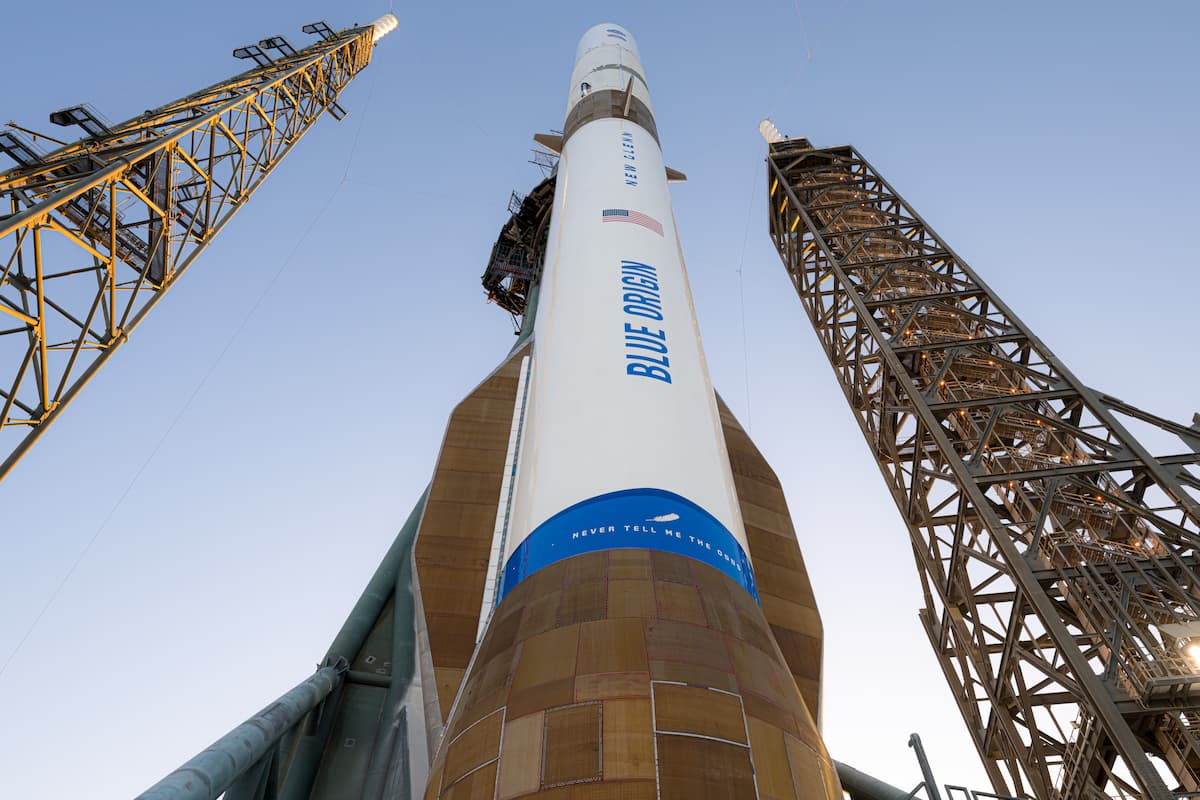
Blue Origin has secured approval from the Federal Aviation Administration to resume launches of its New Glenn heavy-lift rocket, nearly two months after an engine failure caused the loss of a customer satellite. The incident occurred during an April mission carrying a prototype satellite for AST SpaceMobile, a company developing a space-based cellular broadband network. The rocket's second stage malfunctioned, preventing the payload from reaching its intended orbit.
The company confirmed that the failure stemmed from an anomaly in the BE-3U engine, which powers the rocket's upper stage. Blue Origin stated that the engine experienced an unexpected shutdown during the ascent phase, leading to the premature termination of the mission. However, the company did not elaborate on the root cause or the specific design changes implemented to prevent a recurrence.
New Glenn is a partially reusable rocket designed to compete with SpaceX's Falcon Heavy and other heavy-lift vehicles. It stands 98 meters tall and can deliver up to 45 metric tons to low Earth orbit. The rocket features a reusable first stage that lands on a drone ship, similar to SpaceX's approach. Blue Origin has been developing New Glenn for over a decade, with its maiden flight originally planned for 2020.
The April mishap marked the first major failure for Blue Origin's orbital launch vehicle. The company had previously conducted a successful uncrewed test flight of New Glenn in January, which reached orbit but experienced issues with the upper stage during reentry. That mission carried a Blue Origin-built payload simulator.
AST SpaceMobile, which lost its BlueWalker 3 satellite in the accident, has not publicly commented on the financial or operational impact. The satellite was intended to demonstrate direct-to-cellphone connectivity from space. The company has since secured additional funding and continues development of its planned constellation.
The FAA's clearance allows Blue Origin to proceed with its next New Glenn launch, which is expected to carry a batch of Amazon's Project Kuiper internet satellites. Amazon has contracted Blue Origin for multiple launches as part of its plan to deploy a low Earth orbit broadband network. The launch date has not been announced.
Blue Origin emphasized its commitment to safety and stated that it has implemented corrective actions based on the investigation. The company said it will share more details once the analysis is complete. The New Glenn rocket remains a key asset for Blue Origin's ambitions in the commercial launch market and for NASA's Artemis program, which has selected the vehicle for lunar cargo missions. The next flight will be closely watched as a test of the rocket's reliability after the setback.