Palmeiras and Vitória win as Brasileirão Sub-20 Série A round 11 starts
This development in Technology News signals new momentum in the technology agenda.
Palmeiras and Vitória win as Brasileirão Sub-20 Série A round 11 starts has become a significant development in the technology sector. This advancement signals new momentum in the teknoloji haberleri space and carries important implications for both consumers and industry players.
The technical details surrounding this announcement suggest a deliberate strategy aimed at capturing market share while addressing existing user pain points. Industry analysts note that the timing of this release aligns with broader shifts in how technology is adopted at scale.
From a competitive standpoint, this move places additional pressure on established players who have dominated the segment for years. The introduction of these features could force rivals to accelerate their own roadmaps or risk losing relevance in an increasingly crowded marketplace.
Consumer reactions have been mixed but generally positive, with early adopters highlighting the practical benefits over marketing promises. The focus appears to be on solving real problems rather than introducing novelty for its own sake.
Looking at the broader ecosystem, this development may trigger ripple effects across adjacent categories. Partnerships, supply chains, and developer communities are all likely to feel the impact as adoption scales.
Whether this represents a lasting shift or a temporary market reaction will depend on execution quality and sustained innovation in the coming quarters.}
KitchenAid launches its first smart thermometer with dual probe option
KitchenAid has introduced its first smart thermometer, available in single and dual probe models. The device connects to an app for real-time temperature monitoring.
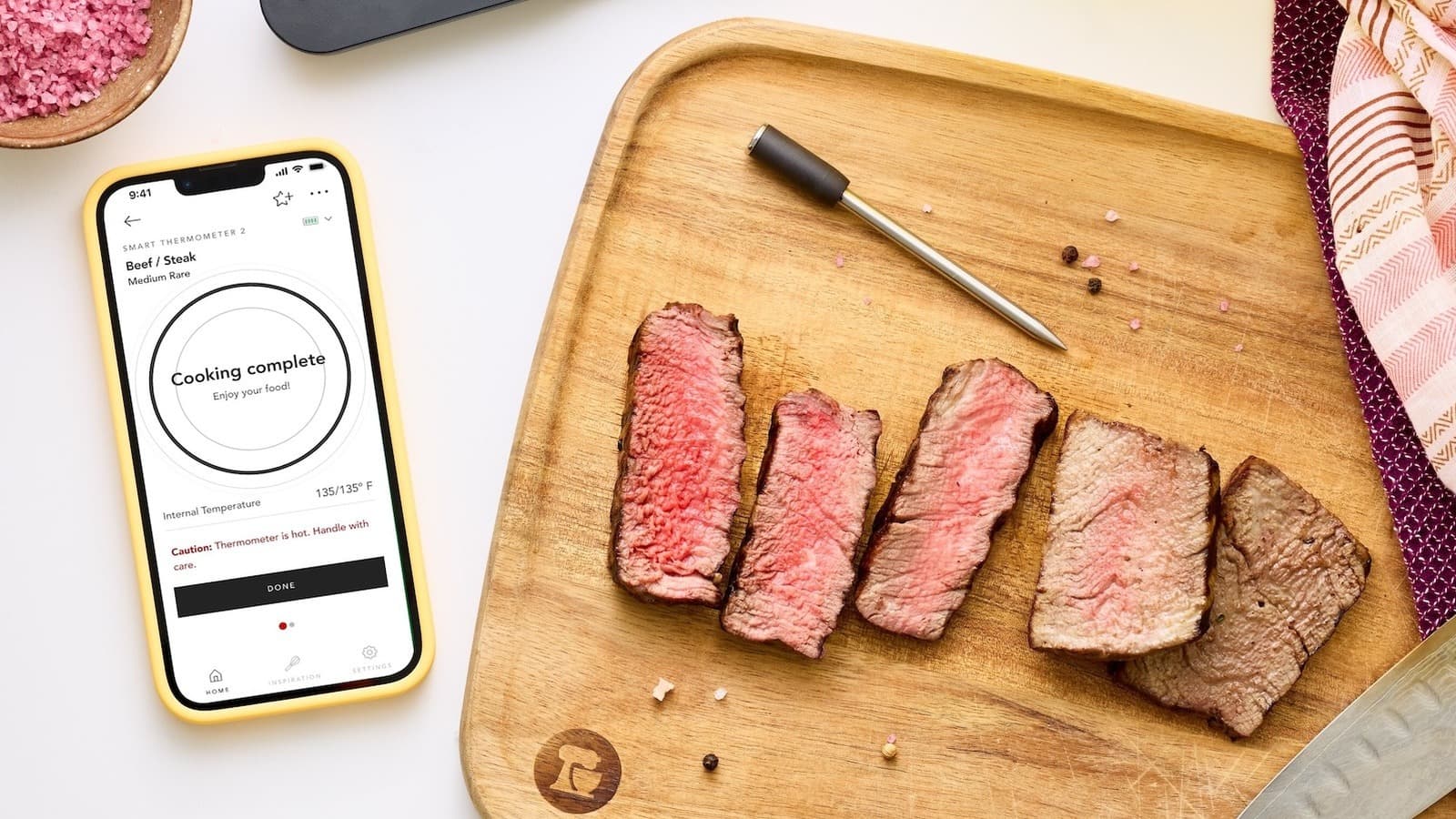
KitchenAid has entered the smart cooking space with its first connected thermometer.
Available in single and dual probe versions, the thermometer pairs with a smartphone app. The app tracks internal meat temperatures in real time, sending alerts when the target temperature is reached.
You can set custom temperature targets for different meats. The app also stores cooking history for future reference.
The single probe model is priced at $49.99, while the dual probe version costs $69.99. Both are available now on KitchenAid's website and at select retailers.
Solar Drone with 747-Sized Wingspan Sets Flight Record Then Crashes
A solar-powered drone with a wingspan comparable to a Boeing 747 broke an eight-day flight record before crashing into the sea. The aircraft, originally Solar Impulse 2, was serving as an uncrewed test platform for US military missions.
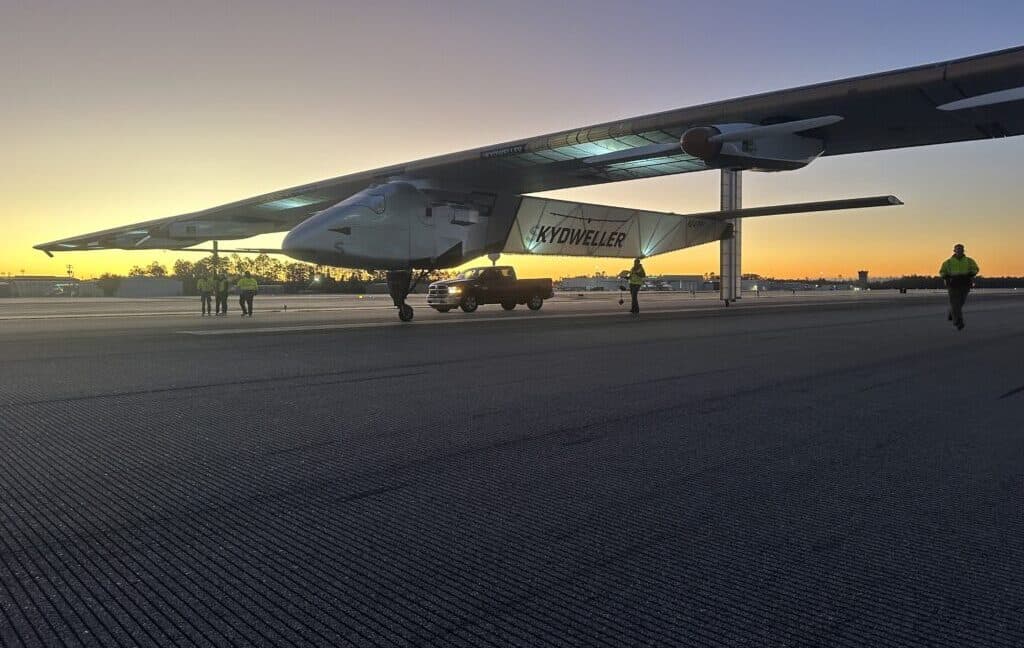
A solar-powered drone has been lost at sea after a record-breaking flight lasting eight days between late April and early May. The crash also marks the untimely demise of the pioneering aircraft Solar Impulse 2, which previously performed the world’s first solar-powered crossings of the Atlantic and Pacific oceans before becoming an uncrewed test platform for US military missions.
The carbon-fiber aircraft could perform such feats of aeronautical endurance while running solely on renewable energy and batteries because of a 236-foot (72-meter) wingspan—comparable to a Boeing 747 jumbo jet’s wings—covered with more than 17,000 solar cells.
The company Skydweller Aero purchased and modified the original Solar Impulse 2 aircraft to become a test platform for “perpetual uncrewed flight” with the capability of carrying up to 800 pounds (363 kilograms) of payload.
Skydweller Aero was conducting test flights for maritime patrol mission scenarios with the US military, and the company also holds contracts with the Navy and Air Force. So the Skydweller drone was operating in that capacity when it took off on its final flight in the early morning hours of April 26.
FCC approves AT&T and Starlink's $40B EchoStar spectrum purchase
The FCC has approved EchoStar's sale of spectrum licenses to AT&T and SpaceX for a combined $40 billion. The decision follows FCC Chairman Brendan Carr's threat to revoke the licenses last year.

The Federal Communications Commission yesterday gave the green light to EchoStar's sale of spectrum licenses to AT&T and Starlink operator SpaceX. The deals total $40 billion.
The orders came from the agency's Wireless Telecommunications Bureau and Space Bureau. They were widely expected after FCC Chairman Brendan Carr effectively forced EchoStar to sell the licenses.
Last year, Carr threatened to revoke the licenses after SpaceX alleged that EchoStar subsidiary Dish Network “barely uses” the spectrum to provide mobile service to US consumers. Dish had secured a deadline extension for its network deployment obligations from the Biden-era FCC, but Carr objected to that agreement.
Following Carr's threat, the Charlie Ergen-led EchoStar struck deals to sell spectrum licenses to SpaceX for $17 billion and to AT&T for $23 billion.
Small carriers have voiced frustration over the decision, arguing it consolidates spectrum in the hands of major players. The FCC's approval marks a significant shift in the wireless landscape.
Ancient proteins in Homo erectus teeth reveal DNA link to modern humans via Denisovans
Proteins extracted from Homo erectus teeth suggest the species interbred with Denisovans, passing some DNA to modern humans. This fills a gap in human ancestry previously hinted at by the Denisovan genome.
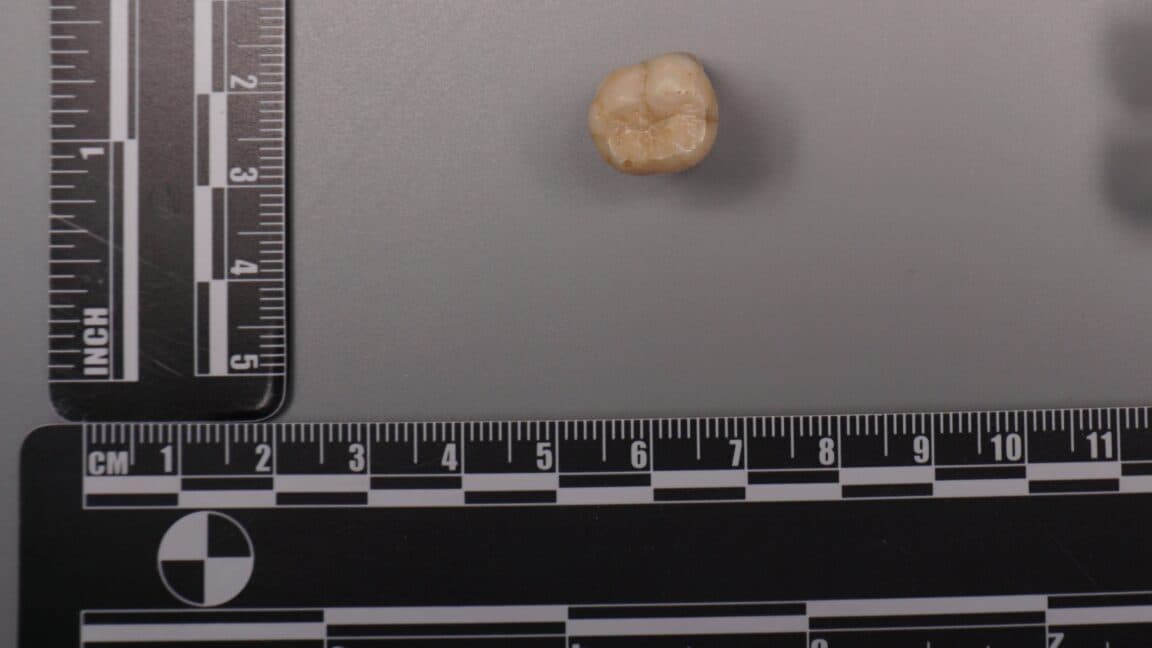
Ancient proteins found in Homo erectus teeth suggest that this early human species interbred with Denisovans, and that some of their DNA eventually made its way into modern humans.
Human ancestry has become much clearer thanks to ancient DNA. As humans left Africa, they interbred with Neanderthals and Denisovans. But the Denisovan genome also hinted at interbreeding with an even older group, whose identity was unknown.
Now, protein evidence points to Homo erectus as that mystery group. Homo erectus left Africa over a million years ago and spread across Eurasia. Through Denisovans, some of their DNA appears to have been inherited by modern humans.
DNA degrades quickly without cellular repair enzymes. The double helix fragments, and bases change or fall off. Cooler, drier environments slow this, but there's a limit to how far back we can sequence DNA. Homo erectus remains seem to be beyond that limit.
Proteins, however, can last longer. Researchers analyzed protein sequences from Homo erectus teeth and found matches with Denisovan DNA, indicating interbreeding. This suggests a genetic link that persisted through Denisovans to us.
The finding helps clarify the complex web of ancient human interactions. It shows that interbreeding was common among archaic human groups, not just between modern humans and Neanderthals.