
Turkey's Intercontinental Ballistic Missile YILDIRIMHAN Unveiled at SAHA 2026
Turkey introduced its intercontinental ballistic missile YILDIRIMHAN at SAHA 2026, featuring a range of 6,000 km and Mach 25 speed. The missile is powered by four rocket motors, marking a new era for the country's defense industry.
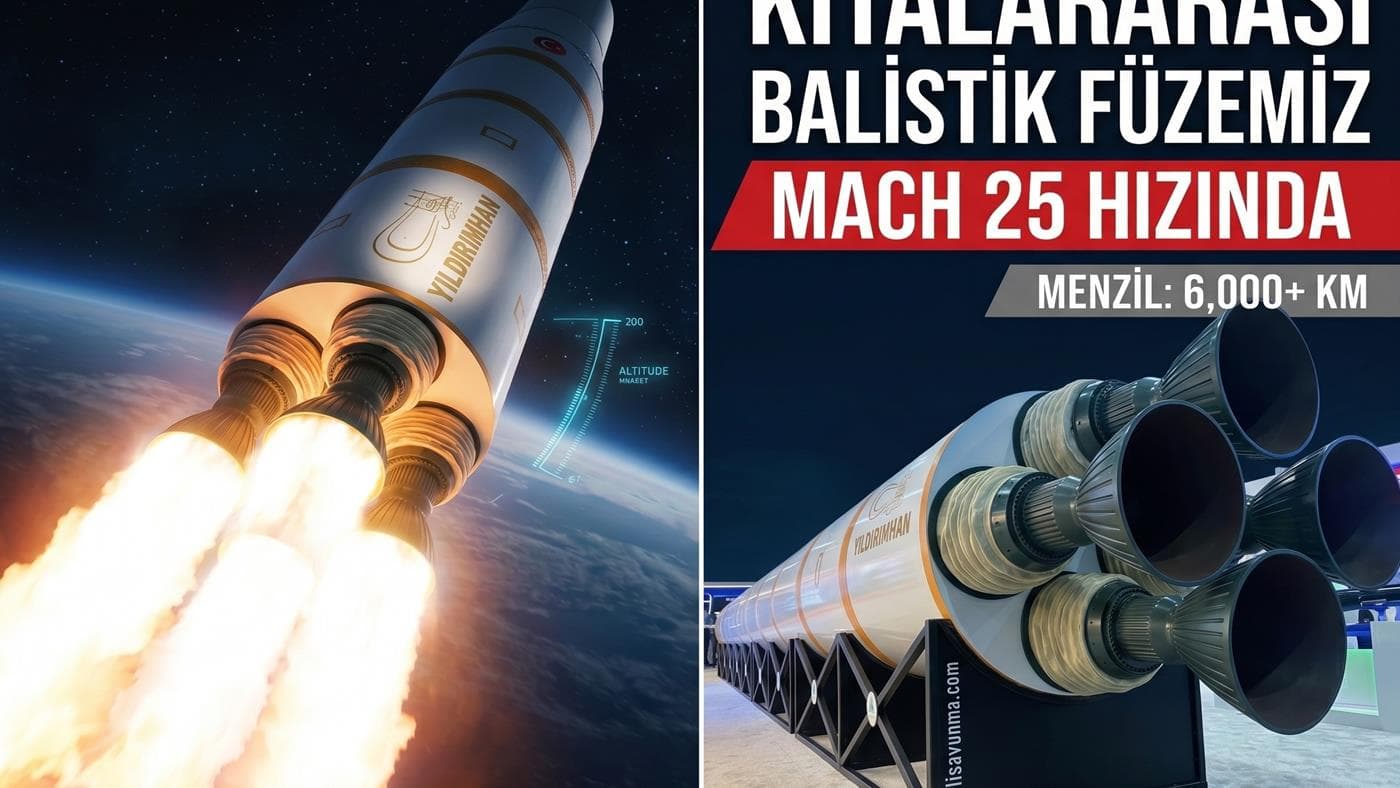
Turkey unveiled its intercontinental ballistic missile YILDIRIMHAN at the SAHA 2026 defense exhibition. The missile boasts a range of 6,000 kilometers and can reach speeds of Mach 25. It is equipped with four rocket motors, representing a significant advancement in the nation's defense capabilities.
The YILDIRIMHAN missile is designed for long-range precision strikes. Its Mach 25 speed makes it one of the fastest missiles in its class. The four rocket motors provide the necessary thrust to achieve intercontinental distances.
This development positions Turkey among a select group of countries with intercontinental ballistic missile technology. The missile's range allows it to target locations across continents, enhancing Turkey's strategic deterrence.
The SAHA 2026 event served as the platform for the missile's public debut. Defense industry officials highlighted the missile's potential to strengthen national security. The YILDIRIMHAN project reflects Turkey's growing self-sufficiency in advanced weaponry.
Technical details about the missile's guidance system and payload capacity were not disclosed. However, experts note that the speed and range specifications align with modern ICBM standards. The missile is expected to undergo further testing before operational deployment.
Turkey's defense industry has been expanding its missile capabilities in recent years. The YILDIRIMHAN joins a family of indigenous missiles, including short-range and medium-range systems. This missile fills a gap in long-range strike options for the Turkish military.
The YILDIRIMHAN missile was introduced at the SAHA 2026 exhibition held in Istanbul. The event showcased various defense technologies from Turkish companies. The missile's unveiling drew attention from international defense observers.
Production timelines and potential export customers have not been announced. The missile is primarily intended for use by the Turkish Armed Forces. Its development is part of a broader effort to reduce reliance on foreign defense systems.
Valve's Steam Controller Faces Fire Hazard Due to Magnetic Charging Design
Valve's new Steam Controller has a magnetic charging connection that poses a fire risk. The design flaw has led to reports of the device catching fire.
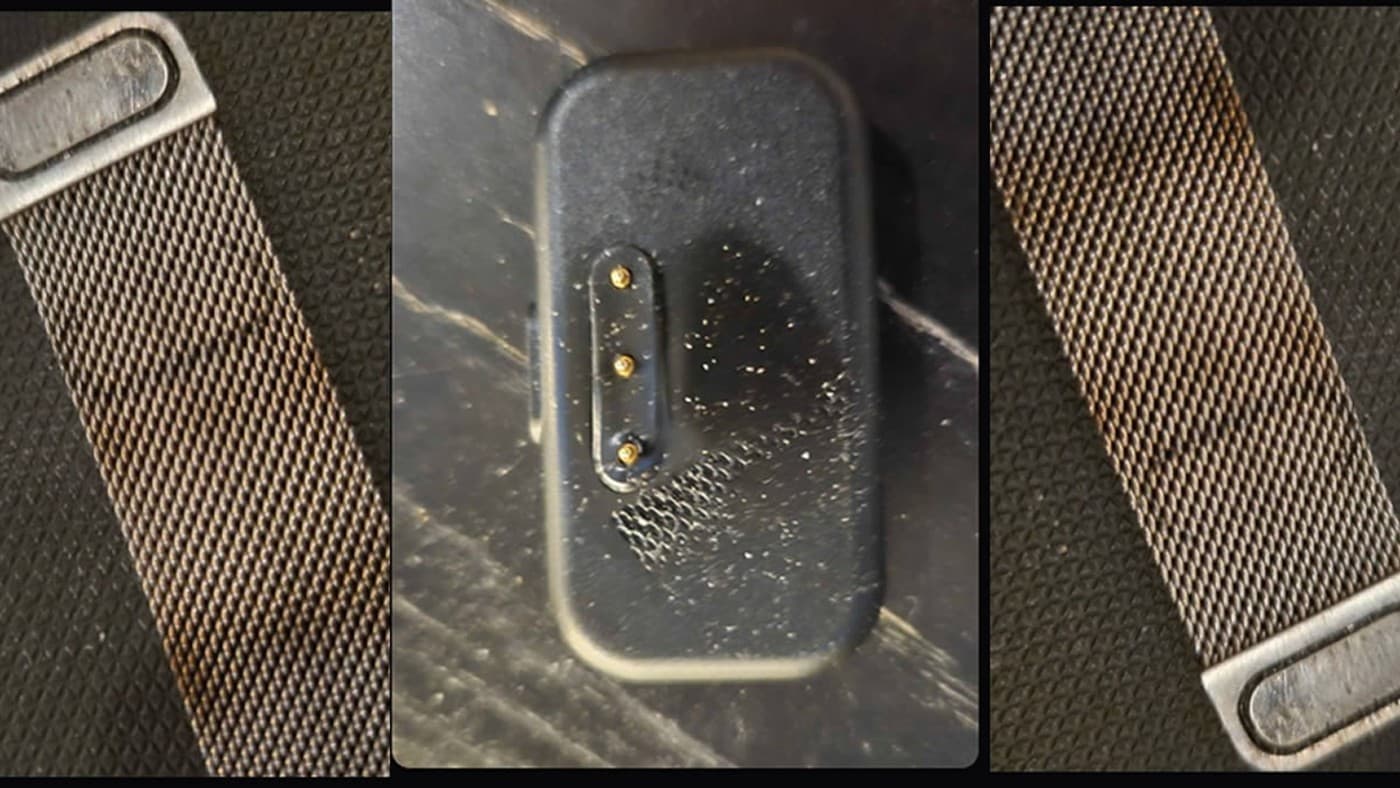
Valve's latest Steam Controller incorporates a magnetic charging mechanism that attaches to the controller for power. However, this design has introduced unexpected safety concerns, with users reporting that the device can ignite.
The magnetic connector, intended for convenience, appears to be the source of the problem. When the connection is not properly aligned or if debris interferes, it can create a short circuit, leading to overheating and potential flames.
Valve has acknowledged the issue and is investigating the reports. The company has not yet issued a recall but advises users to ensure the charging port is clean and the connector is securely attached.
This is not the first time a gaming peripheral has faced fire hazards. Similar issues have occurred with other devices using magnetic charging, though Valve's implementation seems particularly prone to the problem.
The Steam Controller is available for purchase on Steam and through select retailers. Valve recommends that customers who experience any issues contact support for a replacement.
As of now, no injuries have been reported, but Valve urges users to monitor the controller while charging and to unplug it if any unusual heat or smell is detected.
Valve stated, "We take safety seriously and are working to resolve this issue promptly. Customers can expect an update within the next few weeks."

Snap's Next-Gen Spectacles AR Glasses Launching This Fall at High Price
Snap will launch its next-generation Spectacles augmented reality glasses this fall. The AR glasses are expected to cost around $1,000, making them a premium device.

Snap has confirmed the launch timeline for its next-generation Spectacles augmented reality glasses. The company announced that the AR glasses will be released in the fall of this year. The new Spectacles are expected to arrive before competing devices based on Android XR, Google's new operating system for extended reality headsets.
The upcoming Spectacles will feature a significantly higher price point compared to previous models. According to sources familiar with the matter, the AR glasses are expected to cost approximately $1,000. This positions the device as a premium product aimed at developers and early adopters rather than mainstream consumers.
The new Spectacles are designed to overlay digital content onto the real world through transparent lenses. The device will include built-in cameras, speakers, and gesture control capabilities. Snap has been developing the technology for several years, with earlier versions of Spectacles focused on recording video.
Snap's AR glasses will compete with devices from Meta, Apple, and other tech giants entering the mixed reality space. The company has positioned its Spectacles as a more lightweight and socially acceptable form factor compared to bulky headsets. Snap has been working with developers to create AR experiences for the platform.
The launch timing puts Snap ahead of several Android XR devices expected in 2025. Google announced Android XR in partnership with Samsung and Qualcomm, with the first headsets slated for release next year. Snap's early entry could give it an advantage in building an AR ecosystem.
Snap has not disclosed the exact release date or final pricing for the new Spectacles. The company typically unveils new hardware at its annual Snap Partner Summit in the spring, with products shipping later in the year. The fall launch window suggests a release between September and November.
The high price tag reflects the advanced technology packed into the compact form factor. Snap has invested heavily in custom optics, waveguides, and microLED displays to create a compelling AR experience. The company aims to make the device comfortable enough for all-day wear.
Snap CEO Evan Spiegel has described AR glasses as the next major computing platform. The company generates revenue primarily from advertising on its Snapchat app but sees hardware as a long-term growth opportunity. The new Spectacles represent Snap's most ambitious hardware effort to date.
Developers interested in creating AR experiences for Spectacles can apply for early access through Snap's developer program. The company plans to sell the glasses directly to consumers through its website and select retail partners. Snap will provide more details about the device's specifications and capabilities closer to the launch date.

Chicks Hatched from Artificial Eggshells, New Mission to Study Earth's Magnetosphere
Scientists successfully hatched chicks using artificial eggshells, marking a breakthrough in avian reproduction research. A new mission aims to study Earth's magnetosphere to better understand space weather.

Researchers have achieved a milestone in developmental biology by hatching chicks from artificial eggshells. The synthetic shells were created using a porous material that mimics the natural eggshell's structure, allowing gas exchange while providing mechanical support. The team incubated the eggs under controlled conditions and observed normal embryonic development, culminating in the successful hatching of healthy chicks. This innovation could have implications for poultry farming, conservation of endangered bird species, and fundamental studies of avian embryology.
In space science, a new mission has been announced to investigate Earth's magnetosphere. The project, named the Magnetosphere Explorer, will deploy a constellation of small satellites to measure magnetic field variations and plasma interactions. The data collected will help scientists predict space weather events that can disrupt satellites, power grids, and communication systems. The mission is scheduled to launch in 2026 and will operate for at least two years.
Another study published this week reveals that certain bacteria can survive in extreme environments by forming protective biofilms. Researchers found that microbes in volcanic hot springs produce a thick matrix of proteins and sugars that shields them from high temperatures and acidic conditions. Understanding these mechanisms could lead to applications in industrial biotechnology and astrobiology.
In the field of archaeology, a team discovered a 4,000-year-old settlement in the Amazon rainforest using LiDAR technology. The site features geometric earthworks and evidence of advanced agricultural practices, challenging previous assumptions about pre-Columbian societies in the region. The findings suggest that the Amazon was more densely populated than previously thought.
A breakthrough in quantum computing was reported by physicists who achieved a new record for qubit coherence time. By isolating qubits from environmental noise using a novel material, they extended coherence to over 10 milliseconds, a tenfold improvement over previous records. This advancement brings practical quantum computers closer to reality.
Finally, a new species of deep-sea fish was identified in the Mariana Trench. The fish, named Pseudoliparis swirei, thrives at depths exceeding 8,000 meters, making it one of the deepest-living vertebrates known. Its unique adaptations include a gelatinous body and specialized enzymes that function under extreme pressure.
SpaceX Starship V3 First Flight Mostly Successful, Splashes Down in Indian Ocean
SpaceX launched the first test flight of its upgraded Starship V3 rocket and Super Heavy booster Friday, with the vehicle splashing down on target in the Indian Ocean after a successful hour-long flight. The 408-foot-tall rocket performed better than previous versions, which broke apart during their inaugural launches.
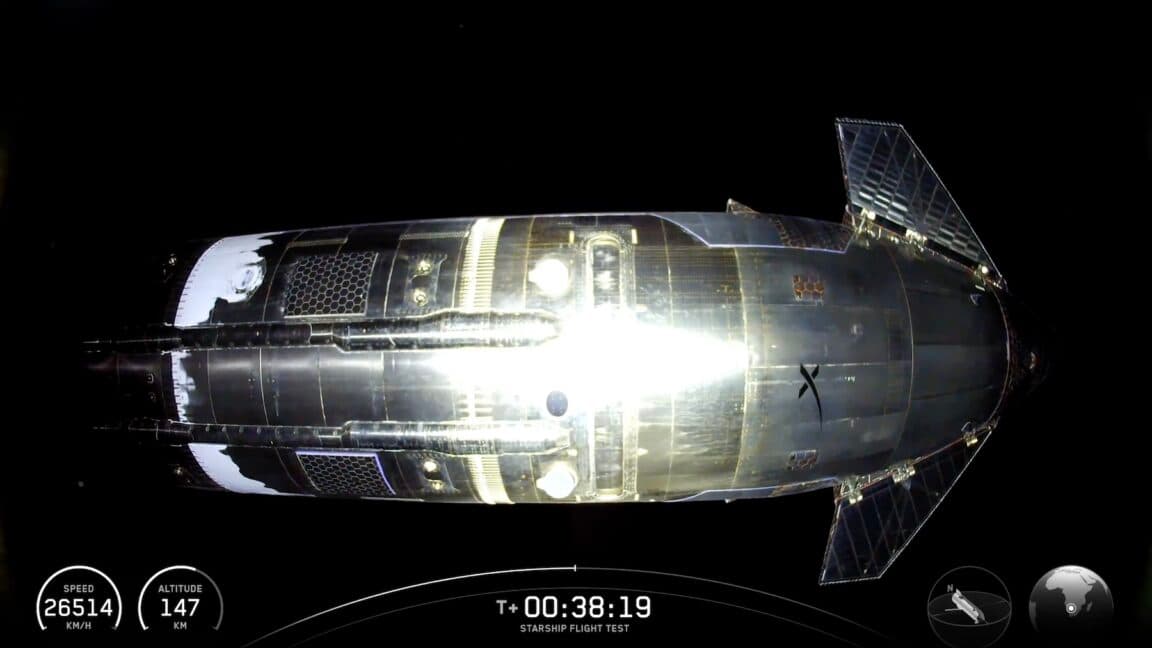
SpaceX conducted the first test flight of its upgraded Starship rocket and Super Heavy booster Friday, achieving mostly positive results. The vehicle, the largest ever built at 408 feet (124 meters) tall, lifted off from SpaceX's Starbase launch facility in South Texas at 5:30 pm CDT (6:30 pm EDT; 22:30 UTC). Within seconds, the rocket cleared the launch tower and turned eastward over the Gulf of Mexico, propelled by 33 methane-fueled main engines.
The Starship upper stage separated from the Super Heavy booster as planned and continued its trajectory. The booster executed a controlled descent and splashdown in the Gulf of Mexico. Starship continued on its suborbital path, reaching space before reentering the atmosphere and splashing down on target in the Indian Ocean a little over an hour after launch.
This flight marked the debut of the Starship V3 variant, which incorporates upgrades over previous versions. The vehicle's performance was notably better than the first flights of Starship V1 in 2023 and Starship V2 in 2025, both of which broke apart during launch. SpaceX engineers will analyze data from the flight to inform further development.
The launch was originally scheduled for earlier in the week but was delayed due to weather and technical checks. The Federal Aviation Administration granted SpaceX a launch license for the test flight after reviewing safety and environmental requirements. No payload was carried on this mission, as the primary objective was to validate the vehicle's systems.
SpaceX has not announced a specific date for the next Starship test flight. The company continues to iterate on the design, aiming to eventually use Starship for crewed missions to the Moon and Mars. Friday's flight represents a significant step forward in the rocket's development program.
The Starship system is designed to be fully reusable, with both the Super Heavy booster and Starship upper stage intended to return to Earth for refurbishment. SpaceX has not yet attempted a landing of either stage on this flight, focusing instead on controlled splashdowns. Future tests will aim for propulsive landings at the launch site.
SpaceX founder Elon Musk stated that the flight met most of its primary objectives, calling it a "great day" for the company. The success of this test provides valuable data for upcoming missions, including potential orbital flights and payload deployments. The company plans to continue testing with increasing complexity.