Cerebras Secures $2.5B Deal, Marking Eclipse's Shift to Physical AI Investments
Eclipse Ventures' $2.5 billion investment in Cerebras Systems underscores a strategic pivot toward physical-world AI applications. The deal signals growing investor confidence in infrastructure that bridges digital intelligence with real-world operations.

Eclipse Ventures has made a landmark $2.5 billion investment in Cerebras Systems, marking a pivotal moment for the venture firm's long-standing thesis on physical-world technology. The deal, announced this week, positions Cerebras as a key player in the race to deploy AI beyond data centers and into tangible industrial applications. For Eclipse founder Lior Susan, the investment validates a decade of betting on hardware that intersects with the physical realm, a strategy that was once considered niche but is now attracting mainstream attention.
Cerebras Systems is known for its wafer-scale processors, which are designed to handle massive AI workloads more efficiently than traditional GPU clusters. The company's CS-2 system, built around the world's largest chip, offers unprecedented computational density for training large language models and scientific simulations. This hardware is particularly suited for tasks that require real-time processing in fields like autonomous vehicles, robotics, and medical imaging, where latency and power consumption are critical.
The $2.5 billion infusion will accelerate Cerebras's expansion into new markets, including edge computing and embedded AI systems. Unlike cloud-based AI services, Cerebras's technology can be deployed directly in factories, hospitals, and transportation hubs, enabling on-site decision-making without relying on remote servers. This aligns with Eclipse's thesis that the next wave of innovation will come from software that controls physical objects, from self-driving cars to industrial robots.
Eclipse's investment reflects a broader shift in venture capital toward deep tech and hard science startups. While software-as-a-service companies have dominated funding in recent years, investors are increasingly recognizing the value of companies that solve physical-world problems. Cerebras's technology, for instance, could reduce the carbon footprint of AI training by replacing thousands of power-hungry GPUs with a single chip, addressing both cost and environmental concerns.
For end users, the impact of Cerebras's technology could be profound. In healthcare, its processors can analyze medical scans in real time, aiding radiologists in detecting tumors. In manufacturing, they can optimize supply chains and predict equipment failures before they occur. The company's chips are also being tested in autonomous driving systems, where split-second decisions are crucial for safety. However, the high cost of Cerebras systems currently limits their adoption to large enterprises and research institutions.
The investment is expected to help Cerebras scale production and reduce costs over time, making its technology accessible to a broader range of industries. The company has already partnered with several government agencies and Fortune 500 companies, and the new funding will support global expansion, particularly in Asia and Europe. Eclipse's network in industrial sectors could also open doors for Cerebras in energy, aerospace, and defense.
Despite the excitement, challenges remain. Cerebras faces competition from established chipmakers like NVIDIA and emerging startups developing specialized AI accelerators. The company must also navigate supply chain constraints and geopolitical tensions affecting semiconductor manufacturing. Moreover, the effectiveness of its wafer-scale approach in diverse real-world scenarios is still being proven.
Looking ahead, Eclipse plans to continue investing in companies that bridge the digital and physical worlds. Susan believes that the convergence of AI, robotics, and advanced materials will redefine industries over the next decade. With the Cerebras deal, Eclipse has not only secured a significant return but also positioned itself as a leader in the physical AI revolution. The coming years will reveal whether this bet on hardware-first innovation pays off as the tech world increasingly turns its attention to the real world.
Eric Schmidt Booed at University of Arizona Commencement for AI Optimism
Former Google CEO Eric Schmidt was met with boos from University of Arizona graduates during his commencement speech on Friday after praising AI. The students expressed anxiety over job displacement and economic uncertainty in an AI-driven future.
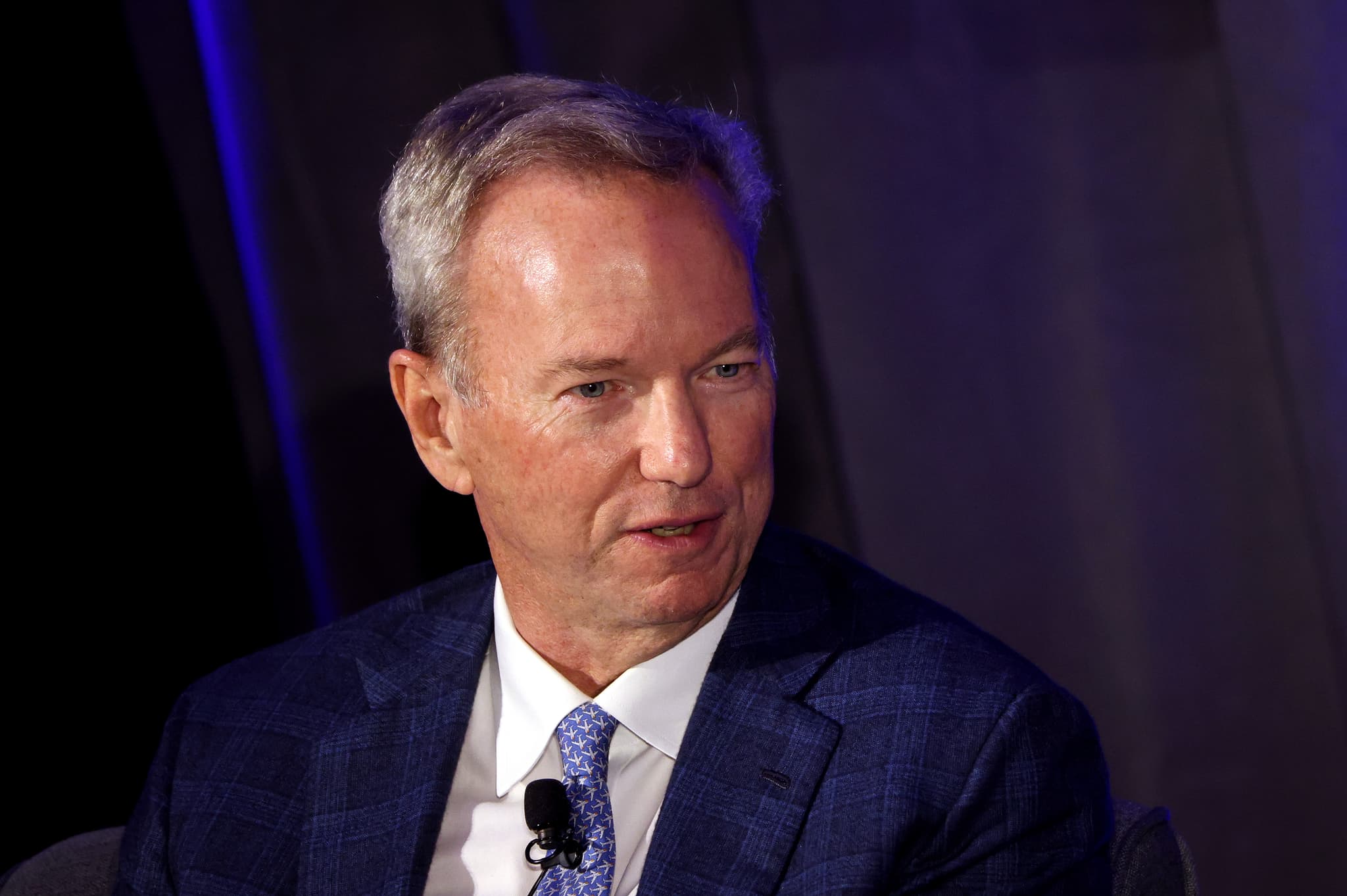
Former Google CEO Eric Schmidt faced a hostile reception at the University of Arizona's commencement ceremony on Friday, where his enthusiastic endorsement of artificial intelligence was repeatedly drowned out by boos from graduating students. The incident highlights growing tensions between tech leaders and young professionals entering a labor market increasingly disrupted by automation. Schmidt, who served as Google's CEO from 2001 to 2011, was invited to deliver the keynote address but quickly encountered resistance when he shifted focus to AI's potential benefits.
During his speech, Schmidt acknowledged the widespread anxiety among graduates, calling fears "that the machines are coming, that the jobs are evaporating, that the climate is breaking, that politics are fractured, and that you are inheriting a mess that you did not create" as "rational." However, his attempts to pivot toward optimism about AI's transformative power were met with audible disapproval from the audience. The boos intensified as he continued to champion AI as a tool for solving global challenges, with many students visibly frustrated by what they perceived as tone-deaf cheerleading.
The reaction reflects a broader generational divide on AI, with younger workers particularly concerned about job displacement and economic inequality. A 2023 Pew Research study found that 52% of Americans under 30 are worried about AI's impact on employment, compared to 38% of those over 50. Schmidt's defense of AI as a net positive for society clashed with the lived reality of students who have witnessed industries like journalism, retail, and customer service shrink due to automation.
Schmidt's speech also touched on climate change and political polarization, but his primary focus remained on AI's potential to revolutionize healthcare, education, and energy. He urged graduates to embrace AI as a collaborative partner rather than a threat, stating that "the future belongs to those who understand and harness this technology." Yet, his remarks failed to resonate with an audience more concerned about immediate job prospects in an economy where AI is already replacing entry-level positions.
The incident is not isolated; tech executives have faced similar backlash at other universities. In 2023, Meta CEO Mark Zuckerberg was heckled during a Q&A at MIT over AI ethics, and OpenAI's Sam Altman drew criticism at Stanford for downplaying AI safety risks. These confrontations underscore a growing skepticism toward Silicon Valley's narrative of inevitable progress without adequate safeguards for workers.
For University of Arizona graduates, the booing served as a public rejection of Schmidt's vision. Many students took to social media afterward, expressing frustration that the university chose a speaker seemingly out of touch with their concerns. One graduate tweeted, "We don't need a lecture on how AI will save the world when we can't even find jobs that pay a living wage."
Schmidt concluded his address by acknowledging the tension but remained steadfast in his message. "I understand your fear, but I ask you to channel that energy into shaping this technology for good," he said. The university has not commented on the incident, though it is unlikely to invite Schmidt back in the near future. As AI continues to evolve, the debate between its proponents and critics will only intensify, with commencement stages becoming unexpected battlegrounds for this ideological clash.
Why 2026 Commencement Speakers Should Avoid Praising AI
As AI reshapes industries, graduates are increasingly anxious about job displacement and ethical concerns. Commencement speakers in 2026 are advised to focus on human resilience and adaptability rather than touting AI's benefits.

Commencement speakers planning to address the Class of 2026 might want to reconsider any uplifting remarks about artificial intelligence. A growing sentiment among graduating students is that AI represents a threat to their career prospects and personal autonomy, rather than a tool for progress. Surveys show that many young adults view AI with skepticism, fearing job automation and loss of human connection. As a result, speeches that paint AI as a panacea could fall flat or even provoke backlash.
Technical details reveal that AI's rapid advancement—particularly in generative models and automation—has made once-stable career paths uncertain. Fields like journalism, graphic design, and customer service have seen significant AI integration, with tools like ChatGPT and DALL-E reducing demand for entry-level roles. The pace of change has outpaced educational curricula, leaving graduates feeling unprepared for a job market where AI skills are often required but not taught.
Contextually, this anxiety is not new but has intensified since the launch of large language models in 2022. Unlike previous technological shifts, AI's ability to perform cognitive tasks has blurred the line between human and machine capabilities. Comparisons to past industrial revolutions offer little comfort, as AI's impact is both broader and faster. Use cases like AI-generated code or automated legal document review have already displaced junior professionals, a pattern that is expected to accelerate.
For users, the impact is deeply personal. Graduates entering fields like marketing, finance, or healthcare worry that their first job may be eliminated before they gain experience. A 2025 survey by the Pew Research Center found that 72% of young adults believe AI will lead to fewer job opportunities for their generation. This pessimism is compounded by ethical concerns about bias, privacy, and the concentration of AI power in a few tech giants.
What's expected next is a shift in how commencement speakers address the elephant in the room. Rather than ignoring AI or painting it as wholly positive, effective speeches will acknowledge graduates' fears while emphasizing uniquely human skills like creativity, empathy, and critical thinking. Some universities have already begun coaching speakers to avoid AI hype and instead focus on adaptability and lifelong learning.
Unknowns remain about how AI will reshape specific industries and whether regulation can keep pace. The Class of 2026 may face a world where AI is both a tool and a competitor, requiring constant upskilling. For now, the best advice for speakers is to listen to graduates' concerns and offer honest, nuanced perspectives rather than empty optimism.
Trump: Xi Backs Hormuz Openness, Warns Taiwan Independence Risks Conflict
President Trump stated that Chinese President Xi Jinping supports keeping the Strait of Hormuz open but cautioned that Taiwan independence could lead to confrontation. The discussions also covered trade, AI, and global security.

U.S. President Donald Trump revealed on Thursday that he engaged in extensive and highly constructive talks with Chinese President Xi Jinping, covering a range of critical issues including Taiwan, Iran, trade, artificial intelligence, and the global security framework. Speaking to reporters aboard Air Force One during his return from China, Trump characterized the discussions as a significant step toward stabilizing relations between the two superpowers. He emphasized that Xi expressed firm views on Taiwan, warning that any moves toward independence could trigger direct confrontation.
Trump noted that Xi reaffirmed China's commitment to keeping the Strait of Hormuz open, a vital waterway for global oil shipments, despite ongoing tensions in the region. The U.S. president said he made no concrete commitments during the talks but described the exchange as "very positive" and essential for maintaining global stability. The discussions also touched on trade imbalances, with both leaders acknowledging the need for continued negotiations.
The conversation on artificial intelligence focused on establishing ethical guidelines and preventing an arms race in autonomous systems. Both leaders reportedly agreed on the importance of international cooperation to manage AI's risks and benefits. Trump highlighted that Xi showed interest in joint efforts to ensure AI development remains safe and beneficial.
Regarding Taiwan, Trump reiterated the U.S. position of supporting the status quo while Xi warned against any unilateral moves toward independence. The Chinese president reportedly stressed that such actions would be a red line, potentially leading to severe consequences. Trump said he listened carefully but did not alter U.S. policy, which includes maintaining unofficial ties with Taiwan.
On Iran, Trump and Xi discussed the need to prevent disruptions in the Strait of Hormuz, a critical chokepoint for oil tankers. Xi expressed support for keeping the waterway open, aligning with global interests in energy security. The talks also covered broader Middle East stability, though no specific agreements were announced.
The discussions on global security architecture touched on reforming international institutions to better reflect current geopolitical realities. Both leaders acknowledged the need for updated frameworks to address emerging threats such as cyberattacks and space militarization. Trump said the talks laid the groundwork for future cooperation in these areas.
Trade remained a key topic, with Trump noting that while progress has been made, significant work remains. He mentioned that both sides agreed to continue negotiations to resolve outstanding issues, particularly regarding technology transfers and intellectual property. The president expressed cautious optimism about reaching a comprehensive deal.
Looking ahead, Trump indicated that further high-level meetings are planned to build on the momentum from these discussions. He did not specify a timeline but suggested that both countries are committed to maintaining open lines of communication. The next steps will likely involve working-level talks to address specific technical details.
If you’re giving a commencement speech in 2026, maybe don’t mention AI
This development in Technology News signals new momentum in the technology agenda.
If you’re giving a commencement speech in 2026, maybe don’t mention AI has become a significant development in the technology sector. This advancement signals new momentum in the teknoloji haberleri space and carries important implications for both consumers and industry players.
The technical details surrounding this announcement suggest a deliberate strategy aimed at capturing market share while addressing existing user pain points. Industry analysts note that the timing of this release aligns with broader shifts in how technology is adopted at scale.
From a competitive standpoint, this move places additional pressure on established players who have dominated the segment for years. The introduction of these features could force rivals to accelerate their own roadmaps or risk losing relevance in an increasingly crowded marketplace.
Consumer reactions have been mixed but generally positive, with early adopters highlighting the practical benefits over marketing promises. The focus appears to be on solving real problems rather than introducing novelty for its own sake.
Looking at the broader ecosystem, this development may trigger ripple effects across adjacent categories. Partnerships, supply chains, and developer communities are all likely to feel the impact as adoption scales.
Whether this represents a lasting shift or a temporary market reaction will depend on execution quality and sustained innovation in the coming quarters.}