
Human Archive pays Indian gig workers to collect physical data for AI robot training
Human Archive, a startup founded by UC Berkeley and Stanford researchers, pays gig workers in India to wear camera-equipped caps and sensor devices to collect real-world physical training data for AI and robotics labs.
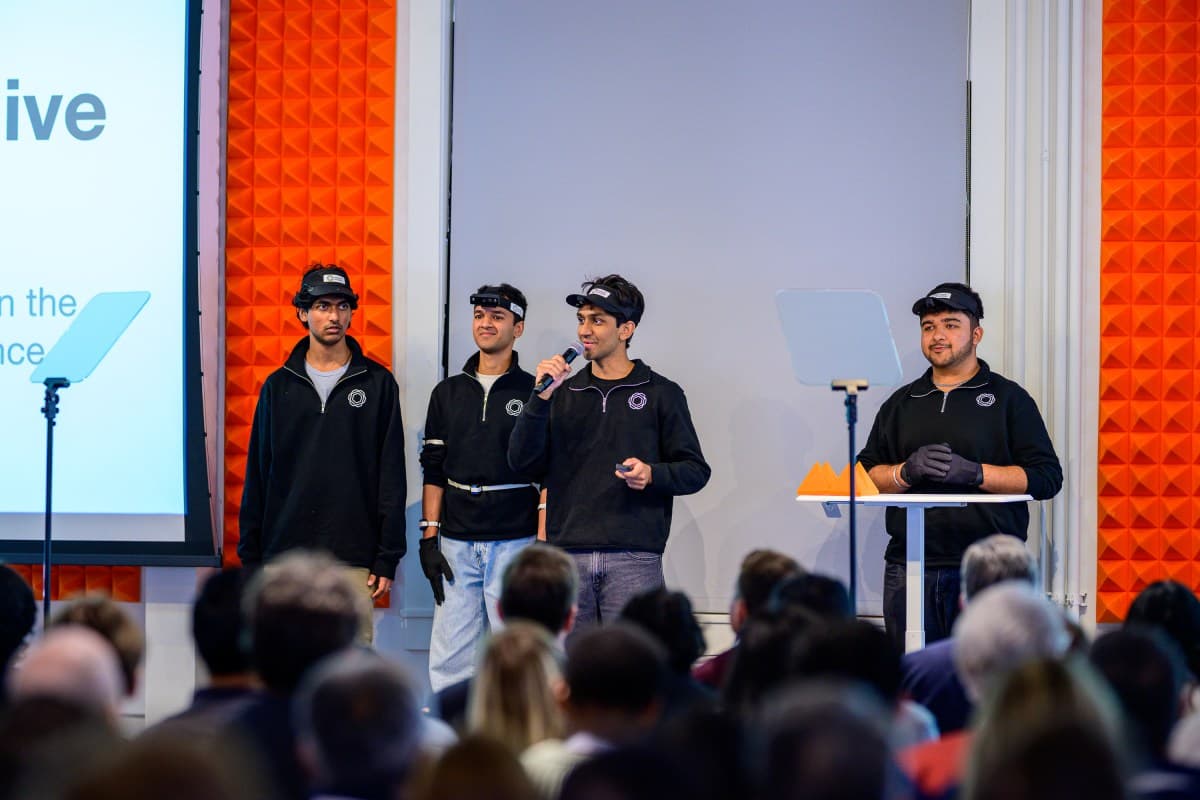
Human Archive, a startup founded by researchers from UC Berkeley and Stanford, is tapping into India’s gig economy to gather physical training data for artificial intelligence and robotics. The company pays gig workers in India to wear caps fitted with cameras and sensor devices that capture real-world movements and interactions. This data is then sold to AI and robotics labs that need large volumes of physical-world examples to train their systems.
The startup’s approach addresses a critical bottleneck in robotics development: the scarcity of diverse, real-world training data. While AI models for language and images can be trained on vast internet datasets, robots require physical demonstrations of tasks like grasping objects, walking, or navigating spaces. Human Archive’s gig workers perform everyday activities while wearing the sensor gear, generating thousands of hours of motion and interaction data.
Workers are recruited through local gig platforms and paid per session, with earnings varying based on the complexity and duration of tasks. The company provides the equipment and instructions, and workers can participate from their own homes or neighborhoods. This model allows Human Archive to collect data at a fraction of the cost of in-house collection in developed countries.
The data captured includes video, depth sensing, inertial measurements, and sometimes haptic feedback. It is anonymized and labeled before being packaged for clients. Human Archive says its dataset covers a wide range of human activities, from cooking and cleaning to assembly and repair, making it valuable for training robots for domestic, industrial, and healthcare applications.
Several robotics companies and research labs have already expressed interest in the dataset, according to the startup. The demand is driven by the need for more robust and generalizable robot learning, especially as companies race to deploy robots in unstructured environments. Human Archive’s data could help reduce the time and cost of training robots through reinforcement learning and imitation learning.
The startup faces challenges around data quality, privacy, and ethical treatment of workers. Human Archive states it obtains informed consent from workers and anonymizes all data to protect identities. The company also says it pays above minimum wage and provides flexible schedules. However, critics have raised concerns about the potential for exploitation in gig economy models and the long-term implications of outsourcing data collection to low-wage countries.
Human Archive is currently operating in several Indian cities and plans to expand to other countries in Southeast Asia and Africa. The startup has raised seed funding from a group of angel investors and is in talks with venture capital firms. Pricing for the dataset varies based on volume and specificity, with some packages costing tens of thousands of dollars.
The company expects to release its first commercial dataset in the second quarter of 2025. Human Archive’s founders believe that leveraging global gig workers is the most scalable way to generate the physical data needed to advance robotics. “The future of robotics depends on access to diverse, real-world training data,” said one of the co-founders in a statement. “We are building the infrastructure to make that possible.”
Startup Battlefield 2026 applications due May 27; here's what judges seek
Applications for TechCrunch's Startup Battlefield 2026 close May 27. The program seeks early-stage startups with innovative technology and strong traction.

TechCrunch has set a May 27 deadline for Startup Battlefield 2026 applications. The competition, now in its 19th year, offers selected startups a platform to pitch to investors and media. Organizers emphasize that submissions should highlight unique technology and market potential.
Judges will evaluate startups based on product innovation, business model viability, and team expertise. Companies must be pre-seed to Series A stage, with a working prototype or early revenue. The program does not accept later-stage companies or those that have previously pitched at TechCrunch events.
Selected participants receive a dedicated mentorship session with TechCrunch editors and industry experts. They also get a spot on the main stage for a six-minute pitch followed by Q&A. Past winners include Dropbox, Fitbit, and Cloudflare, which have collectively raised billions in funding.
Applicants should prepare a clear problem statement and solution. The application requires a video pitch, company deck, and details on traction. Organizers advise focusing on the product's competitive advantage and addressing market size.
The deadline is strict; late submissions will not be considered. Notifications for selected startups will go out in June. The event itself takes place in September 2026 in San Francisco.
For those applying, TechCrunch recommends reviewing the FAQ page and ensuring all materials are polished. The application portal closes at 11:59 PM PT on May 27.

SolarSquare raises approximately $60 million in Series C funding round
Indian rooftop solar energy startup SolarSquare is raising between $55 million and $60 million in a Series C funding round led by B Capital and Lightspeed Venture Partners, with participation from Elevation Capital. The company, which focuses on end-to-end solar solutions for homes and small businesses, could see its valuation reach $450 million to $500 million upon completion.

SolarSquare, an Indian startup specializing in rooftop solar energy systems, is securing new funding. The company is in the process of closing a Series C round worth between $55 million and $60 million. This follows a previous $40 million investment reported in December 2024.
The funding round is jointly led by B Capital and Lightspeed Venture Partners, with Elevation Capital also expected to participate. Discussions are at an advanced stage, and if the investment is completed, SolarSquare's valuation could climb to between $450 million and $500 million.
Founded by Shreya Mishra, Akshat Jalan, Neeraj Jain, and Nikhil Nahar, SolarSquare focuses on installing rooftop solar systems. The company provides end-to-end solar energy solutions primarily for individual homes, apartment complexes, and small businesses.
SolarSquare enables customers to generate their own electricity by equipping their rooftops with solar panels. The company handles system design, engineering planning, equipment procurement, and installation management. It also takes on post-installation maintenance and operations.
By offering these services, SolarSquare helps users reduce their electricity costs and decrease reliance on the grid. The company emphasizes not just hardware installation but also long-term system performance, providing maintenance, monitoring, and efficiency optimization.
The new capital is expected to support SolarSquare's expansion in India's growing solar energy market. The company aims to scale its operations and reach more residential and small business customers.
SolarSquare's approach targets the increasing demand for renewable energy solutions in India. The startup's comprehensive service model differentiates it in the competitive solar installation landscape.
Completion of the Series C round is anticipated soon, with the valuation potentially reaching $500 million. The investment reflects continued investor interest in India's clean energy sector.

eSports Startup Lucra Raises $20M by Pitching Sports Gamification, Not AI
Lucra Sports secured $20 million in funding by focusing on sports gamification rather than AI, a strategy founder Dylan Robbins detailed in a recent interview. The startup's pitch emphasized user engagement and monetization in eSports.

Dylan Robbins, founder and CEO of Lucra Sports, achieved a fundraising milestone earlier this year that he says no other startup has matched. He recently disclosed the tactics behind securing $20 million in venture capital during a period when investors were primarily interested in artificial intelligence companies.
Robbins explained that Lucra deliberately avoided framing its business around AI, despite incorporating machine learning into its platform. Instead, the pitch centered on sports gamification, a sector that allowed the company to demonstrate clear revenue streams and user retention metrics.
The startup operates a platform that enables users to compete in skill-based sports challenges for prizes. Robbins noted that investors responded positively to the company's focus on real-money gaming and its ability to attract a dedicated user base without relying on AI hype.
Lucra's approach involved highlighting partnerships with major sports leagues and media companies. The company had already secured deals with the NFL Players Association and the PGA Tour, which provided credibility and a built-in audience for its challenges.
Robbins emphasized that the fundraising process required educating investors about the differences between eSports and traditional sports betting. Lucra's model avoids the regulatory complexities of gambling by focusing on peer-to-peer competitions where outcomes depend on skill rather than chance.
The $20 million round was led by a group of investors that included existing backers. Robbins declined to name the lead investor but stated that the funding would be used to expand into new sports categories and enhance the platform's social features.
Lucra plans to launch additional game formats and integrate with more sports organizations in the coming months. The company currently operates in 40 U.S. states and aims to increase its market presence through targeted marketing campaigns.
Robbins concluded that the key to Lucra's fundraising success was demonstrating a clear path to profitability without relying on speculative AI applications. The company's focus on sports gamification, he said, resonated with investors seeking tangible business models in the competitive eSports landscape.

AI health startup Lucis raises $20M Series A led by Singular
French AI health startup Lucis has raised $20 million in Series A funding led by Singular. The company plans to use the investment to expand across Europe and develop its AI-powered preventive health platform.

Lucis, an artificial intelligence-driven health startup based in France, has secured $20 million in Series A funding. The round was led by Singular, with participation from General Catalyst, Y Combinator, and Resilience, as well as individual investors Céline Lazorthes and Manu Lecomte. Founded in 2025, the company has now raised a total of $28 million to date.
The startup was launched by Maxime Berthelot and Baptiste Debever. Lucis is building an AI-powered preventive health platform that enables individuals to regularly monitor their health status. The platform analyzes over 110 blood biomarkers, providing comprehensive data on metabolic health, hormones, cardiovascular risk, inflammation, and vitamin and mineral levels.
The company's AI-driven health application processes test results alongside long-term health data and medical context to generate personalized recommendations. Users receive guidance on nutrition, lifestyle changes, supplement use, and retesting schedules, with the system supported by physician oversight.
Lucis aims to shift the traditional healthcare model from intervention after illness to early risk detection. The company has already conducted more than 1 million biomarker tests and serves over 10,000 users across France, the United Kingdom, Ireland, and Portugal.
With the new capital, Lucis plans to expand its operations throughout Europe and further develop its preventive health platform. The startup's approach focuses on providing users with actionable insights to maintain health and prevent disease before symptoms arise.
The Series A round marks a significant milestone for the young company, which has grown rapidly since its founding in 2025. Lucis's platform combines advanced biomarker analysis with machine learning to deliver personalized health assessments.
Singular, the lead investor in this round, has a track record of backing technology-driven health companies. The participation of General Catalyst and Y Combinator underscores the potential seen in Lucis's preventive health model.
Lucis intends to use the funding to scale its platform and reach more users across Europe. The company's long-term vision is to make preventive health accessible and data-driven, reducing the burden on healthcare systems by catching risks early.