Intel Unveils Xeon 6+ Series with 288 Cores for AI and Cloud Data Centers
Intel announced the Xeon 6+ (Clearwater Forest) processor family, built on the Intel 18A node, featuring up to 288 cores. The new chips target AI and cloud computing workloads in data centers.
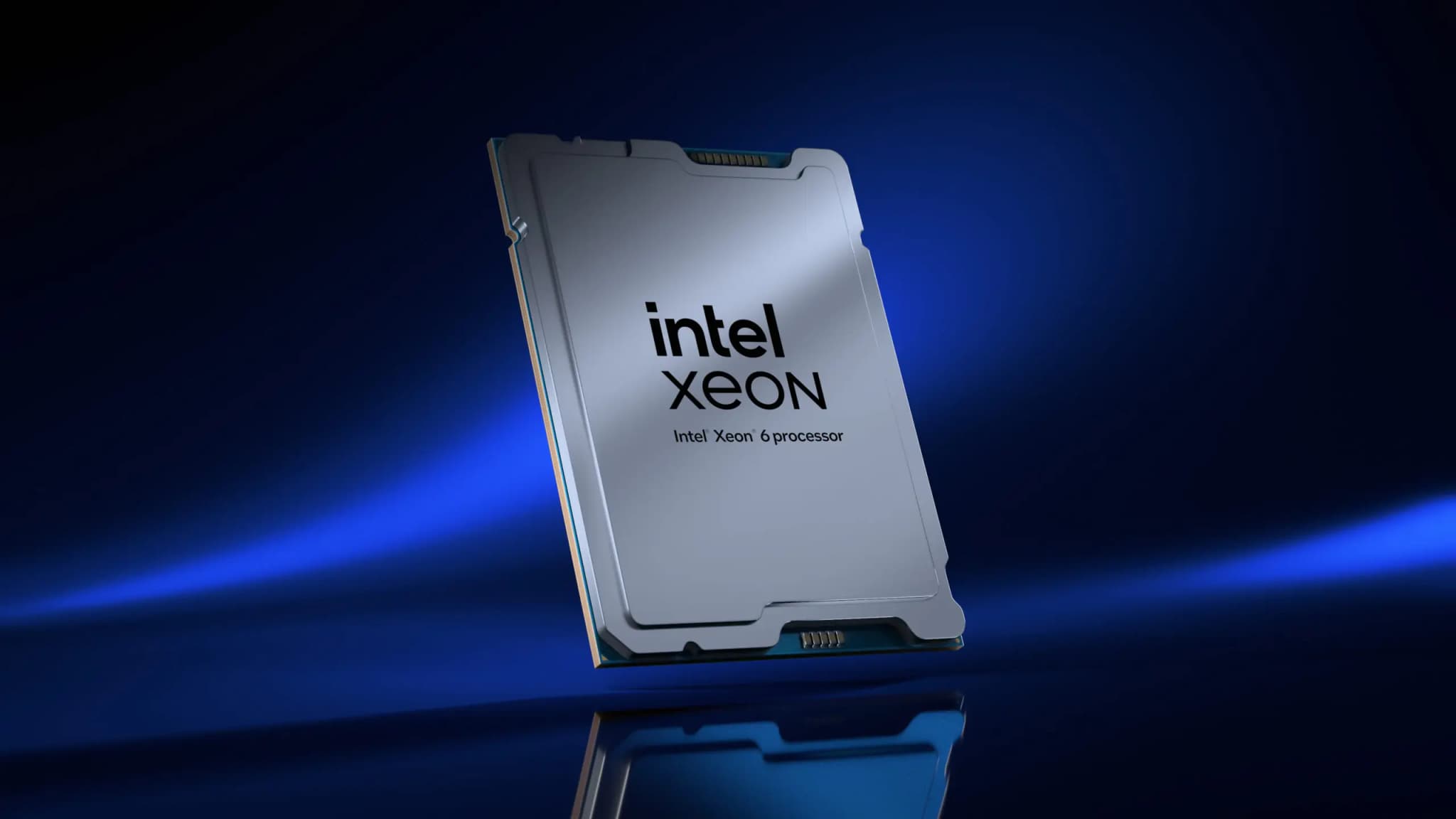
Intel has officially introduced its next-generation Xeon 6+ processor family, code-named Clearwater Forest, designed for data centers and AI infrastructure. The new chips are built on the company's most advanced manufacturing process, the Intel 18A node, and deliver up to 288 cores per socket. The announcement comes as demand for computing power in AI and cloud services continues to surge.
The Xeon 6+ series represents a significant architectural leap from its predecessors. Intel 18A technology incorporates RibbonFET gate-all-around transistors and PowerVia backside power delivery, enabling higher performance and energy efficiency. The 288-core configuration targets massively parallel workloads such as large language model training, inference, and high-performance computing.
Intel positions the new processors as a direct response to the growing computational demands of modern data centers. The company emphasized that the Xeon 6+ will support advanced memory and I/O technologies, including DDR5 memory and PCIe 5.0 interfaces, to minimize bottlenecks in data-intensive applications. Specific clock speeds and thermal design power figures have not yet been disclosed.
The Clearwater Forest architecture introduces several microarchitectural improvements over the previous Granite Rapids and Sierra Forest designs. Intel claims the new cores deliver a substantial increase in instructions per clock, though exact performance metrics will be shared closer to launch. The processors also incorporate enhanced AI acceleration capabilities through integrated matrix engines.
Intel expects the Xeon 6+ to compete directly with AMD's EPYC processors and Arm-based server chips from companies like Ampere Computing. The company has not announced specific pricing or volume availability dates but indicated that sampling to key customers will begin in the first half of 2025. Production ramp is anticipated later that year.
Data center operators and cloud service providers are expected to be the primary customers for the Xeon 6+ series. Intel highlighted that the processors will be compatible with existing LGA 7529 socket platforms, easing upgrades for current Xeon users. The company also confirmed support for Intel's oneAPI software stack to simplify development across heterogeneous architectures.
Intel's announcement underscores its commitment to regaining leadership in the server processor market, where it has faced intense competition. The Xeon 6+ series is part of a broader roadmap that includes future generations built on Intel 14A and beyond. The company stated that the new chips will help customers achieve significant performance-per-watt improvements for AI and cloud workloads.
Intel plans to provide additional technical details at upcoming industry events, including the Hot Chips conference later this year. The Xeon 6+ processors are expected to enter volume production in the second half of 2025, with general availability following shortly after. Pricing will be announced at that time.
Nvidia Expands Robotaxi Ecosystem with Foxconn, Uber, VinFast, and HUMAIN Partnerships
Nvidia is scaling its DRIVE Hyperion platform for autonomous driving, announcing new partnerships with Foxconn, Uber, VinFast, and HUMAIN for robotaxi projects. The company aims to dominate the robotaxi ecosystem globally.
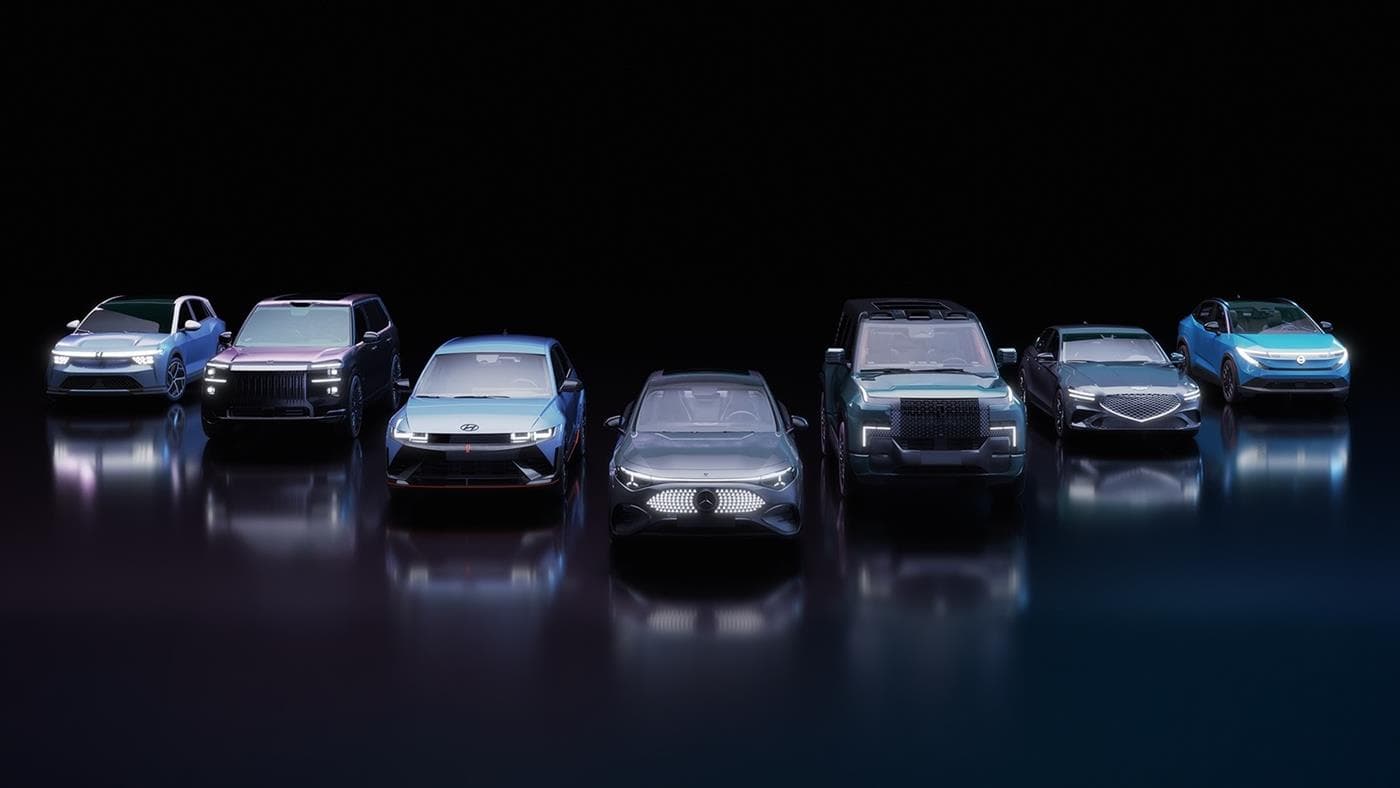
Nvidia is strengthening its position in the autonomous driving sector by expanding its DRIVE Hyperion platform through a series of new partnerships. The company announced collaborations with Foxconn, Uber, VinFast, and HUMAIN to develop robotaxi projects. These agreements mark a significant push by Nvidia to embed its technology across the global robotaxi ecosystem.
The DRIVE Hyperion platform serves as a complete reference architecture for autonomous vehicles, integrating Nvidia's DRIVE Orin system-on-a-chip, sensor suite, and software stack. By partnering with multiple companies, Nvidia aims to provide a standardized solution that can be adopted by various automakers and mobility service providers.
Foxconn, the Taiwanese electronics manufacturer, will leverage Nvidia's platform to develop electric vehicles and autonomous driving systems for its automotive clients. Uber, the ride-hailing giant, plans to integrate Nvidia's technology into its autonomous vehicle fleet, though specific details of the collaboration remain undisclosed.
Vietnamese automaker VinFast will use Nvidia's DRIVE Hyperion to accelerate the development of its self-driving cars. HUMAIN, a Chinese autonomous driving startup, will also adopt the platform for its robotaxi services. These partnerships highlight Nvidia's strategy to cover key markets, including North America, Asia, and Europe.
Nvidia's approach differs from competitors like Intel's Mobileye or Qualcomm, which offer more modular solutions. By providing a full-stack platform, Nvidia aims to reduce development time for automakers and mobility companies. The company claims its platform can handle Level 4 autonomous driving, meaning the vehicle can operate without human intervention in specific conditions.
The robotaxi market is projected to grow significantly in the coming years, with companies like Waymo, Cruise, and Baidu already testing services. Nvidia's partnerships could help it capture a larger share of this emerging market by supplying the underlying hardware and software.
Nvidia's DRIVE Hyperion platform is currently available for automakers and developers. The company has not disclosed specific financial terms of the partnerships or timelines for commercial deployment. However, Nvidia stated that the platform is production-ready and can be customized for different vehicle types.
With these new collaborations, Nvidia is positioning itself as a key enabler in the autonomous driving industry. The company's ability to secure partnerships with diverse players, from manufacturers to service providers, underscores its ambition to dominate the robotaxi ecosystem. Nvidia's CEO Jensen Huang emphasized that the company's platform offers a scalable and safe solution for autonomous mobility. The partnerships are expected to accelerate the deployment of robotaxis globally, though regulatory hurdles and public acceptance remain challenges. Nvidia continues to invest heavily in its automotive business, which it sees as a major growth driver beyond its core graphics and AI markets. The company's DRIVE platform is already used by over 370 partners worldwide, including automakers, trucking companies, and robotaxi developers. Nvidia's latest announcements reinforce its commitment to leading the autonomous driving revolution. The company plans to showcase its technology at upcoming industry events, including CES and the GPU Technology Conference. Nvidia's stock rose slightly following the news, reflecting investor optimism about its automotive prospects. The company faces competition from established players and new entrants, but its comprehensive platform approach may give it an edge in the race to deploy autonomous vehicles at scale.
Meta develops new wearable AI devices including a necklace and advanced smart glasses
Meta is working on new AI-powered wearable devices beyond smart glasses, including an AI necklace and advanced glasses with enhanced environmental sensing. The products aim to offer continuous voice interaction and contextual understanding.

New details have emerged about Meta's wearable technology strategy. According to a report from The Information, the company is not limiting itself to smart glasses but is also developing new hardware categories focused on artificial intelligence. These products include an AI necklace and advanced smart glasses capable of more comprehensive environmental analysis.
One of the products under development is an AI necklace designed for continuous interaction with the user. The device is expected to be equipped with a microphone and various sensors, allowing it to listen to voice commands throughout the day, create reminders, and deliver an AI-powered personal assistant experience. The approach resembles that of recent non-screen AI devices from startups like Humane and Limitless.
Another notable product is what Meta refers to as "supersensing" next-generation smart glasses. The company is reportedly developing glasses that go beyond its current Ray-Ban Meta products, aiming to better understand the user's surroundings and generate contextual information. These devices are intended to recognize objects the user looks at, interpret the environment, and offer more advanced recommendations through AI.
Meta has not made any official announcements regarding these products. However, the company has recently focused on tighter integration of AI with hardware, and these developments suggest it is preparing to expand its strategy with glasses and new wearable devices. This indicates that AI competition will not be limited to models and applications but will also shape new hardware categories.
The AI necklace is said to be designed for all-day use, with a focus on voice interactions rather than a screen. It could potentially handle tasks like setting timers, taking notes, or providing information based on the user's location and activities. The device may also leverage Meta's large language models to offer more natural conversations.
For the advanced smart glasses, Meta is working on computer vision capabilities that can identify objects, read text, and analyze scenes in real time. The glasses could overlay information or provide audio feedback to assist users in various tasks, such as navigation, shopping, or learning. This would represent a significant upgrade from the current Ray-Ban Meta glasses, which primarily offer camera and audio features.
The timeline for these products remains unclear. Meta is known to have multiple wearable projects in its research labs, and some may take years to reach the market. The company's hardware division, Reality Labs, has been investing heavily in augmented reality and AI technologies, with a long-term vision of creating devices that blend the digital and physical worlds.
Industry observers note that Meta's move into AI wearables could intensify competition with companies like Apple, Google, and Amazon, which are also developing similar technologies. The success of these products will depend on factors such as battery life, design, privacy features, and the ability to deliver useful AI experiences without being intrusive.
Meta has not provided any official statement on the reported devices. The company continues to focus on its existing Ray-Ban Meta smart glasses, which have received updates and new features since their launch. As of now, no release dates or pricing information have been disclosed for the AI necklace or supersensing glasses.

Asana acquires no-code agent developer StackAI for $75 million
Asana has acquired StackAI, a no-code agent developer, for $75 million. The acquisition aims to transform Asana's platform into an operating system for human-agent teams.
Asana announced the acquisition of StackAI, a developer of no-code AI agents, in a deal valued at $75 million. The financial details were not disclosed in the official announcement, but sources confirm the purchase price. As part of the transaction, StackAI's founders Tony Rosinol and Bernard Aceituno will join Asana. StackAI's product will continue to operate under its own brand.
StackAI develops software that enables companies to design, test, deploy, and manage custom AI agents without writing code. The platform pulls data from systems like Salesforce, Slack, and Gsuite to create agents that work within existing business systems. The startup was part of Y Combinator's Winter '23 cohort.
StackAI had raised just under $20 million in total investment. Its Series A round of $16 million included backing from Gradient, Epakon Capital, Lobby VC, LifeX Ventures, and Vercel CEO Guillermo Rauch.
Asana stated that this acquisition combines cross-system execution with the space where teams already plan and track work. AI Teammates act as a bridge, transferring context from Asana to StackAI workflows.
Asana announced the acquisition alongside its fiscal 2027 first-quarter results. Revenue reached $205.1 million, up nearly 10% year-over-year, surpassing both analyst expectations of $203.9 million and the company's own guidance. Analysts had forecast earnings of 7 cents per share on that revenue.
The company reduced its net loss to $14.4 million, or 6 cents per share, compared to a $40 million loss in the same quarter of the previous fiscal year. Asana ended the quarter with 26,103 customers spending $5,000 or more annually, a 7% increase year-over-year. Customers spending at least $100,000 rose 12% to 817.
Asana aims to position its platform as the operating system for human-agent teams through this acquisition. The company expects the deal to close in the current quarter.
AMD unveils Ryzen 7 7700X3D at Computex 2026, brings back 5800X3D special edition
AMD announced the Ryzen 7 7700X3D processor at Computex 2026, priced at $329. The company also reintroduced the Ryzen 7 5800X3D in a special edition for gamers.
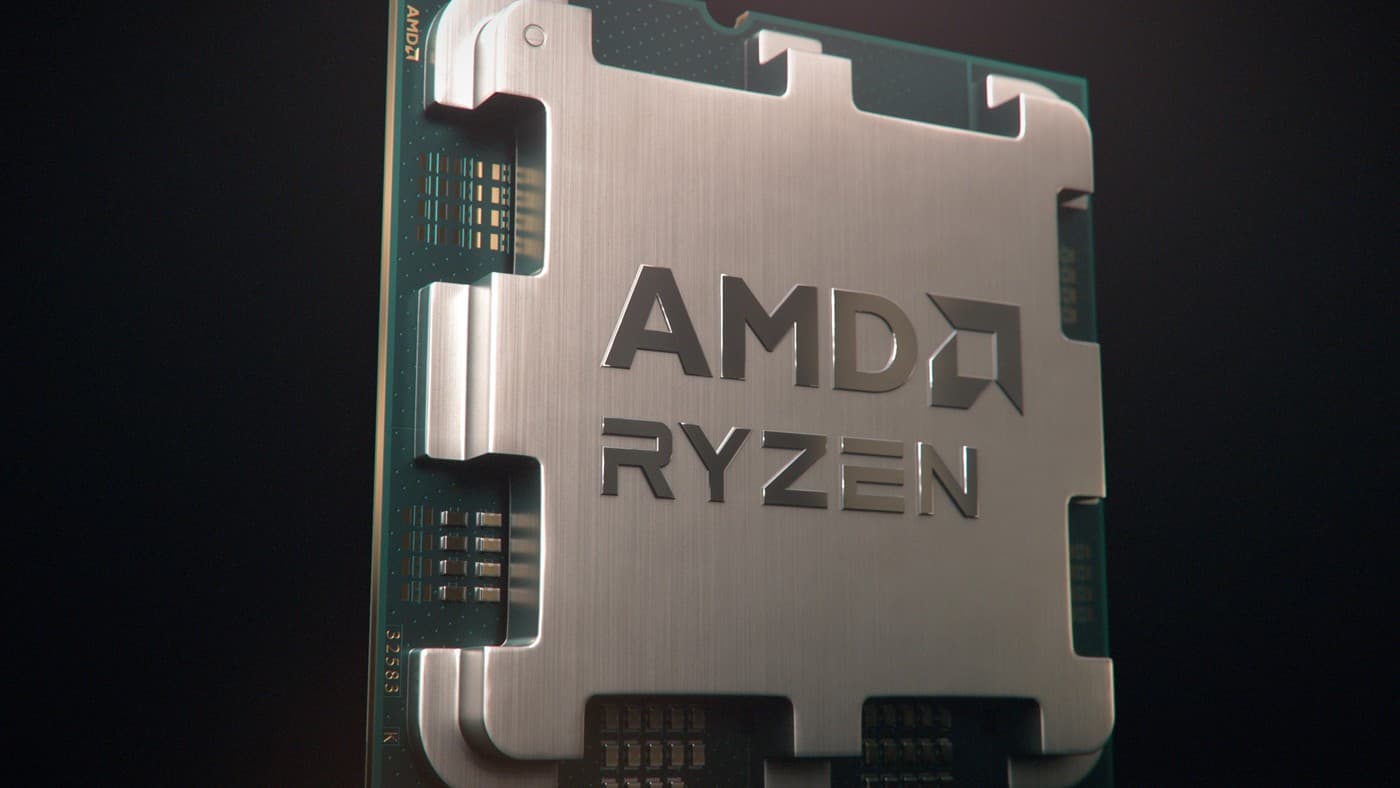
AMD took the stage at Computex 2026 in Taipei to unveil two new processors aimed at gamers. The company introduced the Ryzen 7 7700X3D, a new addition to its 3D V-Cache lineup, and announced a special edition re-release of the popular Ryzen 7 5800X3D.
The Ryzen 7 7700X3D features eight cores and 16 threads, built on the Zen 4 architecture. It incorporates AMD's 3D V-Cache technology, stacking an additional 64MB of L3 cache on top of the standard 32MB, for a total of 96MB. The processor has a base clock of 4.2 GHz and a boost clock of up to 5.3 GHz, with a TDP of 105W.
AMD claims the Ryzen 7 7700X3D delivers up to 15% better gaming performance compared to the standard Ryzen 7 7700X. The extra cache reduces latency and improves frame rates in CPU-intensive titles, particularly at 1080p resolution. The chip is compatible with the AM5 socket and supports DDR5 memory and PCIe 5.0.
The Ryzen 7 5800X3D special edition returns with the same specifications as the original: eight cores, 16 threads, and 3D V-Cache with 96MB total L3 cache. It runs at a base clock of 3.4 GHz and a boost clock of 4.5 GHz, with a TDP of 105W. This version is designed for gamers still using the AM4 platform who want an upgrade without switching motherboards.
AMD priced the Ryzen 7 7700X3D at $329, positioning it as a mid-range gaming processor. The Ryzen 7 5800X3D special edition will retail for $299, matching the original launch price. Both processors are expected to compete with Intel's Core i5 and i7 offerings in the same price brackets.
The Ryzen 7 7700X3D will be available starting July 15, 2026, through major retailers and e-tailers. The Ryzen 7 5800X3D special edition will hit shelves on July 22, 2026, with limited stock. AMD stated that the special edition is a one-time production run to meet ongoing demand from AM4 users.
"We heard the community's desire for more 3D V-Cache options," said David McAfee, AMD's vice president and general manager of the Client Channel Business. "The Ryzen 7 7700X3D brings that technology to a more accessible price point, while the 5800X3D special edition gives AM4 users a final upgrade path."