Mercer Survey: 99% of CEOs Expect AI-Driven Layoffs
A new Mercer report reveals that 99% of CEOs anticipate workforce reductions due to artificial intelligence. The survey highlights the accelerating impact of AI on corporate restructuring.

A sweeping majority of chief executives are bracing for job cuts tied to artificial intelligence, according to a recent report from human resources consultancy Mercer. The survey found that 99% of CEOs expect their organizations to reduce headcount as AI tools take over tasks previously handled by humans. The findings underscore a growing conviction among corporate leaders that AI will fundamentally reshape workforce structures.
Mercer’s report, based on responses from over 800 CEOs globally, indicates that the shift is not hypothetical. Many executives are already implementing AI-driven automation in areas such as customer service, data analysis, and administrative work. The survey suggests that the pace of adoption has accelerated over the past year, with companies prioritizing efficiency gains over maintaining current staffing levels.
The anticipated layoffs are not limited to any single sector. CEOs across industries including finance, technology, healthcare, and manufacturing reported similar expectations. However, the report notes that roles involving repetitive tasks or routine decision-making are seen as most vulnerable. In contrast, positions requiring creativity, strategic thinking, or emotional intelligence are considered less likely to be replaced.
Mercer’s analysis also highlights a paradox: while CEOs foresee job losses, many also plan to hire for new AI-related roles. Positions in AI development, data science, and machine learning oversight are expected to grow. Yet the net effect, according to the survey, will be a reduction in overall employment as automation eliminates more jobs than it creates in the near term.
The report comes amid broader debates about AI’s impact on labor markets. Some economists argue that AI will ultimately boost productivity and create new industries, while others warn of prolonged displacement. Mercer’s data leans toward the latter view, at least for the next few years. The consultancy advises companies to invest in reskilling programs to help workers transition into new roles.
Employee sentiment, however, appears mixed. The survey found that while many workers are anxious about job security, a significant portion see AI as a tool to enhance their work rather than replace it. Employers are encouraged to communicate transparently about automation plans to maintain trust and morale.
Mercer’s findings align with other recent studies. A McKinsey report earlier this year estimated that up to 30% of work activities could be automated by 2030. Similarly, Goldman Sachs projected that AI could replace the equivalent of 300 million full-time jobs globally. The Mercer survey adds a real-time perspective from the C-suite, confirming that these predictions are shaping corporate strategy today.
The report does not specify a timeline for the expected layoffs, but it notes that many companies are already restructuring. CEOs cited competitive pressure and shareholder expectations as key drivers for adopting AI quickly. The message from the corner office is clear: AI is not a future possibility but a present reality that will reshape employment.
Mercer’s full report, titled “AI and the Workforce: CEO Perspectives,” was released on March 15, 2025. It is available on the company’s website. The consultancy plans to update the survey annually to track evolving attitudes toward AI and employment.
Google Navigates AI Security Challenges in Real-Time Transition
Google is addressing AI security issues as the technology evolves rapidly. The company acknowledges that everyone, including itself, is learning to manage AI risks in real time.

Google is confronting the complexities of AI security as the technology undergoes a rapid transition. The company recognizes that the entire industry, including its own teams, is navigating these challenges without a predefined roadmap. This acknowledgment comes amid growing concerns about the safety and ethical implications of advanced AI systems.
In a recent statement, Google highlighted that AI security is not a static problem but one that evolves alongside the technology itself. The company emphasized that there are no established best practices for securing AI systems, as the field is still in its infancy. This reality forces organizations to adapt continuously as new vulnerabilities and threats emerge.
The tech giant pointed out that AI models, particularly large language models, introduce unique security risks that differ from traditional software. These include issues like prompt injection, data poisoning, and model inversion attacks. Google stressed that addressing these threats requires a proactive and iterative approach, rather than relying on legacy security frameworks.
Google's security teams are working on developing tools and methodologies to detect and mitigate AI-specific vulnerabilities. The company is also collaborating with external researchers and industry partners to share insights and establish common standards. However, Google cautioned that no single entity has all the answers, and the collective effort is essential.
The transition period for AI security is expected to last for the foreseeable future, as the technology continues to advance. Google urged organizations to prioritize security from the outset when deploying AI systems, rather than treating it as an afterthought. The company also recommended implementing robust monitoring and incident response plans tailored to AI workloads.
Google's own AI products, such as Bard and Search Generative Experience, are subject to ongoing security evaluations. The company has implemented safeguards like content filters and usage limits to reduce risks. Nevertheless, Google acknowledged that these measures are not foolproof and require constant refinement.
Industry observers note that Google's candid assessment reflects a broader shift in how tech companies approach AI security. Rather than downplaying risks, many are now openly discussing the challenges and uncertainties. This transparency is seen as a positive step toward building trust and fostering collaboration.
Google concluded by stating that the journey toward secure AI is a marathon, not a sprint. The company remains committed to investing in research and development to stay ahead of emerging threats. As the landscape evolves, Google plans to share its learnings publicly to help the entire ecosystem navigate this uncharted territory.

Anthropic's Mythos AI Model Identifies Over 10,000 Security Flaws in First Month
Anthropic's Claude Mythos Preview model has helped partners detect over 10,000 security vulnerabilities within a month of Project Glasswing's launch. The company reported a tenfold increase in bug-finding rates among partners.

Anthropic, the AI firm competing with OpenAI, has released its first report on Project Glasswing, a cybersecurity initiative launched in April that uses artificial intelligence to prevent AI-driven cyberattacks. The project is powered by Claude Mythos Preview, an unreleased model from Anthropic. According to the company, within just one month of Glasswing's launch, Claude Mythos Preview assisted partners in identifying over 10,000 security vulnerabilities. Most partners found hundreds of critical or high-severity bugs in their own software using the model, with bug-finding rates increasing more than tenfold.
Cloudflare discovered 2,000 bugs, 400 of which were classified as high or critical severity. Mozilla reported finding and fixing 271 security vulnerabilities in Firefox, a tenfold increase compared to a previous Claude model used on an older version of the browser. Anthropic itself used Mythos Preview to scan over 1,000 open-source projects in the past few months, identifying 23,019 security vulnerabilities, with 6,202 classified as high or critical severity.
The company stated that Mythos Preview is not yet publicly available because no organization, including Anthropic, has developed security measures strong enough to prevent misuse of such models. However, Anthropic plans to release "Mythos-class models" in the future once adequate safeguards are in place. For now, the company aims to expand Project Glasswing's accessibility by working with partners, including the U.S. government and other administrations, signaling efforts to mend relations with the U.S. government.
Partners involved in Project Glasswing include Amazon Web Services, Apple, CrowdStrike, Google, JPMorganChase, NVIDIA, and Palo Alto Networks. Anthropic's report highlights the potential of AI-driven cybersecurity tools but underscores the need for robust safety measures before broader deployment.

Google expands Gemini integration to more smart home devices
Google is enabling manufacturers to build more smart devices powered by its Gemini AI assistant. The move aims to embed Gemini into a wider range of home products.

Google announced a new initiative to broaden the presence of its Gemini AI assistant across smart home devices. The company is streamlining the process for manufacturers to integrate Gemini into their products. This effort is part of Google's strategy to make its AI assistant ubiquitous in households.
Manufacturers will gain access to new tools and APIs that simplify embedding Gemini into devices like smart speakers, displays, and appliances. Google aims to reduce development time and technical barriers for third-party partners. The company hopes this will lead to a surge in Gemini-compatible gadgets.
Gemini offers advanced natural language understanding and multimodal capabilities, allowing it to process voice, text, and images. Google positions Gemini as a more capable alternative to its previous Assistant. The AI can handle complex queries, control smart home functions, and provide personalized responses.
Google has already partnered with several major brands to launch Gemini-enabled devices. These include smart displays from Lenovo and speakers from JBL. The company expects more partners to announce products in the coming months.
The expansion comes as Google competes with Amazon's Alexa and Apple's Siri in the smart home market. By lowering integration hurdles, Google hopes to accelerate adoption of Gemini. The company believes Gemini's superior AI will give it an edge over rivals.
Developers can access the new Gemini integration tools starting today. Google will provide documentation, sample code, and technical support to partners. The company also plans to host workshops and webinars to assist manufacturers.
Google emphasized that privacy and security remain priorities for Gemini devices. All voice interactions will be processed locally when possible, with encrypted cloud processing for complex tasks. Users will have control over their data through Google's privacy dashboard.
The first wave of third-party Gemini devices is expected to hit the market later this year. Pricing and specific release dates will be announced by individual manufacturers. Google confirmed that its own Nest devices will also receive Gemini updates.
Cursor Reaches $3 Billion Annual Sales Rate Ahead of SpaceX Acquisition
Cursor's annualized revenue hit $3 billion in late April, signaling rising demand for its AI coding software. The startup is expected to be acquired by Elon Musk's SpaceX.
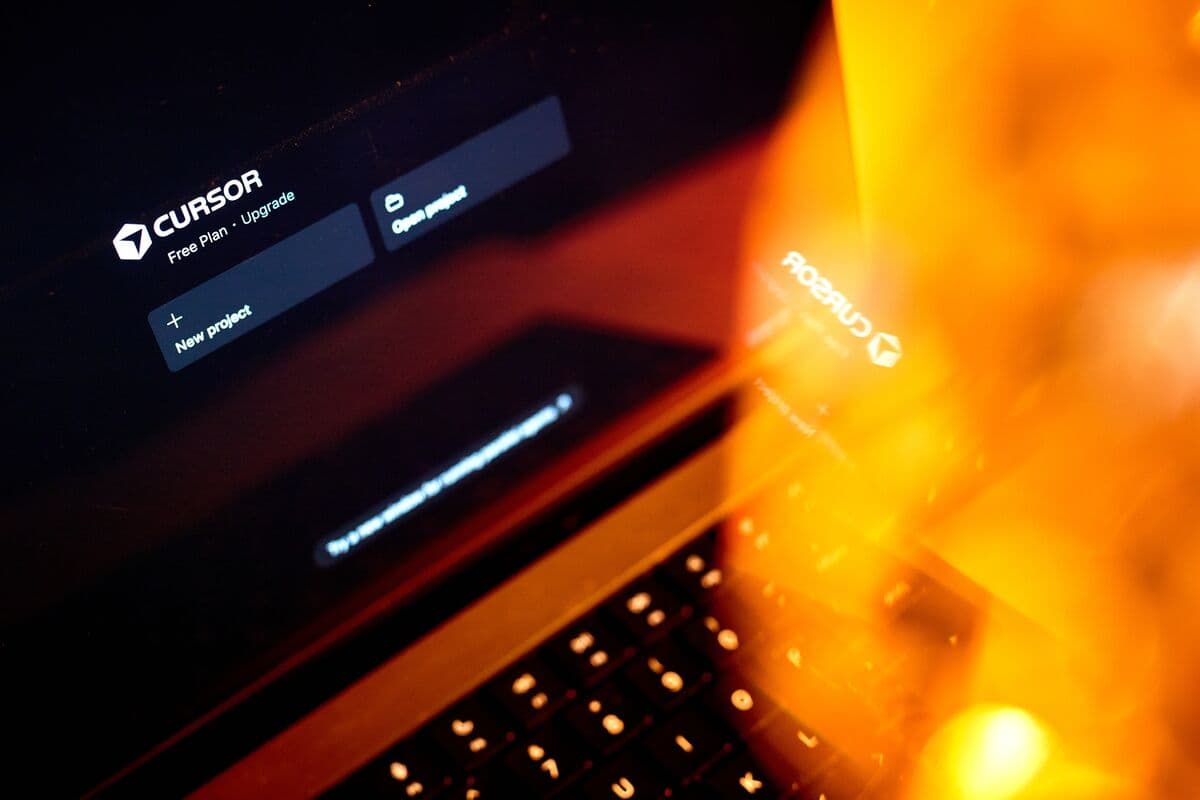
Cursor’s annualized revenue reached $3 billion in late April, according to a person familiar with the matter. The figure reflects growing demand for the company’s AI-powered coding software ahead of an anticipated acquisition by Elon Musk’s SpaceX. The startup’s annualized revenue, which extrapolates recent sales over a 12-month period, had surpassed $2 billion in February, as reported by Bloomberg. Cursor now counts over 3,000 customers that each pay at least $100,000 annually for its services. The company’s rapid revenue growth underscores the increasing adoption of AI tools in software development. Cursor’s software assists developers by generating and completing code, reducing the time needed for programming tasks. The deal with SpaceX, if finalized, would mark a significant expansion of Musk’s AI investments. Neither Cursor nor SpaceX has publicly commented on the acquisition terms. The startup’s revenue milestone comes amid a broader surge in demand for AI coding assistants from companies like GitHub Copilot and Amazon CodeWhisperer. Cursor’s customer base includes major technology firms and enterprises seeking to streamline their development workflows. The $3 billion annualized revenue rate positions Cursor as a leading player in the AI coding market. The expected acquisition by SpaceX could provide Cursor with additional resources and integration opportunities within Musk’s aerospace and technology ventures. Details of the deal remain undisclosed, but the revenue growth highlights the startup’s strong market traction.