Chatbots at the drive-thru are just the beginning
This development in AI News signals new momentum in the technology agenda.

Chatbots at the drive-thru are just the beginning has become a significant development in the technology sector. This advancement signals new momentum in the ai haberleri space and carries important implications for both consumers and industry players.
The technical details surrounding this announcement suggest a deliberate strategy aimed at capturing market share while addressing existing user pain points. Industry analysts note that the timing of this release aligns with broader shifts in how technology is adopted at scale.
From a competitive standpoint, this move places additional pressure on established players who have dominated the segment for years. The introduction of these features could force rivals to accelerate their own roadmaps or risk losing relevance in an increasingly crowded marketplace.
Consumer reactions have been mixed but generally positive, with early adopters highlighting the practical benefits over marketing promises. The focus appears to be on solving real problems rather than introducing novelty for its own sake.
Looking at the broader ecosystem, this development may trigger ripple effects across adjacent categories. Partnerships, supply chains, and developer communities are all likely to feel the impact as adoption scales.
Whether this represents a lasting shift or a temporary market reaction will depend on execution quality and sustained innovation in the coming quarters.}
Oddity is masterfully tense horror from the director of Hokum
This development in AI News signals new momentum in the technology agenda.

Oddity is masterfully tense horror from the director of Hokum has become a significant development in the technology sector. This advancement signals new momentum in the ai haberleri space and carries important implications for both consumers and industry players.
The technical details surrounding this announcement suggest a deliberate strategy aimed at capturing market share while addressing existing user pain points. Industry analysts note that the timing of this release aligns with broader shifts in how technology is adopted at scale.
From a competitive standpoint, this move places additional pressure on established players who have dominated the segment for years. The introduction of these features could force rivals to accelerate their own roadmaps or risk losing relevance in an increasingly crowded marketplace.
Consumer reactions have been mixed but generally positive, with early adopters highlighting the practical benefits over marketing promises. The focus appears to be on solving real problems rather than introducing novelty for its own sake.
Looking at the broader ecosystem, this development may trigger ripple effects across adjacent categories. Partnerships, supply chains, and developer communities are all likely to feel the impact as adoption scales.
Whether this represents a lasting shift or a temporary market reaction will depend on execution quality and sustained innovation in the coming quarters.}
Fujifilm’s X Half is even more whimsical with a $300 price cut
This development in AI News signals new momentum in the technology agenda.

Fujifilm’s X Half is even more whimsical with a $300 price cut has become a significant development in the technology sector. This advancement signals new momentum in the ai haberleri space and carries important implications for both consumers and industry players.
The technical details surrounding this announcement suggest a deliberate strategy aimed at capturing market share while addressing existing user pain points. Industry analysts note that the timing of this release aligns with broader shifts in how technology is adopted at scale.
From a competitive standpoint, this move places additional pressure on established players who have dominated the segment for years. The introduction of these features could force rivals to accelerate their own roadmaps or risk losing relevance in an increasingly crowded marketplace.
Consumer reactions have been mixed but generally positive, with early adopters highlighting the practical benefits over marketing promises. The focus appears to be on solving real problems rather than introducing novelty for its own sake.
Looking at the broader ecosystem, this development may trigger ripple effects across adjacent categories. Partnerships, supply chains, and developer communities are all likely to feel the impact as adoption scales.
Whether this represents a lasting shift or a temporary market reaction will depend on execution quality and sustained innovation in the coming quarters.}
ElliQ is a surprisingly helpful companion robot for older adults
This development in AI News signals new momentum in the technology agenda.

ElliQ is a surprisingly helpful companion robot for older adults has become a significant development in the technology sector. This advancement signals new momentum in the ai haberleri space and carries important implications for both consumers and industry players.
The technical details surrounding this announcement suggest a deliberate strategy aimed at capturing market share while addressing existing user pain points. Industry analysts note that the timing of this release aligns with broader shifts in how technology is adopted at scale.
From a competitive standpoint, this move places additional pressure on established players who have dominated the segment for years. The introduction of these features could force rivals to accelerate their own roadmaps or risk losing relevance in an increasingly crowded marketplace.
Consumer reactions have been mixed but generally positive, with early adopters highlighting the practical benefits over marketing promises. The focus appears to be on solving real problems rather than introducing novelty for its own sake.
Looking at the broader ecosystem, this development may trigger ripple effects across adjacent categories. Partnerships, supply chains, and developer communities are all likely to feel the impact as adoption scales.
Whether this represents a lasting shift or a temporary market reaction will depend on execution quality and sustained innovation in the coming quarters.}
AI Framework Revolutionizes Wastewater Treatment with Real-Time Monitoring and Optimization
A new AI-powered framework enables real-time monitoring and optimization of wastewater treatment, enhancing environmental safety and resource recovery. The system uses digital twin technology to predict system health and reduce energy consumption.
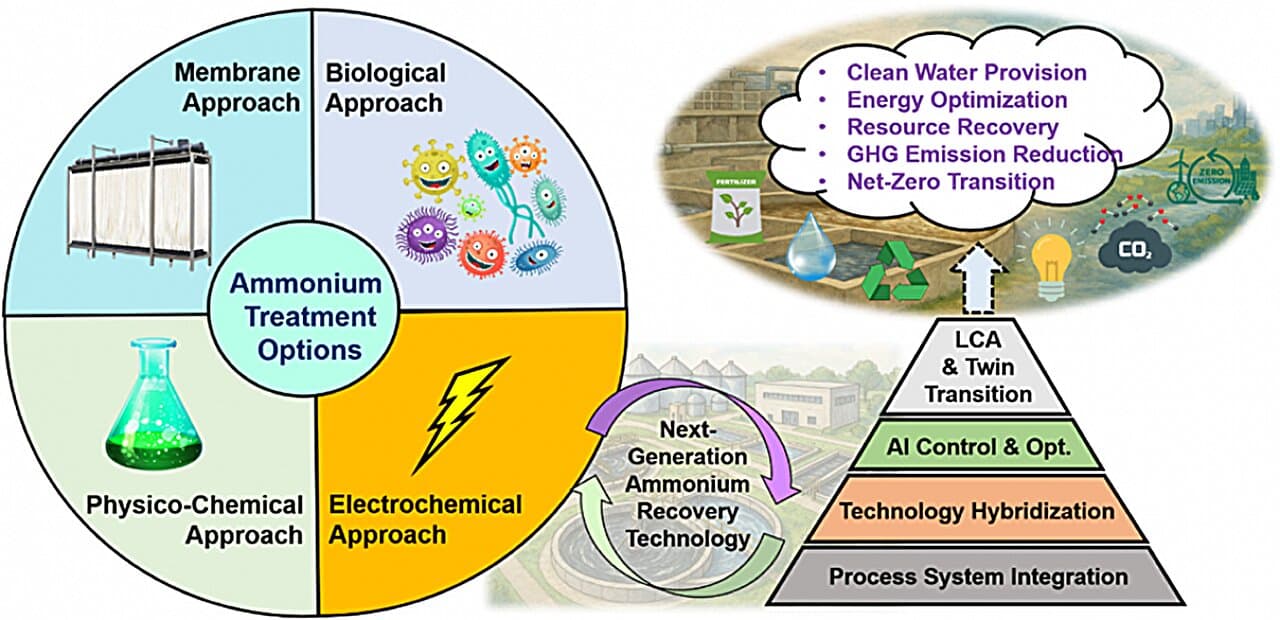
Researchers have unveiled a groundbreaking artificial intelligence framework designed to transform wastewater treatment by enabling real-time monitoring and optimization. This innovation, dubbed the 'twin transition' approach, allows treatment facilities to simultaneously predict system performance and maximize resource recovery while minimizing environmental impact. Developed by a team of engineers and data scientists, the system integrates sensors and machine learning algorithms to create a digital twin of the treatment process.
The framework operates by collecting data from various points in the wastewater treatment cycle, including flow rates, chemical levels, and biological activity. Machine learning models analyze this data in real time to detect anomalies, predict equipment failures, and optimize chemical dosing. The digital twin simulates the entire process, allowing operators to test adjustments virtually before implementing them in the physical plant. This reduces downtime and chemical waste while improving effluent quality.
Key technical features include predictive maintenance capabilities that forecast pump and filter failures up to 48 hours in advance, reducing unplanned outages. The system also optimizes aeration energy, which accounts for up to 60% of a plant's electricity use, by adjusting oxygen levels based on real-time microbial activity. In pilot tests, the framework reduced energy consumption by 15-20% and improved nutrient removal efficiency by 10%.
The development addresses a critical gap in current wastewater treatment, where most facilities rely on periodic manual sampling and reactive maintenance. Traditional methods often fail to detect gradual declines in system health, leading to costly repairs or environmental violations. By contrast, this AI-driven approach provides continuous oversight, enabling proactive interventions. The framework builds on years of research in digital twin technology applied to industrial processes, but this is the first comprehensive solution tailored specifically for municipal wastewater plants.
Early adopters include several medium-sized treatment plants in Europe and North America, which have reported significant operational improvements. The system is particularly beneficial for facilities facing stricter discharge regulations or aging infrastructure. Municipalities can use the framework to meet sustainability goals without expensive capital upgrades, as it works with existing sensors and control systems. The software is offered as a subscription service, with pricing based on plant capacity, starting at approximately $50,000 per year for a small plant.
For end users, the impact is indirect but substantial: cleaner waterways, reduced risk of sewage overflows, and lower water bills due to improved efficiency. The framework also supports water reuse initiatives by ensuring treated effluent meets safety standards for irrigation or industrial use. However, implementation requires staff training and integration with existing SCADA systems, which may pose challenges for smaller facilities with limited technical resources.
While the framework has shown promising results in initial deployments, further testing is needed to validate its performance across diverse climates and wastewater compositions. The research team plans to expand the system's capabilities to include real-time detection of emerging contaminants like pharmaceuticals and microplastics. Future iterations may also incorporate edge computing to reduce cloud dependency and latency. The framework is expected to be commercially available by early next year, with additional modules for sludge management and odor control in development.