
SpaceX's Starlink to Power In-Flight Wi-Fi on American Airlines
American Airlines has partnered with SpaceX to equip its aircraft with Starlink satellite internet, offering free high-speed Wi-Fi to passengers. The service will begin rolling out in 2025, with the first planes expected to be equipped by early next year.
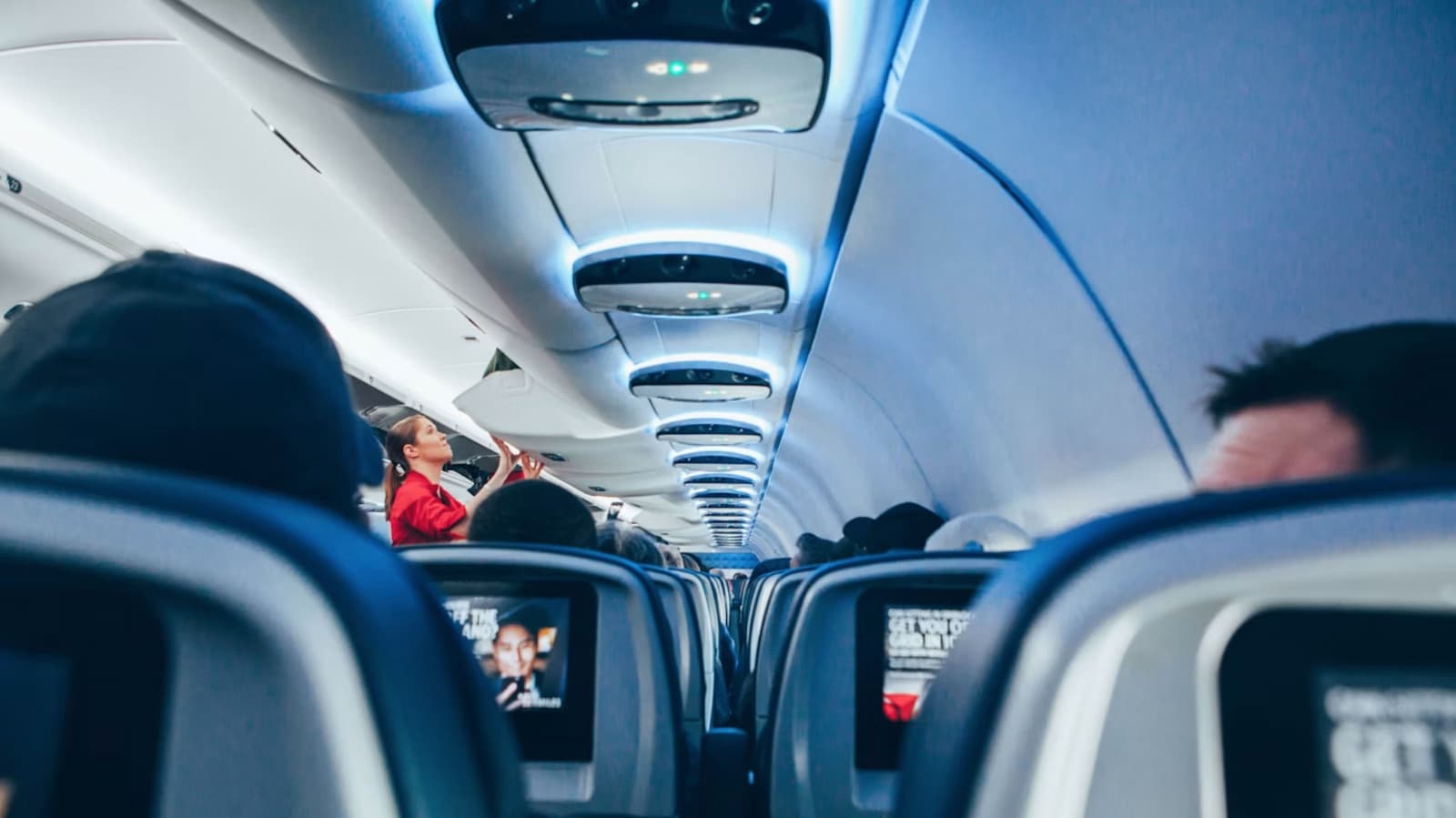
American Airlines announced a partnership with SpaceX to bring Starlink satellite internet to its fleet. The carrier plans to offer free, high-speed Wi-Fi to passengers on all flights. The service will begin rolling out in 2025, with the first aircraft expected to be equipped by early next year.
Starlink's low Earth orbit satellite network promises faster speeds and lower latency compared to traditional in-flight connectivity systems. The technology relies on a constellation of thousands of satellites to provide global coverage, including over oceans and remote areas. American Airlines expects the service to support streaming, browsing, and other data-intensive activities.
The airline will initially equip its regional jets and mainline aircraft, with the goal of covering the entire fleet over time. American Airlines operates more than 900 aircraft, making it one of the largest carriers to adopt Starlink. The company did not disclose the financial terms of the agreement.
Passengers will not be charged for the Wi-Fi service, which will be included in the ticket price. American Airlines currently charges for Wi-Fi on most flights, with prices varying by route and device. The move to free connectivity aligns with a broader industry trend toward complimentary in-flight internet.
SpaceX has been expanding its Starlink aviation business, signing deals with other airlines such as Hawaiian Airlines and JSX. The company also offers Starlink for private jets and maritime vessels. American Airlines' adoption marks a significant milestone for Starlink's commercial aviation footprint.
The rollout will occur in phases, with the first aircraft equipped in early 2025. American Airlines said it will provide updates on the installation timeline as the program progresses. The airline expects the service to enhance the passenger experience and improve operational efficiency.
Starlink's in-flight service has been tested on select aircraft, demonstrating speeds of up to 350 Mbps. The system uses a phased-array antenna mounted on the aircraft's fuselage to connect to the satellite network. American Airlines will work with SpaceX to integrate the technology into its existing onboard systems.
American Airlines CEO Robert Isom stated that the partnership represents a major step forward in the airline's commitment to improving the customer experience. The company aims to offer reliable, high-speed internet that meets the demands of modern travelers. The first equipped flights are scheduled to begin in early 2025.
Study: 16% of vascular plant species face extinction risk by century's end
A new study warns that climate change could put 16% of vascular plant species at risk of extinction by the end of the century. Scientists emphasize the critical threat to ecosystems.

A recent study has found that climate change may place 16% of vascular plant species at risk of extinction by the end of the century. The research highlights the severe impact of rising global temperatures on plant biodiversity. Scientists warn that this loss could disrupt entire ecosystems.
Vascular plants, which include ferns, conifers, and flowering plants, are essential for ecosystem function. They provide oxygen, food, and habitat for countless organisms. The study projects that without significant emission reductions, many species will not survive.
The analysis used climate models to predict species distribution changes under various warming scenarios. Researchers assessed over 300,000 plant species worldwide. They found that even under moderate warming, extinction risks remain substantial.
Tropical regions are expected to experience the highest losses, as many species there have narrow climatic tolerances. Mountainous areas also face significant threats due to limited migration options. The study underscores the need for conservation strategies that account for climate change.
Scientists call for urgent action to reduce greenhouse gas emissions and protect critical habitats. They emphasize that preserving plant diversity is vital for human well-being, as plants provide food, medicine, and raw materials. The findings were published in a peer-reviewed journal.
The research team included experts from multiple countries and institutions. They used data from global plant databases and climate projections. The study is among the most comprehensive assessments of plant extinction risk to date.
Conservation efforts must focus on both reducing emissions and creating refuges for vulnerable species. The authors stress that time is running out to prevent widespread losses. They urge policymakers to integrate these findings into biodiversity planning.
"The extinction risk for plants is a direct consequence of human-induced climate change," said a lead researcher. "We must act now to safeguard the natural systems that sustain life on Earth." The study provides a stark warning about the future of global flora.

American Airlines to Install Starlink on Over 500 Airbus Jets
American Airlines announced a deal to equip more than 500 Airbus aircraft with SpaceX's Starlink satellite internet. The move marks another major airline contract for Starlink as SpaceX prepares for an IPO.
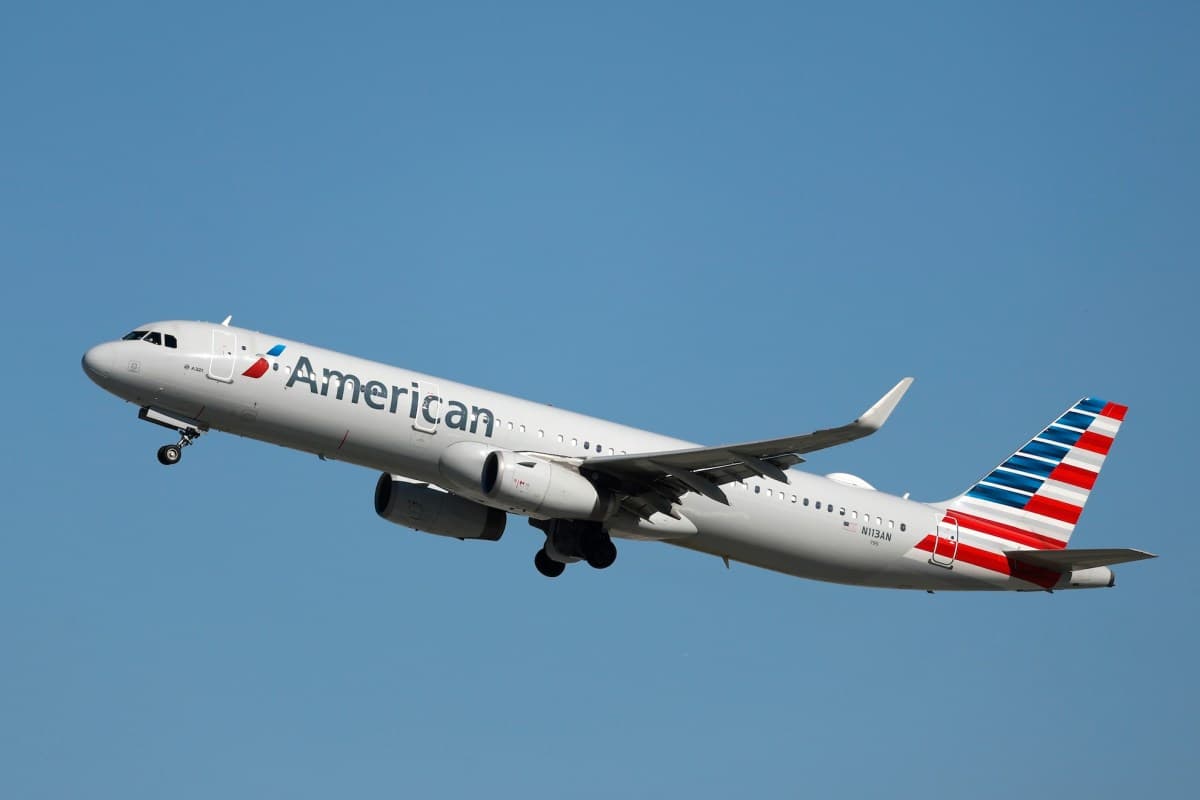
American Airlines revealed on Tuesday that it will install Starlink internet terminals on more than 500 Airbus aircraft. The carrier becomes the latest major airline to adopt SpaceX’s satellite broadband service. Financial terms of the agreement were not disclosed.
The installation will cover American Airlines’ entire Airbus fleet, including A319, A320, A321, and A737 models. The company expects to begin outfitting planes later this year, with completion targeted for 2025. Passengers will gain access to high-speed, low-latency internet during flights.
Starlink’s system uses a network of low-Earth orbit satellites to deliver connectivity. SpaceX has been aggressively pursuing airline contracts as part of its broader strategy to expand Starlink’s commercial applications. The service already has agreements with Hawaiian Airlines, JSX, and Delta Air Lines for testing.
The American Airlines deal comes as SpaceX prepares for a potential initial public offering of Starlink. The satellite internet division has been valued at around $150 billion in private markets. CEO Elon Musk has indicated that an IPO could occur once Starlink’s cash flow becomes more predictable.
SpaceX has launched over 5,000 Starlink satellites since 2019, with more than 4,500 currently operational. The service now covers dozens of countries and has over 2 million subscribers. Airline connectivity represents a growing revenue stream beyond residential and enterprise customers.
American Airlines plans to offer Starlink internet free to passengers with their AAdvantage loyalty program. The airline said the service will enable streaming, browsing, and other online activities at speeds comparable to home broadband. Installation will occur during routine maintenance cycles to minimize operational disruptions.
Starlink faces competition from other satellite internet providers like OneWeb and Viasat. However, its low-latency performance and growing satellite constellation give it an edge for in-flight connectivity. The American Airlines contract strengthens Starlink’s position in the aviation market ahead of its anticipated stock market debut.

Samsung Develops World's First 900-Layer V-NAND Flash Memory Chip
Samsung has achieved a milestone in memory technology by developing the world's first 900-layer V-NAND flash memory chip prototype. The new chip offers significantly higher storage density and performance compared to previous generations.

Samsung Electronics announced on Tuesday that it has developed the industry's first 900-layer V-NAND flash memory chip. The prototype marks a significant advancement in 3D NAND technology, which stacks memory cells vertically to increase density without enlarging the physical footprint. Samsung expects the new chip to enable higher-capacity solid-state drives (SSDs) for data centers and consumer electronics.
The 900-layer V-NAND chip utilizes Samsung's proprietary triple-level cell (TLC) architecture, storing three bits per cell. The company achieved the high layer count through advanced etching and deposition techniques, allowing for precise stacking of conductive and insulating layers. Samsung claims the chip delivers a 20% improvement in data transfer speeds and a 30% reduction in power consumption compared to its previous 512-layer V-NAND.
Samsung's V-NAND technology has evolved rapidly since the introduction of the first 24-layer chip in 2013. The 900-layer prototype represents a doubling of layers from the 512-layer V-NAND introduced in 2020. The company stated that the new chip is designed to meet the growing demand for high-capacity storage in AI, cloud computing, and big data applications.
The prototype chip has a storage capacity of 1 terabit (128 GB) per die, enabling a single SSD with multiple dies to reach capacities exceeding 100 terabytes. Samsung plans to begin mass production of the 900-layer V-NAND in 2025, with initial samples expected to be delivered to key customers later this year. The company did not disclose pricing details but indicated that the cost per gigabyte would be lower than current NAND flash products.
Samsung's announcement comes as competitors like SK Hynix and Micron are also pushing toward higher layer counts. SK Hynix recently introduced a 321-layer NAND chip, while Micron has shipped its 232-layer product. Samsung's 900-layer chip gives it a potential lead in the race for ultra-high-density storage solutions.
The new V-NAND chip is expected to be used in enterprise SSDs for data centers, where power efficiency and density are critical. Samsung also sees applications in consumer SSDs, smartphones, and other portable devices, though the high layer count may initially be cost-prohibitive for mass-market products. The company is working on a quad-level cell (QLC) version of the 900-layer V-NAND to further increase storage density.
Samsung emphasized that the 900-layer V-NAND is a result of its continued investment in R&D and manufacturing capabilities. The company operates multiple fabrication facilities dedicated to NAND flash production, including its plant in Pyeongtaek, South Korea. Samsung stated that the new chip will help solidify its position as the world's largest NAND flash memory supplier.
"This achievement demonstrates our leadership in 3D NAND technology and our commitment to pushing the boundaries of memory innovation," said a Samsung spokesperson. The company plans to showcase the 900-layer V-NAND prototype at the upcoming Flash Memory Summit in August 2024. Mass production is slated to begin in the first half of 2025.

YouTube Music Tests Playlist Sorting by Title, Artist, Album
YouTube Music has begun testing new sorting options for playlists, allowing users to organize tracks by title, artist, or album. The feature is currently available to a limited group of users.

YouTube Music is rolling out a test that introduces new sorting capabilities for playlists. Users can now arrange songs within a playlist by title, artist, or album, offering more flexibility in how they navigate their music collections. The update aims to address a long-standing request from subscribers who wanted greater control over playlist organization.
The sorting options appear as a dropdown menu within the playlist view. Selecting a category instantly reorders the track list alphabetically or numerically based on the chosen criterion. For example, sorting by artist groups songs by the performer's name, while sorting by album organizes tracks by their respective album titles.
This feature is currently in a limited testing phase, meaning only a subset of YouTube Music users have access. The company has not announced a wide release date or provided details on whether the sorting will extend to other areas of the app, such as the library or search results.
Playlist management has been a focus for YouTube Music as it competes with rivals like Spotify and Apple Music. The platform has gradually added features such as collaborative playlists and smart downloads. The new sorting options could help users better manage large playlists, especially those with hundreds of tracks.
Some users have reported seeing the sorting feature on both the Android and iOS versions of the app. However, it does not appear to be tied to a specific server-side update, suggesting it may be enabled through an A/B test. YouTube Music has not confirmed the feature's existence beyond user reports.
For now, users who do not see the sorting options will have to wait for a broader rollout. The company typically tests features with small groups before expanding availability based on feedback and performance metrics.
YouTube Music continues to refine its platform to attract and retain subscribers. The addition of playlist sorting aligns with efforts to enhance user experience and compete more effectively in the streaming music market.
As of now, no official statement from YouTube regarding the feature's future has been released. Users can expect updates through the app's changelog or official blog posts.