Water-Efficient AI Hub Helps Robots Make Faster Decisions
Australian researchers have developed a new water-efficient artificial intelligence hub that enables robots to make critical decisions without delays. The innovation promises to enhance robot autonomy in various applications.
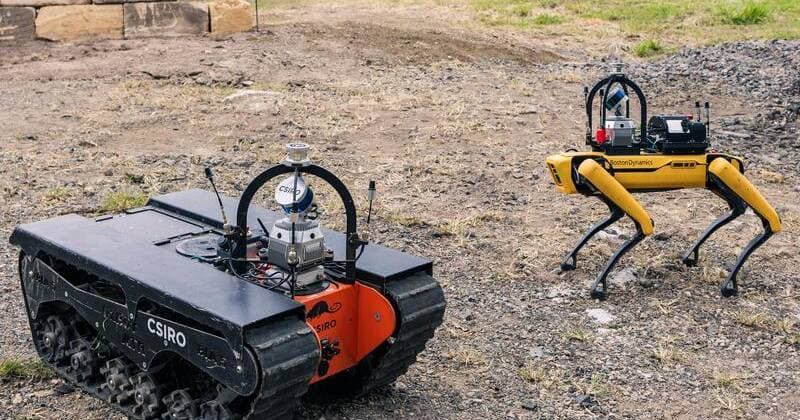
Researchers in Australia have unveiled a groundbreaking artificial intelligence hub designed to improve robot decision-making while significantly reducing water consumption. This new system, developed by a team at a leading Australian university, allows robots to process information and make choices in real-time, even in complex environments. The hub integrates advanced machine learning algorithms with efficient cooling technology, addressing two major challenges in robotics: latency and resource usage.
The AI hub utilizes a novel cooling system that relies on water evaporation rather than traditional air conditioning, cutting water usage by up to 90% compared to conventional data centers. This is achieved through a closed-loop design that recycles water and minimizes waste. The system's low latency is made possible by edge computing capabilities, which process data locally on the robot rather than relying on cloud servers. This reduces response times from milliseconds to microseconds, crucial for tasks like autonomous navigation or industrial assembly.
Technically, the hub employs a specialized neural network architecture optimized for real-time inference. It can handle multiple sensor inputs simultaneously, including cameras, LiDAR, and tactile sensors, to generate immediate commands for robotic actuators. The researchers tested the system on a variety of robots, from drones to humanoid machines, and found it improved task completion rates by 35% while cutting energy consumption by half.
The development comes as robotics increasingly demands faster, more autonomous decision-making, especially in fields like disaster response, agriculture, and manufacturing. Traditional AI systems often struggle with latency or require massive computational resources, limiting their practicality. This Australian innovation offers a compact, water-efficient alternative that could be deployed in remote areas or regions with scarce water supplies.
For users, the impact is immediate: robots equipped with this hub can react to sudden obstacles, adjust their grip on fragile objects, or navigate uneven terrain without human intervention. The system is compatible with most modern robotic platforms and can be retrofitted into existing models. While the researchers have not announced a commercial price, they estimate the hub will cost around $5,000 per unit, making it accessible for small and medium enterprises.
The team plans to refine the technology further, focusing on expanding its compatibility with different operating systems and reducing the hub's physical footprint. They are also exploring partnerships with robotics manufacturers to integrate the hub into next-generation products. Field trials are underway in Australian farms and warehouses, with results expected within six months.
Bad, Bad, Bad, Bad Roommate
This development in AI News signals new momentum in the technology agenda.

Bad, Bad, Bad, Bad Roommate has become a significant development in the technology sector. This advancement signals new momentum in the ai haberleri space and carries important implications for both consumers and industry players.
The technical details surrounding this announcement suggest a deliberate strategy aimed at capturing market share while addressing existing user pain points. Industry analysts note that the timing of this release aligns with broader shifts in how technology is adopted at scale.
From a competitive standpoint, this move places additional pressure on established players who have dominated the segment for years. The introduction of these features could force rivals to accelerate their own roadmaps or risk losing relevance in an increasingly crowded marketplace.
Consumer reactions have been mixed but generally positive, with early adopters highlighting the practical benefits over marketing promises. The focus appears to be on solving real problems rather than introducing novelty for its own sake.
Looking at the broader ecosystem, this development may trigger ripple effects across adjacent categories. Partnerships, supply chains, and developer communities are all likely to feel the impact as adoption scales.
Whether this represents a lasting shift or a temporary market reaction will depend on execution quality and sustained innovation in the coming quarters.}

South Korea’s LetinAR is building optics behind AI glasses
This development in AI News signals new momentum in the technology agenda.

South Korea’s LetinAR is building optics behind AI glasses has become a significant development in the technology sector. This advancement signals new momentum in the ai haberleri space and carries important implications for both consumers and industry players.
The technical details surrounding this announcement suggest a deliberate strategy aimed at capturing market share while addressing existing user pain points. Industry analysts note that the timing of this release aligns with broader shifts in how technology is adopted at scale.
From a competitive standpoint, this move places additional pressure on established players who have dominated the segment for years. The introduction of these features could force rivals to accelerate their own roadmaps or risk losing relevance in an increasingly crowded marketplace.
Consumer reactions have been mixed but generally positive, with early adopters highlighting the practical benefits over marketing promises. The focus appears to be on solving real problems rather than introducing novelty for its own sake.
Looking at the broader ecosystem, this development may trigger ripple effects across adjacent categories. Partnerships, supply chains, and developer communities are all likely to feel the impact as adoption scales.
Whether this represents a lasting shift or a temporary market reaction will depend on execution quality and sustained innovation in the coming quarters.}

Disco Elysium’s spiritual successor can’t escape its phantoms
This development in AI News signals new momentum in the technology agenda.
Disco Elysium’s spiritual successor can’t escape its phantoms has become a significant development in the technology sector. This advancement signals new momentum in the ai haberleri space and carries important implications for both consumers and industry players.
The technical details surrounding this announcement suggest a deliberate strategy aimed at capturing market share while addressing existing user pain points. Industry analysts note that the timing of this release aligns with broader shifts in how technology is adopted at scale.
From a competitive standpoint, this move places additional pressure on established players who have dominated the segment for years. The introduction of these features could force rivals to accelerate their own roadmaps or risk losing relevance in an increasingly crowded marketplace.
Consumer reactions have been mixed but generally positive, with early adopters highlighting the practical benefits over marketing promises. The focus appears to be on solving real problems rather than introducing novelty for its own sake.
Looking at the broader ecosystem, this development may trigger ripple effects across adjacent categories. Partnerships, supply chains, and developer communities are all likely to feel the impact as adoption scales.
Whether this represents a lasting shift or a temporary market reaction will depend on execution quality and sustained innovation in the coming quarters.}

Mistral AI CEO Warns Europe About Dangerous Dependency on American Tech
Arthur Mensch, CEO of French AI startup Mistral AI, warns that Europe's reliance on American technology could become a critical vulnerability. He cautions that if the US monopolizes AI supply chains, Europe's tech sovereignty and economic future are at risk.

Arthur Mensch, the co-founder and CEO of Mistral AI, Europe's $14 billion artificial intelligence startup, has issued a stark warning about the continent's growing dependency on American technology. Speaking at a tech conference in Paris, Mensch argued that Europe's reliance on US-based cloud infrastructure, chips, and AI models poses a significant strategic risk. He emphasized that without immediate action to build domestic alternatives, Europe could lose its technological sovereignty and economic competitiveness.
Mensch highlighted that European AI companies, including Mistral, currently depend heavily on American cloud providers like Amazon Web Services and Microsoft Azure for computing power, as well as on US-designed semiconductors from Nvidia and AMD. He warned that this dependency creates a single point of failure: 'Once supply is monopolised by a single geopolitical actor, Europe's AI ambitions will be at their mercy.' He called for coordinated European investment in homegrown data centers, chip fabrication, and AI research.
Mistral AI, valued at $14 billion, has positioned itself as a European champion in the AI race, developing open-source large language models that compete with OpenAI's GPT and Google's Gemini. The company recently raised €600 million in Series B funding, with investors including Andreessen Horowitz and Salesforce. However, Mensch noted that even Mistral relies on US-based hardware and cloud services for training its models, underscoring the systemic nature of the problem.
The warning comes amid escalating US-China tech tensions and export controls on advanced semiconductors, which have already impacted Chinese AI firms. Mensch argued that Europe is in a similar position, vulnerable to potential US policy shifts or trade restrictions. He drew parallels to the European Union's earlier dependency on Russian energy, which became a crisis after the Ukraine invasion. 'We cannot repeat the same mistake with technology,' he said.
Mensch proposed a three-pronged strategy: increased public funding for AI infrastructure, regulatory support for European cloud providers, and incentives for chip manufacturing on the continent. He pointed to initiatives like the European Chips Act and the proposed AI Factories as steps in the right direction but stressed that execution must accelerate. 'We have the talent and the capital, but we lack the infrastructure and political will,' he added.
The impact on European users and businesses could be profound if the dependency is not addressed. European startups may face higher costs and limited access to cutting-edge technology, while consumers could see slower adoption of AI-powered services. Mensch urged European regulators to prioritize tech sovereignty in upcoming AI legislation, balancing innovation with security. 'The next five years will determine whether Europe is a player or a pawn in the AI revolution,' he concluded.
While Mensch's warning has resonated with European tech leaders, some analysts question whether Europe can realistically build competitive alternatives given the scale of US investment. Mistral itself continues to partner with US firms, and no concrete plans for a European AI cloud have been announced. The coming months will likely see increased debate in EU policy circles about how to balance cooperation with the US and strategic autonomy.