
Australian AI Breakthrough Enables Real-Time Robotic Decision Making
Researchers in Australia have developed a water-efficient AI hub that allows robots to process information and make decisions in real-time. This innovation could significantly enhance robotic autonomy and responsiveness in various applications.
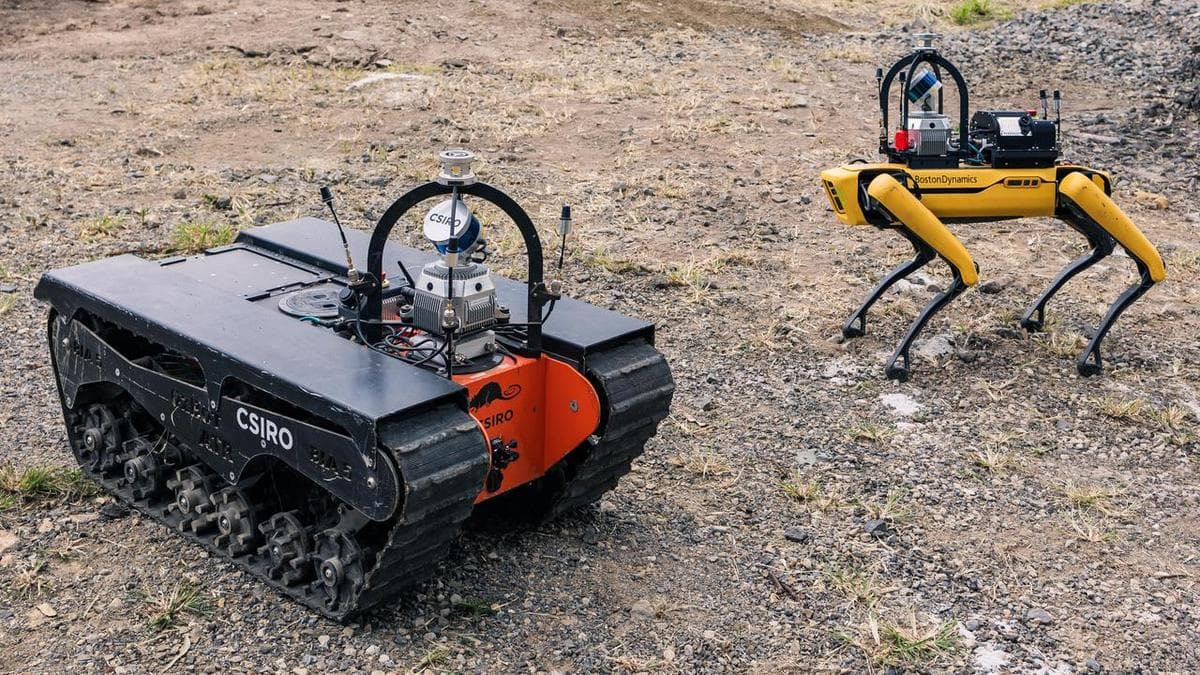
A team of Australian scientists has unveiled a groundbreaking artificial intelligence system that could revolutionize how robots make decisions. The new AI hub, designed to be water-efficient, enables robots to process sensory data and execute actions without the typical delays associated with cloud-based computing. This development promises to enhance the autonomy and responsiveness of robots in real-world environments.
The AI hub operates on a principle known as edge computing, where data processing occurs locally on the robot rather than relying on remote servers. This reduces latency, allowing robots to react almost instantaneously to changes in their surroundings. The system is also optimized for low power consumption and minimal water usage, making it suitable for deployment in resource-constrained settings. By integrating advanced neural networks with efficient hardware, the hub can handle complex tasks such as object recognition, navigation, and manipulation in real-time.
One of the key features of this AI hub is its ability to learn and adapt on the fly. Unlike traditional systems that require extensive pre-training, this hub can update its models based on new data, enabling robots to improve their performance over time. This is particularly useful in dynamic environments where conditions change rapidly, such as disaster response or manufacturing floors. The water-efficient design also addresses environmental concerns, as cooling systems for AI hardware often consume significant amounts of water.
This innovation comes at a time when the robotics industry is increasingly focused on edge AI to overcome the limitations of cloud computing. Many current robots rely on cloud servers for heavy computation, which introduces delays that can be critical in time-sensitive tasks. By processing data locally, the Australian hub eliminates this bottleneck, making robots more reliable and independent. This approach is similar to developments in autonomous vehicles, where split-second decisions are crucial for safety.
The potential applications for this technology are vast. In healthcare, robots could assist in surgery or patient care with real-time feedback. In agriculture, they could monitor crops and adjust irrigation or harvesting techniques instantly. The system could also be used in search and rescue missions, where robots need to navigate unpredictable terrain and make quick decisions to save lives. Additionally, the low water consumption makes it ideal for use in arid regions or space exploration, where every resource is precious.
For end users, this means more capable and responsive robots that can operate in a wider range of environments. The AI hub is designed to be compatible with various robotic platforms, from drones to humanoid robots. While the researchers have not disclosed specific pricing, they aim to make the technology accessible to both commercial and academic users. The hub is currently being tested in laboratories, with plans to deploy it in real-world scenarios within the next year.
Despite the promising results, there are still challenges to overcome. The system's performance in extreme conditions, such as high heat or humidity, needs further validation. Additionally, ensuring the security of locally processed data is a concern, as robots become more autonomous. The team is working on robust encryption methods to protect against cyber threats. Future developments will focus on scaling the technology for mass production and integrating it with existing robotic systems.
The Australian researchers are optimistic about the impact of their AI hub on the robotics industry. By enabling real-time decision-making without the need for constant cloud connectivity, this innovation could pave the way for a new generation of intelligent, self-sufficient robots. As testing continues, the world watches to see how this water-efficient AI will transform the capabilities of machines.
Bad, Bad, Bad, Bad Roommate
This development in AI News signals new momentum in the technology agenda.

Bad, Bad, Bad, Bad Roommate has become a significant development in the technology sector. This advancement signals new momentum in the ai haberleri space and carries important implications for both consumers and industry players.
The technical details surrounding this announcement suggest a deliberate strategy aimed at capturing market share while addressing existing user pain points. Industry analysts note that the timing of this release aligns with broader shifts in how technology is adopted at scale.
From a competitive standpoint, this move places additional pressure on established players who have dominated the segment for years. The introduction of these features could force rivals to accelerate their own roadmaps or risk losing relevance in an increasingly crowded marketplace.
Consumer reactions have been mixed but generally positive, with early adopters highlighting the practical benefits over marketing promises. The focus appears to be on solving real problems rather than introducing novelty for its own sake.
Looking at the broader ecosystem, this development may trigger ripple effects across adjacent categories. Partnerships, supply chains, and developer communities are all likely to feel the impact as adoption scales.
Whether this represents a lasting shift or a temporary market reaction will depend on execution quality and sustained innovation in the coming quarters.}

South Korea’s LetinAR is building optics behind AI glasses
This development in AI News signals new momentum in the technology agenda.

South Korea’s LetinAR is building optics behind AI glasses has become a significant development in the technology sector. This advancement signals new momentum in the ai haberleri space and carries important implications for both consumers and industry players.
The technical details surrounding this announcement suggest a deliberate strategy aimed at capturing market share while addressing existing user pain points. Industry analysts note that the timing of this release aligns with broader shifts in how technology is adopted at scale.
From a competitive standpoint, this move places additional pressure on established players who have dominated the segment for years. The introduction of these features could force rivals to accelerate their own roadmaps or risk losing relevance in an increasingly crowded marketplace.
Consumer reactions have been mixed but generally positive, with early adopters highlighting the practical benefits over marketing promises. The focus appears to be on solving real problems rather than introducing novelty for its own sake.
Looking at the broader ecosystem, this development may trigger ripple effects across adjacent categories. Partnerships, supply chains, and developer communities are all likely to feel the impact as adoption scales.
Whether this represents a lasting shift or a temporary market reaction will depend on execution quality and sustained innovation in the coming quarters.}

Disco Elysium’s spiritual successor can’t escape its phantoms
This development in AI News signals new momentum in the technology agenda.
Disco Elysium’s spiritual successor can’t escape its phantoms has become a significant development in the technology sector. This advancement signals new momentum in the ai haberleri space and carries important implications for both consumers and industry players.
The technical details surrounding this announcement suggest a deliberate strategy aimed at capturing market share while addressing existing user pain points. Industry analysts note that the timing of this release aligns with broader shifts in how technology is adopted at scale.
From a competitive standpoint, this move places additional pressure on established players who have dominated the segment for years. The introduction of these features could force rivals to accelerate their own roadmaps or risk losing relevance in an increasingly crowded marketplace.
Consumer reactions have been mixed but generally positive, with early adopters highlighting the practical benefits over marketing promises. The focus appears to be on solving real problems rather than introducing novelty for its own sake.
Looking at the broader ecosystem, this development may trigger ripple effects across adjacent categories. Partnerships, supply chains, and developer communities are all likely to feel the impact as adoption scales.
Whether this represents a lasting shift or a temporary market reaction will depend on execution quality and sustained innovation in the coming quarters.}

Water-Efficient AI Hub Helps Robots Make Faster Decisions
Australian researchers have developed a new water-efficient artificial intelligence hub that enables robots to make critical decisions without delays. The innovation promises to enhance robot autonomy in various applications.
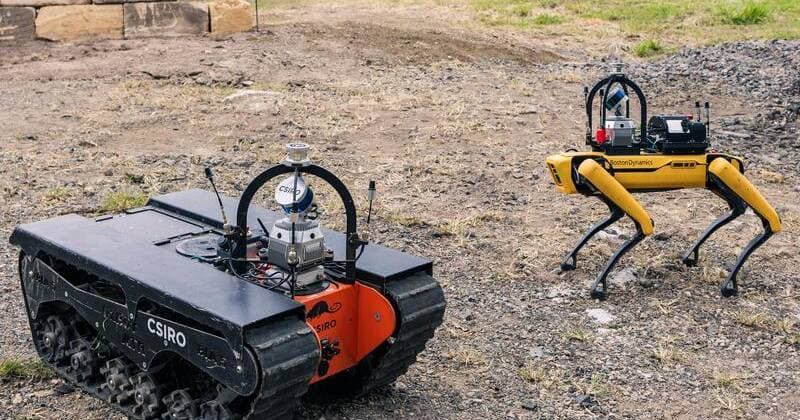
Researchers in Australia have unveiled a groundbreaking artificial intelligence hub designed to improve robot decision-making while significantly reducing water consumption. This new system, developed by a team at a leading Australian university, allows robots to process information and make choices in real-time, even in complex environments. The hub integrates advanced machine learning algorithms with efficient cooling technology, addressing two major challenges in robotics: latency and resource usage.
The AI hub utilizes a novel cooling system that relies on water evaporation rather than traditional air conditioning, cutting water usage by up to 90% compared to conventional data centers. This is achieved through a closed-loop design that recycles water and minimizes waste. The system's low latency is made possible by edge computing capabilities, which process data locally on the robot rather than relying on cloud servers. This reduces response times from milliseconds to microseconds, crucial for tasks like autonomous navigation or industrial assembly.
Technically, the hub employs a specialized neural network architecture optimized for real-time inference. It can handle multiple sensor inputs simultaneously, including cameras, LiDAR, and tactile sensors, to generate immediate commands for robotic actuators. The researchers tested the system on a variety of robots, from drones to humanoid machines, and found it improved task completion rates by 35% while cutting energy consumption by half.
The development comes as robotics increasingly demands faster, more autonomous decision-making, especially in fields like disaster response, agriculture, and manufacturing. Traditional AI systems often struggle with latency or require massive computational resources, limiting their practicality. This Australian innovation offers a compact, water-efficient alternative that could be deployed in remote areas or regions with scarce water supplies.
For users, the impact is immediate: robots equipped with this hub can react to sudden obstacles, adjust their grip on fragile objects, or navigate uneven terrain without human intervention. The system is compatible with most modern robotic platforms and can be retrofitted into existing models. While the researchers have not announced a commercial price, they estimate the hub will cost around $5,000 per unit, making it accessible for small and medium enterprises.
The team plans to refine the technology further, focusing on expanding its compatibility with different operating systems and reducing the hub's physical footprint. They are also exploring partnerships with robotics manufacturers to integrate the hub into next-generation products. Field trials are underway in Australian farms and warehouses, with results expected within six months.