CNN Sues Perplexity Over Copyright Infringement Claims
CNN has filed a lawsuit against Perplexity AI, alleging copyright infringement. The media company claims the AI search startup used its content without authorization.

CNN has initiated legal proceedings against Perplexity AI, becoming the latest media organization to challenge the artificial intelligence search startup over copyright issues. The lawsuit, filed in a federal court, accuses Perplexity of using CNN's copyrighted articles and content without obtaining proper licenses or permission.
The complaint alleges that Perplexity's AI-powered search engine scrapes and reproduces substantial portions of CNN's reporting, effectively bypassing paywalls and diminishing the value of the news outlet's original journalism. CNN contends that this practice violates copyright law and undermines the economic model that supports quality news production.
Perplexity, which markets itself as an AI-driven answer engine, has faced similar legal actions from other publishers. The New York Times and other media companies have previously sued the startup over comparable allegations. These lawsuits highlight growing tensions between AI companies and content creators over the use of copyrighted material for training and generating responses.
In its filing, CNN seeks damages and an injunction to prevent Perplexity from continuing to use its content without authorization. The media company argues that the startup's actions constitute willful infringement, as Perplexity was aware of CNN's copyright protections but proceeded regardless.
Perplexity has not yet publicly responded to the lawsuit. The company has previously defended its practices, stating that it operates within the bounds of fair use by providing summaries and citations rather than full reproductions. However, publishers argue that the AI's outputs often contain verbatim or near-verbatim excerpts, which go beyond acceptable limits.
The case adds to a broader legal landscape where media companies are increasingly asserting their rights against AI firms. Similar disputes have involved OpenAI, Google, and other tech giants, with outcomes that could shape the future of content licensing and AI development.
CNN's lawsuit was filed in the Southern District of New York. The court will now consider the merits of the case, which could set a precedent for how AI search engines interact with copyrighted news content. A trial date has not yet been set.
China Deploys Humanoid Robots at Major Postal Center to Sort 1,200 Parcels Per Hour
China has deployed humanoid robots at a major postal center capable of sorting 1,200 parcels per hour. The facility processes an average of 6.5 million shipments daily, marking a new phase in automation.
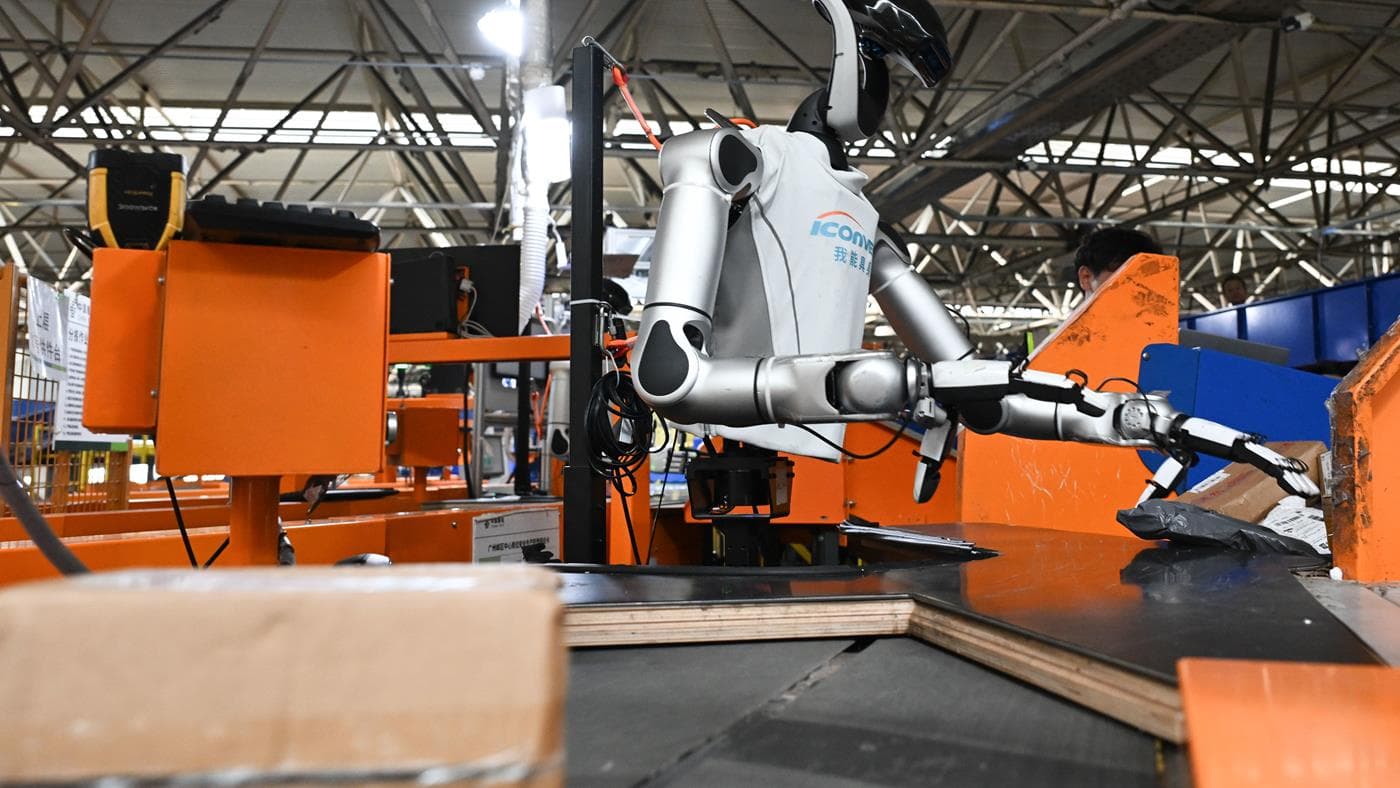
China has introduced humanoid robots at a large-scale postal center, where they sort parcels at a rate of 1,200 per hour. The facility handles an average of 6.5 million shipments each day, representing a significant step in automated logistics. The robots are designed to mimic human movements, allowing them to lift and organize packages of various sizes.
The deployment took place at a central postal hub in China, which serves as a key node in the country's vast delivery network. These robots can operate continuously without fatigue, reducing the need for manual labor in repetitive tasks. Their integration aims to improve efficiency and speed in processing the growing volume of e-commerce packages.
Each robot is equipped with advanced sensors and artificial intelligence to navigate the sorting area and identify parcel destinations. They can adjust their grip based on package shape and weight, minimizing damage during handling. The system also includes real-time data tracking to monitor performance and optimize workflows.
This move aligns with China's broader push toward automation in logistics, driven by rising consumer demand and labor shortages. The postal center's adoption of humanoid robots follows trials in warehouses and factories across the country. Officials noted that the technology could be expanded to other facilities if results prove successful.
The robots were developed by a Chinese robotics company specializing in humanoid designs. Their deployment at the postal center marks one of the first large-scale uses of such machines in a sorting environment. The company claims the robots can work alongside human employees safely, with built-in collision avoidance systems.
China's postal service has been investing heavily in automation to handle peak seasons like Singles' Day, when parcel volumes surge. The new robots are expected to reduce sorting time by up to 30% compared to traditional methods. Workers at the facility have been retrained to oversee robot operations and handle exceptions.
The postal center currently operates 24 hours a day, with the robots working in shifts alongside conveyor belts and automated guided vehicles. Officials stated that the system has already processed millions of packages without major incidents. Further upgrades are planned to increase the robots' sorting capacity and add new features.
China's Ministry of Posts and Telecommunications confirmed that the project is part of a national strategy to modernize logistics infrastructure. The ministry emphasized that the technology would not replace all human workers but would complement their efforts. The robots are expected to handle the most physically demanding tasks, improving workplace safety.
As of now, the humanoid robots are operational at the single postal center, with no official announcement regarding expansion to other sites. The company behind the robots continues to refine the design based on real-world performance data. China's postal service aims to fully integrate these systems into its network by the end of the year.

Huawei Chairman Thanks US: Sanctions Strengthened China's Chip Industry
Huawei's chairman stated that US export restrictions on AI chips have accelerated China's domestic semiconductor development rather than weakening it. He thanked the US for pushing China toward self-reliance in technology.
Huawei Technologies Co. Chairman Liang Hua expressed gratitude toward the United States for its export controls on artificial intelligence chips, arguing the restrictions have inadvertently strengthened China's semiconductor sector. Speaking at a company event, Liang said the sanctions forced Chinese firms to accelerate development of indigenous technologies.
The chairman noted that US restrictions, initially intended to hinder China's tech progress, instead spurred innovation and reduced dependence on foreign suppliers. Huawei itself has invested heavily in alternative chip designs and manufacturing processes since being added to the US trade blacklist in 2019.
Liang emphasized that the challenges posed by US policies prompted Chinese companies to collaborate more closely with domestic partners. This cooperation, he said, led to breakthroughs in chip architecture and production techniques that might not have occurred otherwise.
The executive's comments come amid ongoing tensions between Washington and Beijing over technology access. The US has tightened export rules for advanced semiconductors and manufacturing equipment, citing national security concerns.
Huawei has responded by developing its own Kirin chipsets and HarmonyOS operating system. The company also launched a cloud computing division that offers AI services using its internally developed Ascend processors.
Liang acknowledged that the sanctions initially caused disruptions but said Huawei has now adapted. He pointed to the company's 2023 revenue growth as evidence of its resilience, though specific figures were not disclosed.
The chairman's remarks were met with applause from attendees, many of whom are part of China's burgeoning tech ecosystem. Analysts suggest Huawei's experience could serve as a case study for other Chinese firms facing similar restrictions.
Liang concluded by reiterating Huawei's commitment to open collaboration while maintaining self-sufficiency in critical technologies. He stated that the company will continue investing in R&D to ensure long-term competitiveness.

YouTube Premium Adds Auto Playback Speed, AI Podcast Recommendations
YouTube announced new Premium features including automatic playback speed adjustment, enhanced background listening, and AI-powered podcast recommendations.

YouTube has unveiled a set of new features for its Premium subscribers. The updates include an automatic playback speed setting, an improved background listening mode, and artificial intelligence-driven podcast suggestions. The company made the announcement on its official blog, detailing the rollout for mobile and desktop users.
The automatic playback speed feature adjusts video speed based on content type. For example, educational or tutorial videos may play faster, while music or narrative content retains normal speed. Users can override the setting manually. The feature uses machine learning to analyze video categories and user behavior.
Enhanced background listening now allows Premium subscribers to continue audio playback even when switching apps or locking the screen. This mode works with all videos, not just music. Previously, background play was limited to specific content. The update also includes a new mini-player for easier control.
AI-powered podcast recommendations appear in the YouTube Music tab. The system suggests episodes based on listening history, subscriptions, and trending content. YouTube aims to compete with dedicated podcast platforms like Spotify and Apple Podcasts. The recommendations are personalized and update daily.
YouTube Premium costs $13.99 per month in the US, with a family plan at $22.99. The new features are rolling out gradually over the next few weeks. Users on iOS and Android will receive the updates first, followed by web browsers. No additional cost is required beyond the existing subscription.
The automatic speed feature is available in the video player settings. Users can enable it from the gear icon. Background listening activates automatically for Premium members. Podcast recommendations appear in the YouTube Music home screen. YouTube says these features are part of ongoing efforts to improve the Premium experience.
YouTube also noted that the updates are based on user feedback. The company plans to introduce more AI-driven tools later this year. The new features are available in all regions where YouTube Premium is offered. YouTube has over 80 million Premium and Music subscribers globally.
"We're excited to bring these enhancements to our Premium members," a YouTube spokesperson said. "The automatic playback speed and improved background listening are designed to give users more control and flexibility." The rollout begins today and will complete within the next month.

Apple Publishes 2025 Conflict Minerals Report to SEC
Apple has submitted its annual conflict minerals report for 2025 to the U.S. Securities and Exchange Commission. The document details the company's supply chain audit results regarding minerals sourced from conflict-affected regions.

Apple filed its 2025 conflict minerals report with the Securities and Exchange Commission on Friday. The annual disclosure outlines the company's due diligence efforts to ensure its supply chain does not finance armed groups in the Democratic Republic of Congo or adjoining countries. The report covers tin, tantalum, tungsten, and gold sourced during the 2024 calendar year.
According to the filing, Apple conducted audits of smelters and refiners in its supply chain. The company reported that 100% of identified smelters and refiners participated in third-party audits. Apple stated it continues to work with suppliers to maintain conflict-free sourcing practices.
The report notes that Apple's supply chain includes smelters and refiners certified as conflict-free by the Responsible Minerals Assurance Process. The company said it has not found any evidence that its direct or indirect financing benefited armed groups. Apple emphasized its commitment to responsible sourcing and human rights.
Apple's conflict minerals program includes supplier training, risk assessment, and corrective action plans. The company requires all suppliers to source from certified smelters and refiners. Apple also participates in industry initiatives to improve traceability and transparency in mineral supply chains.
The filing is part of Apple's ongoing compliance with Section 1502 of the Dodd-Frank Wall Street Reform and Consumer Protection Act. The law requires publicly traded companies to disclose whether their products contain conflict minerals from the DRC region. Apple has published such reports annually since 2013.
Apple's report includes a list of smelters and refiners in its supply chain, along with their audit status. The company said it will continue to monitor and address any risks identified. Apple also highlighted its work with local communities and governments to promote responsible mining practices.
The full report is available on Apple's investor relations website. Apple stated it remains committed to ensuring its products are made with conflict-free minerals. The company urged other industry players to adopt similar due diligence measures.
Apple's 2025 conflict minerals report confirms the company's adherence to regulatory requirements and its own supplier responsibility standards. The filing provides transparency into Apple's efforts to avoid contributing to conflict in mineral-rich regions.