Ebola outbreak in DRC now third largest on record, WHO says
The Ebola outbreak in the Democratic Republic of the Congo has become the third largest ever recorded, with nearly 750 cases and 177 deaths. The World Health Organization has raised the national risk level to 'very high' as the virus continues to spread rapidly.
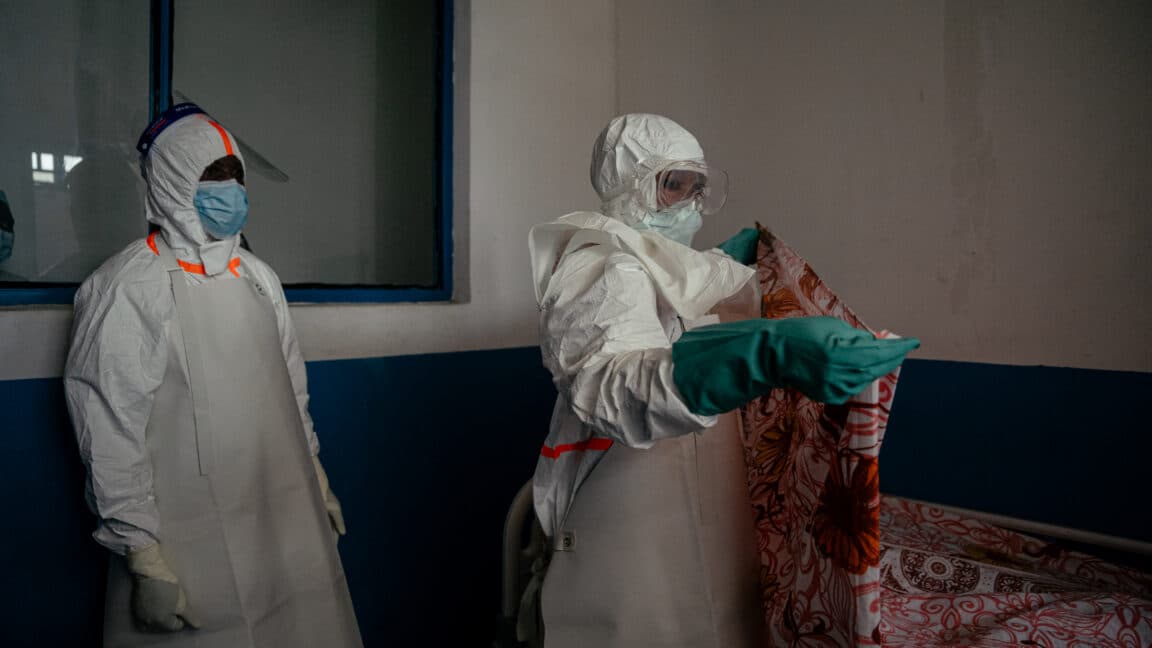
The World Health Organization reported Friday that the Ebola outbreak in the Democratic Republic of the Congo's Ituri province has escalated dramatically. Cases are approaching 750, with 177 deaths confirmed and approximately 1,400 contacts under surveillance. The outbreak was first reported on May 15, making it only a week old, yet it already ranks as the third largest in history.
WHO Director-General Tedros Adhanom Ghebreyesus stated that the outbreak is "spreading rapidly." The agency has revised its risk assessment, elevating the national level from "high" to "very high." Regional risk remains "high," while the global risk is still considered "low."
Officials acknowledged that delays in detecting and responding to the outbreak allowed it to grow significantly. Health authorities are now working urgently to contain the virus and prevent further spread.
The outbreak is centered in North Kivu and Ituri provinces, areas experiencing conflict and population movement, which complicates response efforts. Vaccination campaigns have been launched, but reaching affected communities remains challenging.
As of the latest update, the number of cases continues to rise, with new infections reported daily. The WHO is coordinating with local health ministries and international partners to scale up surveillance, contact tracing, and treatment.
The current outbreak is surpassed only by the 2014-2016 West Africa epidemic and the 2018-2020 outbreak in the same region of DRC. The rapid escalation has raised concerns about the capacity of health systems to manage the crisis.
Tedros emphasized the need for sustained international support to bring the outbreak under control. He called for increased funding and resources to bolster the response efforts.
The WHO continues to advise against travel or trade restrictions with DRC, citing the low global risk. However, neighboring countries are on alert and enhancing screening measures at borders.
Samsung targets MediaTek as foundry customer to boost chip business
Samsung is reportedly pursuing MediaTek as a customer for its semiconductor foundry services. The move is part of Samsung's aggressive strategy to strengthen its position in the chip manufacturing market.

Samsung Electronics is intensifying efforts to expand its semiconductor foundry business, with a new report indicating the company is courting MediaTek as a potential client. The South Korean tech giant aims to secure chip production orders from the Taiwanese fabless chip designer, according to industry sources.
MediaTek, one of the world's largest mobile chip designers, currently relies heavily on Taiwan Semiconductor Manufacturing Co. (TSMC) for its advanced chip manufacturing needs. Samsung's foundry division has been aggressively seeking to diversify its customer base beyond its own semiconductor products and major clients like Qualcomm and Nvidia.
Samsung's foundry business has faced challenges in recent years, including lower yields compared to TSMC and difficulties in attracting top-tier customers for its most advanced process nodes. The company has been investing billions of dollars in new fabrication facilities and advanced manufacturing technologies to close the gap.
MediaTek's potential shift to Samsung could be significant, as the company produces chips for a wide range of devices, including smartphones, smart TVs, and IoT products. However, MediaTek has historically maintained a close relationship with TSMC, which has been its primary foundry partner for years.
Industry analysts note that winning MediaTek as a customer would be a major coup for Samsung, potentially signaling a shift in the foundry market dynamics. Samsung has already secured orders from companies like AMD and Google for its advanced 3nm and 4nm process technologies.
Neither Samsung nor MediaTek have officially commented on the report. The foundry market remains highly competitive, with TSMC holding a dominant market share of over 50%, while Samsung trails with around 15%.
Samsung's foundry division has set an ambitious goal to become the global leader in semiconductor manufacturing by 2030. The company has been expanding its production capacity and investing in next-generation chipmaking technologies to attract more customers.
MediaTek's decision on its foundry partnerships will depend on factors such as pricing, yield rates, and technology roadmaps. The company is expected to continue evaluating its options as the semiconductor industry evolves.

Study Challenges View of Senescent Cells as Purely Harmful in Aging
New research reveals that not all senescent 'zombie cells' are detrimental; some play a protective role in the body. This finding could reshape anti-aging therapies that aim to eliminate all such cells.

A new study published in the journal Cell suggests that senescent cells, often called 'zombie cells' for their undead-like state, may not be uniformly harmful. Researchers at the University of California, San Francisco found that certain senescent cells actually help protect tissues from damage and aid in repair. The discovery challenges the prevailing view that all senescent cells contribute to aging and disease.
Senescent cells accumulate with age and have been linked to chronic inflammation, cancer, and age-related decline. Many anti-aging therapies, known as senolytics, aim to eliminate these cells. However, the new research indicates that blanket removal could be counterproductive. The team identified a subset of senescent cells that express high levels of a protein called CD9, which appears to be beneficial.
In experiments with mice, the CD9-positive senescent cells were found to promote wound healing and suppress tumor growth. When the researchers selectively removed these cells, wounds healed more slowly and cancer risk increased. The study suggests that senescent cells are not a uniform population and that their roles vary depending on context.
The findings could have significant implications for the development of anti-aging treatments. Instead of wiping out all senescent cells, future therapies might target only the harmful ones while preserving the protective ones. The researchers are now working to identify markers that distinguish beneficial from harmful senescent cells.
Dr. Judith Campisi, a co-author of the study, emphasized that the work highlights the complexity of cellular aging. 'We need to be careful about painting all senescent cells with the same brush,' she said. 'Some of them are clearly doing important jobs.' The study was funded by the National Institutes of Health and the Glenn Foundation for Medical Research.
The next step for the team is to explore whether similar protective senescent cells exist in humans. If so, it could lead to more targeted therapies that avoid the potential side effects of broad senolytic drugs. The research also opens new avenues for understanding how the body balances the benefits and drawbacks of cellular senescence.
While the study was conducted in mice, the researchers are optimistic that the findings will translate to humans. They plan to analyze human tissue samples to look for CD9-positive senescent cells. The work is part of a growing recognition that aging is a complex process with many nuances, and that simple solutions may not be effective.
The study was published online on March 15, 2025, in the journal Cell. The full text is available for free on the journal's website. The researchers have declared no competing interests.

First-generation Chromecast users report sudden failures, Google denies bricking devices
Numerous owners of the first-generation Chromecast reported that their devices suddenly stopped casting from popular apps. Google stated it did not intentionally disable the devices and is investigating the issue.

Google’s first Chromecast, launched in 2013, became a widely adopted streaming device, with 10 million units sold by 2014. Its appeal lay in its straightforward functionality: users could cast content from apps like YouTube and Chrome directly to a TV without navigating a separate interface. The device lacked a user interface or advertisements, focusing solely on casting. Despite Google ending support for the $35 device in 2023, many households continued using it for basic streaming needs.
This week, however, reports emerged that the original Chromecast had stopped working for many users. Complaints surfaced on Reddit and other platforms, with users noting that apps such as Chrome, YouTube, and Paramount+ no longer cast to the device. Some users reported that multiple first-gen Chromecasts failed simultaneously, leading to speculation that Google had deliberately bricked the devices to encourage upgrades.
Sahana Mysore, senior product manager for Google Home, addressed the concerns in a statement to Ars Technica. She denied that Google intentionally disabled the devices, stating that the company did not kill the Chromecasts. Mysore did not provide an immediate explanation for the failures but indicated that Google is investigating the issue.
The first-generation Chromecast was discontinued years ago, and Google ended software support for it in 2023. Despite this, the device remained functional for basic casting until this week’s disruptions. Users who rely on the device for streaming are now left without a clear timeline for a fix.
Google has not released an official statement beyond Mysore’s comments. The company has not confirmed whether a software bug or server-side change caused the failures. Affected users are advised to check for updates or consider upgrading to newer Chromecast models, such as the Chromecast with Google TV, which remains supported.
For now, the first-generation Chromecast’s sudden failure remains unexplained. Google’s denial of intentional bricking offers some reassurance, but users await a resolution. The company has not announced a specific date for a fix or further details on the investigation.
SpaceX launches first fully upgraded Starship V3, the most powerful rocket ever built
SpaceX successfully launched the fully redesigned Starship V3 for the first time, making it the most powerful rocket ever flown. Despite some engine losses during the test, the vehicle completed most of its mission and collected critical data for future Moon missions.
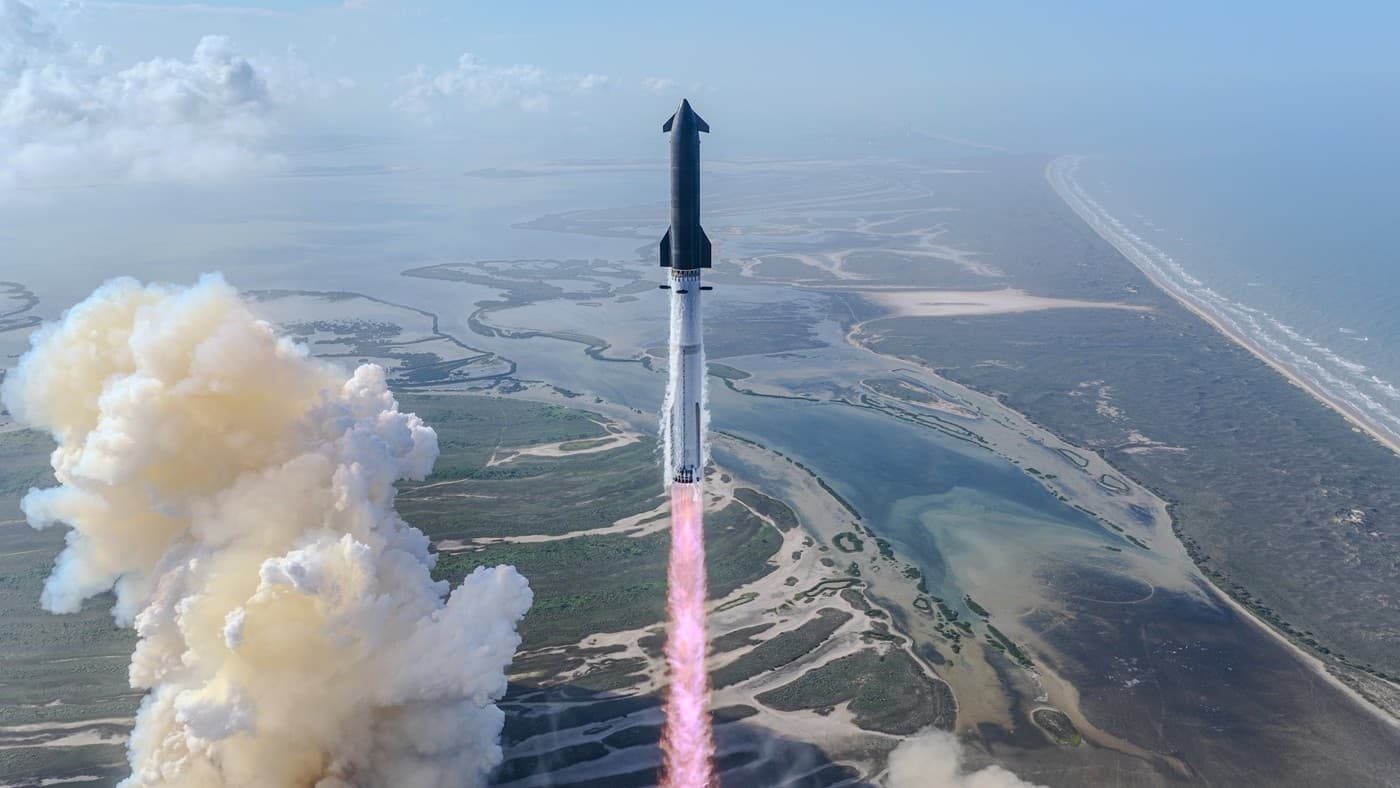
SpaceX launched the fully upgraded Starship V3 rocket for the first time on Thursday from its Starbase facility in Boca Chica, Texas. The vehicle, standing nearly 120 meters tall, is the most powerful rocket ever built, generating over 75 meganewtons of thrust at liftoff. The launch marked a major milestone in the company's development of a fully reusable super-heavy lift launch system.
The Starship V3 features significant design changes compared to its predecessors. The upper stage has been stretched to increase propellant capacity, and the heat shield tiles have been redesigned for better thermal protection during reentry. The Super Heavy booster, equipped with 33 Raptor 3 engines, incorporates improved engine shielding and a new thrust vector control system.
During ascent, the rocket experienced the loss of three Raptor engines on the booster, but the remaining engines compensated and the vehicle continued on its trajectory. The booster successfully separated and performed a controlled descent, though it was lost during the landing burn. The upper stage reached orbital velocity and completed a full orbit before beginning its reentry sequence.
SpaceX engineers collected extensive data from the flight, particularly on the performance of the new heat shield tiles and the upgraded avionics systems. The company stated that the test provided valuable information for refining the vehicle's design, especially regarding engine reliability and thermal protection. The data will be used to inform the next flight, which could occur within weeks.
The Starship V3 is central to NASA's Artemis program, which aims to return humans to the Moon. SpaceX was awarded a contract to develop a lunar landing variant of Starship, and this test flight demonstrated key capabilities needed for that mission. The rocket's massive payload capacity — over 100 metric tons to low Earth orbit — makes it suitable for carrying large amounts of cargo and crew to the Moon and Mars.
SpaceX founder Elon Musk said the company plans to increase the production rate of Starship vehicles to support a rapid test campaign. The next flight is expected to include an attempt to catch the Super Heavy booster with the launch tower's mechanical arms, a maneuver that would enable rapid reuse. The company also aims to demonstrate in-space refueling on a future mission, a critical capability for deep-space travel.
The launch was originally scheduled for Wednesday but was delayed due to weather conditions. The Federal Aviation Administration approved the flight after reviewing SpaceX's safety analysis. The vehicle carried no crew or payload on this test, but future missions will deploy Starlink satellites and other commercial payloads.
SpaceX confirmed that the Starship V3 upper stage splashed down in the Pacific Ocean near Hawaii after completing its reentry and landing burn. The company described the flight as "highly successful" and said it achieved 90% of its primary objectives. The next Starship V3 launch is expected within the next two months, pending regulatory approval and vehicle readiness.