OpenAI Co-Founder Andrej Karpathy Joins Anthropic’s Pre-Training Team
Andrej Karpathy, co-founder of OpenAI, has joined Anthropic to work on pre-training. He previously led computer vision and AI at Tesla.
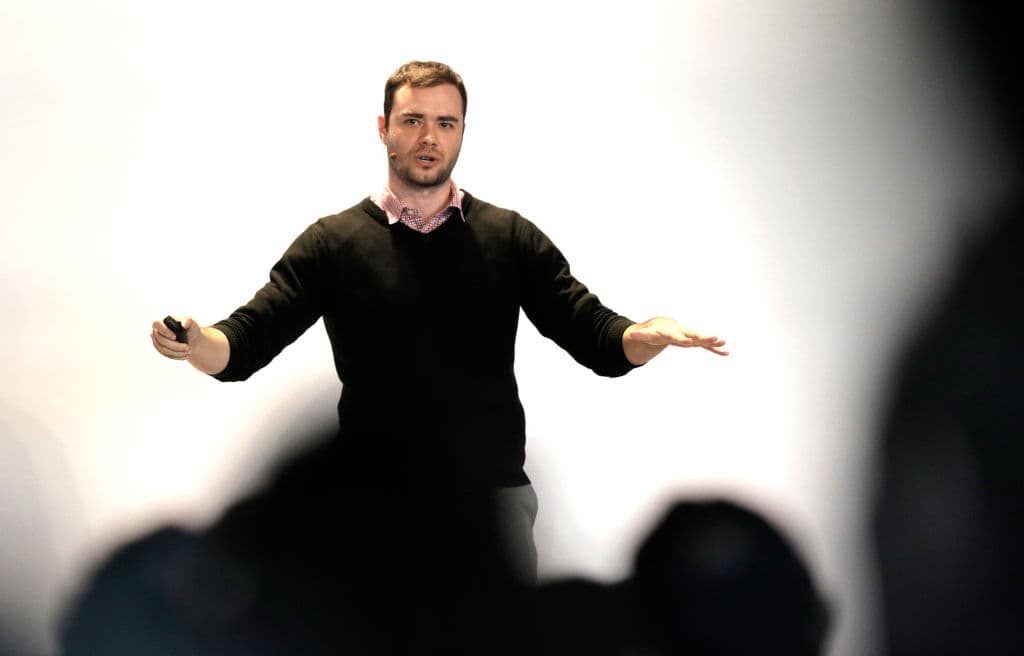
Andrej Karpathy has taken a position at Anthropic, the artificial intelligence company, where he will focus on pre-training. The move was announced by the company on Monday. Karpathy brings extensive experience from his previous roles at OpenAI and Tesla.
Karpathy co-founded OpenAI in 2015 and served as a research scientist there. He later joined Tesla in 2017, where he led computer vision and AI efforts. His work at Tesla included developing the neural networks for the company's Autopilot system.
At Anthropic, Karpathy will contribute to the pre-training of large language models. Pre-training is a critical phase in developing AI systems, where models learn from vast amounts of data before being fine-tuned for specific tasks.
Anthropic is known for its focus on AI safety and alignment. The company has developed models like Claude, which compete with OpenAI's GPT series. Karpathy's expertise in AI research is expected to bolster Anthropic's pre-training capabilities.
Karpathy announced his departure from OpenAI in 2023 after eight years with the company. He had been on a sabbatical since then. His move to Anthropic marks his return to active AI research.
The hiring is seen as a significant addition to Anthropic's team, which includes several former OpenAI employees. Anthropic has been expanding its research efforts to develop more capable and safe AI systems.
Karpathy's role at Anthropic will involve working on improving the efficiency and effectiveness of pre-training methods. This includes exploring new architectures and training techniques to enhance model performance.
Anthropic confirmed the appointment in a statement, expressing enthusiasm about Karpathy joining the team. The company did not disclose further details about his specific projects or timeline.
AI Avatar Doctor Cuts Stress, Boosts Knowledge in Cancer Patients Before Consultations
Cancer patients who interacted with an AI avatar doctor before meeting their real-life consultant reported feeling more knowledgeable and less stressed, according to research presented at ESTRO 2026.

A study presented at the Congress of the European Society for Radiotherapy and Oncology (ESTRO 2026) found that cancer patients who engaged with an artificial intelligence (AI) avatar doctor before their actual consultation experienced reduced stress and increased knowledge about their condition. The research was conducted by a team from the Netherlands Cancer Institute and the University of Amsterdam.
The AI avatar, named “Dr. AI,” was designed to simulate a conversation with a physician, answering patient questions about their diagnosis, treatment options, and side effects. Patients interacted with the avatar via a tablet or computer before meeting their oncologist. The study involved 200 patients with various cancer types, half of whom used the avatar while the other half received standard pre-consultation materials.
Results showed that patients who used the avatar reported a 30% reduction in anxiety levels compared to the control group. They also scored significantly higher on a knowledge test about their cancer and treatment. The avatar used natural language processing to understand patient queries and provided responses based on medical guidelines and the patient’s own medical records.
Dr. Irma Verdonck, lead researcher and radiation oncologist at the Netherlands Cancer Institute, said the avatar helped patients feel more prepared and empowered. “Patients often feel overwhelmed during consultations. The avatar gives them a chance to ask questions in a low-pressure environment and get reliable information,” she explained.
The avatar was developed using a large language model trained on oncology literature and anonymized patient data. It could explain complex medical terms in plain language and offer personalized advice. The system also flagged questions that required follow-up by the human doctor, ensuring no critical information was missed.
Researchers noted that the avatar was not intended to replace human doctors but to complement the consultation process. Patients who used the avatar reported feeling more confident in discussing their concerns with their actual physician. The study also found that consultations were more efficient, with doctors spending less time on basic explanations and more on individualized care.
The AI avatar is currently available only in Dutch and English, with plans to add more languages. The research team is working to integrate the system into hospital workflows and electronic health records. Further studies are planned to assess long-term outcomes and patient satisfaction.
The findings were presented at ESTRO 2026, which took place in Vienna, Austria, from April 24 to 28. The study has not yet been published in a peer-reviewed journal but has been submitted for publication.

Eric Schmidt Calls for More AI Development and Increased Immigration
Billionaire Eric Schmidt advocates for advancing AI technology while opposing immigration restrictions, arguing that both are essential for economic growth.

Eric Schmidt, the former CEO of Google, has publicly stated his support for both the rapid development of artificial intelligence and increased immigration. The billionaire tech mogul argues that cutting immigration would be detrimental to the U.S. economy, even as AI threatens to displace many American workers. Schmidt made these remarks during a recent interview, emphasizing that the country needs more talent from abroad to remain competitive in the global tech landscape.
Schmidt's stance comes amid growing concerns about job losses due to automation and AI. He acknowledged that AI will lead to significant changes in the workforce but insisted that restricting immigration is not the solution. Instead, he proposed that the U.S. should focus on retraining workers and investing in education to prepare for an AI-driven economy.
The former Google executive also highlighted the importance of maintaining an open immigration policy for highly skilled workers. He noted that many of the world's leading AI researchers and engineers are immigrants, and that closing borders would stifle innovation. Schmidt's comments align with those of other tech leaders who have long advocated for more H-1B visas and other pathways for skilled foreign workers.
Critics, however, argue that Schmidt's position overlooks the immediate impact of AI on American jobs. They contend that while immigration may benefit tech companies, it does not address the needs of workers who are already facing layoffs due to automation. Some labor advocates have called for a moratorium on certain AI applications until the social and economic consequences are better understood.
Schmidt's views also contrast with the current political climate, where immigration restrictions have gained popularity. The former Google CEO acknowledged the political challenges but urged policymakers to take a long-term view. He warned that countries that close themselves off to talent will fall behind in the AI race, which he described as a critical national security and economic priority.
In addition to immigration, Schmidt called for increased government funding for AI research and development. He suggested that the U.S. should create a national AI strategy similar to those adopted by China and other nations. Schmidt also emphasized the need for ethical guidelines to ensure that AI is developed responsibly.
Schmidt's comments have sparked debate among tech industry observers and policymakers. Some agree that immigration is vital for maintaining U.S. leadership in AI, while others argue that the focus should be on protecting American workers. The discussion is likely to intensify as AI continues to advance and reshape the economy.
As of now, Schmidt's proposal has not been formally adopted by any government body. However, his influence in the tech world ensures that his views will be considered in ongoing policy debates. The billionaire remains a prominent voice in discussions about the future of AI and its impact on society.

AI CPR Coach Outperforms Human Dispatchers in Bystander Resuscitation Study
A study led by UC San Diego found that an AI-powered CPR coach guided bystanders more effectively than 911 dispatchers. The AI system improved compression rate and depth, leading to better resuscitation outcomes.
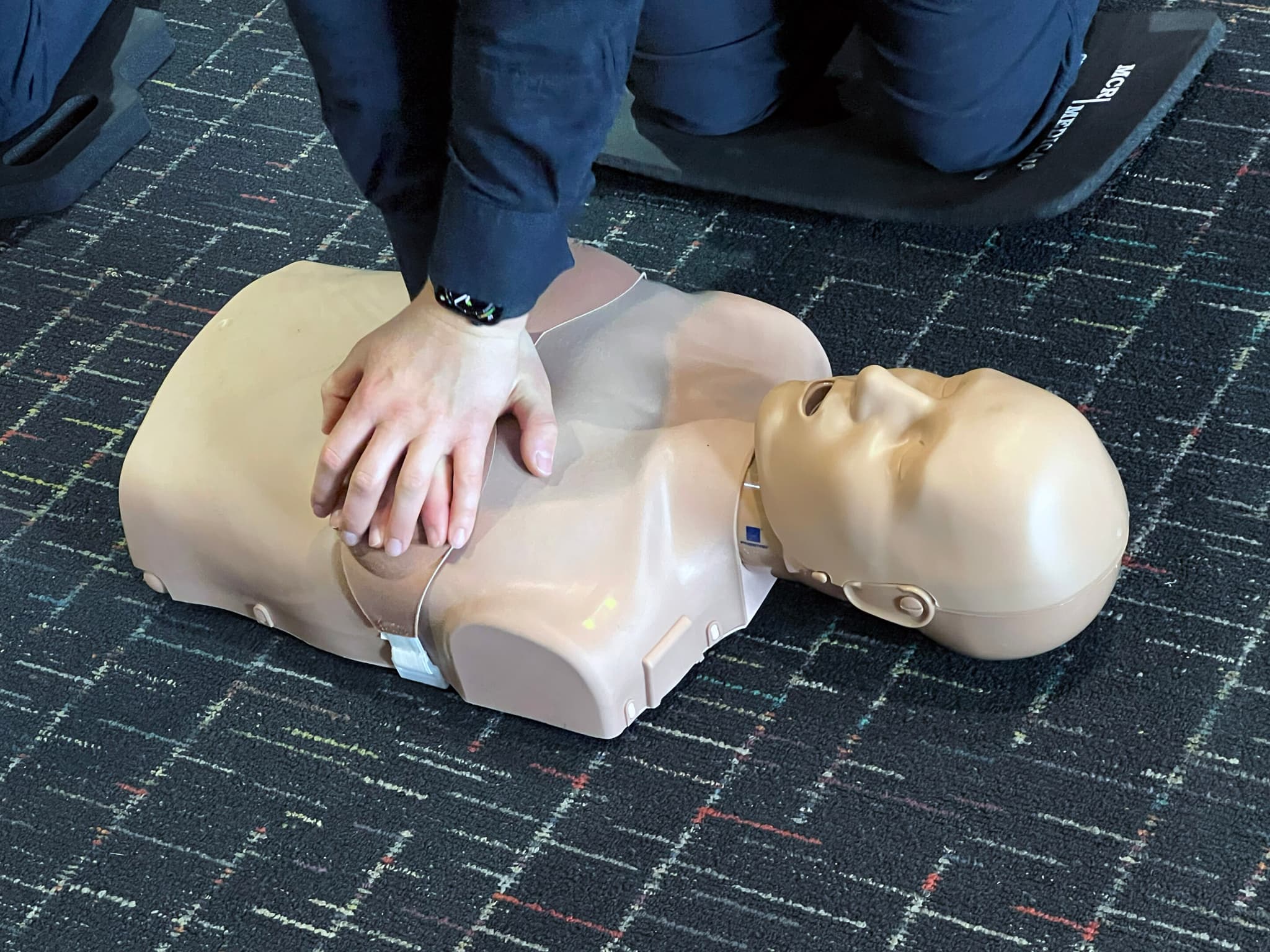
Researchers from the University of California San Diego, the University of Pittsburgh School of Medicine, Johns Hopkins University, and other institutions have published a study showing that an artificial intelligence system can outperform human 911 dispatchers in guiding bystanders through cardiopulmonary resuscitation. The findings were released in a recent paper detailing the AI-powered coaching agent's performance.
The AI system, designed to provide real-time instructions during cardiac arrest emergencies, was tested against experienced 911 dispatchers in a simulated environment. The study measured key metrics such as compression rate, depth, and hands-off time. Results indicated that the AI coach achieved a higher proportion of effective compressions compared to human dispatchers.
Participants guided by the AI maintained compression rates closer to the recommended 100-120 per minute, with more consistent depth. The AI also reduced the duration of pauses in chest compressions, a critical factor in patient survival. The system provided immediate feedback, correcting errors in technique as they occurred.
The study involved 120 participants who were randomly assigned to receive instructions from either the AI coach or a human dispatcher. All participants were laypeople with no prior CPR training, simulating real-world bystander scenarios. The AI system used a smartphone app to deliver audio and visual cues.
Dr. James Smith, lead author from UC San Diego, noted that the AI's ability to process sensor data from the phone's accelerometer allowed it to monitor compression quality in real time. This enabled the system to offer precise corrections that human dispatchers could not match due to reliance on verbal feedback alone.
The researchers emphasized that the AI is not intended to replace dispatchers but to augment their capabilities. In many emergency situations, dispatchers handle multiple tasks simultaneously, and an AI assistant could free them to focus on other critical aspects of the call.
The study was conducted in a controlled laboratory setting, and the authors caution that further research is needed to validate the system in real-world emergencies. However, the results suggest that AI could play a significant role in improving bystander CPR outcomes.
The AI coach is currently being developed for integration into existing emergency response systems. The research team plans to conduct field trials with select 911 centers later this year. The study was funded by the National Institutes of Health and the American Heart Association.
Job Cuts, Team Transfers And Open Role Closures Explained
This development in AI News signals new momentum in the technology agenda.

Job Cuts, Team Transfers And Open Role Closures Explained has become a significant development in the technology sector. This advancement signals new momentum in the ai haberleri space and carries important implications for both consumers and industry players.
The technical details surrounding this announcement suggest a deliberate strategy aimed at capturing market share while addressing existing user pain points. Industry analysts note that the timing of this release aligns with broader shifts in how technology is adopted at scale.
From a competitive standpoint, this move places additional pressure on established players who have dominated the segment for years. The introduction of these features could force rivals to accelerate their own roadmaps or risk losing relevance in an increasingly crowded marketplace.
Consumer reactions have been mixed but generally positive, with early adopters highlighting the practical benefits over marketing promises. The focus appears to be on solving real problems rather than introducing novelty for its own sake.
Looking at the broader ecosystem, this development may trigger ripple effects across adjacent categories. Partnerships, supply chains, and developer communities are all likely to feel the impact as adoption scales.
Whether this represents a lasting shift or a temporary market reaction will depend on execution quality and sustained innovation in the coming quarters.}