How to Run a Local AI Chatbot on Your iPhone for Offline Use and Privacy
Installing a local AI chatbot on your iPhone enables offline functionality and enhanced privacy. This guide explains the steps to set up such a chatbot using available tools.
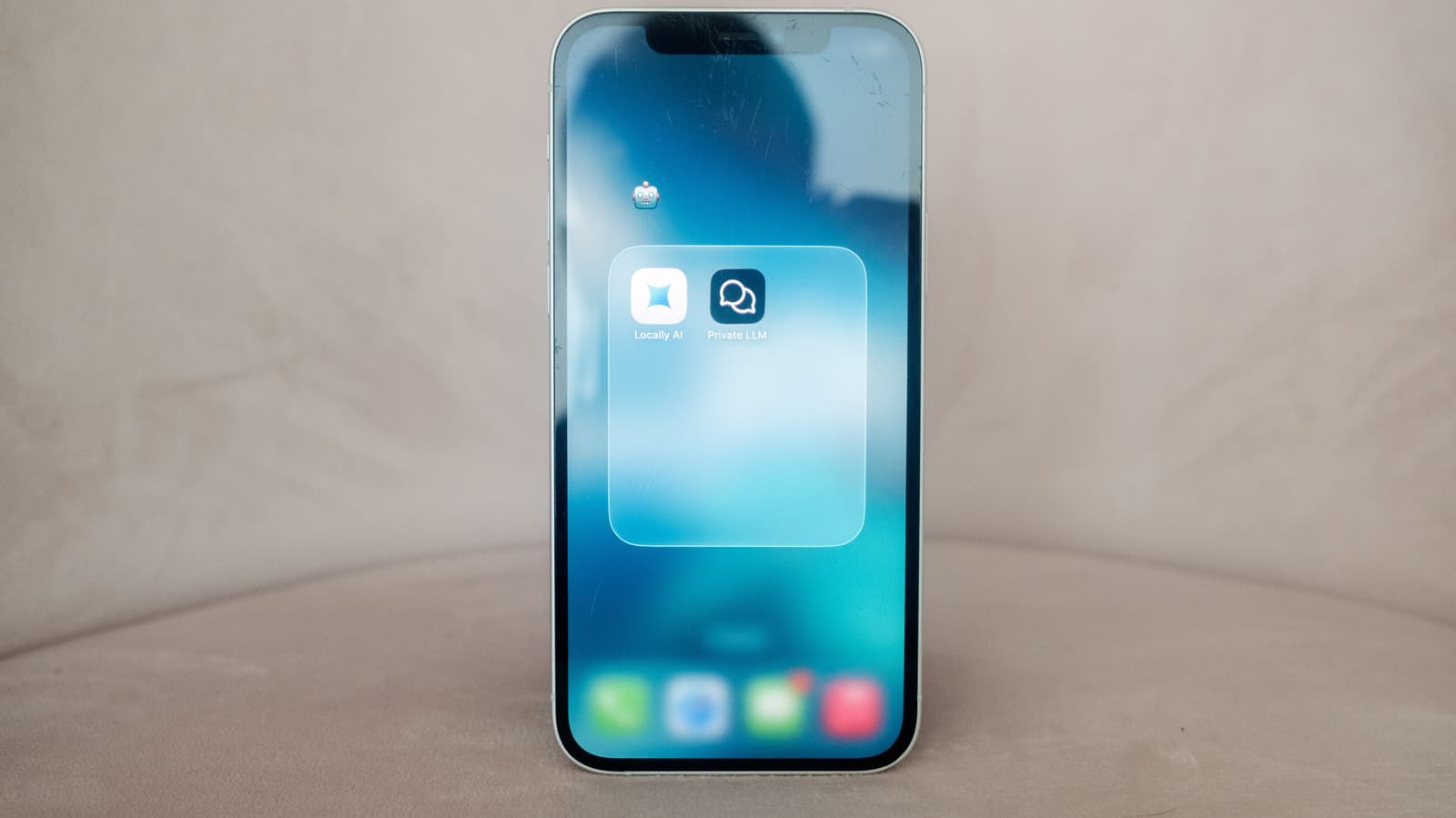
Running a local AI chatbot on an iPhone offers distinct advantages, including the ability to operate without an internet connection and greater control over personal data. Users can avoid sending queries to external servers, reducing privacy risks. This approach relies on on-device processing, which can be slower than cloud-based alternatives but ensures data remains on the device.
To set up a local chatbot, iPhone users need to download a compatible app that supports offline AI models. Several apps in the App Store provide this capability, such as those using models like GPT-2 or smaller versions of Llama. These apps typically require a one-time download of the model file, which can be several gigabytes in size.
Once the app is installed, users must load the model into the app's interface. This process may involve selecting the model from a list or pointing the app to a downloaded file. After loading, the chatbot is ready for use without any internet connection. Users can type questions or commands, and the AI generates responses locally.
Performance varies depending on the iPhone model. Newer devices with more RAM and faster processors, such as the iPhone 15 Pro, handle larger models more efficiently. Older models may experience slower response times or be limited to smaller models. Apple's Neural Engine can accelerate some AI tasks, improving speed.
Privacy is a key benefit of local chatbots. Since all processing occurs on the device, no data is transmitted to third parties. This makes local chatbots suitable for sensitive conversations or when handling confidential information. Users concerned about cloud-based AI services may find local alternatives more trustworthy.
Offline capability is another advantage. Users can access the chatbot in areas with poor or no internet connectivity, such as during flights or in remote locations. The chatbot remains functional as long as the device has power, making it a reliable tool for on-the-go assistance.
However, local chatbots have limitations. They may not be as knowledgeable or up-to-date as cloud-based models, which are regularly updated with new information. The response quality depends on the model's size and training data. Smaller models may produce less accurate or coherent answers.
To get started, users should search the App Store for "local AI chatbot" or "offline AI assistant." Popular options include Private LLM and Local AI Chat. After installation, follow the app's instructions to download a model. The process typically takes a few minutes to an hour, depending on model size and internet speed.
Apple has not officially endorsed local AI chatbots, but the company's focus on on-device processing aligns with this trend. As AI models become more efficient, local chatbots may become more common on iPhones. For now, users willing to trade some performance for privacy and offline access can benefit from this setup.
Oura Ring 5 Launches as Thinnest Smart Ring Yet, Starting at $349
Oura announced the Ring 5, its thinnest smart ring to date, at a starting price of $349. The device features a slimmer design and improved sensors for health tracking.

Oura has unveiled the Ring 5, a new version of its smart ring that the company calls the world's smallest. The wearable is significantly thinner than its predecessor, measuring just 2.4 millimeters in thickness. Oura achieved this by redesigning the internal components and using a new manufacturing process.
The Ring 5 retains the core health tracking features of previous models, including sleep monitoring, heart rate tracking, and activity logging. Oura improved the sensor array to provide more accurate readings, particularly for heart rate variability and SpO2 levels. The ring also includes a new temperature sensor for tracking body temperature trends.
Oura says the Ring 5 is designed for continuous wear, with a battery life of up to seven days on a single charge. The ring is water-resistant to 100 meters, making it suitable for swimming and other water activities. It connects to the Oura app via Bluetooth, which provides detailed insights and trends based on the collected data.
The Ring 5 is available in four finishes: silver, black, gold, and rose gold. It comes in sizes 6 through 13. Oura also offers a sizing kit to help customers find the right fit before purchasing the ring.
Pricing for the Oura Ring 5 starts at $349 for the base model. A version with a titanium finish costs $399. The ring is available for preorder starting today on Oura's website, with shipping expected to begin in late November.
Oura's previous generation, the Ring 4, launched last year at a similar price point. The Ring 5 represents a significant reduction in thickness, which Oura says improves comfort for all-day and all-night wear. The company claims the new design also reduces the risk of the ring catching on clothing or other objects.
The Ring 5 is compatible with both iOS and Android devices. The Oura app provides personalized health recommendations based on the data collected. Oura also offers a subscription service, Oura Membership, which unlocks additional features such as advanced sleep analysis and guided meditations. The membership costs $5.99 per month or $59.99 per year.
Oura CEO Tom Hale stated that the Ring 5 is the culmination of years of engineering work to miniaturize the technology without compromising on accuracy. The company expects the new design to appeal to both existing Oura users and newcomers looking for a discreet health tracker.
The Oura Ring 5 is available for preorder now, with general availability starting November 30.
Illinois passes strongest US AI safety law, requiring testing and whistleblower protections
Illinois lawmakers passed SB 315, the nation's strongest AI safety law, requiring large AI firms to submit safety plans and annual third-party testing reports. Governor J.B. Pritzker confirmed he will sign the bill, which also mandates reporting critical incidents within 72 hours and provides whistleblower protections.

Illinois lawmakers passed SB 315 on Wednesday, establishing what is being called the strongest AI safety law in the United States. The legislation now awaits the signature of Governor J.B. Pritzker, who has already indicated his intent to sign it. In a post on X, Pritzker stated, "Illinois is leading the nation in holding Big Tech accountable."
The bill targets the largest AI firms, requiring them to submit public safety plans and annual reports summarizing the results of independent, third-party safety testing of their frontier models. Companies must also report any critical safety incidents to the state within 72 hours, or within 24 hours if there is potentially "an imminent risk of death or serious physical harm."
Employees at these firms will have a clear avenue for reporting emerging safety risks that companies may be tempted to downplay. The state's whistleblower laws will provide protections for those who come forward with concerns about AI safety.
The passage of SB 315 comes just days after President Donald Trump abruptly canceled a plan that would have given the federal government power to vet frontier AI models. The administration had expressed fears that such oversight might hobble innovation.
Illinois's move represents a significant shift in AI regulation, with the state taking a proactive stance in the absence of comprehensive federal legislation. The law is designed to ensure that companies developing advanced AI systems are transparent about their safety practices and accountable for any incidents.
Governor Pritzker's signature is expected to finalize the law, which will then take effect according to its provisions. The legislation sets a precedent that other states may follow as concerns about AI safety continue to grow.
Under SB 315, companies that fail to comply could face penalties, though the specific enforcement mechanisms are outlined in the bill. The law aims to balance innovation with public safety, requiring firms to demonstrate that their models are safe before deployment.
Illinois's action highlights the patchwork of state-level AI regulations emerging across the country. As federal efforts stall, states are increasingly stepping in to address the risks and challenges posed by advanced artificial intelligence.

Intel launches Arc G-series processors targeting handheld gaming PCs
Intel announced two new Arc G-series processors designed specifically for handheld gaming PCs, with devices arriving from MSI, Acer, and OneXPlayer starting June 2026. The chips integrate Intel's Arc B-series GPU, CPU, NPU, and other components under the Arc branding.
Intel introduced two new processors under the Arc G-series brand, marking the company's first silicon tailored for handheld gaming PCs. The chips are designed to compete with AMD's Ryzen Z-series, which currently powers most Steam Deck-like devices on the market. Intel's Arc G-series processors integrate the company's Arc B-series integrated GPUs, which have received positive reviews for their performance in compact systems.
Most handheld gaming PCs today rely on AMD's Ryzen Z-series chips, which are essentially laptop processors with power profiles optimized for handheld use. While some devices, such as MSI's Claw, use Intel silicon, the company had not previously offered a chip specifically marketed for handheld gaming. The Arc G-series changes that, bundling CPU, GPU, NPU, and other components into a single package under the Arc brand.
Intel confirmed that several Arc G-series handhelds will launch starting in June 2026, with broader availability throughout the year. Among the announced devices are a new MSI Claw model, the Predator Atlas 8 from Acer, and a device from OneXPlayer. These systems will leverage the Arc G-series chips to deliver gaming performance in a portable form factor.
The Arc G-series processors represent Intel's effort to carve out a share of the growing handheld gaming market, which has been dominated by AMD since the Steam Deck's launch. By offering integrated Arc B-series graphics, Intel aims to provide competitive performance for modern games at lower power levels suitable for handhelds.
Intel's use of the Arc branding for the entire chip, rather than just the GPU, signals a shift in how the company markets its integrated solutions. The Arc G-series includes the CPU, GPU, NPU, and other components, all optimized for handheld gaming workloads. This integrated approach could simplify design for OEMs building compact gaming devices.
The new MSI Claw model will be one of the first devices to feature the Arc G-series processor. Acer's Predator Atlas 8 and OneXPlayer's unnamed device will also use the new chips. Pricing for these handhelds has not been announced, but they are expected to compete with existing AMD-based devices in the $500-$800 range.
Intel stated that the Arc G-series processors will enable handhelds to deliver smooth gaming experiences at 1080p resolution with medium to high settings. The company also highlighted the NPU's capabilities for AI-enhanced features, such as upscaling and frame generation, which could improve performance in supported titles.
Availability of Arc G-series handhelds will begin in June 2026, with more devices rolling out through the rest of the year. Intel did not specify which regions would receive the devices first, but global availability is expected. The company's entry into the handheld gaming chip market could intensify competition and potentially lower prices for consumers.
Spielberg's Disclosure Day Final Trailer Reveals Aliens
Steven Spielberg's upcoming UFO film Disclosure Day has released its final trailer, showing aliens for the first time. The movie is set to hit theaters this summer.

Steven Spielberg returns to the UFO genre after many years with his new film, Disclosure Day. The final trailer for the movie has been released, offering the first clear look at the extraterrestrial beings. The film is scheduled to premiere in theaters this summer.
The trailer showcases the aliens in full view, departing from earlier teasers that kept them hidden. Spielberg's approach blends suspense with visual spectacle, a hallmark of his earlier works like Close Encounters of the Third Kind. The footage suggests a narrative centered on a global revelation of alien existence.
Disclosure Day follows a group of characters who uncover a government cover-up involving extraterrestrial contact. The trailer hints at themes of truth, secrecy, and humanity's place in the universe. Spielberg has described the film as a return to his roots in science fiction storytelling.
The cast includes several notable actors, though full details remain under wraps. The production team includes longtime Spielberg collaborators, ensuring a polished visual experience. The film's score is composed by John Williams, marking another reunion for the duo.
Early reactions to the trailer have been positive, with fans praising the alien design and the film's emotional tone. The movie is expected to be a major summer blockbuster, competing with other high-profile releases. Spielberg's involvement guarantees significant attention from both critics and audiences.
Disclosure Day will be released in theaters worldwide on July 12, 2025. The film will also be available in IMAX and other premium formats. A streaming release date has not been announced yet.
Spielberg stated in a press release that the film represents his vision of a first contact scenario grounded in realism. He emphasized the importance of storytelling that asks big questions about humanity. The final trailer has set high expectations for the film's narrative and visual effects.