
Meta acquires robotics AI startup as it makes the push into humanoid machines
Meta has acquired Assured Robot Intelligence, a robotics AI startup. The acquisition will bring the startup's staff into Meta's Superintelligence Labs as the company advances its work on humanoid machines.

Meta has purchased Assured Robot Intelligence, a startup focused on robotics artificial intelligence. The company's employees will join Meta's Superintelligence Labs, the division responsible for advanced AI research. The deal signals Meta's growing interest in embodied AI systems that can interact with the physical world.
Assured Robot Intelligence had been developing AI software for robotic systems, including perception and control algorithms. The startup's technology is designed to enable robots to operate autonomously in unstructured environments. Meta plans to integrate this expertise into its broader AI research efforts.
The acquisition comes as Meta increases its investment in robotics and AI hardware. The company has been exploring the development of humanoid robots that could perform tasks in warehouses or homes. Meta's Superintelligence Labs, led by Yann LeCun, focuses on long-term AI research goals.
Financial terms of the deal were not disclosed. Assured Robot Intelligence had raised venture funding from investors including Sequoia Capital. The startup was founded by researchers from MIT and Stanford with backgrounds in robotics and machine learning.
Meta has been expanding its AI capabilities through acquisitions and internal development. The company recently launched a new AI model for robotics and has been hiring researchers in the field. The acquisition of Assured Robot Intelligence adds specialized talent to Meta's robotics team.
The push into humanoid machines aligns with Meta's vision for the metaverse, where virtual and physical realities converge. The company believes that advanced AI and robotics will be essential for creating immersive experiences. Meta has also been developing haptic gloves and other hardware for virtual interaction.
Industry analysts note that Meta faces competition from companies like Tesla and Boston Dynamics in the humanoid robotics space. Tesla has been developing its Optimus robot, while Boston Dynamics has commercialized its Spot and Atlas robots. Meta's acquisition strategy aims to accelerate its progress in this competitive field.
Assured Robot Intelligence's staff will begin working at Meta's offices in Menlo Park, California, and New York. The integration process is expected to be completed within the next few months. Meta has not announced any specific products or timelines related to its humanoid robot efforts.
3D-Printed Mount Lets You Attach a Smartphone to a Steam Controller
A 3D-printed accessory now allows users to mount a smartphone onto a Steam Controller, though compatibility with iOS and Android apps remains limited.

A new 3D-printed mount enables smartphone attachment to Valve's Steam Controller, bridging mobile and PC gaming. The accessory, designed by a community member, clips onto the controller's top edge, holding phones up to 6.2 inches. However, the mount's utility is constrained by sparse app support on both iOS and Android platforms.
The mount's creator shared the design files on Thingiverse, allowing anyone with a 3D printer to produce the part. The design uses a simple snap-on mechanism that does not require modifications to the controller. Users can print the mount using standard PLA filament, with estimated print time around two hours.
Steam Controller's native support for mobile games is minimal. While the controller can pair with smartphones via Bluetooth, few games natively recognize it. Workarounds exist using third-party apps like Steam Link for remote PC streaming, but direct mobile game compatibility remains scarce.
The mount's release coincides with growing interest in controller-based mobile gaming. Smartphone gaming has expanded rapidly, yet dedicated controller support lags behind. This accessory addresses the hardware gap but depends on software developers to enable broader compatibility.
Valve has not officially endorsed the mount or announced plans for smartphone integration. The company discontinued the Steam Controller in 2019, though existing units remain in use. Community-driven projects like this mount keep the controller relevant for niche applications.
For iOS users, the mount works with Steam Link for streaming PC games to an iPhone. Android users can similarly use Steam Link or Moonlight for game streaming. Native mobile games like Call of Duty Mobile or Genshin Impact do not support the Steam Controller without additional mapping software.
The mount's design files are available for free download on Thingiverse. Users need a 3D printer to fabricate the part, with material costs under $5. No commercial versions are currently sold, though third-party sellers may offer printed mounts.
Valve has not commented on the mount or potential official smartphone accessories. The company's focus remains on the Steam Deck handheld PC, which integrates controller and screen. The mount offers a DIY alternative for Steam Controller owners seeking mobile gaming options.
As of now, the mount's practicality hinges on software support. Without native app compatibility, its use is largely limited to game streaming. The creator hopes the design encourages developers to add Steam Controller support to mobile titles, but no such announcements have been made.

Apple Discontinues Cheapest Mac Mini, Raises Starting Price to $799
Apple has discontinued the entry-level Mac mini with 256GB storage, making the $799 model with 512GB the new base configuration. The move effectively raises the starting price of the compact desktop by $200.
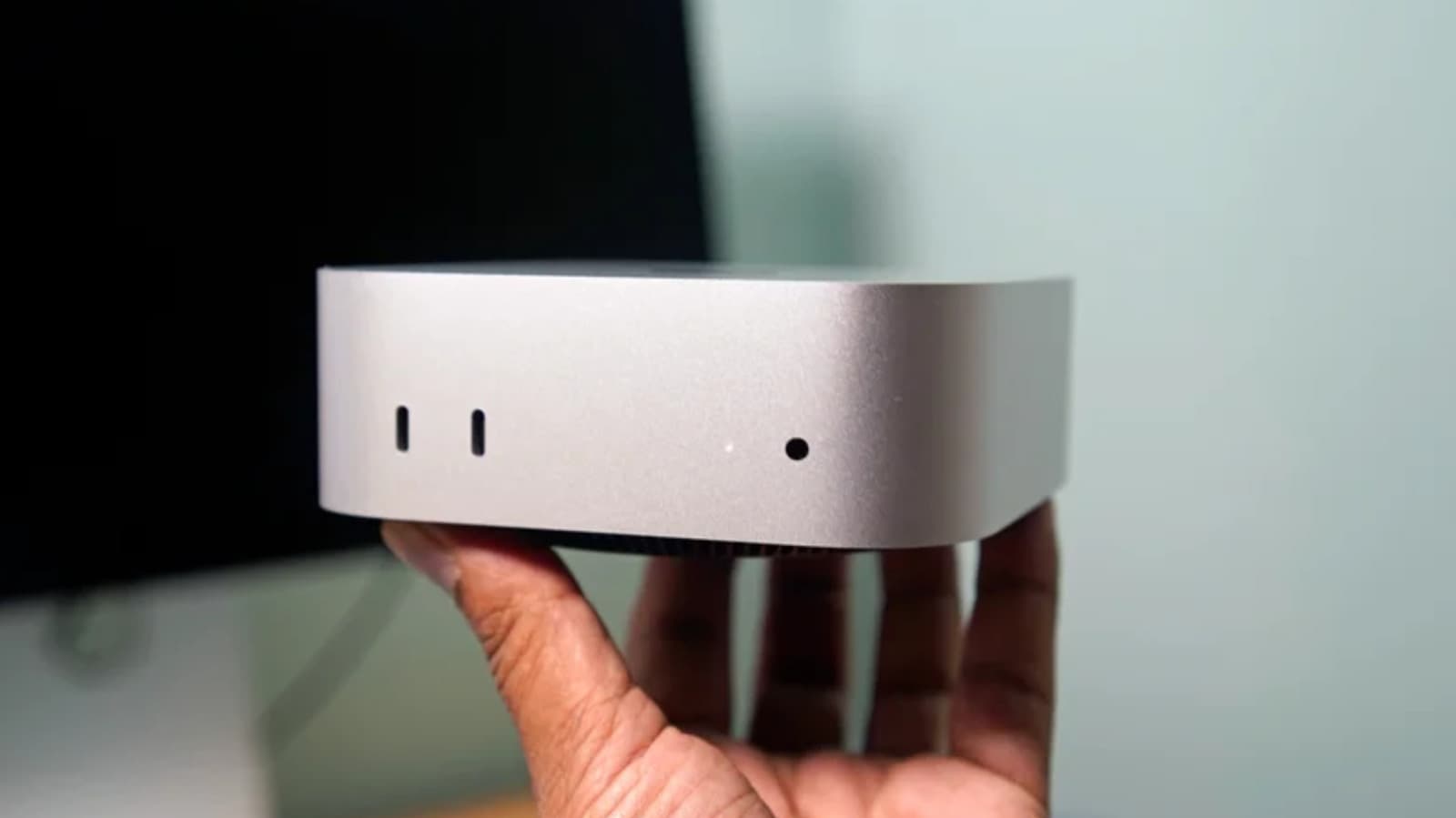
Apple has quietly removed its most affordable Mac mini from the lineup. The entry-level model, priced at $599 with 256GB of storage, is no longer available for purchase on Apple's online store. The company now lists the Mac mini starting at $799, which comes with 512GB of storage.
The $599 Mac mini featured an M2 chip, 8GB of unified memory, and a 256GB SSD. It was introduced in January 2023 alongside the M2 Pro variant. The discontinuation leaves the $799 configuration as the new baseline for Apple's compact desktop.
The $799 model includes the same M2 chip but doubles the storage to 512GB. It also offers 8GB of unified memory. Customers can still configure the Mac mini with up to 24GB of memory and 2TB of storage, as well as upgrade to the M2 Pro chip.
Apple's decision to drop the lowest-priced option comes amid a broader shift in its product strategy. The company has been gradually increasing base storage across its lineup. Earlier this year, Apple raised the base storage of the MacBook Air and MacBook Pro to 256GB and 512GB, respectively.
The Mac mini remains one of the most affordable ways to get into the Mac ecosystem. With the $799 model, buyers get double the storage for an additional $200. The M2 chip delivers performance improvements over the previous M1 generation, including faster CPU and GPU cores.
The $799 Mac mini is available now through Apple's website and retail stores. It ships with macOS Ventura and supports up to two displays. The M2 Pro variant starts at $1,299 and offers additional Thunderbolt 4 ports and support for up to three displays.
Apple has not made an official announcement regarding the discontinuation of the $599 model. The change was first noticed by customers browsing the Mac mini product page. The $799 model is now the only standard configuration listed, with no mention of the previous entry-level option.
For budget-conscious buyers, the $799 Mac mini still represents a solid value for a desktop computer with Apple's latest silicon. However, the removal of the $599 option means the barrier to entry for the Mac mini has effectively increased by $200.

Vertical chip architecture era begins; new study could extend Moore's Law lifespan
Researchers have developed a new method enabling silicon transistors to be stacked vertically. This technology could pave the way for more powerful and energy-efficient 3D chips.

A team of researchers has introduced a novel technique that allows silicon transistors to be placed on top of one another. This vertical stacking approach marks a shift from traditional planar chip designs. The method could lead to significant improvements in chip performance and energy efficiency.
The new process involves growing layers of silicon directly on top of existing transistor layers. This eliminates the need for large horizontal footprints that limit current chip density. By building upward instead of outward, manufacturers can pack more transistors into the same area.
Vertical stacking addresses a key challenge facing the semiconductor industry: the slowdown of Moore's Law. For decades, transistor counts doubled roughly every two years through miniaturization. As physical limits approach, alternative architectures like 3D stacking offer a path forward.
The researchers demonstrated that vertically stacked transistors maintain electrical performance comparable to conventional planar transistors. This suggests the technique is viable for commercial production. The team also noted that the method is compatible with existing fabrication processes.
Potential applications include high-performance computing, artificial intelligence accelerators, and memory devices. Stacked chips could reduce data transfer distances between components, improving speed and reducing power consumption. This is particularly valuable for data-intensive workloads.
The study was conducted by scientists at the University of California, Santa Barbara, and published in the journal Nature. The research was funded by the Semiconductor Research Corporation and the National Science Foundation.
Commercial adoption of vertical transistor stacking is still several years away. The researchers are working with industry partners to refine the process for mass production. Challenges include managing heat dissipation in densely packed 3D structures.
"This work demonstrates a practical path to continue scaling beyond traditional limits," said Dr. Kaustav Banerjee, a professor at UCSB and co-author of the study. "We are excited to see how this technology evolves in the coming years."
STM Unveils KUZGUN Autonomous Kamikaze Drone with 1,000 km Range at SAHA 2026
Turkish defense firm STM introduced the KUZGUN autonomous kamikaze drone at SAHA 2026, featuring a 1,000 km range and vertical takeoff capability. The system is designed for precision strikes against high-value targets without requiring runways.
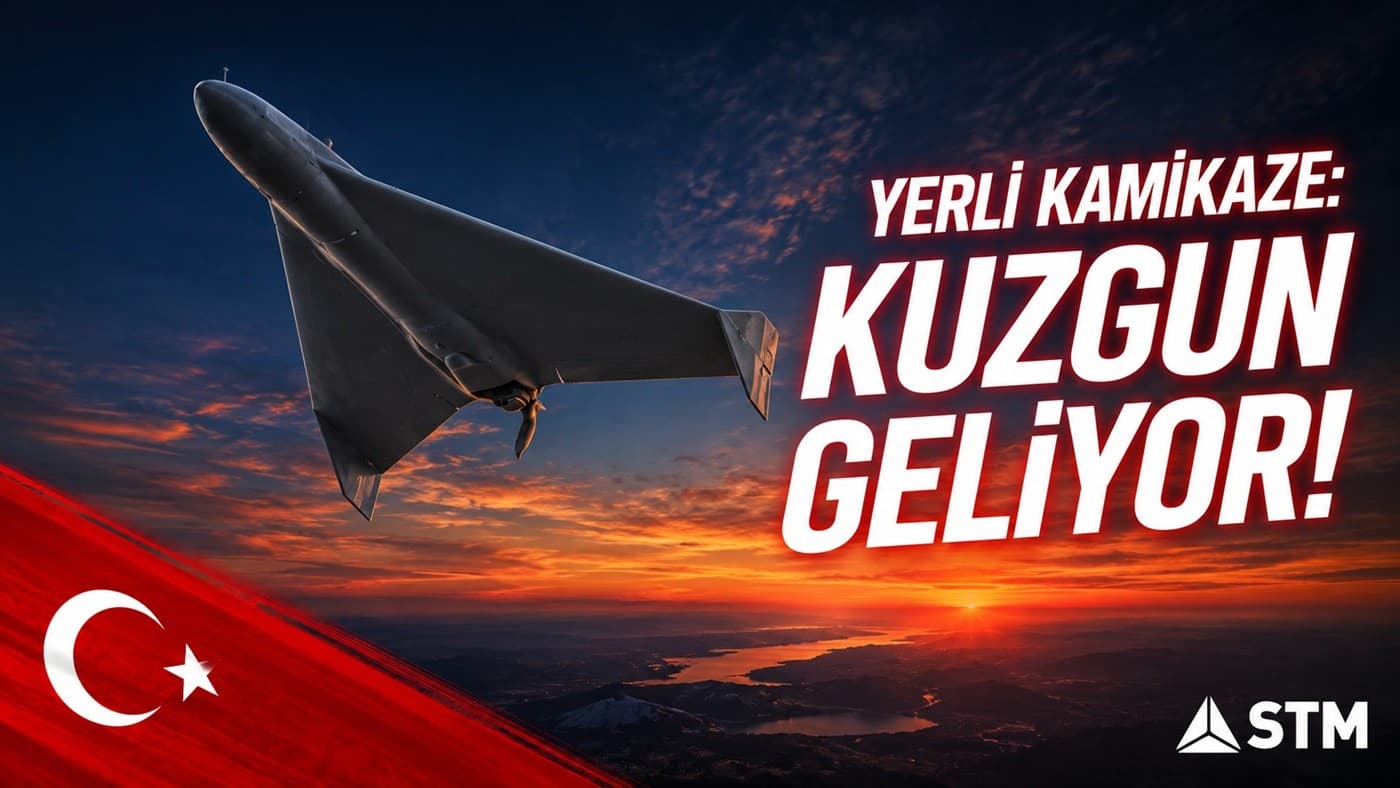
Turkish defense company STM has unveiled the KUZGUN autonomous kamikaze drone at the SAHA 2026 defense exhibition. The system is designed to strike targets at distances of up to 1,000 kilometers without requiring a runway for takeoff. STM officials presented the platform as a new strategic asset for Turkey's defense capabilities.
The KUZGUN operates as a loitering munition, capable of autonomous flight and precision strikes against high-value targets. It features a vertical takeoff and landing (VTOL) design, enabling deployment from confined spaces such as naval vessels or forward operating bases. The drone carries a warhead optimized for destroying fortified positions or armored vehicles.
STM engineers integrated advanced navigation systems resistant to electronic warfare, allowing the KUZGUN to operate in contested environments. The drone can loiter for extended periods before engaging its target, providing battlefield commanders with persistent surveillance and rapid strike options. Its autonomous capabilities reduce the need for continuous human control.
The system's 1,000-kilometer range places it among the longest-range kamikaze drones developed in Turkey. STM emphasized that the KUZGUN can be deployed rapidly without logistical support for runway construction. This feature makes it suitable for expeditionary operations or scenarios where traditional airfields are unavailable.
STM displayed the KUZGUN alongside other unmanned systems at SAHA 2026, highlighting Turkey's growing indigenous drone industry. The company has not disclosed the exact warhead weight or flight endurance, but officials stated the platform is designed for single-use precision strikes. The drone's modular design may allow for different payload configurations in future variants.
Production timelines and potential export customers were not announced at the exhibition. STM stated that the KUZGUN is currently undergoing flight tests, with serial production expected to begin after successful completion of trials. The Turkish military has shown interest in loitering munitions for asymmetric warfare scenarios.
SAHA 2026, held in Istanbul, serves as a platform for Turkish defense firms to showcase new technologies. STM's KUZGUN joins a growing portfolio of indigenous strike drones, including the KARGU and ALPAGU systems. The company positions the KUZGUN as a cost-effective alternative to manned aircraft for deep strike missions.
STM officials said the KUZGUN represents a leap in Turkey's ability to project power without relying on foreign systems. The drone's autonomous navigation and long range are expected to enhance the Turkish Armed Forces' operational flexibility. Further technical details are expected as the system progresses toward operational deployment.