Startup offers free NYC home cleaning in exchange for video data to train robots
German startup MicroAGI is offering free home cleaning in New York City through its Shift app, in exchange for recording the cleaning sessions to train AI-driven robots. The service, promoted on social media since May 28, sends cleaners with body cameras to capture first-person footage.

A German startup is offering New York City residents free home cleaning, but the service comes with a condition: the cleaners will wear cameras to record everything they do. The footage is intended to train artificial intelligence systems for future household robots.
MicroAGI, the company behind the offer, describes itself as a team of engineers, researchers, and operators focused on advancing embodied AI. The startup began promoting the free cleaning service on May 28 through its newly launched Shift app, with posts on X and LinkedIn featuring a video set to the Jay-Z and Alicia Keys song "Empire State of Mind."
The Shift app's website states that it connects New Yorkers with free, professional house cleaners in exchange for recording first-person cleaning footage. The company says this data will help train the next generation of household robots.
To book a free cleaning, users must provide their phone number, email address, home address, and access instructions through the app. Each cleaning appointment is estimated to last about two hours.
The offer raises questions about privacy and data usage, as the recordings capture the interior of people's homes. MicroAGI has not detailed how the footage will be stored, processed, or shared beyond its stated purpose of robot training.
The service is currently available only in New York City, with no announced plans for expansion to other cities. The startup has not disclosed how many cleanings it has booked so far or when the robot training data will be used.
MicroAGI's website emphasizes its mission to accelerate embodied AI, which refers to AI systems that can interact with the physical world. The company's approach involves collecting real-world data from human cleaners to teach robots tasks like sweeping, mopping, and dusting.
The Shift app is available for download on iOS and Android, though the free cleaning offer is limited to New York City residents. The startup has not specified a deadline for the promotion or how long it will continue to offer free cleanings in exchange for data.
AI Chip Startup Groq Reportedly Raising $650M in Internal Funding Round
Groq, an AI chip startup, is reportedly seeking to raise $650 million in internal funding as it shifts focus from hardware to AI inference. The move comes after Nvidia's $20 billion not-acqui-hire of the company's talent.

Groq, the AI chip startup that previously turned down a $20 billion acquisition offer from Nvidia, is now reportedly raising $650 million in internal funding. The information was first reported by Axios, citing sources familiar with the matter. The funding round is said to be led by existing investors, with the company pivoting its strategy from hardware to AI inference.
AI inference refers to the process of refining how AI models respond to user prompts, making them more efficient and accurate. Groq's shift in focus comes as the demand for inference-specific chips grows, driven by the proliferation of large language models and generative AI applications. The company's hardware, known for its low latency and high throughput, is well-suited for inference workloads.
Groq was founded in 2016 by Jonathan Ross, a former Google engineer who co-designed the Tensor Processing Unit. The company has raised over $360 million to date, with investors including Tiger Global Management, D1 Capital Partners, and The Spruce House Partnership. Its valuation was reported to be around $1.1 billion after its last funding round in 2021.
The reported $650 million internal round would be a significant boost for Groq as it competes with established players like Nvidia and emerging startups in the AI chip space. Nvidia's recent $20 billion not-acqui-hire of Groq's talent, where the company hired a large portion of Groq's employees without acquiring the company, highlighted the intense competition for AI expertise.
Groq's decision to focus on inference aligns with industry trends, as many companies seek to optimize AI models for real-time applications. The company's chips are designed to handle massive parallelism, making them ideal for tasks like natural language processing and image recognition. Groq has also developed a software stack that simplifies the deployment of AI models on its hardware.
The funding round is expected to close in the coming weeks, according to Axios. Groq has not officially commented on the report. The company plans to use the capital to expand its engineering team and accelerate the development of its inference platform.
Groq's pivot to inference comes as the AI chip market is projected to grow to over $100 billion by 2025, driven by demand from cloud providers, enterprises, and startups. The company faces stiff competition from Nvidia, which dominates the AI chip market with its GPUs, as well as from startups like Cerebras and SambaNova.
Despite the challenges, Groq's unique architecture and focus on low-latency inference could give it an edge in specific applications. The company's chips are already being used by some customers for real-time AI tasks, and the new funding could help it scale its operations.
The reported $650 million internal round would be one of the largest funding rounds for an AI chip startup this year. It underscores the continued investor interest in AI hardware, even as the market becomes increasingly crowded.

Glean Annual Revenue Triples to Over $300M Amid Enterprise AI Push
Enterprise AI search startup Glean reported annual revenue exceeding $300 million, tripling from the previous year. The company attributes growth to helping businesses cut AI-related costs.

Enterprise AI search startup Glean announced that its annual revenue has surpassed $300 million, tripling from the prior year. The company disclosed the milestone on Tuesday, highlighting its focus on helping organizations reduce spending on artificial intelligence tools.
Glean provides AI-powered enterprise search and knowledge management solutions. The platform indexes internal company data and uses large language models to answer employee queries. The startup positions itself as a cost-saving alternative to building custom AI systems or licensing multiple AI products.
Chief Executive Arvind Jain said the revenue growth reflects demand for tools that consolidate AI spending. "Companies are realizing they don't need ten different AI subscriptions," Jain stated. "They want one platform that works across their data."
The company competes with offerings from Microsoft, Google, and other tech giants. Glean differentiates itself through integrations with over 100 enterprise applications and a focus on security and compliance. The startup raised $200 million in Series D funding in February at a $2.2 billion valuation.
Glean's customer base includes companies in finance, healthcare, and technology. The startup claims its platform reduces the time employees spend searching for information by up to 30%. It also provides analytics to help organizations identify redundant AI tools.
The company plans to expand its workforce by 40% this year, adding roles in engineering, sales, and customer support. Glean also intends to launch new features for automated workflow generation and cross-departmental knowledge sharing.
"We are still in the early stages of enterprise AI adoption," Jain said. "Our focus remains on delivering measurable ROI for our customers." The company did not disclose profitability details but noted that operating margins have improved.
Glean's revenue milestone comes as enterprises scrutinize AI budgets more closely. Industry analysts estimate that organizations waste up to 30% of their AI spending on redundant or underutilized tools. Glean's pitch directly addresses this inefficiency.
The company's annual recurring revenue now exceeds $300 million, with a net retention rate above 130%. Glean serves over 1,000 enterprise customers, including several Fortune 500 companies. The startup is headquartered in Palo Alto, California.

Final Day to Apply for Startup Battlefield 200: $100K Prize at Stake
Applications for Startup Battlefield 200 close today at 11:59 p.m. PT. Selected startups compete for $100,000 in equity-free funding and launch at TechCrunch Disrupt.
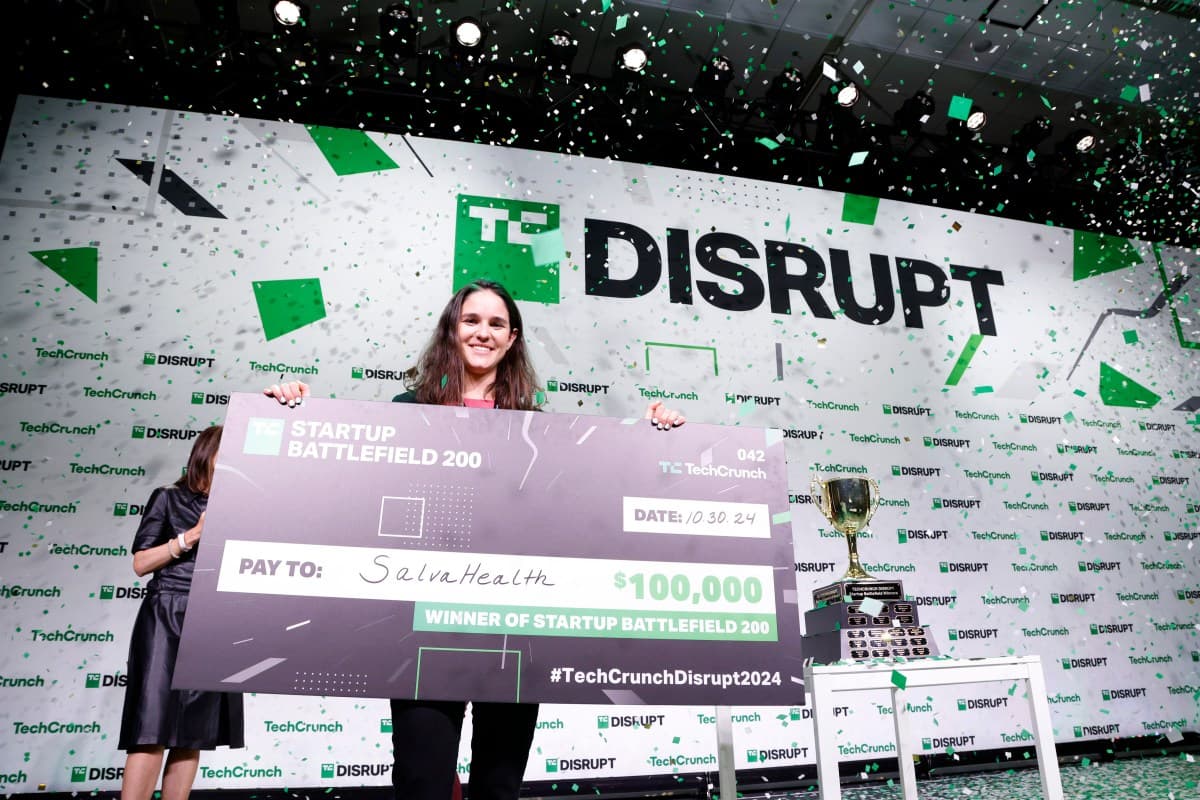
Today marks the last opportunity for startups to submit applications or be nominated for the Startup Battlefield 200 competition. The deadline is set for 11:59 p.m. Pacific Time, after which the application window will close. The program offers a chance to win $100,000 in equity-free funding, along with global exposure and direct access to investors. Participants will also have the opportunity to launch their products on the TechCrunch Disrupt stage.
Startup Battlefield 200 is a highly competitive program that selects 200 early-stage startups to showcase their innovations. The selected companies receive mentorship, media coverage, and networking opportunities with industry leaders. The competition culminates in a live pitch event where finalists vie for the grand prize.
To apply, founders must submit their startup details through the official TechCrunch Disrupt website. Alternatively, third parties can nominate a startup they believe deserves consideration. The application process requires information about the company's product, market traction, and team background.
The $100,000 prize is awarded to the winning startup with no equity taken by TechCrunch. This funding can be used for product development, hiring, or other business needs. Past winners have included companies that later achieved significant growth and additional funding.
TechCrunch Disrupt is a major technology conference that brings together startups, investors, and industry experts. The event features keynote speeches, panel discussions, and networking sessions. Startup Battlefield 200 is one of the most anticipated segments of the conference.
Interested parties are encouraged to act quickly as the deadline is imminent. The application form is available on the TechCrunch website, and submissions must be complete before the cutoff time. Late entries will not be accepted.
For those considering applying, the benefits extend beyond the prize money. Participants gain visibility among top venture capitalists and potential partners. The exposure can lead to future investment opportunities and media coverage.
The final deadline is today at 11:59 p.m. PT. No extensions will be granted. Startups and nominators should ensure their submissions are submitted before the clock runs out.

Thea Energy raises $100M to advance fusion reactor with pixel-inspired magnets
Princeton-based fusion startup Thea Energy has raised $100 million, making it one of the best-funded fusion companies. The company plans to use the funds to develop a commercial reactor by 2034, leveraging a novel magnet design inspired by pixels.
Thea Energy, a fusion startup based in Princeton, New Jersey, has secured $100 million in new funding, elevating it to the ranks of the most well-capitalized private fusion companies. The investment round was led by a group of institutional investors, with participation from existing backers. The company did not disclose its valuation.
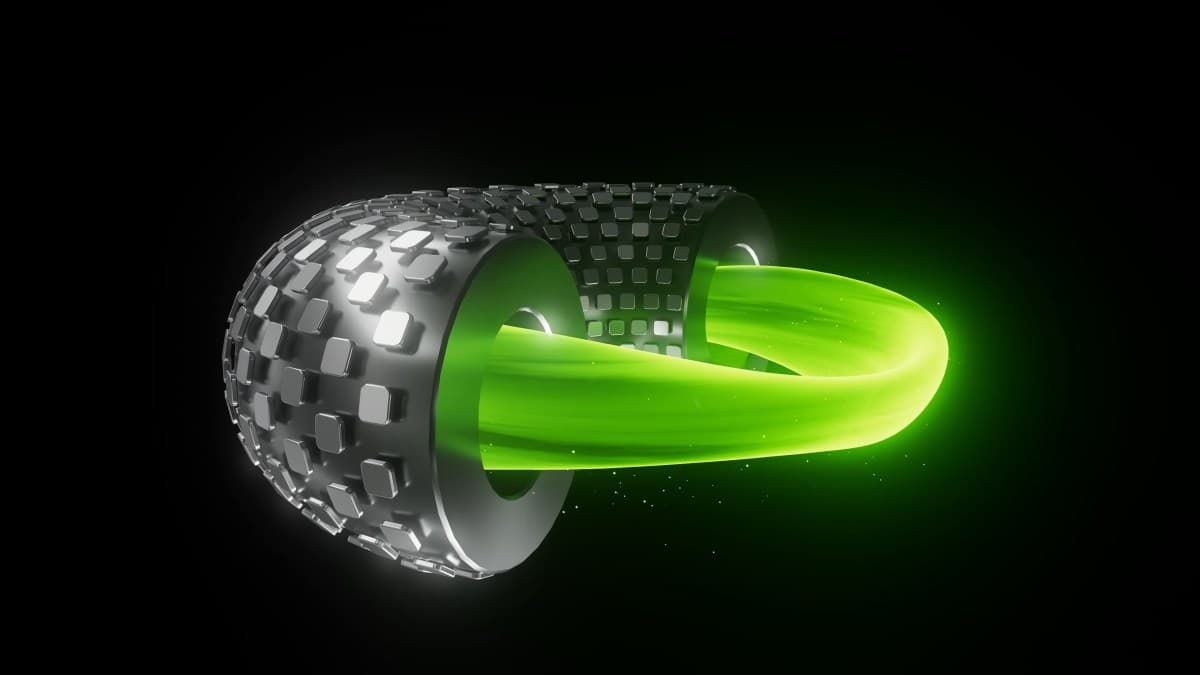
The startup is developing a fusion power plant concept that relies on an array of small, planar magnets arranged in a grid, similar to pixels on a screen. This design, which Thea calls a “pixelated” magnet system, is intended to simplify the complex magnetic confinement required for fusion reactions. The magnets are designed to be mass-produced, potentially reducing costs and accelerating deployment.
Thea Energy’s approach is based on the stellarator, a type of fusion reactor that uses twisted magnetic fields to contain plasma. Traditional stellarators rely on complex, custom-shaped magnets that are difficult and expensive to manufacture. Thea’s pixelated magnet system replaces these with many identical, simpler magnets that can be controlled individually to shape the magnetic field.
The company was spun out from Princeton University and the Princeton Plasma Physics Laboratory in 2021. Its technology builds on research into stellarator optimization, which aims to improve plasma confinement and stability. Thea claims its design can achieve the necessary magnetic field precision while being more practical to build and maintain.
With the new capital, Thea Energy plans to complete the design of a prototype reactor and begin construction of a demonstration plant. The company’s goal is to have a commercial fusion reactor operational by 2034. This timeline aligns with several other fusion startups, though many experts caution that commercial fusion is still decades away.
The $100 million raise brings Thea’s total funding to over $150 million, placing it among the top-funded fusion startups globally. Other well-funded fusion companies include Commonwealth Fusion Systems, TAE Technologies, and Helion Energy, which have raised hundreds of millions to billions of dollars.
Thea Energy’s CEO, Michael Zarnstorff, stated that the funding will allow the company to “move from theory to practice” and demonstrate the viability of its pixelated magnet technology. The company plans to hire additional engineers and physicists to accelerate development.
Fusion energy, which powers the sun and stars, has long been pursued as a clean, virtually limitless energy source. However, achieving sustained fusion reactions on Earth has proven extremely challenging. Thea Energy’s pixelated magnet approach is one of several innovative designs aiming to overcome the engineering hurdles that have stymied fusion for decades.
The company expects to select a site for its demonstration reactor within the next two years. It has not yet announced a specific location but is considering sites in the United States. Thea Energy’s long-term plan is to license its reactor technology to utilities and other energy providers, rather than building and operating its own power plants.
“We are focused on delivering a practical, scalable fusion system,” Zarnstorff said in a statement. “This funding brings us closer to making fusion energy a reality.” The company’s next major milestone is the completion of a subscale prototype that will test the pixelated magnet system under fusion-relevant conditions.