Meta reportedly developing AI-powered pendant for smart assistance
Meta is reportedly working on an AI-powered pendant that would function as a smart assistant. The device is said to be in early development stages.
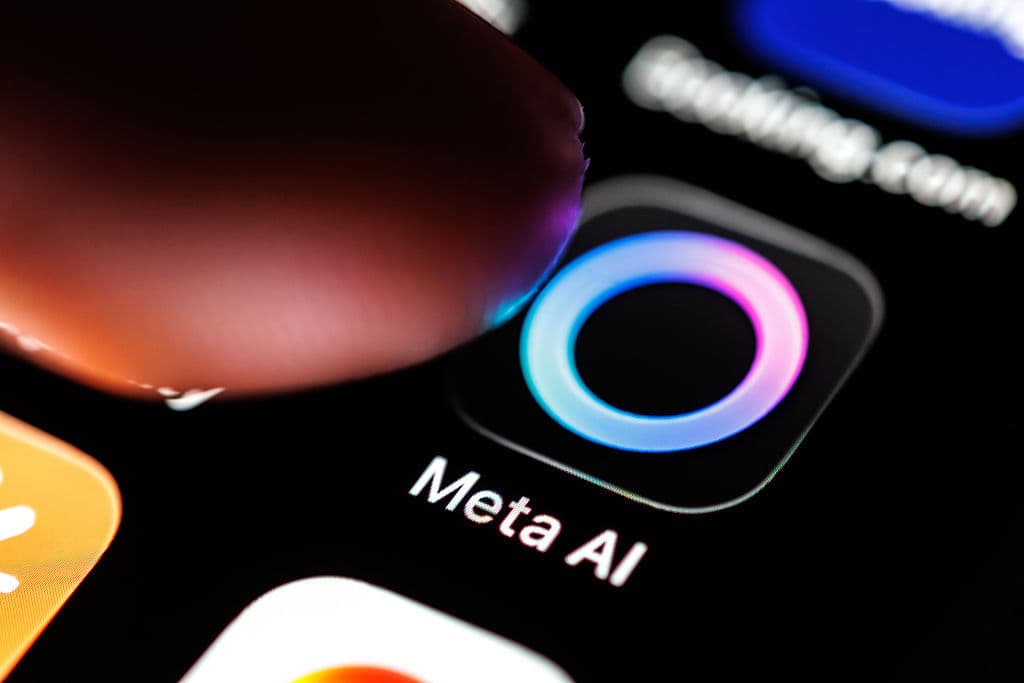
Meta is reportedly developing a new AI-powered wearable device in the form of a pendant, according to sources familiar with the matter. The company, which has been investing heavily in artificial intelligence and augmented reality, is exploring hardware that could serve as a smart assistant. The pendant is said to be designed to interact with users through voice commands and potentially offer visual feedback via a built-in camera or display.
The device is still in the early stages of development, and Meta has not publicly confirmed its existence. The pendant is expected to leverage Meta's AI capabilities, including natural language processing and computer vision, to assist users with tasks such as messaging, navigation, and information retrieval. It could also integrate with Meta's existing ecosystem of apps and services, including WhatsApp, Instagram, and Facebook.
This move aligns with Meta's broader strategy to expand beyond smartphones and into new form factors for computing. The company has already released the Ray-Ban Stories smart glasses and is working on advanced AR glasses. The pendant could serve as a more discreet and always-available AI companion, similar to how Amazon's Echo Frames or Apple's AirPods function.
However, the project faces significant challenges, including battery life, processing power, and user privacy concerns. The pendant would need to be lightweight and comfortable to wear for extended periods while providing reliable AI assistance. Meta will also need to address how the device handles data collection and user consent, especially given the company's history with privacy issues.
Meta has not announced a timeline for the pendant's release, and it remains unclear whether the product will ever reach the market. The company is known for experimenting with various hardware concepts, many of which never see a commercial launch. For now, the pendant is one of several AI hardware projects under development at Meta.
If released, the pendant would compete with other AI wearables like the Humane AI Pin and the Rabbit R1, which aim to replace smartphones for certain tasks. Meta's advantage could lie in its vast user base and integration with popular social platforms, but the company will need to differentiate its offering in a crowded and uncertain market.
Meta declined to comment on the report. The company's next major hardware event is expected later this year, where it may provide updates on its AI and wearable initiatives.
Meta Plans Four Smart Glasses Models by 2026, Tests AI Necklace
Meta is preparing to launch four different smart glasses models before the end of 2026 and has begun testing an AI-powered necklace, according to recent leaks. The aggressive expansion aims to strengthen its wearable tech portfolio and offset losses from Reality Labs.
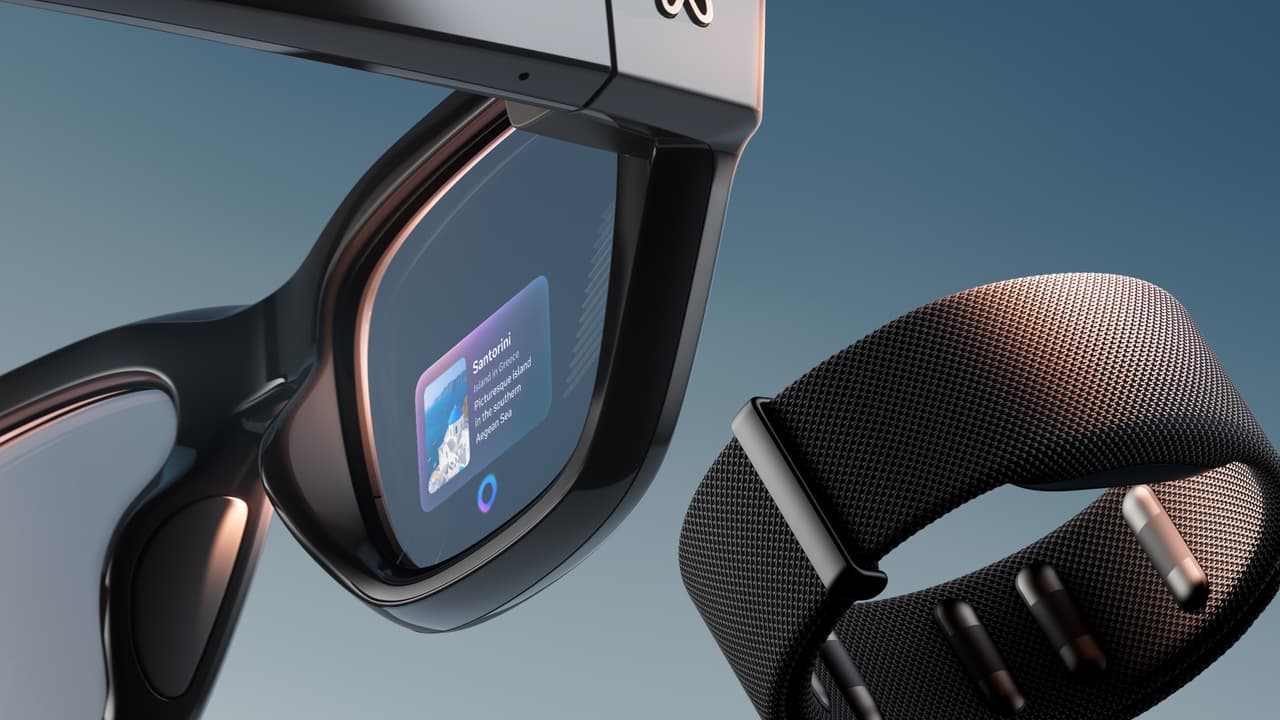
Meta is accelerating its wearable technology strategy with plans to release four distinct smart glasses models by 2026, according to information from recent leaks. The company is also initiating tests on an artificial intelligence-powered necklace, signaling a broader push into AI-driven accessories. These moves come as Meta seeks to expand its footprint in the wearable market while addressing the substantial financial losses incurred by its Reality Labs division.
The leaked roadmap details a diverse lineup of smart glasses designed for different user segments. One model is expected to be a premium version featuring advanced augmented reality capabilities, while another targets a more affordable price point to attract mainstream consumers. A third model is reportedly focused on fitness and health tracking, integrating sensors for activity monitoring. The fourth model is said to emphasize connectivity and hands-free assistance, leveraging Meta's AI assistant.
The AI necklace, currently in testing, is described as a standalone wearable that can interact with users through voice commands and provide contextual information. It is designed to work seamlessly with Meta's ecosystem of devices, including the smart glasses, and may eventually replace some smartphone functions. The necklace is expected to feature a microphone, speaker, and possibly a camera for visual recognition tasks.
Meta's aggressive timeline aims to capitalize on the growing interest in smart eyewear, a category that has seen renewed attention following the success of Ray-Ban Meta smart glasses. The company hopes that a broader range of options will help it capture different market segments and increase adoption rates. Industry analysts note that Meta's strategy mirrors its approach in the virtual reality space, where it offers multiple headset models at various price points.
The financial pressure on Meta's Reality Labs division, which reported significant operating losses in recent quarters, is a key driver behind this expansion. By diversifying its wearable product line, Meta aims to generate new revenue streams and reduce its reliance on advertising income. The company has invested heavily in augmented and virtual reality technologies, viewing them as the next major computing platform.
Pricing details for the upcoming smart glasses have not been disclosed, but sources suggest the affordable model could start around $299, while the premium AR version may exceed $1,000. The AI necklace is expected to be priced competitively to encourage widespread adoption. Meta plans to launch the first new smart glasses model in early 2025, with subsequent releases staggered through 2026.
Availability will initially focus on the United States and select European markets, with a broader global rollout planned for later phases. Meta is also working with eyewear partners to ensure prescription lens options and style variations. The company has not confirmed any of the leaked details, but internal documents and supply chain reports support the outlined roadmap.
Meta's official statement on the matter is expected later this year, likely coinciding with the company's annual Connect conference. The first new smart glasses model is scheduled to go on sale in the first quarter of 2025.
NASA Prepares X-59 for First Supersonic Flight; SpaceX Starship Grounded
NASA is preparing the X-59 QueSST for its first supersonic flight, aiming to demonstrate quiet supersonic technology. Meanwhile, SpaceX's Starship remains grounded pending FAA investigation.

NASA is moving forward with preparations for the first supersonic flight of its X-59 QueSST aircraft. The experimental plane is designed to produce a sonic boom reduced to a quiet thump, potentially paving the way for commercial supersonic travel over land. The agency has completed key ground tests and is now readying the aircraft for its initial flight, which will take place at the Armstrong Flight Research Center in California.
The X-59 is part of NASA's Low-Boom Flight Demonstrator project, which aims to gather data on public response to quieter supersonic flights. The aircraft's unique shape, including a long nose and a cockpit positioned low on the fuselage, is engineered to minimize shockwaves. If successful, the data could help regulators revise current bans on supersonic flight over land.
SpaceX's Starship, the world's most powerful rocket, remains grounded after its April 20 test flight ended in a mid-air explosion. The Federal Aviation Administration has grounded the vehicle pending a mishap investigation. SpaceX CEO Elon Musk said the company is making progress on fixes, but no timeline for the next launch has been announced.
In other science news, researchers at the University of Cambridge have developed a new type of battery that could charge electric vehicles in under five minutes. The prototype uses a niobium oxide anode material that allows for rapid lithium-ion movement. The team believes the technology could be commercialized within the next few years.
A study published in Nature Communications found that microplastics can travel from the ocean into the atmosphere via sea spray. The research, conducted by scientists at the University of Strathclyde, suggests that airborne microplastics could be transported long distances, potentially affecting remote areas.
NASA's James Webb Space Telescope has captured a new image of the Ring Nebula, revealing intricate details of the dying star's final stages. The image shows the nebula's complex structure, including concentric rings and filaments, providing insights into stellar evolution.
The European Space Agency's Euclid mission, launched in July, has begun its survey of the dark universe. The telescope will map billions of galaxies to study dark energy and dark matter. The first data release is expected in 2025.
Finally, a team of astronomers has discovered a new exoplanet, TOI-700 e, orbiting within the habitable zone of its star. The planet is about 95% the size of Earth and located 100 light-years away. The discovery was made using data from NASA's TESS satellite.

HP Reports 30% of Users Still on Windows 10, Urges Upgrade to Windows 11
HP announced that 30% of its users are still using Windows 10. The company is encouraging these users to upgrade to Windows 11.

HP has disclosed that approximately 30 percent of its user base continues to operate on Windows 10. The computer manufacturer made the announcement as part of its broader push to migrate customers to the newer Windows 11 operating system.
The company did not specify the exact number of users affected but emphasized the significance of the remaining Windows 10 install base. HP is actively promoting the transition to Windows 11, citing improvements in security, performance, and user experience.
Windows 10, which launched in 2015, remains widely used despite Microsoft ending mainstream support for the operating system. HP's data suggests a substantial portion of its customers have yet to adopt the successor platform.
HP's call to action comes as Microsoft prepares to phase out Windows 10 entirely. The software giant has set an end-of-support date for October 14, 2025, after which no further security updates will be provided for the older OS.
For users still on Windows 10, HP recommends checking system compatibility with Windows 11. The newer OS requires specific hardware, including a compatible 64-bit processor, 4GB of RAM, and 64GB of storage, along with TPM 2.0 and Secure Boot capabilities.
HP is offering guidance and tools to help users assess their devices' readiness for the upgrade. The company also provides upgrade options through its support channels and retail partners.
The announcement underscores the ongoing transition in the PC market as manufacturers and Microsoft push for broader adoption of Windows 11. HP's data highlights the challenge of migrating a large installed base still reliant on the older platform.
SpaceX wins $4.16B US Space Force contract for missile tracking satellite network
SpaceX has been selected by the US Space Force to lead the development of a satellite network for missile and air target tracking under the Golden Dome program. The contract is valued at $4.16 billion.

The US Space Force has awarded SpaceX a contract worth $4.16 billion to build a satellite network designed to track missile and air targets. The program, known as Golden Dome, aims to enhance the nation's defense capabilities against advanced threats.
SpaceX will develop and deploy a constellation of satellites equipped with advanced sensors to detect and monitor hypersonic missiles, cruise missiles, and other airborne objects. The network is intended to provide persistent global coverage and real-time tracking data to military command centers.
The Golden Dome program represents a significant expansion of the US military's space-based surveillance infrastructure. Current systems rely on a mix of ground-based radars and geostationary satellites, which have limitations in coverage and response time. The new low-Earth orbit constellation promises lower latency and higher resolution tracking.
SpaceX's Starlink satellite manufacturing and launch capabilities are expected to accelerate the deployment timeline. The company has already demonstrated rapid iteration and mass production of satellites, which could be adapted for defense purposes. The contract includes options for additional satellites and ground support systems.
The selection of SpaceX underscores the Pentagon's increasing reliance on commercial space companies for national security missions. This marks one of the largest single contracts awarded to a private space firm for defense purposes. Other companies, including Blue Origin and United Launch Alliance, were also considered for the program.
Work on the Golden Dome network will begin immediately, with initial operational capability targeted for the late 2020s. The full constellation is expected to comprise hundreds of satellites, though exact numbers remain classified. The contract also covers ground segment development and integration with existing missile warning systems.
SpaceX will leverage its Falcon 9 and Starship rockets for satellite deployment. The company's launch cadence and reusable rocket technology are expected to reduce costs and accelerate the timeline. The US Space Force has emphasized the need for rapid fielding of new capabilities to counter evolving threats from China and Russia.
The Golden Dome program is part of a broader effort to modernize US missile defense architecture. The satellite network will complement ground-based interceptors and airborne sensors, providing a multi-layered defense against ballistic and hypersonic missiles. The system is designed to track threats from launch through terminal phase.
SpaceX CEO Elon Musk stated that the company is honored to support national security and will deliver the most advanced space-based tracking system ever built. The US Space Force confirmed the award on Tuesday, noting that the contract includes fixed-price incentives for performance milestones.