Google Gemini Spark AI Assistant Automates Daily Tasks, But Raises Product Questions
Google launched Gemini Spark, a 24/7 AI assistant designed to automate everyday tasks like inbox summaries and local event planning. The product's standalone nature has raised questions about its differentiation from existing Google AI offerings.
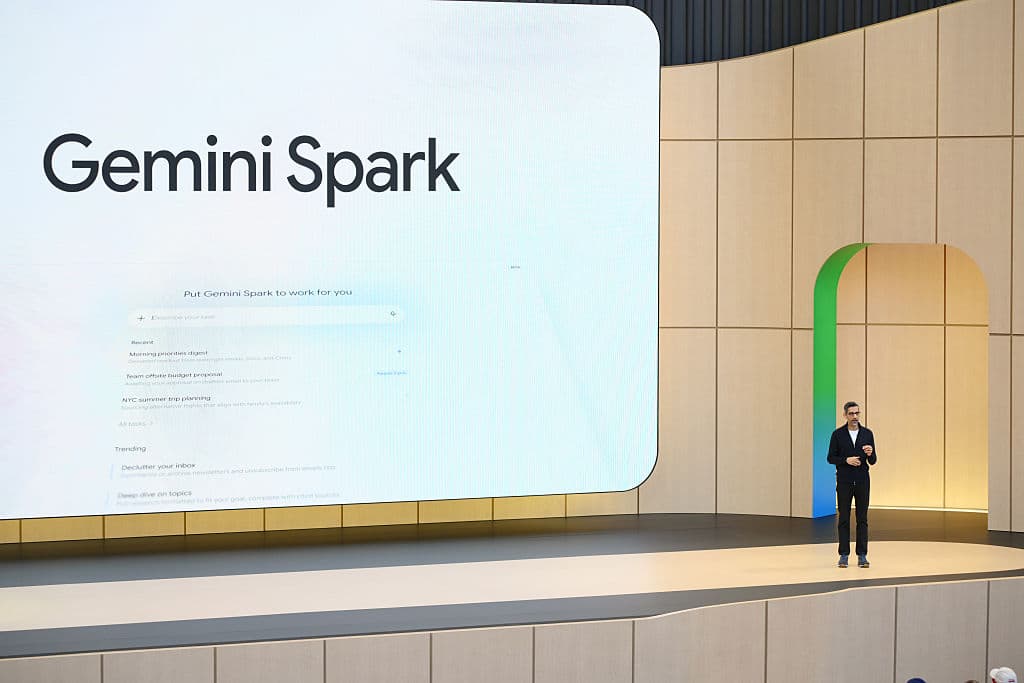
Google has introduced Gemini Spark, a new AI assistant that operates around the clock to handle routine tasks. The tool can summarize emails, plan local events, and manage other daily workflows without requiring user initiation. Early tests suggest the assistant delivers on its promise of convenience, though its positioning as a separate product has puzzled some observers.
Gemini Spark runs continuously in the background, monitoring connected accounts and services. It can generate daily briefings from Gmail, suggest calendar adjustments based on incoming messages, and even recommend nearby restaurants or activities by analyzing user preferences. The assistant also integrates with Google Maps and Google Calendar to provide context-aware suggestions.
Unlike Google's existing Gemini chatbot, which requires explicit prompts, Spark proactively offers assistance. It learns user patterns over time, refining its recommendations and automating repetitive actions. For example, it can draft replies to common email queries or reschedule meetings when conflicts arise.
The decision to brand Gemini Spark as a distinct product has sparked debate. Google already offers Gemini as a conversational AI across its ecosystem, and some analysts argue that Spark's features could have been integrated into the existing assistant. Google has not publicly explained the rationale behind the separate launch.
Gemini Spark is available starting today in the United States. It works with Gmail, Google Calendar, and Google Maps, with plans to expand to third-party services in the future. The assistant is accessible via a dedicated app on Android and iOS, as well as through a web interface.
Pricing for Gemini Spark is set at $19.99 per month, which includes access to all features and priority support. A free tier offers limited functionality, such as daily summaries but no proactive suggestions. Google is also offering a 30-day trial for new users.
Google emphasized that Gemini Spark processes data locally on the device where possible, with cloud processing used for complex tasks. The company stated that user privacy remains a priority, with data encrypted in transit and at rest. Users can review and delete their activity logs at any time.
"Gemini Spark is designed to save people time by handling the small but constant tasks that add up during the day," a Google spokesperson said. The company plans to roll out the assistant to additional countries in the coming months, though no specific dates have been announced.
Enhanced Games: Tech-Backed Competition Allows Performance-Enhancing Drugs
The Enhanced Games, a sporting event where most athletes use performance-enhancing drugs, has attracted tech industry backing. The competition aims to challenge traditional sports norms and create a new business model.

A new sporting competition called the Enhanced Games has emerged, where the majority of athletes compete while using performance-enhancing drugs. The event, which took place in Las Vegas, has drawn attention from the tech industry as a potential new business model. Organizers position the games as a radical departure from traditional sports, embracing drug use rather than banning it.
The competition featured events such as swimming and track and field, with participants openly using substances like steroids. The Enhanced Games' founder, Aron D'Souza, has pitched the event as a celebration of human enhancement, arguing that current anti-doping rules are outdated. The games have attracted investors and sponsors from the tech sector, who see potential in a less regulated sporting environment.
Tech industry figures have expressed interest in the Enhanced Games, viewing it as a platform for innovation in human performance. Some investors believe the event could disrupt traditional sports leagues and create new revenue streams. The games have also sparked debate about the ethics of drug use in sports, with critics warning of health risks and unfair advantages.
The Enhanced Games awarded prize money to winners, with some athletes earning significant sums. The event's business model relies on media rights, sponsorships, and ticket sales, similar to traditional sports. Organizers plan to expand the competition to other cities and add more events in the future.
Athletes participating in the Enhanced Games have defended their choice to use drugs, citing personal freedom and the desire to push human limits. Some have backgrounds in traditional sports but were banned for doping violations. The games provide an opportunity for these athletes to compete without restrictions.
The event has drawn comparisons to historical competitions like the ancient Olympics, where drug use was not prohibited. However, modern sports organizations have strict anti-doping policies, making the Enhanced Games a controversial outlier. The tech industry's embrace of the event reflects a broader trend of challenging established norms.
The Enhanced Games' next edition is scheduled for 2025 in a location yet to be announced. Organizers are seeking additional investors and partners from the tech sector. The event's long-term viability remains uncertain, but its backers are optimistic about its growth potential.
A spokesperson for the Enhanced Games stated that the competition is about freedom and innovation, and that athletes have the right to choose their own enhancement methods. The games have already secured several million dollars in funding from tech investors. The next event is expected to feature more sports and higher prize money.

Kenyan court blocks US plan to send Ebola-exposed Americans to Kenya
A Kenyan court has blocked a Trump administration plan to establish a quarantine and treatment facility for Americans exposed to Ebola in Kenya. The Katiba Institute filed a petition challenging the facility, stalling the plan that was set to begin operations on May 29.

The Trump administration's plan to send Americans exposed to Ebola to Kenya for quarantine and treatment has been blocked by a Kenyan court. The administration had devised the plan amid the ongoing Ebola outbreak in the Democratic Republic of the Congo, refusing to repatriate the exposed individuals to the United States. Instead, officials aimed to establish a makeshift facility in Kenya, about 120 miles north of Nairobi in Laikipia, where the US operates an air base.
The initial phase of the plan involved setting up a 50-bed quarantine facility, which was expected to become operational on May 29. In a subsequent phase, officials intended to establish isolation and biocontainment units to house Americans infected with the virus. However, the Katiba Institute, a Kenyan advocacy group focused on constitutional rights, filed a petition on Thursday challenging the establishment of the facility.
The court's decision has stalled the plan, leaving US officials scrambling to find alternative locations. The Katiba Institute argued that the facility would violate Kenyan constitutional rights and posed health risks to the local population. The Trump administration has not publicly commented on the court ruling or outlined next steps.
The US government has specialized biocontainment facilities capable of handling Ebola cases, such as those at the National Institutes of Health in Maryland and Emory University in Atlanta. Despite this, the administration opted to seek a location in Kenya, raising questions about its rationale. The Ebola outbreak in the DRC has infected thousands and killed hundreds, with the World Health Organization declaring it a public health emergency of international concern.
Kenya has not reported any Ebola cases during the current outbreak, but the proposed facility sparked fears among local communities and activists. The Katiba Institute's petition highlighted concerns about inadequate consultation with Kenyan authorities and potential environmental and health impacts. The court has not yet set a date for a full hearing on the matter.
As of now, the US government has not disclosed how many Americans are exposed to Ebola or where they are currently located. The administration's efforts to find another country willing to host the facility continue, but no agreements have been announced. The Trump administration has faced criticism for its handling of the Ebola response, including cuts to funding for global health security.
The Katiba Institute's legal challenge has effectively halted the plan, at least temporarily. The organization stated that the facility would have violated Kenyan sovereignty and constitutional protections. The court's intervention underscores the legal and diplomatic hurdles the US faces in executing its Ebola response strategy.

Book traces anti-vaccine arguments back to origins of inoculation
Thomas Levenson's new book 'A Pox on Fools' categorizes anti-vaccine arguments into three types: wrong, bad, and intolerable. The book traces these arguments back to the early 18th century when inoculation against smallpox was first introduced.

Stanley Plotkin, a 93-year-old vaccine developer, recently expressed regret for living long enough to see public health progress reverse. Plotkin's sentiment reflects a broader frustration among scientists as anti-vaccine sentiment persists. Thomas Levenson's new book 'A Pox on Fools' examines the historical roots of vaccine opposition. The book's subtitle identifies three groups behind the movement: true believers, grifters, and cynics. Levenson argues that the accusations these groups levy against vaccines can be categorized as wrong, bad, and intolerable.
Levenson traces the origins of anti-vaccine arguments to the early 18th century. At that time, a few Westerners learned about smallpox inoculation from Ottoman women and an enslaved African. Infectious disease was then the leading cause of death, as it had been for centuries. In the 19th century, roughly 40 percent of infants died from infection before age five. Despite the clear benefits of vaccination, opposition emerged almost immediately.
The book breaks down the arguments into three categories. The first category, 'wrong,' includes claims that vaccines are ineffective or cause disease. The second, 'bad,' encompasses moral objections, such as the belief that vaccines interfere with divine will. The third, 'intolerable,' involves accusations of government overreach or conspiracy. Levenson shows that these same arguments have recurred for centuries, adapting to new vaccines and technologies.
Levenson's analysis highlights the role of grifters who profit from spreading misinformation. Cynics exploit public fear for political or financial gain. True believers, meanwhile, are genuinely convinced of the dangers of vaccines, often due to misinformation. The book argues that understanding these categories is essential for countering anti-vaccine rhetoric.
The historical perspective reveals that anti-vaccine arguments are not new. They have persisted since the first inoculations, evolving with each new vaccine. Levenson's work aims to provide context for the current resurgence of vaccine hesitancy. By recognizing the patterns, public health advocates can better address the root causes of opposition.
'A Pox on Fools' is available now from Basic Books. The book offers a comprehensive history of vaccine opposition, from smallpox to COVID-19. Levenson, a professor at MIT, combines historical research with analysis of contemporary anti-vaccine movements. The book has received positive reviews for its clear-eyed examination of a contentious topic.
Plotkin's regret underscores the stakes of the ongoing battle against vaccine misinformation. Levenson's book provides a framework for understanding why such misinformation persists. The author concludes that recognizing the enduring nature of these arguments is the first step toward overcoming them.

Gene-editing drug VERVE-102 cuts bad cholesterol 62% in early trial
An experimental gene-editing therapy called VERVE-102 reduced LDL cholesterol by 62% in a small Phase I trial with 35 patients. The drug appeared safe with no serious adverse events, though a temporary mild liver enzyme increase was observed.

An experimental gene-editing therapy designed to lower bad cholesterol long-term after a single infusion has shown promising early results. Researchers running a Phase I safety trial for the drug, named VERVE-102, published interim data from 35 patients in the New England Journal of Medicine this week. The findings are preliminary but indicate the treatment is safe, with no serious adverse events reported even at the highest doses. A temporary, mild increase in a liver enzyme was observed, suggesting minor injury in the liver where the drug acts.
The small dataset also hints at the drug's effectiveness. Participants who received the largest dose experienced a 62 percent drop in their low-density lipoprotein (LDL), or bad cholesterol, bringing the mean level to 78 mg per deciliter. For individuals with high cholesterol, like those in the trial, such a reduction could lower the risk of cardiovascular disease from arterial plaque buildup by an estimated 50 percent if sustained over 20 years. The trial has up to 18 months of follow-up data so far, and the positive effects appear to be holding up across all subgroups.
VERVE-102 is an investigational therapy that uses gene editing to permanently modify a gene in the liver, aiming to reduce LDL production. The approach targets the PCSK9 gene, which regulates cholesterol levels. By editing this gene, the therapy seeks to provide a one-time treatment for high cholesterol, potentially eliminating the need for daily statin pills. The current standard of care for high cholesterol includes statins and other medications that require ongoing adherence.
The Phase I trial enrolled patients with heterozygous familial hypercholesterolemia or established atherosclerotic cardiovascular disease, conditions that put them at high risk for heart attacks and strokes. The primary goal was to assess safety, but researchers also measured LDL reductions as a secondary endpoint. The 62 percent reduction in the high-dose group exceeded expectations, though the small sample size limits the strength of the conclusion.
VERVE-102 is administered as a single intravenous infusion. The therapy uses a lipid nanoparticle to deliver a base-editing system to liver cells, where it makes a precise change in the PCSK9 gene. This approach differs from other gene-editing therapies that use CRISPR-Cas9, as base editing can alter a single DNA letter without cutting the double helix. The company behind the drug, Verve Therapeutics, is also developing similar therapies for other conditions.
The trial is ongoing, and researchers plan to enroll additional patients to further evaluate safety and efficacy. Longer follow-up is needed to confirm that the LDL reductions are durable and to monitor for any late-emerging side effects. The mild liver enzyme elevation resolved on its own in most cases, but investigators will continue to watch for any signs of liver damage.
If VERVE-102 proves safe and effective in larger trials, it could offer a transformative option for patients with high cholesterol who struggle with daily medication. The therapy is still years away from potential regulatory approval, as Phase II and III trials are required to confirm its benefits and risks. Verve Therapeutics has stated that it plans to move forward with larger studies.
The interim results were published in the New England Journal of Medicine on [date not specified in source]. The company has not yet announced a timeline for the next phase of clinical development. All data presented are from the ongoing Phase I trial, which is registered at ClinicalTrials.gov.