
MSI unveils world's first triple-mode QD-OLED gaming monitor
MSI has introduced the world's first triple-mode QD-OLED gaming monitor, capable of switching between 4K 360 Hz, 1440p 520 Hz, and 1080p 680 Hz modes. The 32-inch display targets competitive gamers seeking flexibility in resolution and refresh rate.
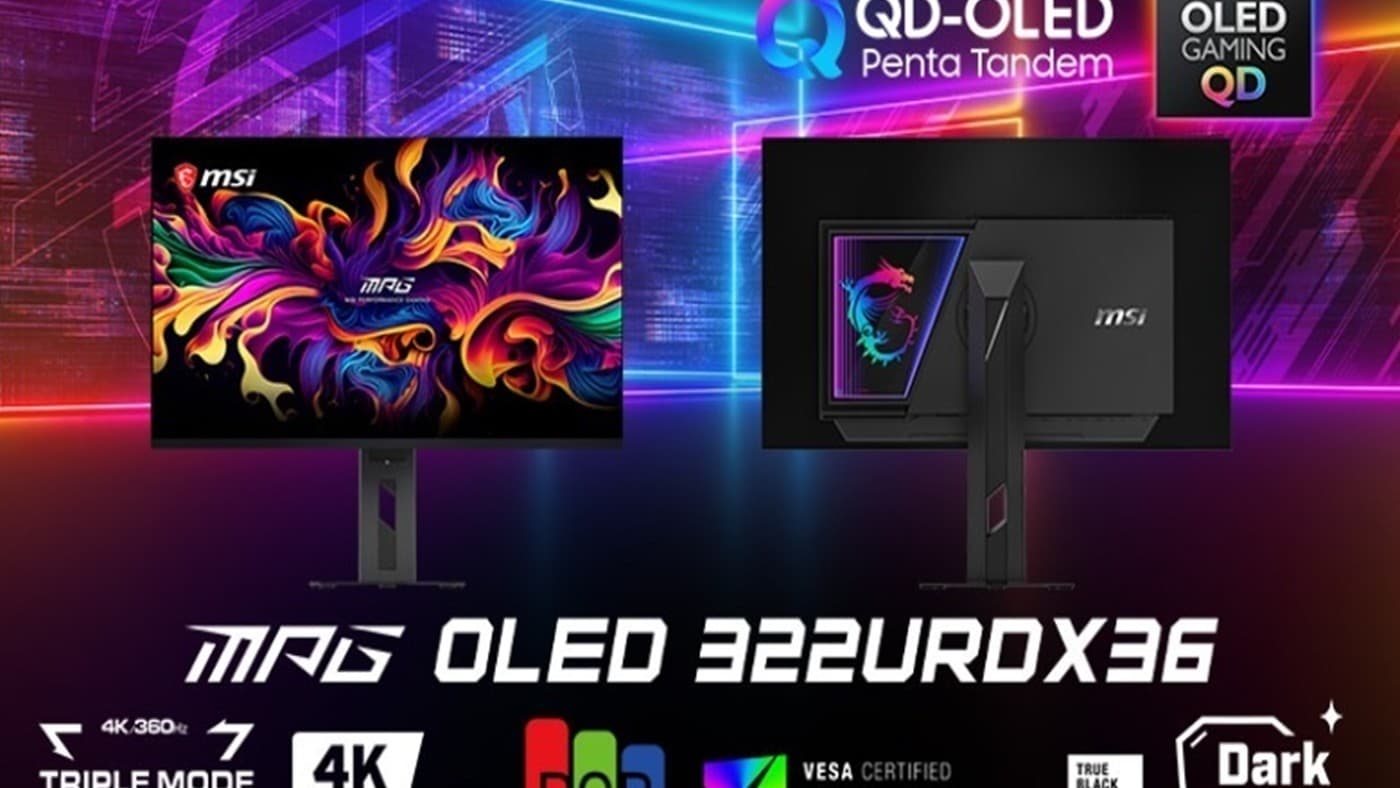
MSI announced the launch of the world's first triple-mode QD-OLED gaming monitor. The 32-inch display allows users to switch between three distinct resolution and refresh rate combinations. These modes include 4K at 360 Hz, 1440p at 520 Hz, and 1080p at 680 Hz.
The monitor leverages QD-OLED technology, combining quantum dots with OLED panels for enhanced color accuracy and contrast. MSI designed the display to cater to competitive gamers who prioritize high refresh rates for fast-paced titles. The triple-mode feature enables users to choose between higher resolution for immersive single-player games or extreme refresh rates for esports.
Switching between modes is handled through the monitor's on-screen display or a dedicated hotkey. The 4K mode delivers sharp visuals at 360 Hz, suitable for modern AAA games. The 1440p mode offers a balance of resolution and speed at 520 Hz, while the 1080p mode pushes refresh rates to 680 Hz for maximum fluidity in competitive scenarios.
MSI incorporated a custom heatsink and graphene film to manage heat dissipation, ensuring stable performance during extended gaming sessions. The monitor also features VESA DisplayHDR True Black 400 certification, delivering deep blacks and high dynamic range. Connectivity options include HDMI 2.1, DisplayPort 2.1, and USB-C with 90W power delivery.
The monitor supports NVIDIA G-Sync Compatible and AMD FreeSync Premium Pro for tear-free gameplay. MSI also included a KVM switch for users who operate multiple devices. The stand offers height, tilt, swivel, and pivot adjustments for ergonomic comfort.
MSI has not yet announced pricing or a specific release date for the triple-mode QD-OLED monitor. The company stated that the monitor will be available in select markets starting in the second quarter of 2025. Further details on regional availability and pricing are expected closer to launch.
MSI positions this monitor as a premium option for enthusiasts who demand versatility. The triple-mode capability eliminates the need for multiple monitors, offering a single display that adapts to different gaming needs. The official announcement highlighted the monitor's potential to set a new standard in the gaming display market.
MSI confirmed that the monitor will debut at CES 2025, where attendees can experience the triple-mode functionality firsthand. The company plans to showcase the monitor alongside its other gaming peripherals and components at the event.
Google's AI search move backfires: Users flock to DuckDuckGo
Google's new AI-focused search experience has not been universally welcomed. DuckDuckGo, which offers an AI-free search option, is seeing a rapid increase in user numbers.

Google's introduction of an artificial intelligence-driven search experience has generated a mixed response. The company rolled out AI Overviews, which provide summarized answers at the top of search results, aiming to enhance user convenience. However, this feature has drawn criticism for occasionally producing inaccurate or misleading information, leading to user frustration.
In contrast, DuckDuckGo, a privacy-focused search engine that does not incorporate AI-generated summaries, has experienced a surge in popularity. The platform reported a significant uptick in daily active users, attributing the growth to users seeking an alternative to Google's AI-infused search results. DuckDuckGo emphasizes that it does not track user activity or personalize search results based on browsing history.
The shift in user behavior highlights a growing demand for simpler, less algorithmically mediated search experiences. Some users have expressed concerns about the reliability of AI-generated content, particularly when it comes to factual queries. Others worry about the potential for AI to reinforce biases or spread misinformation.
DuckDuckGo's privacy-centric model has long appealed to users wary of data collection by major tech companies. The recent influx suggests that AI integration in search may be driving even more users toward privacy-focused alternatives. The company has not disclosed exact user numbers but noted that the growth rate has accelerated since Google's AI rollout.
Google has acknowledged the issues with AI Overviews and stated that it is working to improve accuracy. The company emphasized that the feature is still in its early stages and that user feedback is being incorporated to refine the system. However, for some users, the initial missteps have already eroded trust.
The trend also reflects broader debates about the role of AI in everyday tools. While AI can streamline tasks, its application in search raises questions about information quality and user autonomy. DuckDuckGo's success suggests that a segment of the market values control over convenience.
DuckDuckGo remains free to use and generates revenue through non-tracking advertisements. The platform has also introduced its own AI-powered features, such as DuckAssist, but these are opt-in and clearly labeled. This approach allows users to choose whether to engage with AI tools.
As of now, DuckDuckGo continues to see rising engagement, with no signs of the trend reversing. The company has not provided a timeline for when or if it will integrate AI more deeply into its core search functionality. For the moment, its AI-free option appears to be a key differentiator in an increasingly AI-driven search landscape.
Nvidia N1 and N1X ARM Laptop Processors Specs Leak Ahead of Computex 2026
Nvidia's ARM-based laptop processors, the N1 and N1X, have had their technical specifications leaked. The chips are expected to debut at Computex 2026.
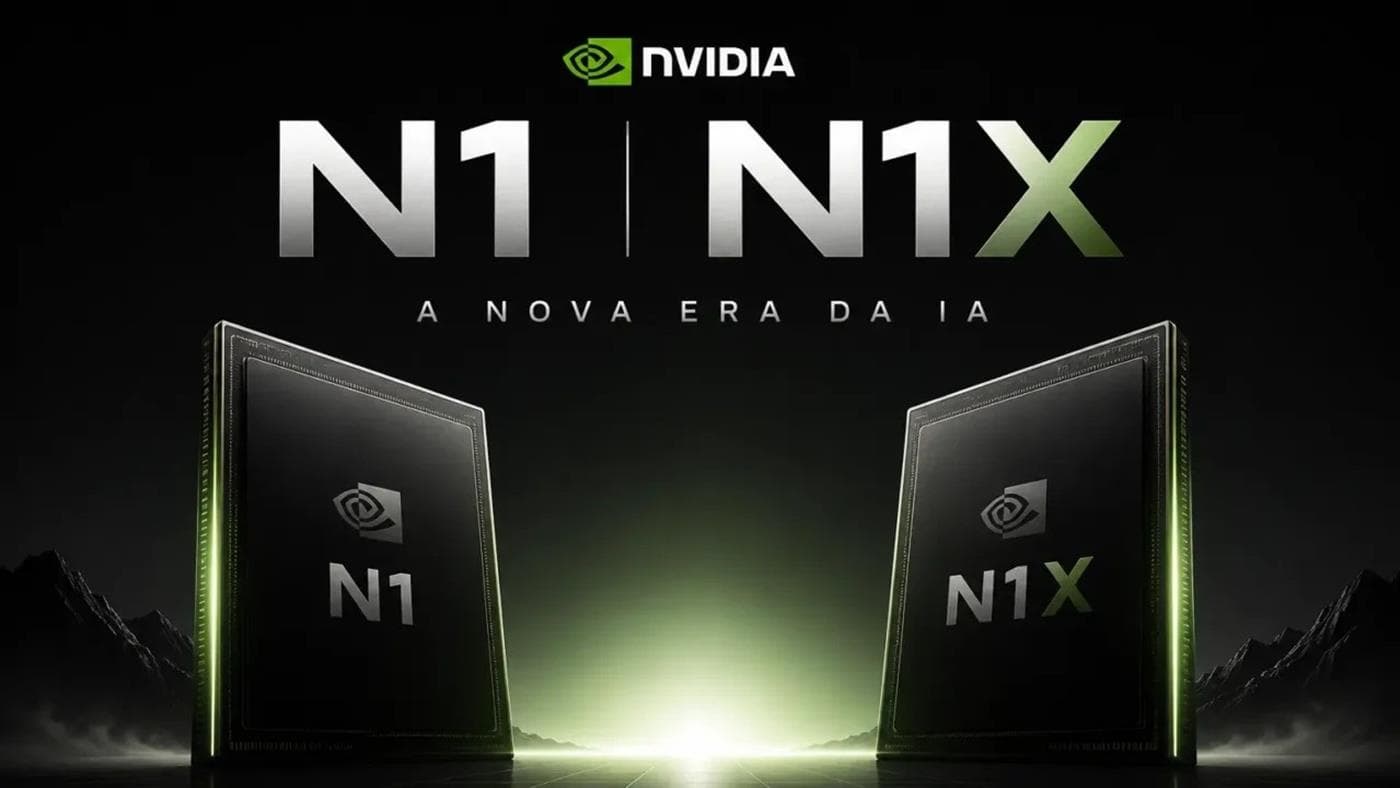
Nvidia's long-rumored ARM-based PC processors are moving closer to official unveiling. Technical details of the N1 series, anticipated for launch at Computex 2026, have surfaced through a leak.
The N1 chip is designed for mainstream laptops, featuring a 12-core CPU configuration. It combines eight performance cores with four efficiency cores, built on a custom ARM architecture. The processor is paired with an integrated GPU based on Nvidia's Blackwell architecture, offering up to 12 compute units.
A higher-end variant, the N1X, targets performance-oriented notebooks. This chip packs 20 CPU cores, split into 16 performance and four efficiency cores. Its GPU scales to 24 Blackwell compute units, delivering significantly higher graphics throughput.
Both processors support LPDDR5X memory, with the N1 handling up to 32GB and the N1X supporting up to 64GB. Memory bandwidth reaches 128-bit for the N1 and 256-bit for the N1X. The chips also integrate a dedicated neural processing unit for AI workloads, capable of up to 40 TOPS on the N1X.
Nvidia is positioning these processors to compete with Apple's M-series chips and Qualcomm's Snapdragon X Elite. The N1 series leverages Nvidia's GPU expertise to offer superior graphics performance in thin-and-light laptops. The chips are fabricated on a 3nm process node, likely from TSMC.
Laptop manufacturers including Dell, HP, Lenovo, and Asus are reportedly developing devices around the N1 and N1X. The first wave of products is expected to ship in the second half of 2026, following the Computex announcement.
Pricing details remain undisclosed, but the N1 is expected to target the mid-range segment, while the N1X will compete in the premium tier. Nvidia has not officially commented on the leaked specifications.
Computex 2026 is scheduled for early June in Taipei, where Nvidia is expected to formally introduce the N1 series. The company has not confirmed a specific launch date.

Nvidia Unveils RTX Spark Superchip Series at Computex 2026
Nvidia announced its first official processor family, the RTX Spark Superchip series, at Computex 2026. The new chips, previously known under the codenames N1 and N1X, mark the company's direct entry into the PC processor market.

Nvidia CEO Jensen Huang took the stage at Computex 2026 to unveil the company's first official processor family, the RTX Spark series. The announcement marks a significant expansion for the graphics card leader into the broader PC processor market. The new chips, previously rumored under the codenames N1 and N1X, are now officially branded as the RTX Spark Superchip lineup.
The RTX Spark series integrates Nvidia's GPU architecture with general-purpose processing cores on a single die. The design leverages the company's expertise in parallel computing and AI acceleration. Huang described the Superchip as a unified processor capable of handling both graphics and compute workloads with high efficiency.
Technical details shared during the presentation include support for the latest memory standards and connectivity interfaces. The chips are built on an advanced manufacturing process, though Nvidia did not disclose the specific node. The architecture incorporates dedicated tensor cores and ray tracing units, extending features from the company's discrete GPUs into the integrated processor.
Nvidia positioned the RTX Spark as a solution for a range of devices, from thin-and-light laptops to high-performance desktops. The company emphasized power efficiency and thermal performance, targeting both consumer and enterprise segments. Huang noted that the Superchip design allows for flexible configurations depending on the target device.
The announcement places Nvidia in direct competition with Intel and AMD in the CPU market. While Nvidia has long dominated the discrete GPU space, the RTX Spark series represents its first serious push into integrated processors. The company has previously offered the Tegra line for mobile and embedded devices, but the new chips are designed for mainstream PC platforms.
Availability details were provided for the initial lineup. The RTX Spark N1 and N1X models will launch in the first quarter of 2027. Pricing will vary by configuration, with the entry-level N1 starting at $299. OEM partners including Dell, HP, Lenovo, and ASUS have confirmed plans to release systems featuring the new processors.
Nvidia also announced a reference design for laptops and mini PCs based on the RTX Spark platform. The reference design includes support for up to 64GB of unified memory and PCIe 5.0 connectivity. Huang stated that the company will work closely with software developers to optimize applications for the new architecture.
The RTX Spark series goes on sale to OEMs in December 2026, with consumer devices expected to ship in early 2027. Nvidia will provide further technical specifications and benchmark results closer to the launch date.

Apple Targets September Launch for New Apple TV and HomePod Mini
Apple plans to release new Apple TV and HomePod Mini models in September, according to reliable analysts. The devices are expected to feature incremental hardware updates, with the timing driven by Apple's AI initiatives.

Apple is preparing to strengthen its smart home ecosystem with long-awaited product updates. According to information from trusted technology analysts, the next-generation Apple TV and HomePod Mini models will officially go on sale this September. The two devices are not expected to undergo radical hardware changes, with the launch timeline primarily determined by Apple's new moves in the artificial intelligence space.
The upcoming Apple TV is anticipated to feature an upgraded processor, likely the A16 Bionic chip, to support enhanced streaming capabilities and smoother integration with smart home accessories. The device may also include improved support for high refresh rate displays and advanced audio codecs. However, the overall design and core functionality are expected to remain similar to the current model.
The new HomePod Mini is rumored to incorporate a more advanced Siri experience, leveraging Apple's latest AI models for better voice recognition and contextual understanding. The smart speaker may also gain support for additional smart home protocols, such as Thread and Matter, to improve interoperability with third-party devices. Audio quality improvements are also possible, though the compact form factor is likely to stay unchanged.
Analysts suggest that Apple's focus on AI is the primary driver behind the September launch window. The company is reportedly developing a new on-device AI engine that will power features like personalized recommendations, adaptive audio tuning, and proactive home automation. These capabilities are expected to debut on the new Apple TV and HomePod Mini, giving users a more intelligent and seamless smart home experience.
The timing of the release aligns with Apple's typical product cycle, as the company often unveils new hardware in September alongside the iPhone lineup. This year, the new Apple TV and HomePod Mini could be announced at the same event, allowing Apple to showcase its integrated ecosystem. The devices are expected to ship shortly after the announcement, with pre-orders opening on the same day.
Pricing for the new Apple TV is expected to start at $179 for the 64GB model, while the 128GB version with Ethernet may cost $199. The HomePod Mini is likely to retain its $99 price point, though a potential higher-end variant with additional sensors could be priced at $129. Availability will begin in the United States first, followed by other major markets in Europe and Asia within weeks.
Apple has not officially confirmed these details, but the company's supply chain partners have reportedly begun ramping up production for the new devices. The September launch is seen as a strategic move to capture holiday season demand and solidify Apple's position in the smart home market. The new Apple TV and HomePod Mini are expected to go on sale starting September 22.