NTSB suspends public access to crash docket after AI recreates cockpit audio
The US National Transportation Safety Board has temporarily taken its online docket system offline after internet users used AI tools to reconstruct cockpit voice recordings from sound spectrum images. The move comes as federal law prohibits the agency from publicly releasing actual cockpit audio from transportation accidents.

The US National Transportation Safety Board has temporarily suspended public access to its online database of civil transportation accident records. The agency took the step after discovering that individuals were using artificial intelligence tools to reconstruct cockpit voice recordings from sound spectrum imagery included in investigation reports.
On May 21, the NTSB announced that the online docket system containing factual reports and evidence from investigations was "temporarily unavailable." The agency said it was reviewing the publicly available materials that had enabled people to recreate cockpit audio recordings from aircraft disasters.
Internet sleuths had used software and AI tools to recreate the voices of pilots from the final seconds of a fatal cargo plane crash. The reconstructed audio spread online, prompting the NTSB to act because federal law prohibits investigators from publicly releasing audio from cockpit voice recorders.
The NTSB acknowledged that "advances in image recognition and computational methods have enabled individuals to reconstruct approximations of cockpit voice recorder audio from sound spectrum imagery released as part of NTSB investigations." The agency specifically cited the ongoing investigation of the crash of UPS flight 2976 in Louisville, Kentucky, last year.
"The NTSB does not release cockpit audio recordings," the agency stated. The prohibition is rooted in federal law, which bars the NTSB from publicly disclosing cockpit voice recorder audio, though it may release written transcripts of the recordings.
The NTSB typically shares factual reports and evidence gathered from investigations of aircraft crashes and other civil transportation incidents. The online docket system had been a key resource for journalists, researchers, and the public to access such materials.
The agency did not specify when the docket system would be restored. The NTSB said it was reviewing the materials to prevent further unauthorized reconstruction of cockpit audio from its publicly available records.
Driver integrates smartwatch into gear shift knob, goes viral
A driver with no software background developed a smart gear shift knob that detects gear movements in real-time and controls the music player. The project gained widespread attention online.
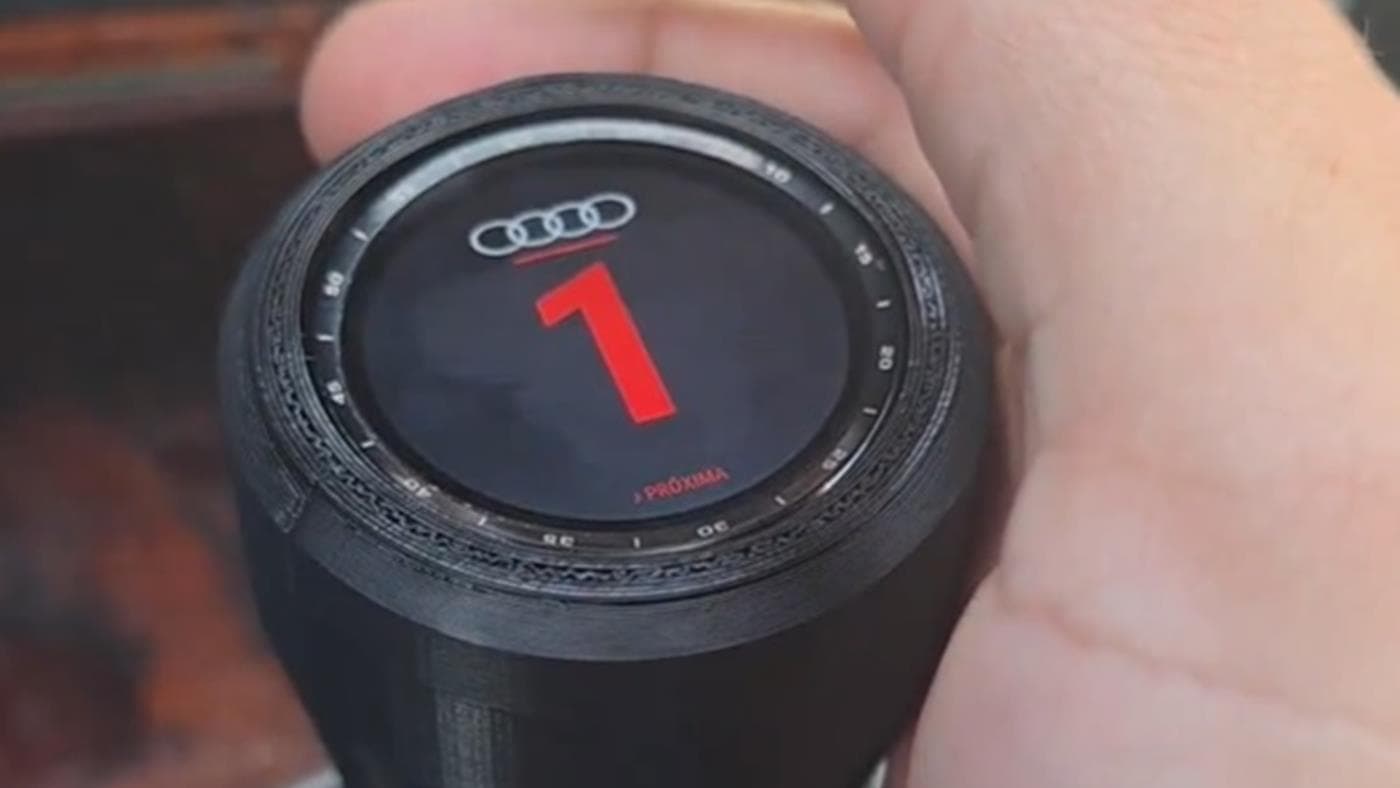
A driver has created a smart gear shift knob that integrates a smartwatch to detect gear movements and control the vehicle's music player. The project, developed without any formal software training, has become a trending topic on social media. The system uses the smartwatch's sensors to monitor the position of the gear lever in real time. When the driver shifts gears, the smartwatch interprets the movement and triggers corresponding actions, such as skipping tracks or adjusting volume. The builder documented the process and shared it online, where it quickly gained traction among automotive and tech enthusiasts. The video demonstrates how the smartwatch is mounted onto the gear knob and connected to the car's audio system via Bluetooth. The creator noted that the project required only basic hardware modifications and off-the-shelf components. The smartwatch runs a custom application that processes sensor data and sends commands to the music player. The driver stated that the goal was to enhance convenience and reduce distractions while driving. The project has sparked discussions about DIY automotive modifications and the potential for integrating wearable technology into vehicles. Some viewers praised the ingenuity, while others raised questions about safety and legality. The creator has not announced plans to commercialize the design but has shared detailed instructions for others to replicate it. The video has amassed millions of views across multiple platforms. The driver emphasized that the project was a personal experiment and not intended for professional use. The smart gear knob is currently installed in the driver's personal vehicle and has been tested over several weeks. The creator reported no issues with reliability or interference with the car's normal operation. The project highlights the growing trend of consumer-driven innovation in the automotive space. The driver hopes the project inspires others to explore creative solutions using everyday technology.

Samsung targets MediaTek as foundry customer to boost chip business
Samsung is reportedly pursuing MediaTek as a customer for its semiconductor foundry services. The move is part of Samsung's aggressive strategy to strengthen its position in the chip manufacturing market.

Samsung Electronics is intensifying efforts to expand its semiconductor foundry business, with a new report indicating the company is courting MediaTek as a potential client. The South Korean tech giant aims to secure chip production orders from the Taiwanese fabless chip designer, according to industry sources.
MediaTek, one of the world's largest mobile chip designers, currently relies heavily on Taiwan Semiconductor Manufacturing Co. (TSMC) for its advanced chip manufacturing needs. Samsung's foundry division has been aggressively seeking to diversify its customer base beyond its own semiconductor products and major clients like Qualcomm and Nvidia.
Samsung's foundry business has faced challenges in recent years, including lower yields compared to TSMC and difficulties in attracting top-tier customers for its most advanced process nodes. The company has been investing billions of dollars in new fabrication facilities and advanced manufacturing technologies to close the gap.
MediaTek's potential shift to Samsung could be significant, as the company produces chips for a wide range of devices, including smartphones, smart TVs, and IoT products. However, MediaTek has historically maintained a close relationship with TSMC, which has been its primary foundry partner for years.
Industry analysts note that winning MediaTek as a customer would be a major coup for Samsung, potentially signaling a shift in the foundry market dynamics. Samsung has already secured orders from companies like AMD and Google for its advanced 3nm and 4nm process technologies.
Neither Samsung nor MediaTek have officially commented on the report. The foundry market remains highly competitive, with TSMC holding a dominant market share of over 50%, while Samsung trails with around 15%.
Samsung's foundry division has set an ambitious goal to become the global leader in semiconductor manufacturing by 2030. The company has been expanding its production capacity and investing in next-generation chipmaking technologies to attract more customers.
MediaTek's decision on its foundry partnerships will depend on factors such as pricing, yield rates, and technology roadmaps. The company is expected to continue evaluating its options as the semiconductor industry evolves.

Study Challenges View of Senescent Cells as Purely Harmful in Aging
New research reveals that not all senescent 'zombie cells' are detrimental; some play a protective role in the body. This finding could reshape anti-aging therapies that aim to eliminate all such cells.

A new study published in the journal Cell suggests that senescent cells, often called 'zombie cells' for their undead-like state, may not be uniformly harmful. Researchers at the University of California, San Francisco found that certain senescent cells actually help protect tissues from damage and aid in repair. The discovery challenges the prevailing view that all senescent cells contribute to aging and disease.
Senescent cells accumulate with age and have been linked to chronic inflammation, cancer, and age-related decline. Many anti-aging therapies, known as senolytics, aim to eliminate these cells. However, the new research indicates that blanket removal could be counterproductive. The team identified a subset of senescent cells that express high levels of a protein called CD9, which appears to be beneficial.
In experiments with mice, the CD9-positive senescent cells were found to promote wound healing and suppress tumor growth. When the researchers selectively removed these cells, wounds healed more slowly and cancer risk increased. The study suggests that senescent cells are not a uniform population and that their roles vary depending on context.
The findings could have significant implications for the development of anti-aging treatments. Instead of wiping out all senescent cells, future therapies might target only the harmful ones while preserving the protective ones. The researchers are now working to identify markers that distinguish beneficial from harmful senescent cells.
Dr. Judith Campisi, a co-author of the study, emphasized that the work highlights the complexity of cellular aging. 'We need to be careful about painting all senescent cells with the same brush,' she said. 'Some of them are clearly doing important jobs.' The study was funded by the National Institutes of Health and the Glenn Foundation for Medical Research.
The next step for the team is to explore whether similar protective senescent cells exist in humans. If so, it could lead to more targeted therapies that avoid the potential side effects of broad senolytic drugs. The research also opens new avenues for understanding how the body balances the benefits and drawbacks of cellular senescence.
While the study was conducted in mice, the researchers are optimistic that the findings will translate to humans. They plan to analyze human tissue samples to look for CD9-positive senescent cells. The work is part of a growing recognition that aging is a complex process with many nuances, and that simple solutions may not be effective.
The study was published online on March 15, 2025, in the journal Cell. The full text is available for free on the journal's website. The researchers have declared no competing interests.

First-generation Chromecast users report sudden failures, Google denies bricking devices
Numerous owners of the first-generation Chromecast reported that their devices suddenly stopped casting from popular apps. Google stated it did not intentionally disable the devices and is investigating the issue.
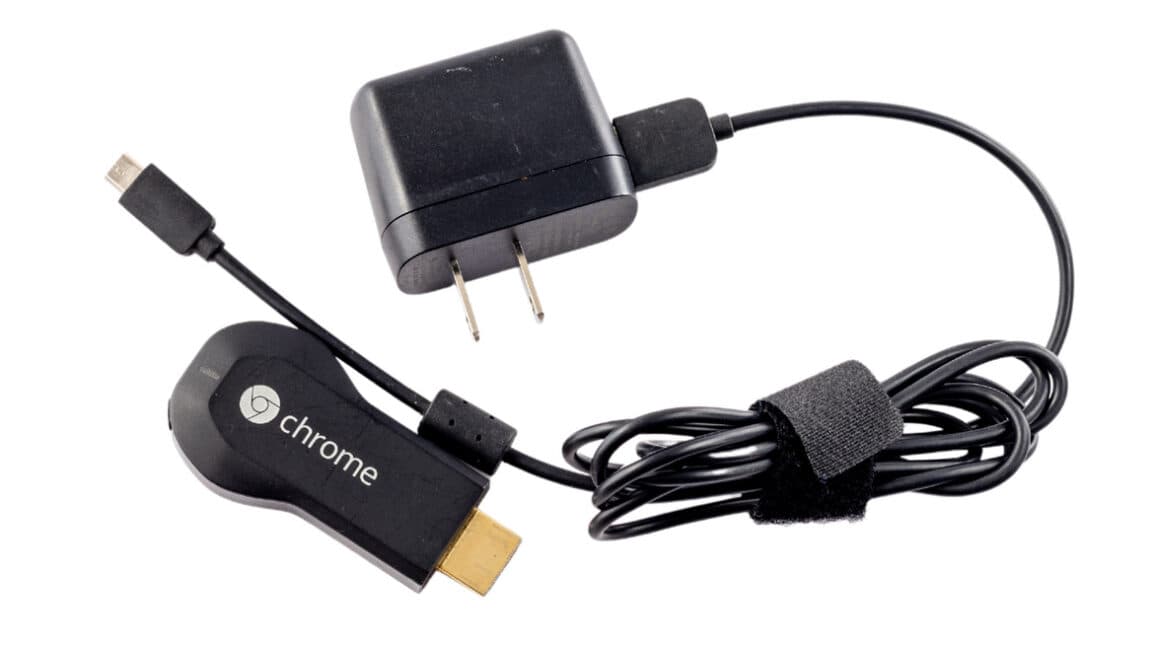
Google’s first Chromecast, launched in 2013, became a widely adopted streaming device, with 10 million units sold by 2014. Its appeal lay in its straightforward functionality: users could cast content from apps like YouTube and Chrome directly to a TV without navigating a separate interface. The device lacked a user interface or advertisements, focusing solely on casting. Despite Google ending support for the $35 device in 2023, many households continued using it for basic streaming needs.
This week, however, reports emerged that the original Chromecast had stopped working for many users. Complaints surfaced on Reddit and other platforms, with users noting that apps such as Chrome, YouTube, and Paramount+ no longer cast to the device. Some users reported that multiple first-gen Chromecasts failed simultaneously, leading to speculation that Google had deliberately bricked the devices to encourage upgrades.
Sahana Mysore, senior product manager for Google Home, addressed the concerns in a statement to Ars Technica. She denied that Google intentionally disabled the devices, stating that the company did not kill the Chromecasts. Mysore did not provide an immediate explanation for the failures but indicated that Google is investigating the issue.
The first-generation Chromecast was discontinued years ago, and Google ended software support for it in 2023. Despite this, the device remained functional for basic casting until this week’s disruptions. Users who rely on the device for streaming are now left without a clear timeline for a fix.
Google has not released an official statement beyond Mysore’s comments. The company has not confirmed whether a software bug or server-side change caused the failures. Affected users are advised to check for updates or consider upgrading to newer Chromecast models, such as the Chromecast with Google TV, which remains supported.
For now, the first-generation Chromecast’s sudden failure remains unexplained. Google’s denial of intentional bricking offers some reassurance, but users await a resolution. The company has not announced a specific date for a fix or further details on the investigation.