Nvidia's AI Surge Divides Wall Street, Leaves Main Street Earnings in the Dust
Stock markets rally on renewed AI optimism, led by Nvidia, while consumer-focused companies struggle to keep pace. The divergence highlights a growing gap between tech-driven growth and broader economic challenges.

A sharp divergence has emerged in financial markets, with technology stocks surging on renewed artificial intelligence enthusiasm while consumer-oriented companies report lackluster earnings. The rally, led by chipmaker Nvidia, has propelled major indices higher, but the gains remain concentrated in a narrow band of AI-related firms. This bifurcation underscores a growing divide between Wall Street's tech optimism and the realities facing Main Street businesses.
Nvidia's shares have soared over 20% in the past month, pushing its market capitalization past $3 trillion, as investors bet on sustained demand for its graphics processing units used in AI data centers. The company's latest earnings report exceeded expectations, with revenue from its data center segment doubling year-over-year. Analysts attribute the surge to hyperscalers like Microsoft and Amazon ramping up AI infrastructure spending, a trend expected to continue through 2025.
However, beyond the AI sector, corporate earnings tell a different story. Retailers, consumer goods makers, and hospitality firms have reported cautious outlooks, citing persistent inflation and shifting consumer spending habits. Walmart recently trimmed its profit forecast, while McDonald's noted a slowdown in U.S. traffic. These reports suggest that the broader economy is grappling with higher interest rates and dwindling pandemic-era savings.
The market's narrow leadership has prompted concerns about sustainability. Historically, rallies driven by a handful of stocks have often preceded corrections. The S&P 500's equal-weight index, which gives each company the same representation, has lagged its market-cap-weighted counterpart by over 10 percentage points this year, signaling that most stocks are not participating in the gains.
For Main Street businesses, the challenge is twofold: they face both cost pressures from inflation and a potential pullback in consumer spending. Small and medium-sized enterprises, in particular, are struggling to pass on higher costs to price-sensitive customers. Meanwhile, the Federal Reserve's commitment to keeping rates elevated to combat inflation adds further strain on borrowing costs.
Investors are now watching for signs of whether AI's transformative potential can trickle down to other sectors. Some analysts argue that as AI adoption spreads, it could boost productivity across industries, eventually benefiting consumer companies. Others caution that the current enthusiasm may be overblown, with Nvidia's valuation already pricing in years of perfect execution.
In the near term, earnings season will provide more clues. Next week, results from major retailers like Home Depot and Target will offer fresh insights into consumer health. Meanwhile, Nvidia's upcoming GTC conference in March could set the tone for AI stocks. The key question remains whether AI's promise can bridge the gap between Wall Street's dreams and Main Street's realities.
As the market digests these opposing forces, volatility is likely to persist. The Fed's next policy meeting in March will be closely scrutinized for any shift in stance. For now, the AI rally continues to defy gravity, but its isolation from the broader economy leaves the market vulnerable to sudden reversals if sentiment shifts.
How AI is Transforming Employment and Shaping Future Careers
Artificial intelligence is fundamentally altering the job landscape, displacing some roles while creating new opportunities. Workers must adapt by acquiring skills in AI collaboration and lifelong learning.

Artificial intelligence is rapidly reshaping the global job market, automating routine tasks and augmenting human capabilities across industries. From manufacturing to finance, AI systems are taking over repetitive processes, leading to both job displacement and the creation of new roles that require human-AI collaboration. This transformation is not a distant future scenario but an ongoing reality that demands immediate attention from workers, employers, and policymakers.
At the core of this shift are technologies like machine learning, natural language processing, and robotics. Machine learning algorithms analyze vast datasets to make predictions or decisions, replacing jobs in data entry, customer service, and even legal document review. Natural language processing powers chatbots and virtual assistants, handling inquiries that once required human operators. Robotics and automation are revolutionizing manufacturing, warehousing, and logistics, performing tasks with greater speed and precision than human workers.
However, AI is also generating new job categories that didn't exist a decade ago. Roles such as AI ethicists, data labelers, and prompt engineers are emerging, focusing on training, refining, and overseeing AI systems. The demand for AI specialists, data scientists, and machine learning engineers has skyrocketed, with salaries reflecting the high value placed on these skills. Moreover, AI is augmenting existing professions: doctors use AI for diagnostic assistance, teachers leverage personalized learning tools, and marketers employ AI for targeted campaigns.
The impact of AI on jobs is uneven across sectors and demographics. Routine manual and cognitive tasks are most susceptible to automation, while jobs requiring creativity, emotional intelligence, and complex problem-solving are more resilient. Low-skilled workers face higher risks of displacement, while high-skilled workers may see their productivity enhanced. Geographic disparities also emerge, with tech hubs benefiting from AI-driven growth while regions dependent on manufacturing or routine services may struggle.
To navigate this evolving landscape, workers must embrace lifelong learning and upskilling. Governments and companies are investing in reskilling programs, teaching digital literacy, critical thinking, and AI collaboration. Educational institutions are updating curricula to include AI fundamentals, data analysis, and ethics. For individuals, staying adaptable and continuously acquiring new skills is essential to remain relevant in an AI-augmented workforce.
Companies adopting AI must also consider the human element. Ethical implementation involves transparent communication about job changes, providing retraining opportunities, and redesigning work processes to combine human and machine strengths. Some organizations are experimenting with four-day workweeks or job sharing to mitigate displacement effects. Social safety nets, such as universal basic income or portable benefits, are being debated as potential buffers against job loss.
Looking ahead, the pace of AI adoption will accelerate, making it crucial for societies to proactively manage the transition. While AI will eliminate some jobs, it also has the potential to create a more efficient and fulfilling work environment if handled responsibly. The future of work is not predetermined; it will be shaped by the choices we make today in education, policy, and corporate strategy.
South Carolina Bill Targets AI-Generated Child Exploitation Images
South Carolina lawmakers have introduced a bill to criminalize the creation and distribution of AI-generated child sexual abuse material. The legislation aims to close legal gaps as synthetic media becomes increasingly realistic and accessible.

South Carolina legislators are pushing forward with a new bill designed to combat the growing threat of artificial intelligence being used to exploit children. The proposed law, introduced in the state's General Assembly, would make it a crime to create, possess, or distribute AI-generated images or videos that depict minors in sexually explicit scenarios. Lawmakers argue that current statutes are insufficient to address the rapid advancement of generative AI technologies, which can produce hyper-realistic synthetic content with just a few prompts.
Under the bill, offenders could face felony charges punishable by up to 10 years in prison for first-time offenses, with harsher penalties for repeat violations. The legislation specifically targets "synthetic child sexual abuse material" (CSAM), defined as any visual representation created through artificial intelligence, machine learning, or other digital means that appears to depict a minor engaging in sexual conduct. This includes deepfakes and entirely computer-generated images that do not involve an actual child in production.
The proposal comes amid a nationwide push to update laws as AI tools become more sophisticated and accessible. Currently, federal law prohibits CSAM involving real children, but legal gray areas exist for purely synthetic content. South Carolina's bill seeks to close that gap by explicitly including AI-generated material, recognizing that such content can normalize abuse, fuel demand for real exploitation, and cause psychological harm to victims whose likenesses are used without consent.
Supporters of the bill, including child advocacy groups and law enforcement, emphasize that synthetic CSAM is not a victimless crime. Even when no real child is involved in production, the images can be used to groom minors, blackmail victims, or desensitize viewers to exploitation. The bill also includes provisions for training law enforcement to identify AI-generated material and collaborate with tech companies to trace its origin.
The legislation has drawn bipartisan support, with sponsors citing the need to stay ahead of technological threats. Similar bills have been introduced in states like Florida, Texas, and California, reflecting a growing recognition that existing laws are outdated. However, some civil liberties groups have raised concerns about potential overreach, arguing that the law could inadvertently target legitimate artistic or educational content.
If passed, South Carolina would join a handful of states with explicit bans on AI-generated child exploitation material. The bill is currently under review by the Judiciary Committee, with hearings expected in the coming weeks. Lawmakers hope to have it signed into law before the end of the legislative session.
As AI continues to evolve, legal experts predict that more states will follow suit, leading to a patchwork of regulations that may eventually require federal standards. For now, South Carolina's bill represents a proactive step in protecting children from emerging digital threats, setting a precedent for how states can adapt criminal codes to the age of generative AI.
Trump-Xi Summit Leaves Nvidia's China Chip Deal Stuck in Limbo: Report
Nvidia's plan to ship H200 AI chips to China remains unresolved after the Trump-Xi summit ended without a breakthrough. The deal is now in limbo pending further negotiations.

The fate of Nvidia's powerful H200 artificial intelligence chips in China remained unresolved Friday after President Donald Trump's visit to China ended without a breakthrough, according to a new report. The summit between Trump and Chinese President Xi Jinping concluded without any public agreement on technology trade restrictions, leaving Nvidia's proposed sale of its H200 AI chips to Chinese customers in a state of uncertainty. The H200 is one of Nvidia's most advanced AI accelerators, designed for high-performance computing tasks such as training large language models and running complex simulations.
Nvidia had been seeking U.S. government approval to export the H200 to China, which is subject to export controls imposed by the Biden administration and maintained under Trump. The chips are restricted due to national security concerns, as they could be used to advance China's military AI capabilities. The H200 offers significant performance improvements over previous models, with enhanced memory bandwidth and processing power, making it highly sought after by Chinese tech companies for AI development.
The lack of progress at the summit suggests that the issue will be addressed in future trade negotiations, but no timeline has been set. Nvidia has reportedly been in talks with U.S. officials to find a compromise, such as shipping a less powerful version of the chip that still meets export control requirements. However, the company has not confirmed any specific proposals.
This development comes amid broader tensions over technology trade between the U.S. and China. The U.S. has been tightening restrictions on advanced semiconductors and manufacturing equipment to slow China's technological rise. Nvidia, as a leading chipmaker, has been at the center of these disputes, with its previous A100 and H100 chips also facing export restrictions.
For Nvidia, the inability to sell H200 chips to China represents a significant revenue loss, as Chinese customers have been major buyers of its AI hardware. The company has warned that export controls could harm its business and competitiveness. Meanwhile, Chinese firms are increasingly turning to domestic alternatives, such as Huawei's Ascend chips, to fill the gap.
The situation remains fluid, with both sides expected to continue negotiations. Analysts suggest that a resolution could take months, and the outcome will depend on broader geopolitical dynamics. Nvidia has not commented on the report, but investors are closely watching for any updates that could affect the company's stock.
In the meantime, Nvidia is focusing on other markets, including the U.S. and Europe, where demand for AI chips remains strong. The company recently reported record revenue driven by data center sales, but the China uncertainty casts a shadow over its long-term growth prospects. The next potential milestone could be a follow-up meeting between Trump and Xi, though no date has been announced.
Institutional Investors Ramp Up Stakes in AI Infrastructure Stocks in Q1 2026
During the first quarter of 2026, institutional investors significantly increased their holdings in companies critical to AI infrastructure. This surge reflects growing confidence in the long-term demand for AI computing power, data centers, and networking hardware.
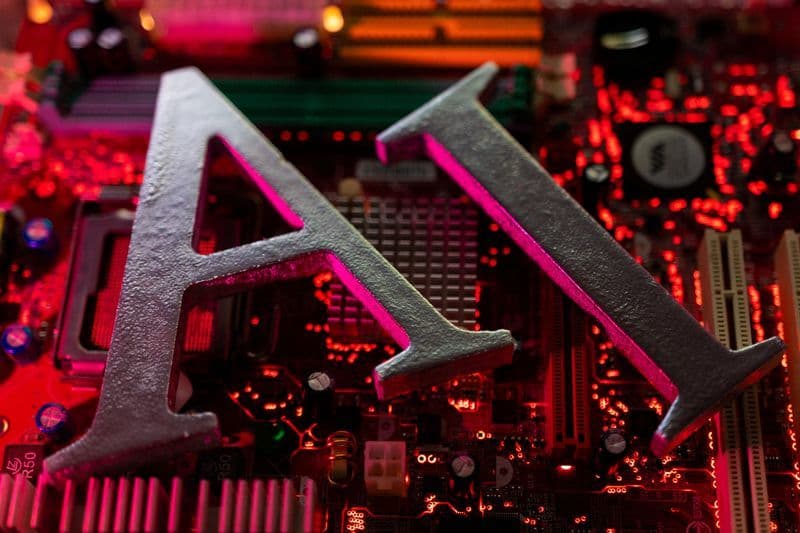
In the first quarter of 2026, institutional investors aggressively expanded their positions in companies central to artificial intelligence infrastructure, signaling strong conviction in the sector's growth trajectory. Data from regulatory filings reveals that hedge funds, pension funds, and mutual funds collectively boosted stakes in firms providing AI chips, data center equipment, and cloud services. The move underscores a broader shift toward betting on the physical backbone of AI rather than just software applications.
Leading the charge were holdings in semiconductor giants like Nvidia and AMD, which design the high-performance GPUs essential for training and running AI models. Institutional ownership in Nvidia rose by 12% quarter-over-quarter, while AMD saw an 8% increase. Additionally, companies specializing in data center construction and cooling systems, such as Vertiv and Eaton, experienced notable upticks in institutional interest. These firms benefit from the exponential rise in computing power requirements, which demand advanced infrastructure to manage heat and energy consumption.
The trend also extended to networking and interconnect companies like Broadcom and Marvell Technology, which produce chips and equipment for high-speed data transfer within AI clusters. Institutional filings show a 15% increase in holdings for Broadcom, driven by its custom AI chip deals with major tech firms. Meanwhile, cloud providers like Microsoft and Amazon, which lease AI computing capacity, saw steady but more modest gains as institutions balanced exposure between infrastructure vendors and cloud hyperscalers.
This investment wave comes amid a backdrop of surging AI adoption across industries, from autonomous vehicles to generative AI applications. The first quarter saw several major enterprises announce plans to triple their AI computing budgets, fueling demand for hardware that can handle massive workloads. Analysts note that while AI software companies have faced valuation corrections, infrastructure plays offer more tangible revenue streams tied to physical deployments.
For retail investors, the institutional buying spree may signal a shift in market leadership away from pure-play AI software firms toward hardware and infrastructure providers. However, the high capital expenditure required for AI infrastructure means these companies are sensitive to interest rate changes and supply chain disruptions. The increased institutional focus could also lead to higher volatility, as large funds adjust positions based on quarterly performance.
The impact is most pronounced in the US market, where the majority of AI infrastructure companies are listed, but Asian and European firms in the supply chain are also benefiting. Notably, TSMC, the key manufacturer of AI chips, saw institutional holdings rise by 10%, while European semiconductor equipment maker ASML experienced a 7% increase. Prices for these stocks have generally trended upward, though some have faced profit-taking after sharp gains in late 2025.
Looking ahead, the second quarter may bring further institutional accumulation, especially if AI adoption accelerates with new product launches from tech giants. However, uncertainties remain around export controls on advanced chips and potential overbuilding of data center capacity. The next wave of quarterly filings in August will reveal whether this trend persists or if institutions rotate into other sectors. For now, AI infrastructure appears to be a cornerstone of institutional portfolios, reflecting a bet on the enduring need for physical computing power in the AI era.