reMarkable Paper Pro: New Entry-Level Slate Targets Corporate Buyers
reMarkable has launched the Paper Pro, a new entry-level digital writing slate designed to appeal more to corporate buyers. The device starts at $579 and is available for pre-order now.

reMarkable has introduced the Paper Pro, a new entry-level digital writing slate that the company says is consciously designed to appeal more to corporate buyers. The device, which starts at $579, is available for pre-order starting today.
The Paper Pro features a 10.3-inch monochrome E Ink display with a resolution of 1872 x 1404 pixels and 226 PPI. It includes a new Marker stylus that requires no charging and offers a paper-like writing experience with low latency. The device runs on a custom Linux-based operating system and provides cloud synchronization for notes and documents.
reMarkable has positioned the Paper Pro as a tool for professionals who need to take handwritten notes, annotate documents, and organize their work digitally. The company emphasizes the device's ability to replace paper notebooks and printed documents, reducing clutter and improving productivity.
Compared to the higher-end reMarkable 2, the Paper Pro lacks some features such as a front light and a higher-resolution display. However, it retains the core writing and reading capabilities that have made reMarkable devices popular among note-takers and academics.
The Paper Pro is available in a single configuration with 8GB of storage. It comes with the Marker stylus and a USB-C cable for charging and data transfer. The device measures 187 x 246 x 4.7 mm and weighs 403 grams.
reMarkable is targeting corporate buyers with the Paper Pro, offering volume discounts and integration with enterprise cloud services. The company also provides a 30-day money-back guarantee and a one-year warranty.
The Paper Pro is available for pre-order in the United States, Canada, the United Kingdom, and select European countries. Shipping is expected to begin in late November. The device is priced at $579, with the Marker stylus included.
Pornhub Unblocks UK Users Who Verify Age via Apple
Pornhub's parent company Aylo announced that UK iOS users who verify their age through Apple will regain full access to the adult website. The move comes as the UK implements new age verification laws for online adult content.

Pornhub is restoring access for UK users who verify their age through Apple’s system, its parent company Aylo confirmed. The change applies specifically to iOS users in the UK who complete the age verification process via Apple’s technology. Those who do not verify will continue to face restrictions on the platform.
Aylo stated that the decision aligns with the UK’s new regulatory framework for adult content. The company emphasized that age verification is a critical step to ensure compliance with local laws. Apple’s system provides a secure and private method for users to confirm they are over 18.
The verification process requires users to authenticate their Apple ID, which then confirms their age without sharing personal data with Pornhub. This approach aims to balance legal requirements with user privacy. Aylo noted that the system is designed to prevent underage access while minimizing data exposure.
UK users who do not verify their age will still be blocked from viewing content on Pornhub. The company has previously restricted access in other regions with similar age verification mandates. Aylo said it is working to implement comparable solutions for other platforms and devices.
The UK’s Online Safety Act, which took effect earlier this year, imposes strict obligations on adult websites to verify user ages. Non-compliance can result in significant fines. Pornhub’s move to integrate Apple’s verification system is seen as a direct response to these legal pressures.
Aylo also operates other adult sites such as YouPorn and RedTube, which may adopt similar verification methods in the future. The company has not yet announced plans for Android users or desktop access. Currently, only iOS users in the UK have the option to verify via Apple.
The age verification feature is available immediately for UK iOS users. Pornhub expects the system to expand to other regions as local regulations evolve. Aylo reiterated its commitment to age verification as a standard practice across its platforms.

Chrome Downloads 4GB AI File Without User Consent, Researcher Claims
A security researcher alleges that Google Chrome downloads a 4GB AI model file without user consent. The file is part of a built-in AI feature that can be disabled via a toggle.

A security researcher has accused Google Chrome of downloading a 4GB artificial intelligence model file without obtaining user permission. The allegation centers on a file associated with the browser's integrated AI capabilities, which the researcher claims is automatically fetched in the background. The download reportedly occurs even when users have not opted into any AI features, raising concerns about data usage and privacy.
The file in question is part of Chrome's built-in AI functionality, which Google has been gradually expanding. The researcher, who shared findings on social media, stated that the download happens without clear notification or consent. This has sparked debate about transparency in how browsers handle large background downloads, particularly for features that may not be immediately obvious to users.
Google has not yet issued an official response to the specific claim, but the company has previously emphasized user control over AI features. Chrome includes a toggle in its settings that allows users to disable the AI model download. The toggle is located under the "Privacy and security" section, labeled as "Allow AI-powered features." Disabling this option prevents the browser from downloading or using the AI model.
The 4GB file size is notable, as it represents a significant amount of data for a background download. For users with limited bandwidth or data caps, such an automatic download could lead to unexpected charges or slowed connections. The researcher highlighted that the download occurs without a clear prompt, which may violate user expectations around consent.
Chrome's AI features include capabilities like smart text selection, tab organization, and other machine learning-driven tools. These features are designed to enhance browsing efficiency, but their automatic activation has drawn criticism. The toggle provides a straightforward way for users to opt out, but critics argue that the default behavior should require explicit consent.
The incident adds to ongoing discussions about how tech companies deploy AI features. As browsers and operating systems increasingly integrate AI, questions about user agency and data handling become more pressing. The researcher's findings underscore the need for clearer communication about what software does in the background.
For now, users concerned about the download can navigate to Chrome's settings and disable the AI toggle. This action will stop the current download and prevent future ones. The setting is available in the latest stable version of Chrome across desktop and mobile platforms. Google has not indicated any plans to change the default behavior.
The researcher's report has prompted some users to check their own Chrome installations for the file. The AI model is stored locally and can be deleted manually if the toggle is turned off. However, without the toggle disabled, Chrome may re-download the file after updates or cache clearing.
As of now, Google has not commented on whether the download process will be revised. The company typically addresses such concerns through updates or documentation. Users seeking more information can refer to Chrome's help pages on AI features, which describe the toggle and its effects.

Meta develops AI-powered necklace and four new smart glasses models
Meta is working on an AI-powered necklace and four new smart glasses models as part of its wearable technology strategy. The devices aim to integrate artificial intelligence into everyday accessories.

Meta is expanding its wearable technology lineup with an artificial intelligence-powered necklace and four new smart glasses models, according to sources familiar with the company's plans. The projects are part of Meta's broader push to embed AI into everyday accessories.
The AI necklace, internally referred to as "Camerabuds," is designed to be worn around the neck and features a camera that can capture images and video. The device uses Meta's AI to identify objects, translate text, and provide contextual information to the wearer. It is expected to compete with similar products like the Humane AI Pin and the Rabbit R1.
Meta's smart glasses lineup includes four new models under development. Two of these are successors to the Ray-Ban Meta smart glasses, which were released in 2023. The third model is a high-end version with a built-in display, codenamed "Orion," and the fourth is a more affordable variant aimed at a broader audience.
The Ray-Ban Meta smart glasses, currently priced at $299, have seen moderate success. The new models are expected to feature improved cameras, longer battery life, and deeper integration with Meta's AI assistant. The high-end Orion model is rumored to include a holographic display that can overlay digital information onto the real world.
Meta's wearable strategy is part of CEO Mark Zuckerberg's vision to create the next major computing platform after smartphones. The company has invested heavily in augmented reality and virtual reality through its Reality Labs division, which reported $19.2 billion in losses in 2023.
The AI necklace and smart glasses are still in development, with no official release dates announced. However, sources indicate that Meta aims to launch some of these products within the next two years. The company is also working on a neural interface wristband that can interpret hand gestures, which could complement the glasses.
Meta faces competition from other tech giants like Apple, which is reportedly developing its own smart glasses, and Google, which has a long history with Google Glass. The market for wearable AI devices is still nascent, but Meta is betting that integrating AI into familiar form factors like glasses and necklaces will appeal to consumers.
Meta has not commented on the reports. The company is expected to provide more details at its annual Connect conference later this year.

Meta Plans Four Smart Glasses Models by 2026, Tests AI Necklace
Meta is preparing to launch four different smart glasses models before the end of 2026 and has begun testing an AI-powered necklace, according to recent leaks. The aggressive expansion aims to strengthen its wearable tech portfolio and offset losses from Reality Labs.
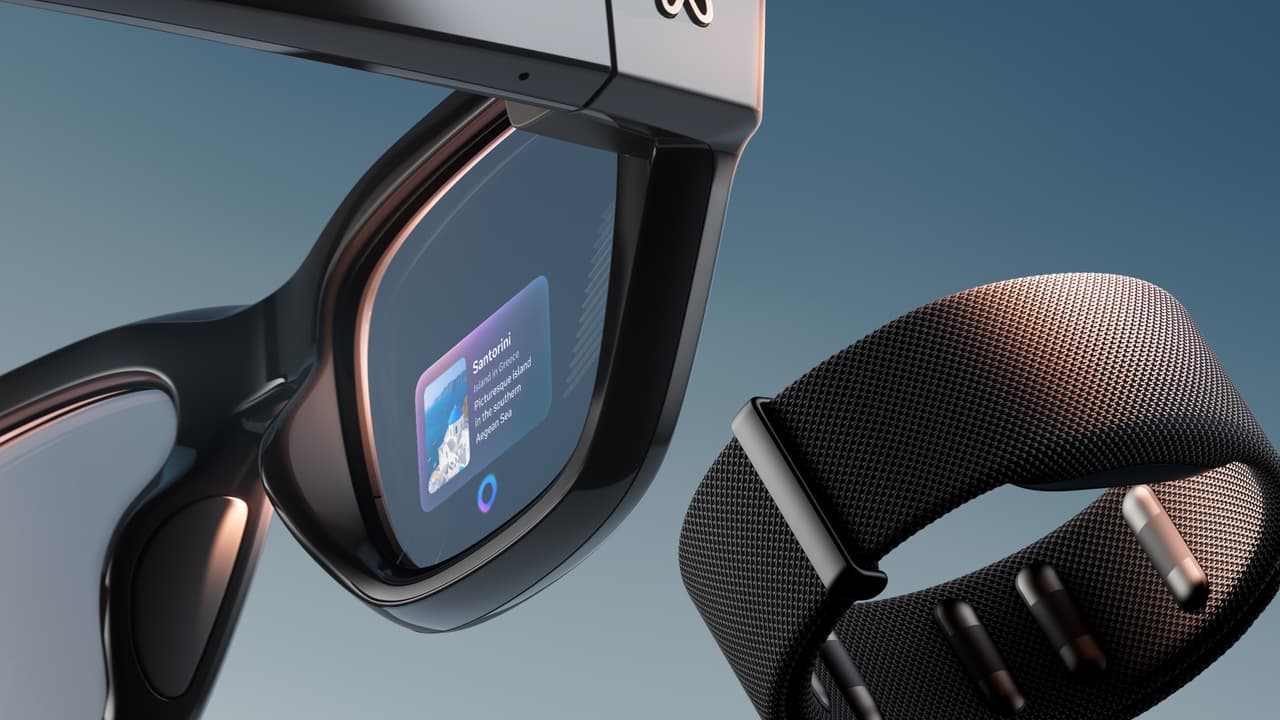
Meta is accelerating its wearable technology strategy with plans to release four distinct smart glasses models by 2026, according to information from recent leaks. The company is also initiating tests on an artificial intelligence-powered necklace, signaling a broader push into AI-driven accessories. These moves come as Meta seeks to expand its footprint in the wearable market while addressing the substantial financial losses incurred by its Reality Labs division.
The leaked roadmap details a diverse lineup of smart glasses designed for different user segments. One model is expected to be a premium version featuring advanced augmented reality capabilities, while another targets a more affordable price point to attract mainstream consumers. A third model is reportedly focused on fitness and health tracking, integrating sensors for activity monitoring. The fourth model is said to emphasize connectivity and hands-free assistance, leveraging Meta's AI assistant.
The AI necklace, currently in testing, is described as a standalone wearable that can interact with users through voice commands and provide contextual information. It is designed to work seamlessly with Meta's ecosystem of devices, including the smart glasses, and may eventually replace some smartphone functions. The necklace is expected to feature a microphone, speaker, and possibly a camera for visual recognition tasks.
Meta's aggressive timeline aims to capitalize on the growing interest in smart eyewear, a category that has seen renewed attention following the success of Ray-Ban Meta smart glasses. The company hopes that a broader range of options will help it capture different market segments and increase adoption rates. Industry analysts note that Meta's strategy mirrors its approach in the virtual reality space, where it offers multiple headset models at various price points.
The financial pressure on Meta's Reality Labs division, which reported significant operating losses in recent quarters, is a key driver behind this expansion. By diversifying its wearable product line, Meta aims to generate new revenue streams and reduce its reliance on advertising income. The company has invested heavily in augmented and virtual reality technologies, viewing them as the next major computing platform.
Pricing details for the upcoming smart glasses have not been disclosed, but sources suggest the affordable model could start around $299, while the premium AR version may exceed $1,000. The AI necklace is expected to be priced competitively to encourage widespread adoption. Meta plans to launch the first new smart glasses model in early 2025, with subsequent releases staggered through 2026.
Availability will initially focus on the United States and select European markets, with a broader global rollout planned for later phases. Meta is also working with eyewear partners to ensure prescription lens options and style variations. The company has not confirmed any of the leaked details, but internal documents and supply chain reports support the outlined roadmap.
Meta's official statement on the matter is expected later this year, likely coinciding with the company's annual Connect conference. The first new smart glasses model is scheduled to go on sale in the first quarter of 2025.