Sennheiser Momentum 5 Headphones Debut with Dolby Atmos and Enhanced ANC
Sennheiser has launched the Momentum 5 wireless headphones, featuring Dolby Atmos with head tracking and upgraded active noise cancellation. The headphones are priced at $349.95 and will be available starting October 10.
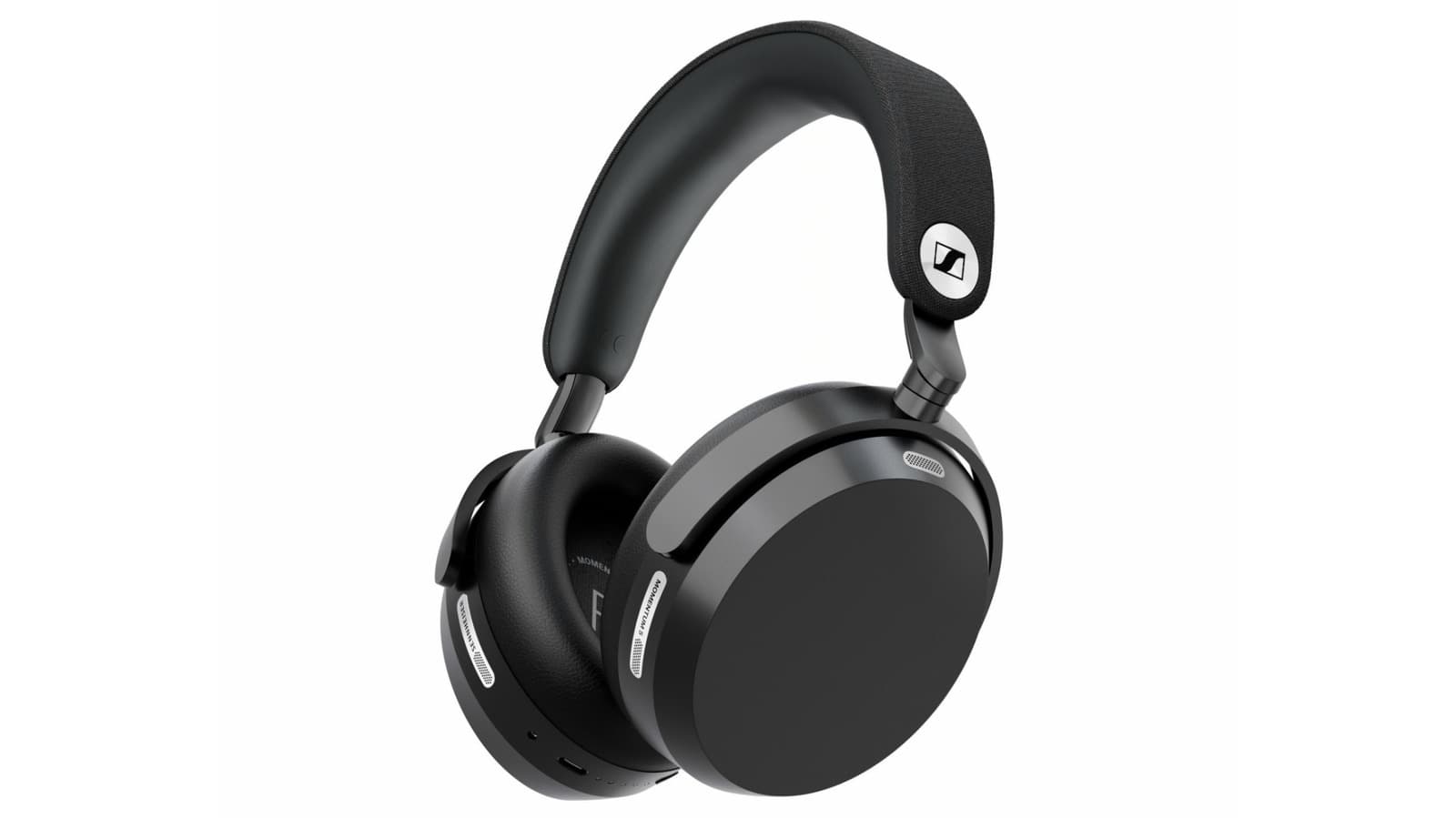
Sennheiser introduced the Momentum 5 wireless headphones on Tuesday, marking the latest addition to its premium audio lineup. The new model focuses on delivering improved sound quality and more effective noise cancellation compared to its predecessor. A key feature is support for Dolby Atmos with dynamic head tracking, which adjusts the audio spatialization as the listener moves their head.
The headphones incorporate Sennheiser's proprietary acoustic system, including 42mm transducers designed to reproduce a wide frequency range. The company claims the Momentum 5 offers a more natural and immersive listening experience, with enhanced clarity across bass, midrange, and treble. The active noise cancellation (ANC) system has been upgraded with adaptive technology that automatically adjusts to the user's environment.
Sennheiser also introduced a Transparency mode that allows ambient sounds to pass through without removing the headphones. The Momentum 5 supports Bluetooth 5.4 with multipoint connectivity, enabling simultaneous pairing with two devices. Codec support includes AAC, SBC, and aptX Adaptive for high-resolution audio streaming.
Battery life is rated at up to 60 hours with ANC enabled, and a quick charge feature provides 6 hours of playback from a 10-minute charge. The headphones come with a USB-C charging cable and a 3.5mm audio cable for wired use. The design remains largely similar to the Momentum 4, with a foldable structure and memory foam ear cushions covered in leatherette.
The Momentum 5 is available in three color options: black, white, and copper. Sennheiser has also updated the companion app, offering a five-band equalizer and sound personalization through a hearing test. The headphones are priced at $349.95 and will begin shipping on October 10 from Sennheiser's website and select retailers.
Huawei Unveils 1.4nm Chip Plan Without ASML EUV Machines
Huawei announced it can develop 1.4nm chips without relying on ASML's advanced EUV lithography machines. The company is pursuing alternative manufacturing methods to achieve this milestone.
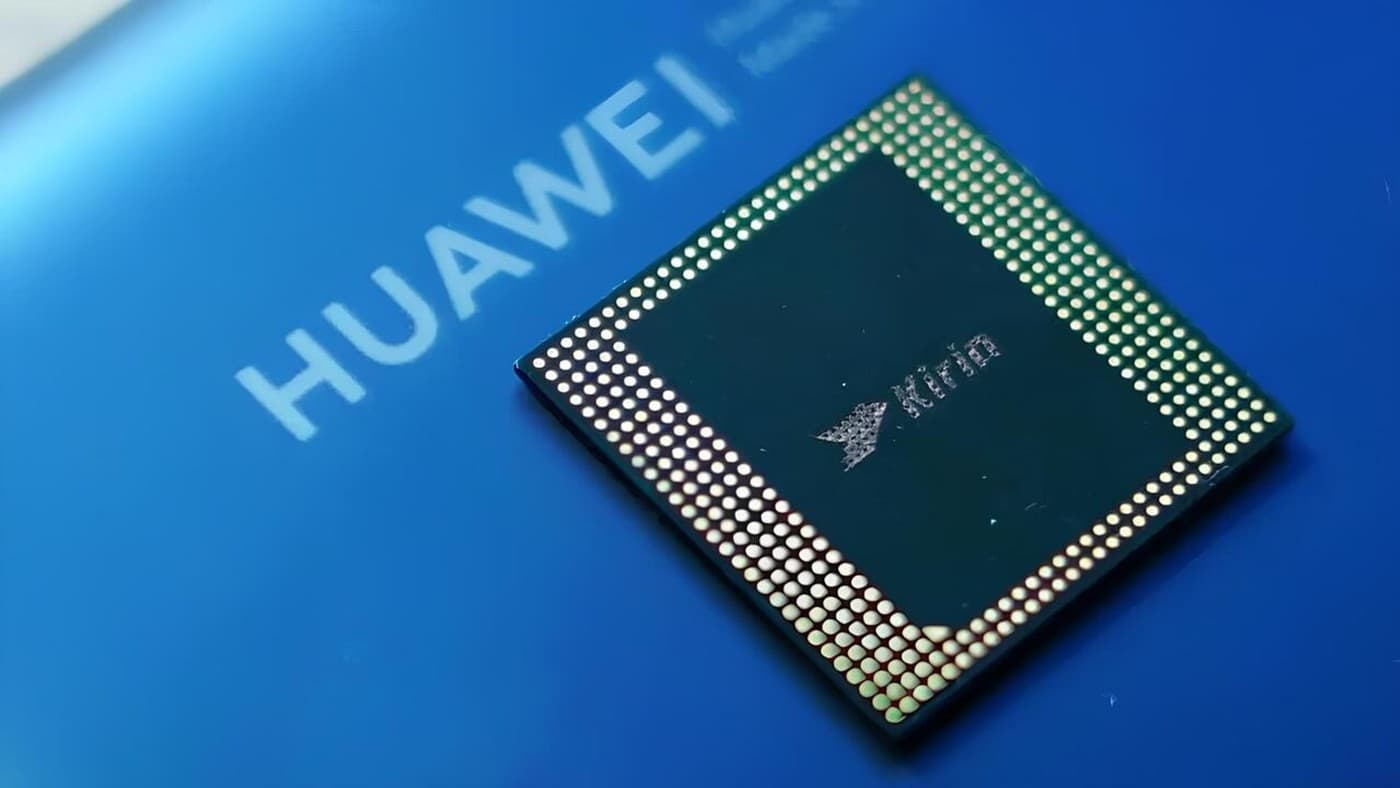
Huawei has revealed a plan to produce 1.4nm chips without using ASML's advanced EUV lithography machines. The Chinese tech giant announced it is exploring alternative manufacturing techniques to achieve this node. This move comes amid ongoing US export restrictions that limit Huawei's access to cutting-edge chipmaking equipment.
The company did not disclose specific details about the alternative methods it intends to use. However, industry analysts suggest Huawei may leverage multi-patterning with existing deep ultraviolet (DUV) lithography or adopt novel approaches like nanosheet transistors or advanced packaging. Huawei's research arm has been working on these technologies for several years.
Huawei's 1.4nm plan represents a significant leap from its current capabilities. The company's HiSilicon division currently produces chips using 7nm and 5nm nodes, though production is constrained by foundry limitations. Achieving 1.4nm would place Huawei among the leaders in semiconductor manufacturing, alongside TSMC and Samsung.
The announcement comes as Huawei continues to face sanctions that prevent it from purchasing ASML's latest EUV machines. These machines are essential for producing chips at 7nm and below using conventional methods. Huawei's alternative approach could potentially bypass these restrictions, though technical challenges remain substantial.
Industry experts note that developing 1.4nm chips without EUV lithography would require significant innovation in design and manufacturing. Multi-patterning with DUV tools increases complexity and cost, while alternative transistor architectures may require new materials and processes. Huawei has not provided a timeline for when 1.4nm chips might enter production.
Huawei's announcement is part of a broader push by Chinese semiconductor companies to achieve self-sufficiency in chip manufacturing. The Chinese government has invested heavily in domestic chip production capabilities, aiming to reduce reliance on foreign technology. Huawei's 1.4nm plan aligns with these national objectives.
The company has not confirmed whether it will manufacture these chips in-house or partner with a foundry. Huawei's HiSilicon division typically designs chips but relies on external foundries like TSMC for production. However, TSMC is also subject to US export controls, limiting its ability to serve Huawei.
Huawei stated that its 1.4nm development is still in the research phase and that commercial production is not imminent. The company emphasized that it remains committed to innovation despite external challenges. Further details are expected to be shared at upcoming industry conferences.

Starlink Launches Satellite Internet Service in Kyrgyzstan
SpaceX's Starlink satellite internet service has become available in Kyrgyzstan. The expansion marks a new milestone for the company's global coverage.

SpaceX's satellite internet venture Starlink has officially launched its services in Kyrgyzstan, according to a company announcement. The Central Asian nation becomes the latest addition to Starlink's growing list of operational countries. Users in Kyrgyzstan can now access the low-Earth orbit satellite network for broadband connectivity.
The service aims to provide high-speed internet to remote and underserved areas where traditional infrastructure is limited. Starlink's constellation of thousands of satellites beams internet signals directly to user terminals on the ground. The company has been rapidly expanding its footprint across Asia, Africa, and other regions.
Kyrgyzstan's mountainous terrain and dispersed population have historically posed challenges for internet service providers. Starlink's satellite-based approach bypasses the need for extensive ground infrastructure, making it a viable option for rural and hard-to-reach locations. The service is expected to benefit schools, businesses, and households in areas with poor connectivity.
SpaceX did not disclose the exact pricing or subscription plans for Kyrgyzstan in the initial announcement. However, Starlink typically charges a one-time hardware fee for the user terminal and a monthly subscription fee. The company often adjusts pricing based on local market conditions and regulatory requirements.
Starlink's expansion into Kyrgyzstan follows similar launches in other countries across the region, including Kazakhstan and Uzbekistan. The company has been actively seeking regulatory approvals and partnerships to enter new markets. SpaceX CEO Elon Musk has previously stated the goal of providing global coverage, particularly for unserved and underserved communities.
The service is currently available in over 60 countries worldwide, with ongoing efforts to increase capacity and reduce latency. Starlink has faced criticism from astronomers over light pollution and concerns about space debris, but continues to deploy satellites at a rapid pace.
For users in Kyrgyzstan, the service can be ordered through the official Starlink website. Delivery times and installation support will depend on local logistics. The company has not specified a timeline for further expansion in the region.
SpaceX confirmed the launch in a brief statement, emphasizing its commitment to bridging the digital divide. The company noted that Starlink is now operational in Kyrgyzstan as of this week.

Cyient Semiconductors raises $30M at $500M valuation for chip design
Cyient Semiconductors secured $30 million in funding led by Edelweiss, reaching a $500 million valuation. The investment will accelerate R&D in power semiconductors and ASIC solutions, and build semiconductor verification and test infrastructure in India.
Cyient Semiconductors, an India-based chip design startup, has raised $30 million in a funding round led by Edelweiss. The investment values the company at $500 million. According to an official statement, approximately $10 million of the funding comes from equity investment, while $20 million is structured debt financing.
The company plans to use the new capital to accelerate research and development efforts focused on power semiconductors and ASIC solutions. It also intends to establish semiconductor verification and test infrastructure in India, as well as support global customer programs.
Rising energy consumption in AI infrastructure has recently boosted demand for power semiconductors. Cyient Semiconductors CEO Suman Narayan noted that AI is making energy efficiency a central agenda for the chip industry in the coming period.
Last year, the company acquired Kinetic Technologies, which operates in the power semiconductor space. It also announced India's first GaN power integrated circuit product family in collaboration with Navitas Semiconductor.
The funding round was led by Edelweiss, with participation from other investors. The structured debt component provides flexibility for the company's capital-intensive expansion plans.
Cyient Semiconductors specializes in custom chip design and power management solutions. Its clients include major technology firms across automotive, industrial, and data center sectors.
The company's valuation jump to $500 million reflects growing investor interest in semiconductor design firms, particularly those addressing power efficiency challenges in AI and high-performance computing.
Cyient Semiconductors expects to deploy the funds over the next 18 to 24 months. The company aims to double its engineering team size and expand its facility in Hyderabad.
"This investment will help us scale our capabilities to meet the surging demand for energy-efficient power semiconductors," said Suman Narayan in the official announcement.

Turkey's Trade Ministry Pledges Continued Support for Record-Breaking Automotive Sector
Turkey's Ministry of Trade announced ongoing support for the automotive sector, which achieved a record $41.5 billion in exports. The ministry emphasized its commitment to sustaining the industry's growth.

Turkey's Ministry of Trade has declared its continued backing for the automotive industry, which recently set a new export record. The sector reached $41.5 billion in exports, marking a historic high. Officials stated that support measures will remain in place to maintain this momentum.
The announcement came as part of the ministry's broader strategy to bolster key export sectors. The automotive industry has been a cornerstone of Turkey's economy, contributing significantly to the country's trade balance. The ministry highlighted the sector's resilience and its role in driving economic growth.
Specific details of the support package were not disclosed, but the ministry indicated that incentives and regulatory facilitation would be prioritized. The goal is to enhance competitiveness and encourage further investment in production and technology.
Industry representatives welcomed the news, noting that consistent government support has been instrumental in achieving the export record. They emphasized the need for continued collaboration to address challenges such as global supply chain disruptions and rising raw material costs.
The automotive sector's performance has been buoyed by strong demand from European markets and increased production capacity. Turkey is a major hub for automotive manufacturing, hosting both domestic and international brands.
The ministry's pledge aligns with Turkey's broader economic targets, which include boosting high-value exports and reducing reliance on imports. The automotive sector is seen as a key driver for meeting these objectives.
Moving forward, the ministry plans to work closely with industry associations to identify new opportunities and address bottlenecks. Regular consultations will be held to ensure that support measures are effectively implemented.
The record export figure underscores the sector's importance to Turkey's economy. With continued government backing, the automotive industry is expected to maintain its growth trajectory and contribute further to national exports.