Stan Lee’s Voice Returns Digitally Through ElevenLabs Partnership
ElevenLabs has partnered with the estate of Stan Lee to bring the late Marvel icon's voice to its Iconic Marketplace. The digital recreation allows fans to hear Lee's voice in new contexts, with his family's approval.

ElevenLabs announced a partnership with the estate of Stan Lee to make the late Marvel legend's voice available through its Iconic Marketplace. The collaboration allows users to generate audio using a digital recreation of Lee's distinctive voice, which was developed with the consent of his family. The company stated that the voice model was trained on archival recordings to ensure authenticity.
The Iconic Marketplace, launched by ElevenLabs earlier this year, offers licensed voice recreations of notable figures. Stan Lee's voice joins a roster that includes other deceased celebrities, such as the actor James Dean and the singer Judy Garland. Each voice is created using the company's AI speech synthesis technology, which analyzes existing audio samples to produce new speech.
Lee's daughter, J.C. Lee, expressed support for the project, noting that her father always embraced innovation and storytelling. She said in a statement that the digital voice would allow fans to hear him in new ways, preserving his legacy for future generations. The family retains control over how the voice is used, with ElevenLabs requiring approval for each project.
The voice model is available for licensing through the Iconic Marketplace, with pricing starting at $1,000 for a single project. Larger packages are available for commercial use, including advertising, video games, and audiobooks. ElevenLabs emphasized that the technology is not intended to replace human voice actors but to offer new creative possibilities.
Critics have raised ethical concerns about using AI to recreate the voices of deceased individuals, even with family consent. ElevenLabs has implemented safeguards, including a review process for each request and a prohibition on using the voices for political or harmful content. The company also requires clear disclosure that the audio is AI-generated.
The Stan Lee voice model is available immediately for licensing through the ElevenLabs website. The company plans to expand its Iconic Marketplace with additional voices in the coming months, though it has not disclosed which figures will be added next. Lee's voice joins a growing list of digital recreations that have sparked debate about the boundaries of AI and legacy.
China Retains More Top AI Talent as Domestic Industry Booms
China's artificial intelligence sector is producing world-class researchers, and the government is increasingly discouraging them from working abroad. This shift is driven by a booming domestic AI industry and policies aimed at retaining top talent.

China's artificial intelligence boom is generating a growing pool of highly skilled researchers, and Beijing is showing less willingness to let them pursue careers overseas. The country's AI industry has expanded rapidly, creating abundant opportunities for local talent. Government policies and incentives are also playing a role in keeping researchers within China's borders.
The shift marks a change from previous years, when many Chinese AI experts sought education and employment in the United States and other countries. Now, a combination of factors is reversing that trend. China's domestic AI companies, such as Baidu, Alibaba, and Tencent, offer competitive salaries and cutting-edge research environments. Additionally, government-funded initiatives and national AI development plans provide further incentives for researchers to stay.
Beijing has implemented policies that make it more attractive for AI talent to remain in China. These include streamlined visa processes for foreign experts, increased funding for AI research, and the establishment of national AI laboratories. The government has also tightened restrictions on technology transfers and overseas collaborations, making it harder for Chinese researchers to work abroad without government approval.
The retention of top AI talent is seen as crucial for China's goal of becoming a global leader in artificial intelligence by 2030. The country has already made significant strides in areas such as facial recognition, natural language processing, and autonomous vehicles. Keeping leading researchers at home is expected to accelerate progress in these and other fields.
Some experts note that the trend is not absolute. A number of Chinese AI researchers continue to work at top universities and companies in the United States and Europe. However, the flow has slowed, and an increasing number are choosing to return to China after completing their studies or gaining experience abroad.
The implications for global AI development are significant. China's growing pool of homegrown talent could reduce its reliance on foreign expertise and potentially shift the balance of AI innovation. Other countries may face increased competition for top researchers as China continues to invest heavily in its AI ecosystem.
For now, the trend appears to be strengthening. China's AI industry shows no signs of slowing, and government support for retaining talent remains strong. As a result, the country is likely to hold onto more of its best and brightest minds in the years ahead.

Triomics raises $22M Series B for oncology AI platform
Triomics has secured $22 million in Series B funding led by Battery Ventures. The company develops AI tools tailored for cancer centers to streamline clinical workflows and data analysis.

Triomics announced it has raised $22 million in a Series B funding round. Battery Ventures led the investment, with participation from existing backers. The company focuses on building artificial intelligence solutions specifically designed for oncology settings.
The startup's platform aims to help cancer centers manage and analyze clinical data more efficiently. Triomics' AI tools can process unstructured medical records, extract relevant information, and assist in treatment planning. The technology is intended to reduce administrative burdens on healthcare professionals.
Triomics was founded by a team with backgrounds in oncology and machine learning. The company has been developing its product in collaboration with several cancer centers. The new funding will be used to expand the platform's capabilities and scale deployment across more institutions.
Battery Ventures partner Michael Brown will join Triomics' board of directors as part of the investment. Brown noted that the healthcare industry is increasingly looking for AI solutions that can improve patient outcomes and operational efficiency. He highlighted Triomics' focus on oncology as a key differentiator.
The oncology AI market has seen growing interest from investors. Several startups are developing similar tools to assist with cancer diagnosis, treatment selection, and clinical trial matching. Triomics differentiates itself by targeting the specific needs of cancer centers rather than general healthcare AI.
Triomics plans to use the funds to grow its engineering and sales teams. The company also intends to invest in research and development to enhance its AI models. Current customers include academic medical centers and community oncology practices.
The Series B brings Triomics' total funding to over $30 million. The company previously raised a seed round and a Series A from investors including Y Combinator. Triomics did not disclose its valuation in the latest round.
Triomics CEO and co-founder said the company is committed to making AI practical and accessible for cancer care. The platform is designed to integrate with existing electronic health record systems. The company expects to announce additional partnerships in the coming months.

Why Google’s AI Can’t Spell Google (or Anything Else)
Google's AI models struggle with spelling, including the company's own name. The issue stems from how large language models process text as tokens rather than individual characters.
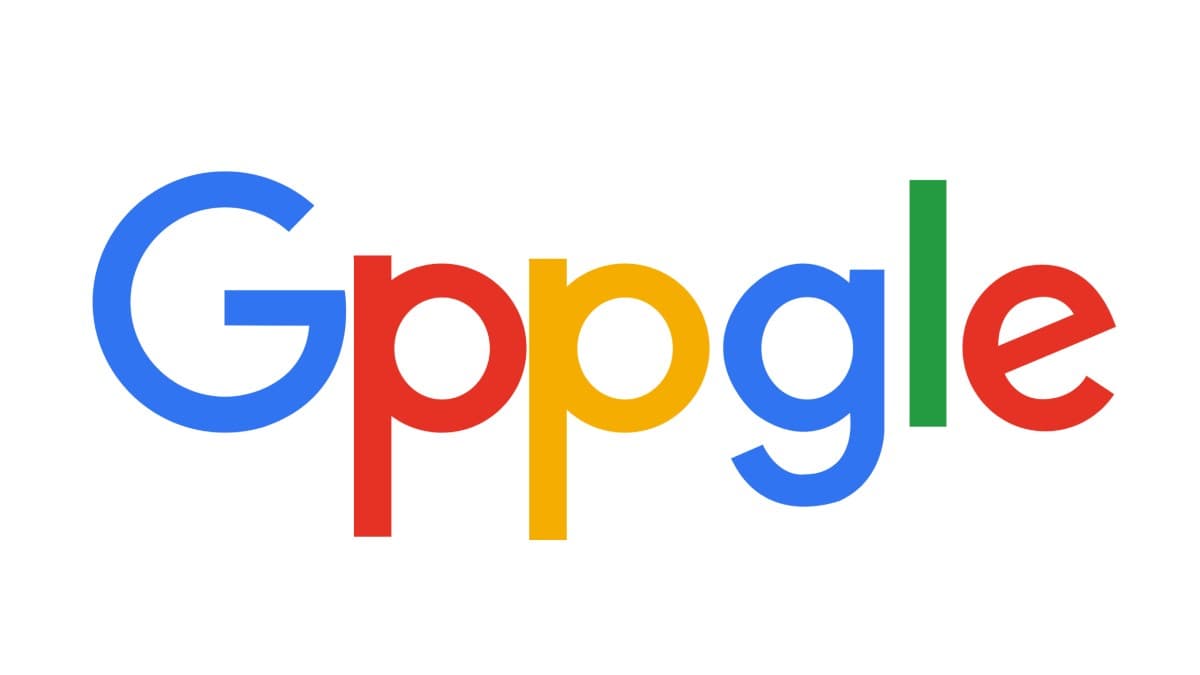
Google’s artificial intelligence systems have a notable weakness: they frequently misspell words, including the company’s own name. This problem has been observed across various AI-powered products, from search suggestions to text generation tools. The root cause lies in the fundamental architecture of large language models (LLMs), which process text as tokens—chunks of characters—rather than individual letters. This tokenization approach, while efficient for understanding context, makes precise spelling a challenge.
When an AI model encounters a word like “Google,” it may break it into tokens such as “Go” and “ogle” or treat it as a single token. The model learns patterns from vast datasets where misspellings and variations exist, leading to inconsistent outputs. For example, the AI might generate “Gooogle” or “Gogle” because those forms appear in its training data. This issue is not unique to Google; other LLMs from OpenAI, Meta, and Anthropic exhibit similar spelling difficulties.
Google has acknowledged the problem in internal communications and research papers. Engineers have attempted to mitigate it through fine-tuning and post-processing filters, but the underlying tokenization remains a barrier. The company’s AI chief, Jeff Dean, noted in a 2023 interview that spelling is an “active area of research” and that current models prioritize fluency over orthographic accuracy.
The spelling issue has practical implications. Users searching for “Google” may receive results for “Googel” or “Goggle,” reducing search quality. In AI-generated text, misspelled words undermine credibility, especially in professional or academic contexts. Google’s own products, such as Bard and Search Generative Experience, have been caught misspelling common terms, drawing criticism from users and tech commentators.
Competitors face similar challenges. OpenAI’s GPT-4 occasionally misspells words, and Meta’s LLaMA models have been observed making spelling errors. However, Google’s prominence in search and AI makes its struggles more visible. The company has invested heavily in AI research, including projects like PaLM and Gemini, yet spelling remains a stubborn flaw.
Google has not announced a specific timeline for fixing the spelling issue. The company continues to explore alternative tokenization methods, such as character-level models, but these require significantly more computational resources. In the meantime, users are advised to double-check AI-generated text for spelling errors, especially for proper nouns like brand names.
A Google spokesperson stated, “We are committed to improving the accuracy of our AI systems, including spelling. This is a complex technical challenge, and we are making progress.” The company emphasized that spelling is just one aspect of AI performance and that overall model capabilities continue to advance.
For now, Google’s AI will likely continue to misspell its own name, serving as a reminder of the limitations of current language models. The company’s engineers face a difficult trade-off between efficiency and precision, with no easy solution in sight.

OpenRouter raises $113M Series B, valuation hits $1.3B
OpenRouter closed a $113 million Series B funding round led by CapitalG, pushing its valuation to $1.3 billion. The company's usage grew fivefold in six months, signaling strong demand for multi-model AI access.

OpenRouter has secured $113 million in Series B funding, with CapitalG leading the round. The investment more than doubles the company's valuation to $1.3 billion within a year, reflecting rapid growth in the AI infrastructure space.
The startup provides a unified platform for developers to access multiple large language models from providers like OpenAI, Anthropic, and Meta. Its service handles routing, load balancing, and fallback logic, allowing users to switch between models without managing separate APIs.
Usage on OpenRouter's platform surged five times over the past six months, according to the company. This growth suggests enterprises and developers are increasingly adopting a multi-model strategy rather than relying on a single AI provider.
OpenRouter plans to use the new capital to expand its engineering team and improve its routing infrastructure. The company aims to reduce latency and costs for customers by optimizing model selection based on performance and pricing.
The funding round also included participation from existing investors. OpenRouter has now raised a total of $150 million since its founding.
CapitalG, Alphabet's growth equity fund, led the Series B. The investment signals confidence in OpenRouter's approach to aggregating AI models, which addresses concerns about vendor lock-in and model availability.
OpenRouter's service is available globally, with pricing based on per-token usage. The company does not disclose specific customer numbers but says it serves thousands of developers and enterprises.
The Series B round closed in March 2025, with funds already deployed toward product development. OpenRouter's valuation jump from $600 million to $1.3 billion underscores the accelerating demand for flexible AI infrastructure.