Bluesky Introduces Long-Form Posts to Compete with X Articles
Bluesky has rolled out a new feature allowing users to publish long-form content directly on the platform, positioning itself as a competitor to X's Articles. The update aims to attract creators and journalists seeking an alternative for in-depth posts.

Bluesky announced a significant update on Tuesday, introducing support for long-form content on its social media platform. The feature enables users to write and publish posts that exceed the platform's previous character limit, directly challenging X's Articles functionality. This move marks Bluesky's latest effort to differentiate itself in the competitive social media landscape.
The new long-form posts allow users to embed images, videos, and links within extended text, similar to blog-style entries. Bluesky stated that these posts will appear in users' feeds with a distinct visual indicator, making them easily identifiable. The company emphasized that the feature is designed for in-depth discussions, storytelling, and sharing detailed information without leaving the platform.
Bluesky's development team built the long-form feature on top of the AT Protocol, the decentralized framework underlying the platform. This approach ensures that long-form posts remain interoperable with other services built on the same protocol. Users can compose these posts using a new editor interface accessible from the compose button, which supports formatting options like bold, italics, and headers.
The rollout comes as Bluesky continues to grow its user base, which surpassed 5 million active users in recent months. The platform has been iterating rapidly, adding features like direct messaging, video support, and custom feeds. Long-form content represents a strategic pivot to attract writers, journalists, and creators who have traditionally relied on platforms like Medium or Substack.
Bluesky's CEO Jay Graber stated that the company aims to provide tools for meaningful conversations, not just short bursts of text. "We want to give people the space to express themselves fully," Graber said in a blog post announcing the feature. The company also noted that long-form posts will be subject to the same moderation policies as regular posts, including content warnings and reporting mechanisms.
Early adopters have already begun testing the feature, with some publishing multi-paragraph essays and analysis pieces. Bluesky plans to refine the editor based on user feedback, potentially adding more advanced formatting options in future updates. The feature is available on both the web and mobile versions of the app, with support for all languages currently offered on the platform.
Bluesky's long-form posts are rolling out globally starting today. Users can access the feature by updating their app to the latest version. The company has not announced any monetization plans for long-form content, but industry observers speculate that future iterations could include tipping or subscription models to support creators.
TikTok Launches In-App Travel Booking Services for Users
TikTok has introduced travel booking features within its app, allowing users to search and book flights, hotels, and experiences directly. The service is initially rolling out in select markets.
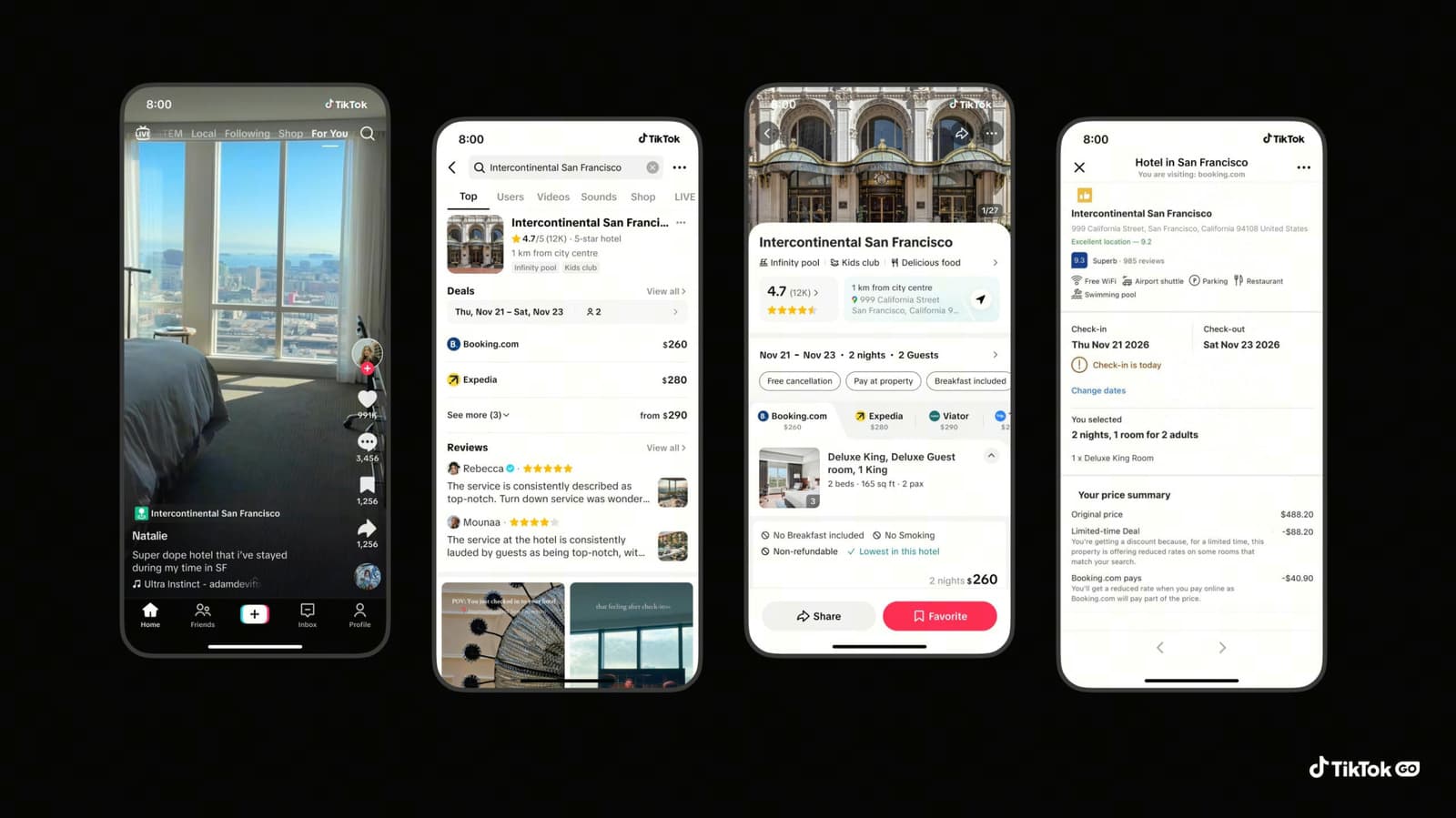
TikTok announced the launch of in-app travel booking services, enabling users to plan and book trips without leaving the platform. The feature integrates with third-party travel partners to offer flights, hotel accommodations, and activity reservations. Users can access the booking tools through dedicated tabs or links in travel-related videos.
The new service leverages TikTok's algorithm to recommend destinations and deals based on user interests and viewing history. When a user watches a travel video, they may see a "Book Now" button that leads to a booking interface within the app. The company partnered with several travel aggregators to provide pricing and availability data.
TikTok's move into travel booking follows a broader trend of social media platforms adding e-commerce and service features. The company aims to keep users engaged within its ecosystem rather than redirecting them to external sites. The booking process is designed to be seamless, with payment options including in-app wallets and credit cards.
Initial rollout covers the United States, the United Kingdom, and Canada, with plans to expand to additional countries later this year. The feature is available on both iOS and Android versions of the app. TikTok stated that the service complies with local travel regulations and data privacy laws.
Travel creators on the platform can now earn commissions on bookings made through their content. TikTok's affiliate program allows creators to tag products and services, including travel bookings, and receive a share of revenue. This incentivizes creators to produce more travel-related content.
Industry analysts note that TikTok's entry into travel booking could disrupt traditional online travel agencies. The platform's massive user base and engagement rates offer a new distribution channel for travel suppliers. However, challenges include building trust in booking reliability and handling customer service issues.
TikTok emphasized that the feature is optional and users can still access external booking sites. The company also introduced safety measures, such as verified listings and secure payment processing. Users can report issues with bookings directly through the app.
The travel booking service is part of TikTok's broader push into commerce, which already includes in-app shopping for physical goods. The company reported that users have shown strong interest in travel content, with hashtags like #TravelTok amassing billions of views. The new feature aims to capitalize on that trend by converting inspiration into bookings.
TikTok's official statement said, "We are excited to help our community discover and book their next adventure directly on TikTok. This feature makes travel planning more accessible and integrated with the content users love." The service is available starting today for users in the initial markets.

Threads Tests Grok-Like AI Feature That Lets Users Ask Questions
Meta is testing a new AI feature on Threads that allows users to ask questions directly in the app, similar to X's Grok. The feature is currently available to a limited set of users.

Meta has begun testing an artificial intelligence feature on its social platform Threads that enables users to pose questions directly within the app. The feature, which resembles the Grok AI assistant available on X, is currently being trialed with a small group of users. Threads, which Meta launched as a competitor to X, has been steadily adding new capabilities since its debut.
The AI tool appears as a search bar or a prompt within the Threads interface, inviting users to ask questions. When a user submits a query, the system generates a response based on Meta's large language model. The company has not disclosed which specific AI model powers the feature, but Meta has previously developed and released open-source language models like Llama.
This test marks Meta's latest effort to integrate generative AI into its social media ecosystem. The company has already introduced AI-powered features on Facebook and Instagram, including chatbots and image generation tools. Threads, which initially focused on text-based posts, has been expanding its feature set to include more interactive elements.
The feature is being tested in select regions and with a limited number of users, according to a Meta spokesperson. The company did not provide a timeline for a broader rollout or confirm whether the feature will eventually be available to all Threads users. The test is part of Meta's broader strategy to incorporate AI across its platforms.
Some users who have access to the feature reported that it can answer questions about current events, similar to Grok, which is integrated into X. However, Meta has not specified the extent of the AI's knowledge or its ability to access real-time information. The company has faced scrutiny over the accuracy and safety of its AI systems in the past.
The introduction of an AI assistant on Threads could raise concerns about misinformation and content moderation. Meta has implemented safeguards on its other AI tools, including filters to prevent harmful responses. It remains unclear what specific guardrails are in place for the Threads AI feature.
Threads has grown rapidly since its launch in July 2023, reaching over 100 million users within days. The platform has since added features such as trending topics, edit buttons, and a web version. The AI test represents the latest attempt to differentiate Threads from competitors like X and Bluesky.
Meta has not announced any plans to monetize the AI feature or integrate it with advertising. The company typically tests new features with small user groups before deciding on wider releases. Users who are part of the test can access the AI tool through the Threads search interface.
A Meta spokesperson stated that the company is "always exploring new ways to improve the Threads experience." The spokesperson declined to provide additional details about the AI feature's capabilities or future availability. The test is ongoing, and Meta will evaluate user feedback before making any decisions about a broader launch.

Govee apologizes after 'white supremacy' books appear in marketing image
Smart lighting company Govee apologized after a marketing image on its US website showed books with the words 'white supremacy' on their spines. The image was removed after The Verge reported the incident.

Smart lighting manufacturer Govee issued an apology after a marketing image on its US website featured books with the words “white supremacy” visible on their spines. The image, which promoted bedroom lighting, showed the books placed on a shelf above a child’s bed, alongside toy animals. Only the spines of the books were legible in the photograph.
The Verge first reported the controversy after a reader alerted the publication to the image. The outlet contacted Govee, which subsequently removed the image from its website. However, Govee did not respond to The Verge’s inquiries before the initial report was published.
Following the removal, Govee released a statement apologizing for the oversight. The company said the image was part of a stock photo used in error and did not reflect its values. Govee emphasized that it condemns racism and white supremacy in all forms.
The incident highlights the risks companies face when using stock imagery without thorough review. The books in question appeared to be part of a set designed to provoke thought or critique, but their placement in a child’s bedroom context drew sharp criticism.
Govee stated it is reviewing its content approval processes to prevent similar mistakes in the future. The company also thanked those who brought the issue to its attention and reiterated its commitment to diversity and inclusion.
The image was live on Govee’s US website for an unspecified period before being taken down. The company did not disclose how the stock photo was selected or which third-party provider supplied it.
Govee’s apology came after the image circulated on social media, drawing widespread condemnation. The company’s statement did not specify whether any employees faced disciplinary action over the incident.
As of now, Govee has not announced any further changes to its marketing team or external vendor policies. The company continues to sell its smart lighting products, including the bedroom lights featured in the now-removed image.

Meta Launches Facebook Plus and Instagram Plus Subscriptions at $3.99/Month
Meta has introduced paid subscription tiers for Facebook and Instagram, priced at $3.99 per month each. The new plans offer additional features such as ad-free browsing and enhanced profile customization.

Meta announced the rollout of Facebook Plus and Instagram Plus subscriptions on Tuesday. The paid tiers are available to users in select markets starting at $3.99 per month per platform. The company positions these subscriptions as an optional upgrade for users seeking an enhanced experience.
Facebook Plus subscribers gain access to an ad-free feed, exclusive stickers, and advanced profile customization options. The subscription also includes priority customer support and early access to new features. Instagram Plus offers similar benefits, including an ad-free experience, exclusive filters, and the ability to see who viewed their posts.
Meta stated that the subscriptions are designed to provide additional value without affecting the core free services. The company emphasized that users who do not subscribe will continue to have full access to Facebook and Instagram as before. The move follows a broader industry trend of social platforms introducing paid tiers to diversify revenue streams.
The pricing for Facebook Plus and Instagram Plus is set at $3.99 per month for each service. Meta is testing the subscriptions in several countries, including the United States, Australia, and New Zealand. The company plans to expand availability based on user feedback and market response.
Subscribers can manage their subscriptions directly within the Facebook and Instagram apps. Meta confirmed that the subscriptions are recurring and can be canceled at any time. The company also noted that the ad-free experience applies to both the main feed and Stories.
Meta's introduction of paid subscriptions comes as the company faces increasing pressure to generate revenue beyond advertising. The social media giant has been exploring various monetization strategies, including in-app purchases and virtual goods. The Facebook Plus and Instagram Plus subscriptions represent a direct attempt to offer premium features for a monthly fee.
Industry analysts have noted that the $3.99 price point is relatively low compared to other subscription services. The move could attract users who are willing to pay for an ad-free experience and exclusive features. However, it remains to be seen how many users will opt for the paid tiers.
Meta has not disclosed specific subscriber targets for the new plans. The company will monitor adoption rates and user satisfaction before making broader decisions about the subscriptions. Facebook Plus and Instagram Plus are now available for sign-up in the initial test markets.