Final Day to Apply for Startup Battlefield 200: $100K Prize at Stake
Applications for Startup Battlefield 200 close today at 11:59 p.m. PT. Selected startups compete for $100,000 in equity-free funding and launch at TechCrunch Disrupt.
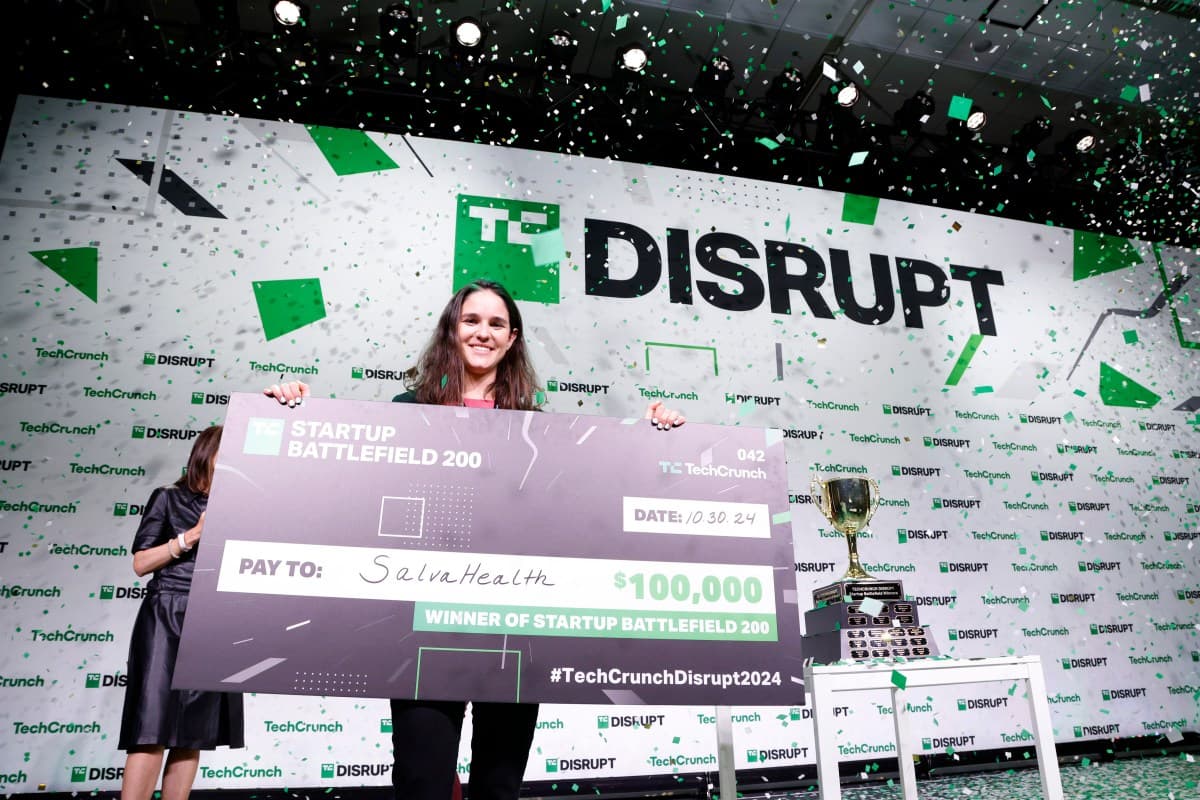
Today marks the last opportunity for startups to submit applications or be nominated for the Startup Battlefield 200 competition. The deadline is set for 11:59 p.m. Pacific Time, after which the application window will close. The program offers a chance to win $100,000 in equity-free funding, along with global exposure and direct access to investors. Participants will also have the opportunity to launch their products on the TechCrunch Disrupt stage.
Startup Battlefield 200 is a highly competitive program that selects 200 early-stage startups to showcase their innovations. The selected companies receive mentorship, media coverage, and networking opportunities with industry leaders. The competition culminates in a live pitch event where finalists vie for the grand prize.
To apply, founders must submit their startup details through the official TechCrunch Disrupt website. Alternatively, third parties can nominate a startup they believe deserves consideration. The application process requires information about the company's product, market traction, and team background.
The $100,000 prize is awarded to the winning startup with no equity taken by TechCrunch. This funding can be used for product development, hiring, or other business needs. Past winners have included companies that later achieved significant growth and additional funding.
TechCrunch Disrupt is a major technology conference that brings together startups, investors, and industry experts. The event features keynote speeches, panel discussions, and networking sessions. Startup Battlefield 200 is one of the most anticipated segments of the conference.
Interested parties are encouraged to act quickly as the deadline is imminent. The application form is available on the TechCrunch website, and submissions must be complete before the cutoff time. Late entries will not be accepted.
For those considering applying, the benefits extend beyond the prize money. Participants gain visibility among top venture capitalists and potential partners. The exposure can lead to future investment opportunities and media coverage.
The final deadline is today at 11:59 p.m. PT. No extensions will be granted. Startups and nominators should ensure their submissions are submitted before the clock runs out.
Thea Energy raises $100M to advance fusion reactor with pixel-inspired magnets
Princeton-based fusion startup Thea Energy has raised $100 million, making it one of the best-funded fusion companies. The company plans to use the funds to develop a commercial reactor by 2034, leveraging a novel magnet design inspired by pixels.

Thea Energy, a fusion startup based in Princeton, New Jersey, has secured $100 million in new funding, elevating it to the ranks of the most well-capitalized private fusion companies. The investment round was led by a group of institutional investors, with participation from existing backers. The company did not disclose its valuation.
The startup is developing a fusion power plant concept that relies on an array of small, planar magnets arranged in a grid, similar to pixels on a screen. This design, which Thea calls a “pixelated” magnet system, is intended to simplify the complex magnetic confinement required for fusion reactions. The magnets are designed to be mass-produced, potentially reducing costs and accelerating deployment.
Thea Energy’s approach is based on the stellarator, a type of fusion reactor that uses twisted magnetic fields to contain plasma. Traditional stellarators rely on complex, custom-shaped magnets that are difficult and expensive to manufacture. Thea’s pixelated magnet system replaces these with many identical, simpler magnets that can be controlled individually to shape the magnetic field.
The company was spun out from Princeton University and the Princeton Plasma Physics Laboratory in 2021. Its technology builds on research into stellarator optimization, which aims to improve plasma confinement and stability. Thea claims its design can achieve the necessary magnetic field precision while being more practical to build and maintain.
With the new capital, Thea Energy plans to complete the design of a prototype reactor and begin construction of a demonstration plant. The company’s goal is to have a commercial fusion reactor operational by 2034. This timeline aligns with several other fusion startups, though many experts caution that commercial fusion is still decades away.
The $100 million raise brings Thea’s total funding to over $150 million, placing it among the top-funded fusion startups globally. Other well-funded fusion companies include Commonwealth Fusion Systems, TAE Technologies, and Helion Energy, which have raised hundreds of millions to billions of dollars.
Thea Energy’s CEO, Michael Zarnstorff, stated that the funding will allow the company to “move from theory to practice” and demonstrate the viability of its pixelated magnet technology. The company plans to hire additional engineers and physicists to accelerate development.
Fusion energy, which powers the sun and stars, has long been pursued as a clean, virtually limitless energy source. However, achieving sustained fusion reactions on Earth has proven extremely challenging. Thea Energy’s pixelated magnet approach is one of several innovative designs aiming to overcome the engineering hurdles that have stymied fusion for decades.
The company expects to select a site for its demonstration reactor within the next two years. It has not yet announced a specific location but is considering sites in the United States. Thea Energy’s long-term plan is to license its reactor technology to utilities and other energy providers, rather than building and operating its own power plants.
“We are focused on delivering a practical, scalable fusion system,” Zarnstorff said in a statement. “This funding brings us closer to making fusion energy a reality.” The company’s next major milestone is the completion of a subscale prototype that will test the pixelated magnet system under fusion-relevant conditions.

Remote Hits $300M ARR, Achieves Cash-Flow Positive Status with AI-Driven Efficiency Gains
Payroll startup Remote reached $300 million in annual recurring revenue and became cash-flow positive. The company attributed its growth to a 50% increase in revenue per employee, driven by AI adoption without adding headcount.

Remote, a payroll service provider for distributed teams, announced it has surpassed $300 million in annual recurring revenue (ARR). The company also reported achieving cash-flow positive status, a milestone in its financial trajectory. Remote credited these results to a 50% increase in revenue per employee, which it linked to the integration of artificial intelligence into its operations.
The company did not expand its workforce to achieve this growth. Instead, Remote leveraged AI tools to enhance productivity and streamline processes, allowing existing staff to handle a larger volume of work. This approach enabled the startup to scale revenue without corresponding increases in headcount, a pattern observed across some technology firms seeking operational efficiency.
Remote provides global payroll, benefits, and compliance services for companies hiring remote workers. Its platform manages employment in over 60 countries, handling tax filings, contracts, and local regulations. The company competes with other payroll and employer-of-record providers such as Deel and Papaya Global.
The $300 million ARR figure marks a significant increase from previous years. Remote had reported $100 million in ARR in 2022 and $200 million in 2023, indicating steady growth. The company’s path to cash-flow positivity suggests improved unit economics and cost management, partly driven by AI adoption.
Remote’s CEO and co-founder, Job van der Voort, stated that the company’s focus on efficiency has been key to its financial performance. He noted that AI has allowed Remote to automate repetitive tasks, reduce manual errors, and accelerate service delivery. The company has integrated AI into customer support, document processing, and compliance monitoring.
The startup’s achievement comes amid a broader industry trend where companies are using AI to boost productivity while controlling costs. Remote’s results demonstrate how AI can contribute to revenue growth without proportional headcount expansion, a model that may influence other businesses in the HR tech space.
Remote is headquartered in San Francisco and has raised over $500 million in funding from investors including Sequoia Capital and Accel. The company plans to continue investing in AI and expand its service offerings, though specific product updates were not disclosed in the announcement.
The company did not provide a timeline for further milestones but emphasized its commitment to sustainable growth. Remote’s cash-flow positive status and ARR milestone reflect its current financial health, with no immediate plans for additional fundraising.

Human Archive pays Indian gig workers to collect physical data for AI robot training
Human Archive, a startup founded by UC Berkeley and Stanford researchers, pays gig workers in India to wear camera-equipped caps and sensor devices to collect real-world physical training data for AI and robotics labs.
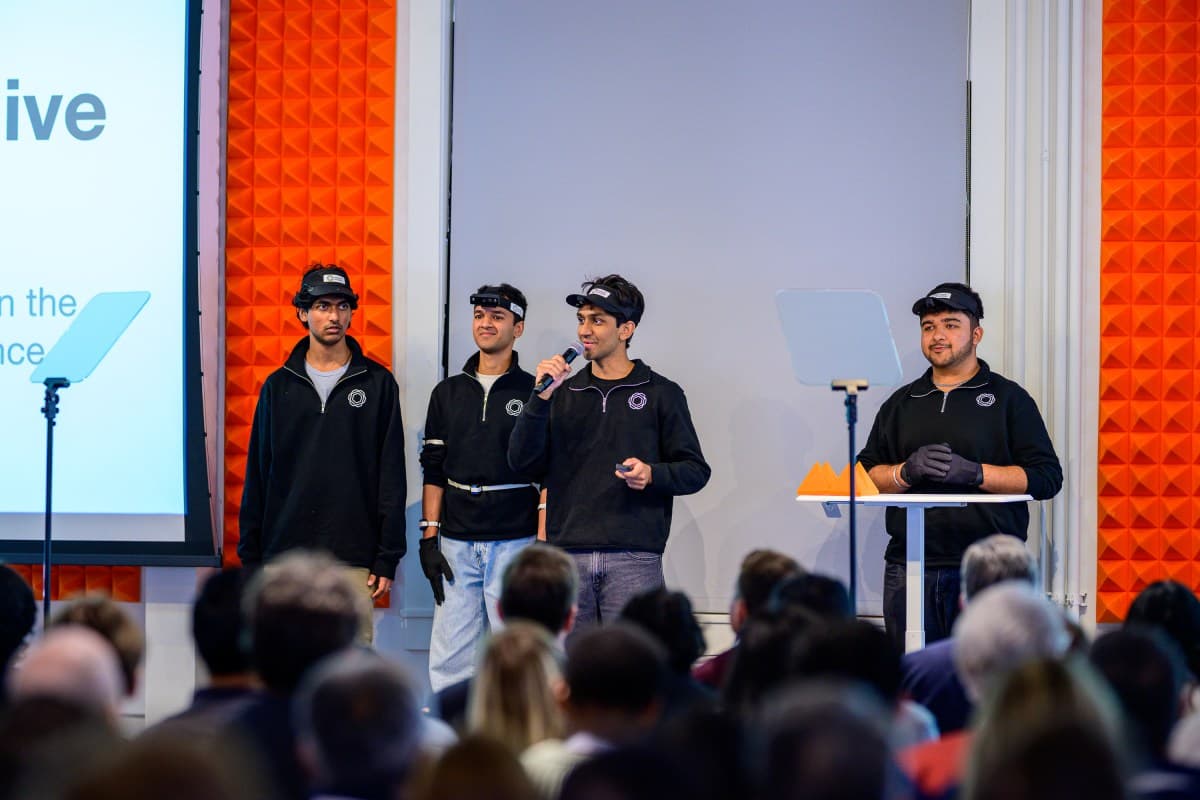
Human Archive, a startup founded by researchers from UC Berkeley and Stanford, is tapping into India’s gig economy to gather physical training data for artificial intelligence and robotics. The company pays gig workers in India to wear caps fitted with cameras and sensor devices that capture real-world movements and interactions. This data is then sold to AI and robotics labs that need large volumes of physical-world examples to train their systems.
The startup’s approach addresses a critical bottleneck in robotics development: the scarcity of diverse, real-world training data. While AI models for language and images can be trained on vast internet datasets, robots require physical demonstrations of tasks like grasping objects, walking, or navigating spaces. Human Archive’s gig workers perform everyday activities while wearing the sensor gear, generating thousands of hours of motion and interaction data.
Workers are recruited through local gig platforms and paid per session, with earnings varying based on the complexity and duration of tasks. The company provides the equipment and instructions, and workers can participate from their own homes or neighborhoods. This model allows Human Archive to collect data at a fraction of the cost of in-house collection in developed countries.
The data captured includes video, depth sensing, inertial measurements, and sometimes haptic feedback. It is anonymized and labeled before being packaged for clients. Human Archive says its dataset covers a wide range of human activities, from cooking and cleaning to assembly and repair, making it valuable for training robots for domestic, industrial, and healthcare applications.
Several robotics companies and research labs have already expressed interest in the dataset, according to the startup. The demand is driven by the need for more robust and generalizable robot learning, especially as companies race to deploy robots in unstructured environments. Human Archive’s data could help reduce the time and cost of training robots through reinforcement learning and imitation learning.
The startup faces challenges around data quality, privacy, and ethical treatment of workers. Human Archive states it obtains informed consent from workers and anonymizes all data to protect identities. The company also says it pays above minimum wage and provides flexible schedules. However, critics have raised concerns about the potential for exploitation in gig economy models and the long-term implications of outsourcing data collection to low-wage countries.
Human Archive is currently operating in several Indian cities and plans to expand to other countries in Southeast Asia and Africa. The startup has raised seed funding from a group of angel investors and is in talks with venture capital firms. Pricing for the dataset varies based on volume and specificity, with some packages costing tens of thousands of dollars.
The company expects to release its first commercial dataset in the second quarter of 2025. Human Archive’s founders believe that leveraging global gig workers is the most scalable way to generate the physical data needed to advance robotics. “The future of robotics depends on access to diverse, real-world training data,” said one of the co-founders in a statement. “We are building the infrastructure to make that possible.”
Startup Battlefield 2026 applications due May 27; here's what judges seek
Applications for TechCrunch's Startup Battlefield 2026 close May 27. The program seeks early-stage startups with innovative technology and strong traction.

TechCrunch has set a May 27 deadline for Startup Battlefield 2026 applications. The competition, now in its 19th year, offers selected startups a platform to pitch to investors and media. Organizers emphasize that submissions should highlight unique technology and market potential.
Judges will evaluate startups based on product innovation, business model viability, and team expertise. Companies must be pre-seed to Series A stage, with a working prototype or early revenue. The program does not accept later-stage companies or those that have previously pitched at TechCrunch events.
Selected participants receive a dedicated mentorship session with TechCrunch editors and industry experts. They also get a spot on the main stage for a six-minute pitch followed by Q&A. Past winners include Dropbox, Fitbit, and Cloudflare, which have collectively raised billions in funding.
Applicants should prepare a clear problem statement and solution. The application requires a video pitch, company deck, and details on traction. Organizers advise focusing on the product's competitive advantage and addressing market size.
The deadline is strict; late submissions will not be considered. Notifications for selected startups will go out in June. The event itself takes place in September 2026 in San Francisco.
For those applying, TechCrunch recommends reviewing the FAQ page and ensuring all materials are polished. The application portal closes at 11:59 PM PT on May 27.