Study Finds People Often Misjudge AI Confidence Levels in Responses
A new study reveals that humans consistently overestimate the confidence of AI systems like ChatGPT and Gemini in their answers. The research highlights a gap between perceived and actual reliability of AI responses.
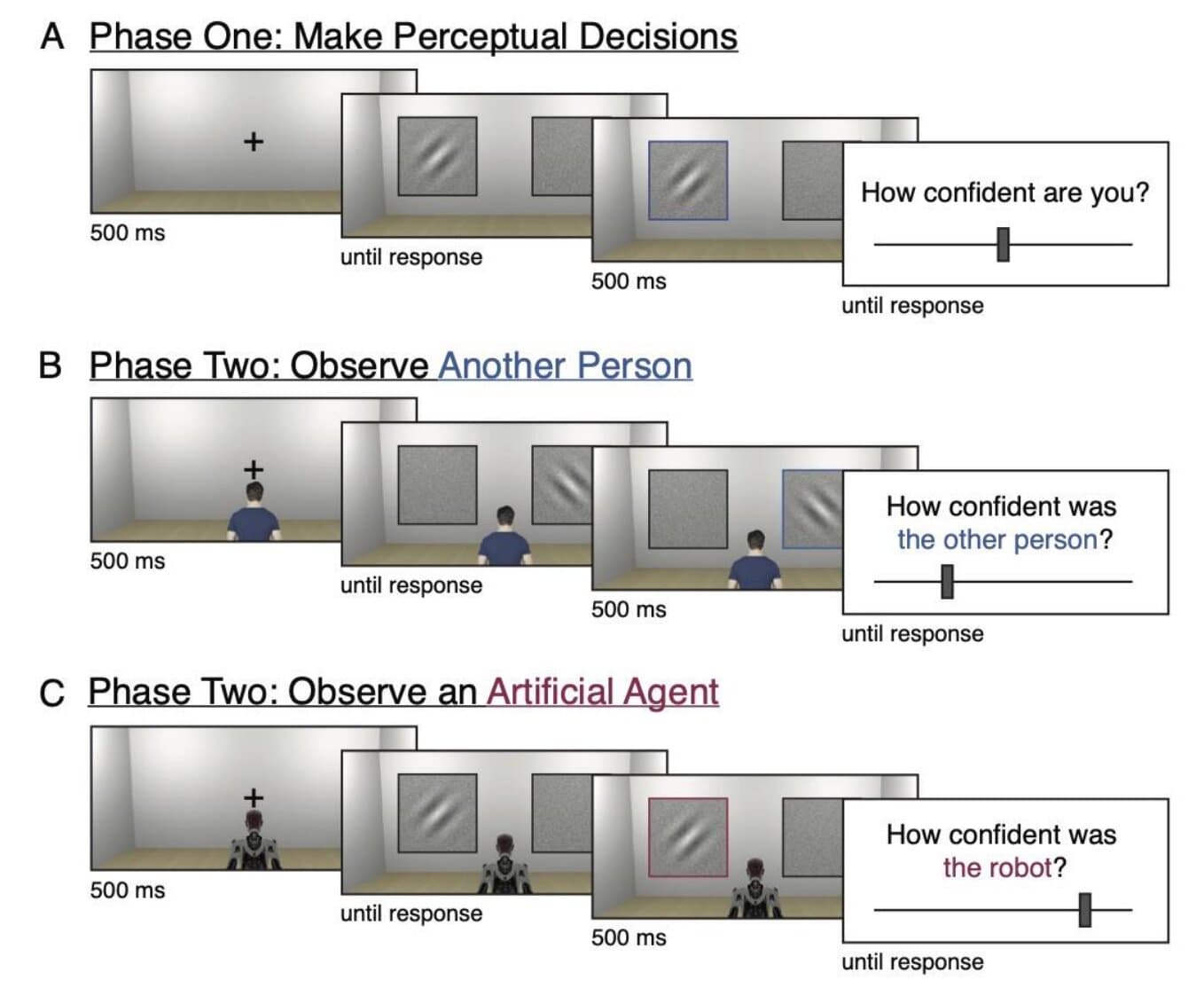
A recent series of experiments has uncovered a significant cognitive bias in how humans interact with artificial intelligence systems. Researchers found that people consistently overestimate how confident AI models are in their responses, particularly when interacting with conversational agents like ChatGPT or Google's Gemini. The study, conducted by a team of cognitive scientists, involved thousands of participants evaluating AI-generated answers across various topics, from factual queries to opinion-based questions.
The experiments presented users with responses from different AI models, each accompanied by a confidence score generated by the system itself. Participants were asked to estimate the AI's confidence level based solely on the text of the response. Across multiple trials, human judges rated the AI as more confident than it actually was, even when the responses contained hedging language or explicit uncertainty markers. The overestimation was most pronounced when the AI's language was fluent and grammatically correct, leading users to infer unwarranted certainty.
The researchers attribute this phenomenon to a combination of linguistic fluency bias and anthropomorphism. Humans tend to equate smooth, natural-sounding language with high confidence, even when the AI's internal calibration suggests otherwise. Additionally, people often unconsciously project human-like certainty onto AI systems, assuming that a coherent answer implies a strong conviction. The study controlled for response length, sentiment, and topic complexity, but the overestimation persisted across all conditions.
This finding has critical implications for the deployment of AI in high-stakes domains such as healthcare, finance, and legal advice. If users consistently overestimate AI confidence, they may place undue trust in incorrect or misleading information. The study compared user perceptions across several popular AI models and found that while some systems explicitly display confidence percentages, users still overestimated by an average of 15-20 percentage points. Even when AI responses included disclaimers like "I'm not sure" or "this is speculative," participants often ignored or downplayed these signals.
For everyday users, this means that relying on an AI's apparent certainty could lead to poor decisions. The researchers suggest that AI developers should design interfaces that visually calibrate confidence more effectively, perhaps using color-coded bars or explicit warnings when uncertainty is high. Currently, most chatbots present all answers with equal formatting, obscuring differences in reliability. The study also noted that users who frequently interact with AI showed slightly better calibration, but the overestimation remained significant.
The experiments were conducted in controlled online settings with participants from diverse backgrounds, but real-world interactions may introduce additional biases. The researchers plan to expand the study to include voice-based AI assistants and multimodal systems. They also call for more transparent AI confidence reporting standards, as current practices vary widely between companies.
As AI becomes more integrated into daily life, understanding how humans perceive machine confidence is crucial. The study underscores the need for better user education and system design to bridge the gap between perceived and actual AI reliability. Without such measures, the risk of over-reliance on flawed AI outputs will continue to grow.
AI in Medicine: Transforming Healthcare or Adding Complexity?
Artificial intelligence is increasingly being integrated into healthcare, promising to revolutionize diagnostics, treatment planning, and patient care. However, questions remain about its effectiveness, ethical implications, and whether it will truly benefit patients and doctors.

Artificial intelligence is no longer confined to the realms of computing and robotics; it is steadily making its way into the doctor's office. From analyzing medical images to predicting patient outcomes, AI systems are being developed to assist healthcare professionals in making faster and more accurate decisions. This technological shift promises to transform the way medicine is practiced, but it also raises important questions about reliability, privacy, and the human touch in healthcare.
AI algorithms are already being used in radiology to detect tumors, fractures, and other abnormalities in X-rays, CT scans, and MRIs. These systems can process thousands of images in minutes, often identifying subtle patterns that human eyes might miss. Similarly, AI-powered tools are aiding pathologists in diagnosing diseases from tissue samples, and helping cardiologists interpret electrocardiograms with greater precision. The underlying technology relies on deep learning, a subset of machine learning that trains neural networks on vast datasets to recognize complex patterns.
Beyond diagnostics, AI is being applied to treatment planning and personalized medicine. For instance, AI models can analyze a patient's genetic makeup, lifestyle, and medical history to recommend tailored therapies. In oncology, AI helps design radiation plans that target tumors while sparing healthy tissue. Virtual health assistants, powered by natural language processing, are also being deployed to triage symptoms, schedule appointments, and provide medication reminders, potentially reducing the burden on healthcare staff.
Despite these advances, the integration of AI into clinical practice is not without challenges. One major concern is the quality and bias of the data used to train AI models. If the training data is not diverse, the AI may perform poorly on certain populations, leading to disparities in care. Additionally, AI systems can be 'black boxes,' making it difficult for doctors to understand how they arrive at a particular recommendation. This lack of transparency raises trust issues and legal liability questions.
Another critical aspect is the impact on the patient-doctor relationship. While AI can enhance efficiency, there is a risk that it may depersonalize care. Patients may feel uncomfortable interacting with machines or worry that their data is being used without consent. Moreover, doctors might become overly reliant on AI, potentially overlooking their own clinical judgment. Striking the right balance between human expertise and machine assistance is essential.
Currently, AI applications in medicine are most advanced in developed countries, with pilot programs and approved devices in the US, Europe, and parts of Asia. However, widespread adoption is still limited by regulatory hurdles, high costs, and the need for robust validation studies. Many AI tools are still in the research phase, and few have received regulatory clearance for routine clinical use. The cost of implementing such systems can be prohibitive for smaller clinics and hospitals, particularly in low-resource settings.
For patients, the benefits of AI in medicine could be substantial: earlier detection of diseases, more accurate diagnoses, and personalized treatment plans. However, these benefits depend on responsible development and deployment. Privacy safeguards must be in place to protect sensitive health data, and algorithms must be continuously monitored for bias and performance. Patients should be informed when AI is used in their care and have the option to opt out if they prefer human-only interaction.
Looking ahead, the next few years will be critical for AI in medicine. Researchers are working on making AI more interpretable and fair, while regulators are developing frameworks to ensure safety and efficacy. Collaborative efforts between tech companies, healthcare providers, and policymakers are needed to address the ethical and practical challenges. Ultimately, AI has the potential to be a powerful ally in medicine, but it must be wielded with caution and a clear focus on improving patient outcomes.
India Must Use AI to Augment Human Work, Not Replace It: Former NITI Aayog Member
Former NITI Aayog member Arvind Virmani stated that India's AI strategy should focus on complementing human labor rather than displacing workers. He emphasized enhancing productivity through human-AI collaboration.
Arvind Virmani, a former member of the NITI Aayog, has articulated a clear vision for India's approach to artificial intelligence: AI should serve as a tool to augment human capabilities, not as a replacement for workers. Speaking at a recent policy discussion, Virmani stressed that the nation's AI strategy must prioritize human-centric development to avoid widespread job displacement. His comments come as India accelerates its adoption of AI across various sectors, from agriculture to healthcare.
Virmani outlined that AI systems should be designed to handle repetitive, data-intensive tasks, freeing up humans for creative and strategic roles. For instance, in agriculture, AI can analyze soil data and weather patterns, enabling farmers to make informed decisions without replacing their expertise. Similarly, in healthcare, AI can assist in diagnostics and drug discovery, but final decisions should remain with medical professionals. This collaborative model, he argued, would boost overall productivity without causing social upheaval.
The former NITI Aayog member also highlighted the need for robust data infrastructure and ethical guidelines. He called for investment in AI research that aligns with India's unique challenges, such as low literacy rates and diverse languages. Virmani warned against blindly importing AI models from developed nations, which may not account for local contexts. Instead, India should develop indigenous AI solutions that address its specific needs, like improving access to education and healthcare in rural areas.
Virmani's perspective aligns with global debates on AI's societal impact. While countries like the US and China focus on AI-driven automation, India's large informal workforce makes job displacement a critical concern. The International Labour Organization has warned that automation could threaten up to 69% of jobs in India, particularly in manufacturing and services. Virmani's approach offers a middle path: leveraging AI to enhance human productivity while creating new roles in AI oversight, training, and maintenance.
This human-AI collaboration model could have significant implications for India's workforce. For example, in the banking sector, AI chatbots can handle routine queries, allowing human employees to focus on complex customer needs. In education, AI tutors can provide personalized learning, but teachers remain essential for mentorship and emotional support. Virmani emphasized that reskilling and upskilling programs are crucial to prepare workers for this transition, ensuring that no one is left behind.
Virmani also touched on the role of government in shaping AI adoption. He advocated for public-private partnerships to fund AI research and deployment, especially in sectors like agriculture and healthcare where private investment is limited. The government, he said, must also establish clear regulations to prevent misuse of AI, such as bias in hiring algorithms or privacy violations. Transparent and accountable AI systems would build public trust and encourage wider adoption.
Looking ahead, Virmani expects India to play a leading role in global AI governance. He called for international cooperation on standards for ethical AI, data sharing, and cybersecurity. India's experience with large-scale digital platforms like Aadhaar and UPI positions it well to contribute to these discussions. However, he cautioned that rapid AI advancement requires continuous policy adaptation to address emerging challenges.
While Virmani's vision is compelling, its implementation faces hurdles. India lacks sufficient AI talent and research infrastructure compared to global leaders. The cost of AI deployment in rural areas remains high, and digital literacy is low. Virmani acknowledged these challenges but remained optimistic, noting that India's demographic dividend could be an advantage if its youth are trained in AI skills. The coming years will test whether India can forge a path that harnesses AI for inclusive growth.
India Must Use AI to Augment, Not Replace Human Workers: Former NITI Aayog Member
Former NITI Aayog member Arvind Virmani emphasizes that India's AI strategy should focus on complementing human labor rather than replacing it, leveraging the country's large workforce alongside automation.

India should adopt an artificial intelligence strategy that enhances human productivity rather than replacing workers, according to former NITI Aayog member Arvind Virmani. Speaking on Sunday, he argued that the nation's strength lies in combining AI with its vast labor pool instead of aggressively pursuing robotics-led automation. Virmani stressed that AI should serve as a tool to augment human capabilities, not as a substitute for human workers.
Virmani highlighted that India's demographic dividend, with a large and young workforce, presents a unique opportunity to integrate AI in ways that boost efficiency without displacing jobs. He cautioned against blindly following automation trends seen in developed economies, where labor shortages drive robotics adoption. Instead, India should focus on AI applications that assist workers in sectors like agriculture, manufacturing, and services, improving output and quality.
The former policy advisor noted that AI can help bridge skill gaps by providing decision-support tools, real-time data analysis, and personalized training. For example, AI-powered platforms could help farmers optimize crop yields, or assist healthcare workers in diagnosing diseases more accurately. This approach would raise productivity while preserving employment, aligning with India's socio-economic goals.
Virmani also pointed to the need for targeted investments in AI research and digital infrastructure to support such a strategy. He called for public-private partnerships to develop AI solutions tailored to India's specific challenges, such as low literacy rates and diverse languages. Additionally, he emphasized the importance of ethical AI frameworks to prevent bias and ensure equitable access.
Critics of automation-heavy strategies argue that rapid job displacement could exacerbate inequality and social unrest in India, where formal employment is limited. Virmani's perspective aligns with global debates on 'human-centric AI,' where technology is designed to empower rather than replace people. Countries like Germany and Japan have similarly pursued 'Industry 4.0' models that combine human skills with smart machines.
For Indian businesses, this means prioritizing AI tools that assist employees rather than fully automating roles. For instance, chatbots could handle routine customer queries while human agents tackle complex issues, or AI could flag anomalies in financial transactions for human review. Such hybrid models are already being tested in banking, retail, and logistics.
The government's National AI Strategy, released in 2018, also emphasizes AI for social good and inclusive growth. However, implementation has been uneven, with limited adoption in small enterprises and rural areas. Virmani's remarks reinforce the need for policy coherence and grassroots deployment to realize AI's potential without harming livelihoods.
While Virmani did not specify timelines or budget allocations, his comments signal a cautious yet optimistic approach to AI in India. The coming years will likely see more pilot projects that blend AI with human oversight, along with skilling programs to prepare workers for AI-augmented roles. The challenge will be to scale these initiatives while managing the inevitable disruption to traditional jobs.
OpenAI Acquires Voice Cloning Startup Weights.gg for AI Voice Tech
OpenAI has acquired Weights.gg, a startup known for its AI voice cloning technology that allowed users to create and share realistic celebrity voice clones. The acquisition comes after Weights.gg shut down earlier this year.

OpenAI, the leading artificial intelligence research organization, has acquired Weights.gg, a startup that gained notoriety for its AI-powered voice cloning technology. The deal was confirmed by sources familiar with the matter, though financial terms were not disclosed. Weights.gg had previously operated a platform that enabled users to generate and share highly realistic AI voice clones of celebrities and public figures, sparking both fascination and controversy.
The technology behind Weights.gg utilized deep learning models trained on audio samples to replicate voices with remarkable accuracy. Users could input text and have it spoken in the cloned voice, producing results that were often indistinguishable from the original speaker. The platform gained significant traction for its ability to create voice clones of famous personalities, but it also raised ethical and legal concerns regarding consent and misuse.
OpenAI's acquisition signals a strategic move to bolster its own voice AI capabilities, particularly as the company continues to develop its GPT models and multimodal AI systems. Voice cloning technology could enhance OpenAI's offerings in areas like virtual assistants, content creation, and accessibility tools. The acquisition also brings Weights.gg's team of engineers and researchers into OpenAI, adding expertise in audio AI.
Weights.gg had shut down its platform earlier this year amid growing scrutiny over deepfake technology and potential misuse. The startup faced criticism for enabling the creation of unauthorized voice clones, which could be used for impersonation, fraud, or spreading misinformation. The acquisition by OpenAI may help address these concerns by integrating the technology into a more controlled and ethical framework.
For users, the acquisition could lead to new voice-based features in OpenAI's products, such as more natural-sounding text-to-speech in ChatGPT or personalized voice assistants. However, OpenAI has not announced specific plans for integrating Weights.gg's technology. The company is likely to focus on responsible deployment, given the potential for misuse.
The acquisition is expected to close in the coming weeks, pending regulatory approvals. OpenAI has not commented publicly on the deal, but industry analysts view it as a strategic investment in voice AI, a rapidly growing field. Competitors like Google and Amazon have also invested heavily in voice cloning and synthesis technologies.
As OpenAI integrates Weights.gg's technology, questions remain about how the company will balance innovation with ethical safeguards. The acquisition highlights the ongoing tension between advancing AI capabilities and addressing the risks of misuse. OpenAI's track record with safety measures, such as content filters and usage policies, will be closely watched as it moves forward with voice cloning technology.