
AI in Medicine: Transforming Healthcare or Adding Complexity?
Artificial intelligence is increasingly being integrated into healthcare, promising to revolutionize diagnostics, treatment planning, and patient care. However, questions remain about its effectiveness, ethical implications, and whether it will truly benefit patients and doctors.

Artificial intelligence is no longer confined to the realms of computing and robotics; it is steadily making its way into the doctor's office. From analyzing medical images to predicting patient outcomes, AI systems are being developed to assist healthcare professionals in making faster and more accurate decisions. This technological shift promises to transform the way medicine is practiced, but it also raises important questions about reliability, privacy, and the human touch in healthcare.
AI algorithms are already being used in radiology to detect tumors, fractures, and other abnormalities in X-rays, CT scans, and MRIs. These systems can process thousands of images in minutes, often identifying subtle patterns that human eyes might miss. Similarly, AI-powered tools are aiding pathologists in diagnosing diseases from tissue samples, and helping cardiologists interpret electrocardiograms with greater precision. The underlying technology relies on deep learning, a subset of machine learning that trains neural networks on vast datasets to recognize complex patterns.
Beyond diagnostics, AI is being applied to treatment planning and personalized medicine. For instance, AI models can analyze a patient's genetic makeup, lifestyle, and medical history to recommend tailored therapies. In oncology, AI helps design radiation plans that target tumors while sparing healthy tissue. Virtual health assistants, powered by natural language processing, are also being deployed to triage symptoms, schedule appointments, and provide medication reminders, potentially reducing the burden on healthcare staff.
Despite these advances, the integration of AI into clinical practice is not without challenges. One major concern is the quality and bias of the data used to train AI models. If the training data is not diverse, the AI may perform poorly on certain populations, leading to disparities in care. Additionally, AI systems can be 'black boxes,' making it difficult for doctors to understand how they arrive at a particular recommendation. This lack of transparency raises trust issues and legal liability questions.
Another critical aspect is the impact on the patient-doctor relationship. While AI can enhance efficiency, there is a risk that it may depersonalize care. Patients may feel uncomfortable interacting with machines or worry that their data is being used without consent. Moreover, doctors might become overly reliant on AI, potentially overlooking their own clinical judgment. Striking the right balance between human expertise and machine assistance is essential.
Currently, AI applications in medicine are most advanced in developed countries, with pilot programs and approved devices in the US, Europe, and parts of Asia. However, widespread adoption is still limited by regulatory hurdles, high costs, and the need for robust validation studies. Many AI tools are still in the research phase, and few have received regulatory clearance for routine clinical use. The cost of implementing such systems can be prohibitive for smaller clinics and hospitals, particularly in low-resource settings.
For patients, the benefits of AI in medicine could be substantial: earlier detection of diseases, more accurate diagnoses, and personalized treatment plans. However, these benefits depend on responsible development and deployment. Privacy safeguards must be in place to protect sensitive health data, and algorithms must be continuously monitored for bias and performance. Patients should be informed when AI is used in their care and have the option to opt out if they prefer human-only interaction.
Looking ahead, the next few years will be critical for AI in medicine. Researchers are working on making AI more interpretable and fair, while regulators are developing frameworks to ensure safety and efficacy. Collaborative efforts between tech companies, healthcare providers, and policymakers are needed to address the ethical and practical challenges. Ultimately, AI has the potential to be a powerful ally in medicine, but it must be wielded with caution and a clear focus on improving patient outcomes.
Water-Efficient AI Hub Helps Robots Make Faster Decisions
Australian researchers have developed a new water-efficient artificial intelligence hub that enables robots to make critical decisions without delays. The innovation promises to enhance robot autonomy in various applications.
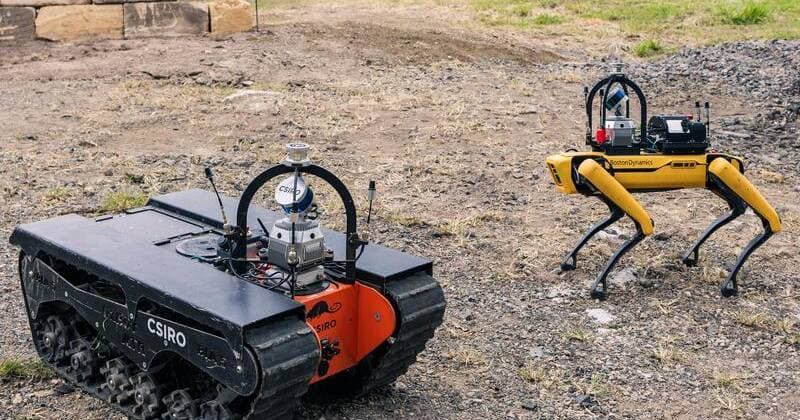
Researchers in Australia have unveiled a groundbreaking artificial intelligence hub designed to improve robot decision-making while significantly reducing water consumption. This new system, developed by a team at a leading Australian university, allows robots to process information and make choices in real-time, even in complex environments. The hub integrates advanced machine learning algorithms with efficient cooling technology, addressing two major challenges in robotics: latency and resource usage.
The AI hub utilizes a novel cooling system that relies on water evaporation rather than traditional air conditioning, cutting water usage by up to 90% compared to conventional data centers. This is achieved through a closed-loop design that recycles water and minimizes waste. The system's low latency is made possible by edge computing capabilities, which process data locally on the robot rather than relying on cloud servers. This reduces response times from milliseconds to microseconds, crucial for tasks like autonomous navigation or industrial assembly.
Technically, the hub employs a specialized neural network architecture optimized for real-time inference. It can handle multiple sensor inputs simultaneously, including cameras, LiDAR, and tactile sensors, to generate immediate commands for robotic actuators. The researchers tested the system on a variety of robots, from drones to humanoid machines, and found it improved task completion rates by 35% while cutting energy consumption by half.
The development comes as robotics increasingly demands faster, more autonomous decision-making, especially in fields like disaster response, agriculture, and manufacturing. Traditional AI systems often struggle with latency or require massive computational resources, limiting their practicality. This Australian innovation offers a compact, water-efficient alternative that could be deployed in remote areas or regions with scarce water supplies.
For users, the impact is immediate: robots equipped with this hub can react to sudden obstacles, adjust their grip on fragile objects, or navigate uneven terrain without human intervention. The system is compatible with most modern robotic platforms and can be retrofitted into existing models. While the researchers have not announced a commercial price, they estimate the hub will cost around $5,000 per unit, making it accessible for small and medium enterprises.
The team plans to refine the technology further, focusing on expanding its compatibility with different operating systems and reducing the hub's physical footprint. They are also exploring partnerships with robotics manufacturers to integrate the hub into next-generation products. Field trials are underway in Australian farms and warehouses, with results expected within six months.
Mistral AI CEO Warns Europe About Dangerous Dependency on American Tech
Arthur Mensch, CEO of French AI startup Mistral AI, warns that Europe's reliance on American technology could become a critical vulnerability. He cautions that if the US monopolizes AI supply chains, Europe's tech sovereignty and economic future are at risk.

Arthur Mensch, the co-founder and CEO of Mistral AI, Europe's $14 billion artificial intelligence startup, has issued a stark warning about the continent's growing dependency on American technology. Speaking at a tech conference in Paris, Mensch argued that Europe's reliance on US-based cloud infrastructure, chips, and AI models poses a significant strategic risk. He emphasized that without immediate action to build domestic alternatives, Europe could lose its technological sovereignty and economic competitiveness.
Mensch highlighted that European AI companies, including Mistral, currently depend heavily on American cloud providers like Amazon Web Services and Microsoft Azure for computing power, as well as on US-designed semiconductors from Nvidia and AMD. He warned that this dependency creates a single point of failure: 'Once supply is monopolised by a single geopolitical actor, Europe's AI ambitions will be at their mercy.' He called for coordinated European investment in homegrown data centers, chip fabrication, and AI research.
Mistral AI, valued at $14 billion, has positioned itself as a European champion in the AI race, developing open-source large language models that compete with OpenAI's GPT and Google's Gemini. The company recently raised €600 million in Series B funding, with investors including Andreessen Horowitz and Salesforce. However, Mensch noted that even Mistral relies on US-based hardware and cloud services for training its models, underscoring the systemic nature of the problem.
The warning comes amid escalating US-China tech tensions and export controls on advanced semiconductors, which have already impacted Chinese AI firms. Mensch argued that Europe is in a similar position, vulnerable to potential US policy shifts or trade restrictions. He drew parallels to the European Union's earlier dependency on Russian energy, which became a crisis after the Ukraine invasion. 'We cannot repeat the same mistake with technology,' he said.
Mensch proposed a three-pronged strategy: increased public funding for AI infrastructure, regulatory support for European cloud providers, and incentives for chip manufacturing on the continent. He pointed to initiatives like the European Chips Act and the proposed AI Factories as steps in the right direction but stressed that execution must accelerate. 'We have the talent and the capital, but we lack the infrastructure and political will,' he added.
The impact on European users and businesses could be profound if the dependency is not addressed. European startups may face higher costs and limited access to cutting-edge technology, while consumers could see slower adoption of AI-powered services. Mensch urged European regulators to prioritize tech sovereignty in upcoming AI legislation, balancing innovation with security. 'The next five years will determine whether Europe is a player or a pawn in the AI revolution,' he concluded.
While Mensch's warning has resonated with European tech leaders, some analysts question whether Europe can realistically build competitive alternatives given the scale of US investment. Mistral itself continues to partner with US firms, and no concrete plans for a European AI cloud have been announced. The coming months will likely see increased debate in EU policy circles about how to balance cooperation with the US and strategic autonomy.
Australian AI Breakthrough Enables Real-Time Robotic Decision Making
Researchers in Australia have developed a water-efficient AI hub that allows robots to process information and make decisions in real-time. This innovation could significantly enhance robotic autonomy and responsiveness in various applications.
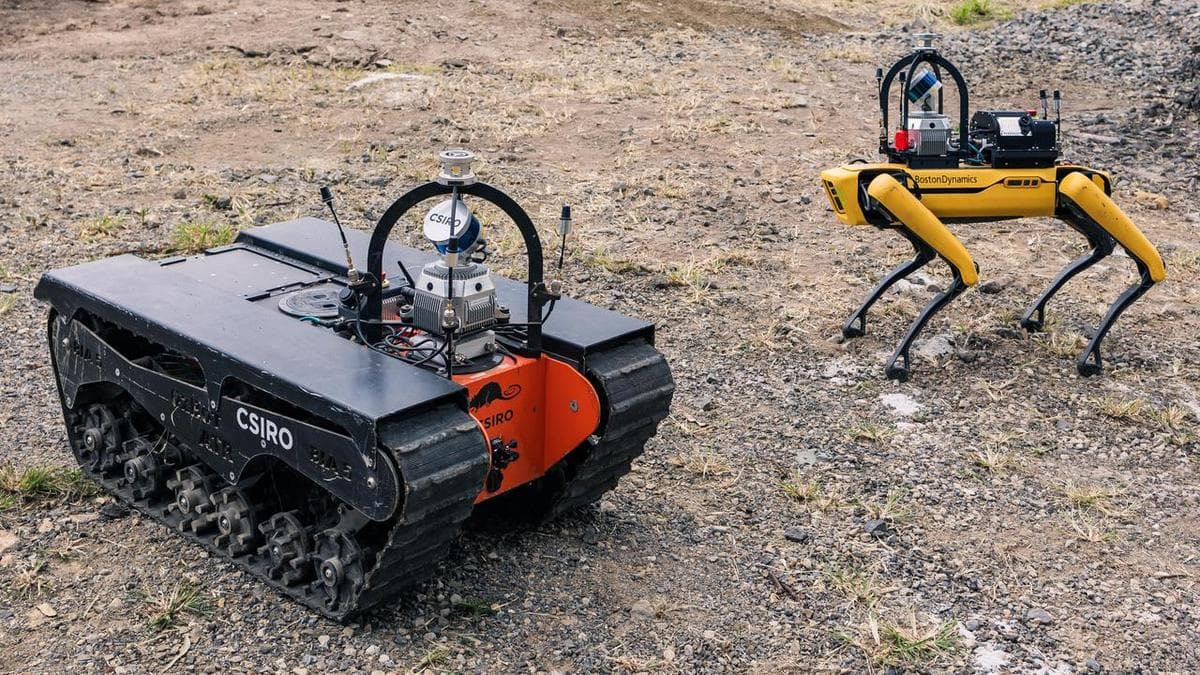
A team of Australian scientists has unveiled a groundbreaking artificial intelligence system that could revolutionize how robots make decisions. The new AI hub, designed to be water-efficient, enables robots to process sensory data and execute actions without the typical delays associated with cloud-based computing. This development promises to enhance the autonomy and responsiveness of robots in real-world environments.
The AI hub operates on a principle known as edge computing, where data processing occurs locally on the robot rather than relying on remote servers. This reduces latency, allowing robots to react almost instantaneously to changes in their surroundings. The system is also optimized for low power consumption and minimal water usage, making it suitable for deployment in resource-constrained settings. By integrating advanced neural networks with efficient hardware, the hub can handle complex tasks such as object recognition, navigation, and manipulation in real-time.
One of the key features of this AI hub is its ability to learn and adapt on the fly. Unlike traditional systems that require extensive pre-training, this hub can update its models based on new data, enabling robots to improve their performance over time. This is particularly useful in dynamic environments where conditions change rapidly, such as disaster response or manufacturing floors. The water-efficient design also addresses environmental concerns, as cooling systems for AI hardware often consume significant amounts of water.
This innovation comes at a time when the robotics industry is increasingly focused on edge AI to overcome the limitations of cloud computing. Many current robots rely on cloud servers for heavy computation, which introduces delays that can be critical in time-sensitive tasks. By processing data locally, the Australian hub eliminates this bottleneck, making robots more reliable and independent. This approach is similar to developments in autonomous vehicles, where split-second decisions are crucial for safety.
The potential applications for this technology are vast. In healthcare, robots could assist in surgery or patient care with real-time feedback. In agriculture, they could monitor crops and adjust irrigation or harvesting techniques instantly. The system could also be used in search and rescue missions, where robots need to navigate unpredictable terrain and make quick decisions to save lives. Additionally, the low water consumption makes it ideal for use in arid regions or space exploration, where every resource is precious.
For end users, this means more capable and responsive robots that can operate in a wider range of environments. The AI hub is designed to be compatible with various robotic platforms, from drones to humanoid robots. While the researchers have not disclosed specific pricing, they aim to make the technology accessible to both commercial and academic users. The hub is currently being tested in laboratories, with plans to deploy it in real-world scenarios within the next year.
Despite the promising results, there are still challenges to overcome. The system's performance in extreme conditions, such as high heat or humidity, needs further validation. Additionally, ensuring the security of locally processed data is a concern, as robots become more autonomous. The team is working on robust encryption methods to protect against cyber threats. Future developments will focus on scaling the technology for mass production and integrating it with existing robotic systems.
The Australian researchers are optimistic about the impact of their AI hub on the robotics industry. By enabling real-time decision-making without the need for constant cloud connectivity, this innovation could pave the way for a new generation of intelligent, self-sufficient robots. As testing continues, the world watches to see how this water-efficient AI will transform the capabilities of machines.
India Must Use AI to Augment Human Work, Not Replace It: Former NITI Aayog Member
Former NITI Aayog member Arvind Virmani stated that India's AI strategy should focus on complementing human labor rather than displacing workers. He emphasized enhancing productivity through human-AI collaboration.

Arvind Virmani, a former member of the NITI Aayog, has articulated a clear vision for India's approach to artificial intelligence: AI should serve as a tool to augment human capabilities, not as a replacement for workers. Speaking at a recent policy discussion, Virmani stressed that the nation's AI strategy must prioritize human-centric development to avoid widespread job displacement. His comments come as India accelerates its adoption of AI across various sectors, from agriculture to healthcare.
Virmani outlined that AI systems should be designed to handle repetitive, data-intensive tasks, freeing up humans for creative and strategic roles. For instance, in agriculture, AI can analyze soil data and weather patterns, enabling farmers to make informed decisions without replacing their expertise. Similarly, in healthcare, AI can assist in diagnostics and drug discovery, but final decisions should remain with medical professionals. This collaborative model, he argued, would boost overall productivity without causing social upheaval.
The former NITI Aayog member also highlighted the need for robust data infrastructure and ethical guidelines. He called for investment in AI research that aligns with India's unique challenges, such as low literacy rates and diverse languages. Virmani warned against blindly importing AI models from developed nations, which may not account for local contexts. Instead, India should develop indigenous AI solutions that address its specific needs, like improving access to education and healthcare in rural areas.
Virmani's perspective aligns with global debates on AI's societal impact. While countries like the US and China focus on AI-driven automation, India's large informal workforce makes job displacement a critical concern. The International Labour Organization has warned that automation could threaten up to 69% of jobs in India, particularly in manufacturing and services. Virmani's approach offers a middle path: leveraging AI to enhance human productivity while creating new roles in AI oversight, training, and maintenance.
This human-AI collaboration model could have significant implications for India's workforce. For example, in the banking sector, AI chatbots can handle routine queries, allowing human employees to focus on complex customer needs. In education, AI tutors can provide personalized learning, but teachers remain essential for mentorship and emotional support. Virmani emphasized that reskilling and upskilling programs are crucial to prepare workers for this transition, ensuring that no one is left behind.
Virmani also touched on the role of government in shaping AI adoption. He advocated for public-private partnerships to fund AI research and deployment, especially in sectors like agriculture and healthcare where private investment is limited. The government, he said, must also establish clear regulations to prevent misuse of AI, such as bias in hiring algorithms or privacy violations. Transparent and accountable AI systems would build public trust and encourage wider adoption.
Looking ahead, Virmani expects India to play a leading role in global AI governance. He called for international cooperation on standards for ethical AI, data sharing, and cybersecurity. India's experience with large-scale digital platforms like Aadhaar and UPI positions it well to contribute to these discussions. However, he cautioned that rapid AI advancement requires continuous policy adaptation to address emerging challenges.
While Virmani's vision is compelling, its implementation faces hurdles. India lacks sufficient AI talent and research infrastructure compared to global leaders. The cost of AI deployment in rural areas remains high, and digital literacy is low. Virmani acknowledged these challenges but remained optimistic, noting that India's demographic dividend could be an advantage if its youth are trained in AI skills. The coming years will test whether India can forge a path that harnesses AI for inclusive growth.