US Army Declares Drones and AI Will Shape Future Warfare
The US Army has informed lawmakers that drones, artificial intelligence, and autonomous systems are rapidly transforming modern combat. Military officials emphasize that future wars will be defined by these technologies, urging accelerated adoption and integration.

The United States Army has delivered a stark assessment to lawmakers, asserting that drones, artificial intelligence, and autonomous systems will fundamentally redefine the nature of future warfare. In a briefing on May 16 in Washington, senior military officials outlined how these technologies are rapidly evolving and becoming central to modern combat operations. The Army stressed that the pace of technological change demands urgent action to maintain strategic superiority on the battlefield.
According to the briefing, unmanned aerial vehicles (UAVs) have already proven their effectiveness in recent conflicts, providing persistent surveillance, precision strikes, and force multiplication. The Army highlighted that drones are no longer niche tools but are becoming ubiquitous across all domains of warfare. AI integration allows for faster data processing, target recognition, and decision-making, while autonomous systems can operate in environments too dangerous for human soldiers.
The officials emphasized that the future battlefield will be characterized by swarms of drones, AI-driven command and control, and autonomous logistics. They pointed to ongoing experiments with drone swarms that can overwhelm enemy defenses and AI algorithms that can predict enemy movements. The Army is investing heavily in these technologies, but warned that adversaries are also advancing quickly, making it a race to achieve technological dominance.
This assessment comes amid growing global competition in military AI and drone development. China and Russia have both demonstrated advanced drone capabilities and are integrating AI into their military systems. The US Army's statement underscores a shift from traditional manpower-centric warfare to technology-centric operations, where software and sensors play as critical a role as soldiers and tanks.
The Army's message to Congress included requests for sustained funding and streamlined acquisition processes to field these systems faster. Officials noted that current procurement cycles are too slow to keep up with the rapid evolution of commercial drone technology. They also called for new ethical guidelines and operational doctrines to govern the use of autonomous weapons.
For soldiers on the ground, this means a future where they will fight alongside robotic wingmen, rely on AI for tactical advice, and operate drones from handheld controllers. Training programs are already being updated to include drone operation and AI literacy. The Army is also exploring how to protect its own systems from electronic warfare and cyber attacks that adversaries might use to disable drones.
While the timeline for full integration remains unclear, the Army has set milestones for fielding AI-enabled systems by 2025 and autonomous combat vehicles by 2030. However, challenges remain, including reliability of AI in chaotic environments, interoperability with allies, and public acceptance of autonomous lethal systems. Lawmakers expressed support but also raised concerns about oversight and accountability.
The US Army's declaration marks a clear signal that the era of drone and AI warfare is not a distant future but an imminent reality. As technology continues to advance, the military is racing to adapt its strategies, training, and equipment to ensure it can dominate the battlefields of tomorrow. The coming years will likely see accelerated testing and deployment of these systems, shaping how wars are fought for decades to come.
AI and Thermal Cameras Deployed in Balearics to Protect Sperm Whales from Ship Strikes
A new system combining thermal cameras and artificial intelligence is being deployed in the Balearic Islands to detect sperm whales and alert ships to prevent deadly collisions. The technology aims to reduce the primary threat to this endangered Mediterranean population.

A pioneering conservation initiative has been launched in the waters surrounding Spain's Balearic Islands, deploying a network of thermal cameras paired with artificial intelligence to detect sperm whales and warn nearby vessels. Ship strikes represent the single greatest threat to the survival of sperm whales in the Mediterranean, where the species is classified as endangered. The Balearic region serves as a critical habitat for these deep-diving cetaceans, making it a focal point for protective measures.
The system, known as 'Whale Safe Balearics,' utilizes high-resolution thermal imaging cameras mounted on buoys and coastal stations to scan the ocean surface continuously. When a whale's blow or body heat is detected, the AI algorithm analyzes the footage in real time to confirm the presence of a sperm whale and estimate its location. An alert is then transmitted to nearby ships via a mobile app and VHF radio, advising them to reduce speed or alter course to avoid a collision.
This technology builds on similar systems used for whale detection in other parts of the world, such as the Boston Harbor and the Santa Barbara Channel, but is specifically adapted for the Balearic Sea's conditions. The thermal cameras can operate effectively at night and in fog, when traditional visual monitoring from ships or aircraft is limited. The AI model was trained using thousands of images of sperm whales taken in Mediterranean waters to minimize false positives from other marine life or waves.
Sperm whales in the Mediterranean are genetically distinct from their Atlantic counterparts and number only a few hundred individuals. They face multiple stressors including noise pollution, entanglement in fishing gear, and chemical contamination, but collisions with large vessels are the most immediate lethal threat. The Balearic Islands, particularly the area between Ibiza and Mallorca, are a known feeding ground where whales concentrate during summer months, overlapping with busy shipping lanes.
The project is a collaboration between the Balearic Islands government, the Spanish Ministry for Ecological Transition, and several marine conservation NGOs. Initial deployment includes five camera stations covering the most high-risk areas, with plans to expand to ten stations by the end of the year. The system is already operational in a test phase, and early results show it can detect whales up to two kilometers away under favorable conditions.
For mariners, the alerts are designed to be integrated into existing navigation systems, providing a practical tool for avoiding collisions without imposing mandatory speed limits. The app is free to download and available in Spanish, Catalan, and English. The project team is also working with shipping companies and ferry operators to encourage voluntary adoption of the alerts and to gather feedback on the system's usability.
While the technology shows promise, challenges remain. False alarms can still occur due to floating debris or unusual wave patterns, and the system's range is limited in rough seas. The next phase will involve testing additional sensors, such as acoustic detectors that listen for whale calls, to improve accuracy. Data collected during the pilot will also help refine the AI algorithms and identify seasonal patterns of whale movement.
If successful, the Balearic system could serve as a model for other Mediterranean regions where ship strikes threaten marine mammals, such as the Strait of Gibraltar or the Hellenic Trench. The project's backers hope that within two years, the technology will be integrated into regional maritime traffic management systems, providing a scalable solution to one of the most pressing conservation challenges in the Mediterranean Sea.
Blockchain and AI Drive Next-Gen Security in Digital Payment Systems
Blockchain and artificial intelligence are becoming critical technologies for securing digital payments, offering tamper-proof ledgers and real-time fraud detection. Experts highlight their role in building faster, safer payment ecosystems for both everyday transactions and large-value transfers.

As digital payments increasingly dominate both everyday purchases and high-value transfers, the demand for robust security infrastructure has never been greater. Industry experts are now pointing to blockchain and artificial intelligence as foundational technologies for creating payment ecosystems that are faster, safer, and more trustworthy. The convergence of these two technologies promises to address long-standing vulnerabilities in traditional payment systems, from fraud to data breaches.
Blockchain technology provides a decentralized, immutable ledger that records every transaction in a transparent and tamper-proof manner. This eliminates the need for a central authority, reducing the risk of single points of failure and unauthorized alterations. Each block in the chain is cryptographically linked to the previous one, making it nearly impossible for malicious actors to alter transaction history without detection. For digital payments, this means enhanced integrity and traceability, especially for cross-border and large-value transfers where trust is paramount.
Artificial intelligence complements blockchain by enabling real-time fraud detection and risk assessment. Machine learning algorithms can analyze vast amounts of transaction data to identify patterns indicative of fraudulent activity, such as unusual spending behavior or account takeovers. AI systems can also adapt to new threats over time, continuously improving their accuracy. When integrated with blockchain, AI can trigger automated responses, such as flagging suspicious transactions or temporarily freezing accounts, without human intervention.
The combination of blockchain and AI is already being tested in various payment scenarios. For instance, some fintech companies are using blockchain to settle interbank transfers instantly while AI monitors for anomalies. In retail, AI-powered payment gateways can verify user identity through biometrics or behavioral analysis, with blockchain ensuring that transaction records remain unaltered. This dual-layer approach significantly reduces the window for cyberattacks compared to conventional systems.
For end users, the impact is tangible. Consumers can expect fewer false declines on legitimate purchases, faster transaction confirmations, and greater confidence in the security of their financial data. Businesses benefit from reduced chargeback fraud and lower operational costs associated with manual fraud reviews. However, the adoption of these technologies is not uniform across regions. Developed markets like North America and Europe are leading, while emerging economies are gradually integrating blockchain and AI into mobile payment platforms.
Pricing for such enhanced security varies. Some payment processors offer AI fraud detection as an add-on service for a monthly fee, while blockchain-based settlement systems may charge per transaction. For large enterprises, custom implementations can cost tens of thousands of dollars annually, but the savings from fraud prevention often justify the expense. Smaller businesses may access these technologies through third-party payment gateways that bundle security features.
Despite the promise, challenges remain. Blockchain scalability issues can slow transaction speeds during peak loads, and AI models require high-quality data to avoid bias. Regulatory frameworks around data privacy and cross-border data flows also pose hurdles. Looking ahead, experts expect tighter integration of blockchain and AI into mainstream payment infrastructure, with standards emerging for interoperability. The next few years will likely see pilot projects expand into commercial deployments, particularly in sectors like banking, remittances, and e-commerce.
Bipartisan House Bill Would Block State AI Safety Laws in California and New York
House negotiators are crafting a federal AI bill that would preempt state-level frontier safety laws in California and New York. The legislation aims to establish national standards and prevent a patchwork of regulations.
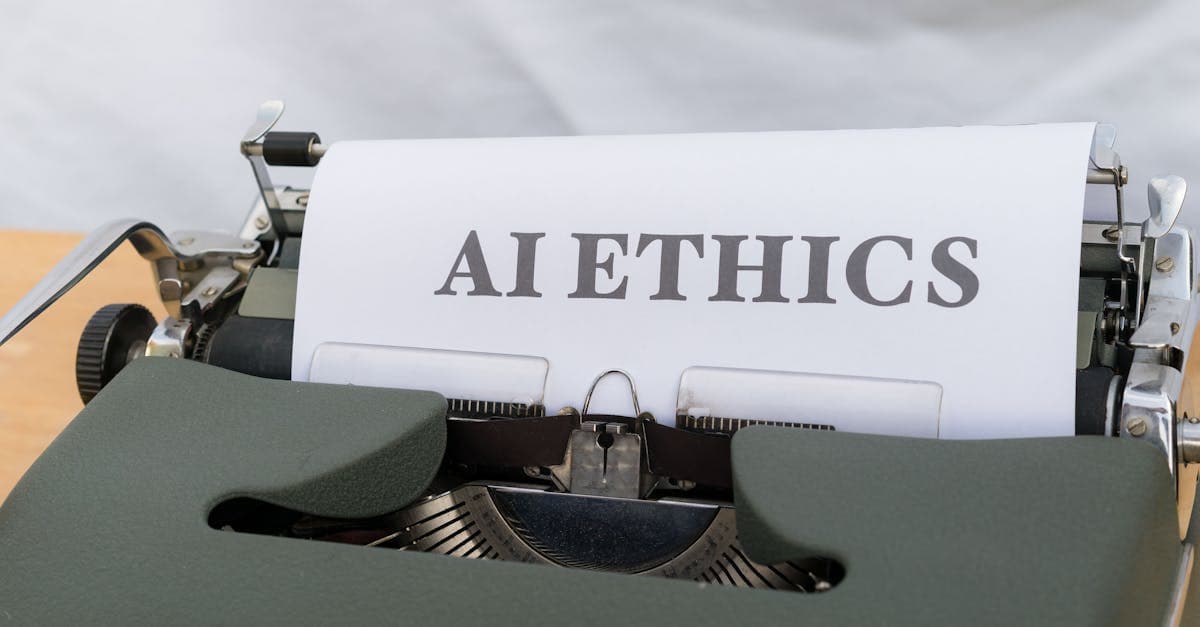
Bipartisan House negotiators are closing in on a federal artificial intelligence bill that would block California and New York from enforcing their new frontier AI safety laws. The proposed legislation aims to create a uniform national framework for regulating advanced AI systems, preempting state-level efforts that lawmakers fear could fragment the market. The bill would give the federal government exclusive authority over frontier AI safety for at least two years, during which states would be barred from enacting or enforcing their own rules.
The negotiations come as California and New York have advanced their own AI safety bills targeting the most powerful models. California's SB 1047, introduced by Senator Scott Wiener, would require developers of frontier AI models to implement safety protocols and could hold them liable for catastrophic harms. New York's proposed legislation similarly seeks to impose strict oversight on large-scale AI deployments. Industry groups have warned that a patchwork of state laws would stifle innovation and create compliance nightmares.
The emerging federal bill would establish a national AI safety office within the Department of Commerce, tasked with developing standards for testing and auditing frontier models. It would also create a voluntary reporting framework for developers, with incentives for participation. Lawmakers believe a federal approach can balance innovation with safety, avoiding the inconsistencies of state-by-state regulation.
The bill's sponsors argue that AI systems that cross state lines or operate nationally require consistent rules. They point to successful federal preemption in areas like telecommunications and aviation as models. Critics, however, contend that the bill may weaken protections that states like California have pioneered, especially on issues like algorithmic bias and labor displacement.
If passed, the bill would immediately halt the enforcement of California's SB 1047 and New York's AI safety law, pending further federal rulemaking. Companies developing frontier AI models would need to comply only with federal standards, reducing legal uncertainty. Consumer advocates worry that the two-year freeze could leave gaps in oversight, particularly for rapid AI deployments.
The bill's timeline is uncertain, but negotiators hope to introduce it within weeks. The legislative session provides a window before states can act again, but the House must reconcile differences with the Senate, which has its own AI framework. The White House has signaled support for federal preemption but has not endorsed specific provisions.
Key details remain unresolved, including how to define "frontier AI" and what penalties would apply for noncompliance. Lawmakers are also debating whether to include provisions on transparency and open-source models. The bill's fate may hinge on whether it can attract enough bipartisan support to overcome potential filibusters in the Senate.
ArXiv Imposes One-Year Ban on Authors Using AI to Write Scientific Papers
ArXiv, the leading preprint repository, will now ban authors for a year if they use AI to write entire papers without proper attribution. The policy targets the careless use of large language models in scientific manuscripts.

ArXiv, the widely used preprint repository for scientific papers, has announced a new policy to penalize authors who rely on artificial intelligence to write their manuscripts. Starting immediately, researchers found to have used large language models (LLMs) to generate entire papers without appropriate oversight or attribution could face a one-year ban from submitting new work. The move is part of ArXiv's broader effort to maintain the integrity of scientific publishing in an era of increasingly sophisticated AI tools.
Under the updated guidelines, ArXiv moderators will screen submissions for signs of AI-generated content, such as repetitive phrasing, nonsensical citations, or a lack of coherent argument. If a paper is flagged, the authors will be contacted and given a chance to explain. If the violation is confirmed, the paper will be removed, and the authors will be prohibited from submitting new preprints for 12 months. The policy applies to all fields covered by ArXiv, from physics and mathematics to computer science and biology.
ArXiv's policy does not ban the use of AI tools entirely. Authors may still use LLMs for editing, grammar checking, or generating code, as long as they disclose such use and take responsibility for the final content. The repository emphasizes that humans must remain accountable for the accuracy and originality of their work. This aligns with guidelines from many scientific journals, which now require authors to declare AI assistance.
The decision comes amid a surge in AI-generated papers across scientific disciplines. Since the release of ChatGPT, many researchers have experimented with LLMs to draft manuscripts, sometimes leading to embarrassing errors, fabricated references, and nonsensical conclusions. In some cases, entire papers have been generated with minimal human input, undermining the peer review process and wasting reviewers' time.
ArXiv's ban is one of the strictest responses yet from a preprint server. Other repositories, such as bioRxiv and medRxiv, have issued warnings but not implemented bans. The policy is expected to deter casual misuse while still allowing legitimate applications of AI in research. However, detecting AI-generated content remains challenging, and ArXiv moderators will rely on both automated tools and manual review.
For researchers, the new rule means they must be more careful when using AI to assist with writing. Those who rely heavily on LLMs without thorough human editing risk losing access to ArXiv, which is a critical platform for sharing early findings and establishing priority. The ban could particularly affect non-native English speakers who use AI to improve language, though ArXiv says it will consider context and intent.
ArXiv has not specified how it will handle appeals or multiple offenses. The repository also plans to update its moderation guidelines as AI technology evolves. For now, the message is clear: AI can be a tool, but it cannot replace the scientist. Authors must ensure that their work reflects genuine human insight and effort, or risk being shut out of one of the most important open-access archives in science.