
Acer HD1500 Projector Offers 70-Inch Display from 2 Meters
Acer has introduced the HD1500 projector, capable of projecting a 70-inch image from just 2 meters away. The device features Full HD resolution, a 30,000-hour battery life, and built-in dual 5W speakers.
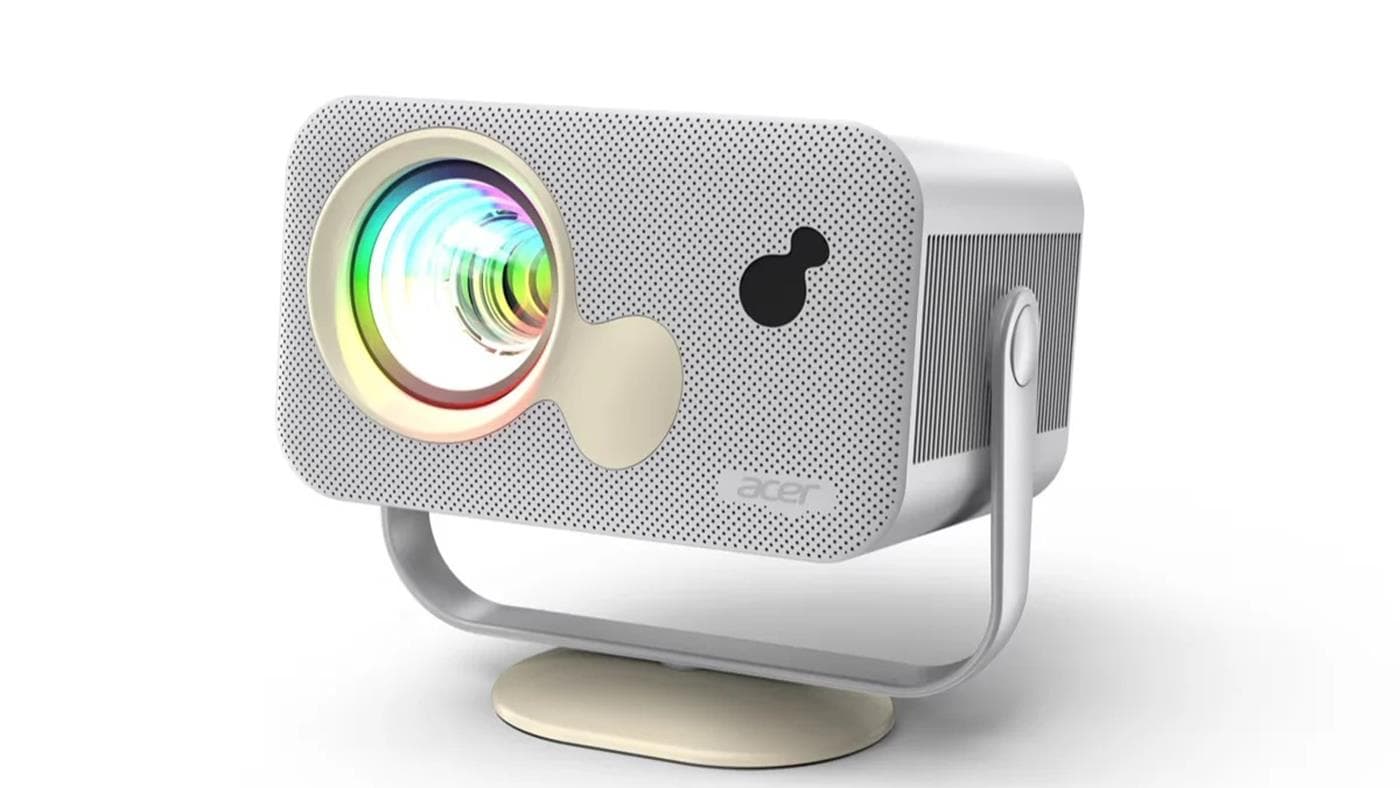
Acer has unveiled its latest projector model, the HD1500, designed for compact spaces and portable use. The device can project a 70-inch image from a distance of only 2 meters, making it suitable for small rooms or on-the-go presentations.
The HD1500 comes with native Full HD resolution, ensuring sharp and clear visuals. It also includes two built-in 5W speakers, providing adequate audio output without the need for external speakers.
One of the standout features is the projector's battery life, rated at 30,000 hours. This long lifespan reduces the need for frequent lamp replacements, lowering maintenance costs over time.
The projector supports multiple connectivity options, including HDMI and USB ports, allowing users to connect various devices such as laptops, streaming sticks, or gaming consoles.
Acer has positioned the HD1500 as a versatile solution for both business and entertainment purposes. Its short-throw capability enables large projections even in confined spaces, which is beneficial for conference rooms or small home theaters.
Pricing and availability details have not been disclosed by Acer at this time. The company is expected to release the HD1500 in select markets in the coming months.
The HD1500 joins Acer's lineup of portable projectors, which includes models with varying brightness and resolution levels. This new addition focuses on convenience and long-term durability.
Acer stated that the HD1500 is designed to deliver a reliable projection experience with minimal maintenance, emphasizing its 30,000-hour battery life as a key advantage.
Google to Release 32 Million Lab-Bred Mosquitoes in California and Florida
Google plans to release 32 million male mosquitoes carrying Wolbachia bacteria in California and Florida to combat West Nile virus and other mosquito-borne diseases. The initiative aims to reduce mosquito populations by preventing reproduction.

Google announced a plan to release 32 million specially bred male mosquitoes into the wild in California and Florida. The effort targets the reduction of mosquito-borne diseases such as West Nile virus. The mosquitoes are raised in a laboratory and carry the Wolbachia bacterium.
The male mosquitoes do not bite or transmit diseases. Wolbachia bacteria cause reproductive issues in female mosquitoes when they mate with infected males. This leads to eggs that do not hatch, thereby reducing the overall mosquito population.
The project is part of Google's parent company Alphabet's life sciences division, Verily. Verily has been working on mosquito control using this technique for several years. The release is scheduled to take place in specific areas of California and Florida.
In California, the release will occur in Fresno County, where a pilot program was conducted in 2017. In Florida, the release will happen in the Florida Keys, where the Aedes aegypti mosquito is prevalent. This mosquito species is known to carry dengue, Zika, and chikungunya viruses.
The method has been tested in other countries, including Brazil and Australia, with promising results. The goal is to suppress the population of disease-carrying mosquitoes without using chemical pesticides. The technique is considered environmentally friendly as it targets only specific mosquito species.
Verily's approach involves using automated systems to rear and sort the mosquitoes. The company uses machine learning to identify and separate male from female mosquitoes. Only male mosquitoes are released, as they do not bite humans.
The release is expected to begin in the coming months. The exact dates and locations will be coordinated with local mosquito control districts. The project has received approval from the relevant environmental and health agencies.
Google and Verily emphasize that the released mosquitoes are not genetically modified. The Wolbachia bacteria occur naturally in many insect species. The technique has been endorsed by the World Health Organization as a safe and effective method for mosquito control.
The initiative represents a significant investment by Google in public health. The company aims to demonstrate that technology can play a key role in addressing global health challenges. The results of the release will be monitored closely to assess its impact on mosquito populations and disease transmission.

Chinese Researchers Boost Laser Performance 20-Fold Using Quantum Technologies
Chinese physicists have achieved a 20-fold increase in laser performance by leveraging quantum properties of light. The new method could revolutionize optical systems.

Chinese researchers have developed a technique that enhances laser performance by a factor of 20 using quantum technologies. The breakthrough, achieved by a team of physicists, leverages the quantum properties of light to produce more powerful laser effects with lower energy input.
The method involves manipulating the quantum state of photons to achieve greater coherence and intensity. By controlling the quantum fluctuations of light, the researchers were able to significantly amplify the laser output without increasing the energy consumption proportionally.
This advancement could have profound implications for various fields that rely on laser technology, including telecommunications, medical devices, and industrial manufacturing. The ability to generate stronger lasers with less power could lead to more efficient and compact systems.
The team demonstrated the technique in a laboratory setting, achieving a 20-fold improvement in laser performance compared to conventional methods. The results were published in a peer-reviewed journal, detailing the experimental setup and theoretical framework.
While the technology is still in the research phase, the researchers are optimistic about its potential for practical applications. They are now working on scaling up the system and exploring ways to integrate it into existing laser platforms.
The development marks a significant step forward in the field of quantum optics and laser physics. It showcases how quantum principles can be harnessed to overcome limitations of classical laser systems.
Further studies are needed to assess the long-term stability and reliability of the quantum-enhanced lasers. The researchers plan to collaborate with industry partners to accelerate the transition from lab to market.
"Our work demonstrates a new pathway to achieve high-performance lasers using quantum effects," said the lead researcher. "We believe this approach will open up new possibilities for laser applications."

Google's AI search move backfires: Users flock to DuckDuckGo
Google's new AI-focused search experience has not been universally welcomed. DuckDuckGo, which offers an AI-free search option, is seeing a rapid increase in user numbers.

Google's introduction of an artificial intelligence-driven search experience has generated a mixed response. The company rolled out AI Overviews, which provide summarized answers at the top of search results, aiming to enhance user convenience. However, this feature has drawn criticism for occasionally producing inaccurate or misleading information, leading to user frustration.
In contrast, DuckDuckGo, a privacy-focused search engine that does not incorporate AI-generated summaries, has experienced a surge in popularity. The platform reported a significant uptick in daily active users, attributing the growth to users seeking an alternative to Google's AI-infused search results. DuckDuckGo emphasizes that it does not track user activity or personalize search results based on browsing history.
The shift in user behavior highlights a growing demand for simpler, less algorithmically mediated search experiences. Some users have expressed concerns about the reliability of AI-generated content, particularly when it comes to factual queries. Others worry about the potential for AI to reinforce biases or spread misinformation.
DuckDuckGo's privacy-centric model has long appealed to users wary of data collection by major tech companies. The recent influx suggests that AI integration in search may be driving even more users toward privacy-focused alternatives. The company has not disclosed exact user numbers but noted that the growth rate has accelerated since Google's AI rollout.
Google has acknowledged the issues with AI Overviews and stated that it is working to improve accuracy. The company emphasized that the feature is still in its early stages and that user feedback is being incorporated to refine the system. However, for some users, the initial missteps have already eroded trust.
The trend also reflects broader debates about the role of AI in everyday tools. While AI can streamline tasks, its application in search raises questions about information quality and user autonomy. DuckDuckGo's success suggests that a segment of the market values control over convenience.
DuckDuckGo remains free to use and generates revenue through non-tracking advertisements. The platform has also introduced its own AI-powered features, such as DuckAssist, but these are opt-in and clearly labeled. This approach allows users to choose whether to engage with AI tools.
As of now, DuckDuckGo continues to see rising engagement, with no signs of the trend reversing. The company has not provided a timeline for when or if it will integrate AI more deeply into its core search functionality. For the moment, its AI-free option appears to be a key differentiator in an increasingly AI-driven search landscape.
MSI unveils world's first triple-mode QD-OLED gaming monitor
MSI has introduced the world's first triple-mode QD-OLED gaming monitor, capable of switching between 4K 360 Hz, 1440p 520 Hz, and 1080p 680 Hz modes. The 32-inch display targets competitive gamers seeking flexibility in resolution and refresh rate.

MSI announced the launch of the world's first triple-mode QD-OLED gaming monitor. The 32-inch display allows users to switch between three distinct resolution and refresh rate combinations. These modes include 4K at 360 Hz, 1440p at 520 Hz, and 1080p at 680 Hz.
The monitor leverages QD-OLED technology, combining quantum dots with OLED panels for enhanced color accuracy and contrast. MSI designed the display to cater to competitive gamers who prioritize high refresh rates for fast-paced titles. The triple-mode feature enables users to choose between higher resolution for immersive single-player games or extreme refresh rates for esports.
Switching between modes is handled through the monitor's on-screen display or a dedicated hotkey. The 4K mode delivers sharp visuals at 360 Hz, suitable for modern AAA games. The 1440p mode offers a balance of resolution and speed at 520 Hz, while the 1080p mode pushes refresh rates to 680 Hz for maximum fluidity in competitive scenarios.
MSI incorporated a custom heatsink and graphene film to manage heat dissipation, ensuring stable performance during extended gaming sessions. The monitor also features VESA DisplayHDR True Black 400 certification, delivering deep blacks and high dynamic range. Connectivity options include HDMI 2.1, DisplayPort 2.1, and USB-C with 90W power delivery.
The monitor supports NVIDIA G-Sync Compatible and AMD FreeSync Premium Pro for tear-free gameplay. MSI also included a KVM switch for users who operate multiple devices. The stand offers height, tilt, swivel, and pivot adjustments for ergonomic comfort.
MSI has not yet announced pricing or a specific release date for the triple-mode QD-OLED monitor. The company stated that the monitor will be available in select markets starting in the second quarter of 2025. Further details on regional availability and pricing are expected closer to launch.
MSI positions this monitor as a premium option for enthusiasts who demand versatility. The triple-mode capability eliminates the need for multiple monitors, offering a single display that adapts to different gaming needs. The official announcement highlighted the monitor's potential to set a new standard in the gaming display market.
MSI confirmed that the monitor will debut at CES 2025, where attendees can experience the triple-mode functionality firsthand. The company plans to showcase the monitor alongside its other gaming peripherals and components at the event.