Anthropic Files Confidentially for IPO, Valuation at $965 Billion
Anthropic has submitted a confidential draft registration statement to the SEC for a proposed initial public offering. The company's valuation reached $965 billion after a recent Series H funding round.

Anthropic announced it has made a confidential filing for an initial public offering. The company submitted a draft registration statement to the U.S. Securities and Exchange Commission. The number of shares and price range have not yet been disclosed. The planned IPO will depend on market conditions and other factors, according to Anthropic.
Confidential IPO filings allow companies to begin preparations without publicly revealing detailed financial information, risks, or internal operations. Anthropic's IPO will be evaluated privately away from public scrutiny. If the process advances, the company will need to file an S-1 registration document containing detailed information about its finances, legal matters, risks, and the distribution of voting rights.
Currently, Anthropic has submitted a draft registration statement on Form S-1 to the SEC under confidential terms. If the application is approved after review, the IPO could rank among the most valuable offerings. Last week, the company closed a Series H funding round that raised $65 billion, pushing its valuation to $965 billion.
The investment round was co-led by Altimeter Capital, Dragoneer, Greenoaks, Sequoia Capital, Capital Group, Coatue, and D1 Capital Partners. The funding round attracted significant interest from institutional and strategic investors in anticipation of the IPO.
Founded in 2021 by former OpenAI employees, Anthropic was long seen as a distant rival to OpenAI and ChatGPT. The company has enhanced its capabilities and attracted investors and customers by focusing on enterprise services. Anthropic recently announced that its annualized revenue exceeded $47 billion by the end of 2025, up from $9 billion.
Anthropic's IPO filing comes at a time when IPOs from ScaleX and OpenAI are also expected. SpaceX is preparing for an IPO with a valuation target of $1.75 trillion, while OpenAI is preparing to file for an IPO expected in September. OpenAI completed a funding round in March at a post-money valuation of $852 billion, raising $122 billion.
As of the end of May, Anthropic's valuation stood at $965 billion, while OpenAI's valuation was around $852 billion. Both AI giants are preparing for IPOs, with Anthropic potentially surpassing OpenAI in valuation.
The company's confidential filing allows it to proceed with IPO preparations while keeping sensitive details under wraps. The exact timing of the public offering remains subject to SEC review and market conditions.
SK Hynix joins $1 trillion club as AI demand boosts chipmaker value
SK Hynix has surpassed a $1 trillion market valuation for the first time, driven by surging demand for AI memory chips. The South Korean company becomes the third memory chip maker to reach this milestone, following Samsung and Micron.
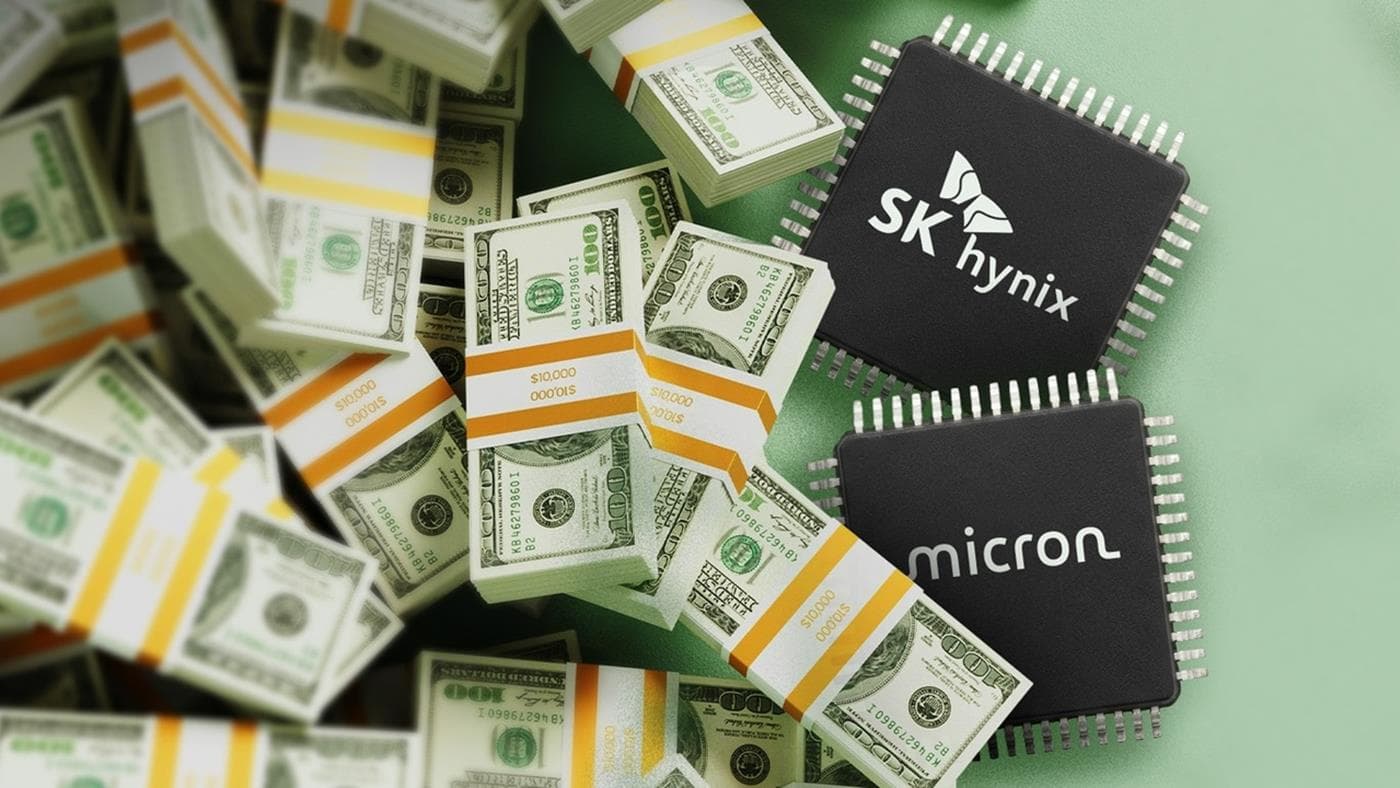
SK Hynix has crossed the $1 trillion market capitalization threshold for the first time in its history. The South Korean memory chip maker joins an elite group of 14 companies worldwide that have achieved this valuation. The milestone comes amid a surge in demand for high-bandwidth memory chips used in artificial intelligence applications.
The company's stock price has more than doubled over the past year, fueled by its dominant position in the HBM3E memory market. SK Hynix is the primary supplier of these advanced chips to Nvidia, which uses them in its AI accelerators. The company's market cap reached approximately 1.04 trillion dollars on Tuesday.
SK Hynix now stands alongside Samsung Electronics and Micron Technology as the only memory chip manufacturers in the trillion-dollar club. Samsung crossed the threshold earlier, while Micron achieved the milestone in 2021. The trio collectively controls over 90% of the global DRAM market.
The broader semiconductor industry has seen a valuation boom driven by AI computing demands. Nvidia itself has surged past $3 trillion, while TSMC and Broadcom have also joined the trillion-dollar ranks. SK Hynix's ascent reflects the growing importance of memory bandwidth in AI workloads.
Analysts attribute SK Hynix's success to its early investment in HBM technology. The company began developing HBM in 2013 and has maintained a technological lead over competitors. Its HBM3E chips offer data transfer speeds of up to 1.18 terabytes per second, critical for training large language models.
SK Hynix reported record quarterly profits in its most recent earnings, with operating profit surging over 400% year-over-year. The company plans to invest $74.6 billion over the next five years to expand its HBM production capacity. New fabrication facilities are under construction in South Korea and the United States.
The company's market cap milestone comes as global AI spending is projected to reach $200 billion by 2025. SK Hynix expects HBM to account for more than 60% of its total DRAM revenue this year. The company has already secured long-term supply agreements with major AI chip designers.
SK Hynix's achievement underscores the rapid transformation of the semiconductor landscape. The company's market value has grown more than tenfold since 2020. As AI adoption accelerates across industries, memory chip makers are poised to capture an increasing share of the technology value chain. SK Hynix aims to maintain its leadership by advancing to HBM4 technology by 2026.
AMD Unveils Ryzen 7 5800X3D, 7700X3D and RX 9070 GRE at Computex 2026
AMD announced the Ryzen 7 5800X3D, Ryzen 7 7700X3D, and Radeon RX 9070 GRE at Computex 2026. The new processors extend AM4 platform support, while the graphics card targets the mid-range market.
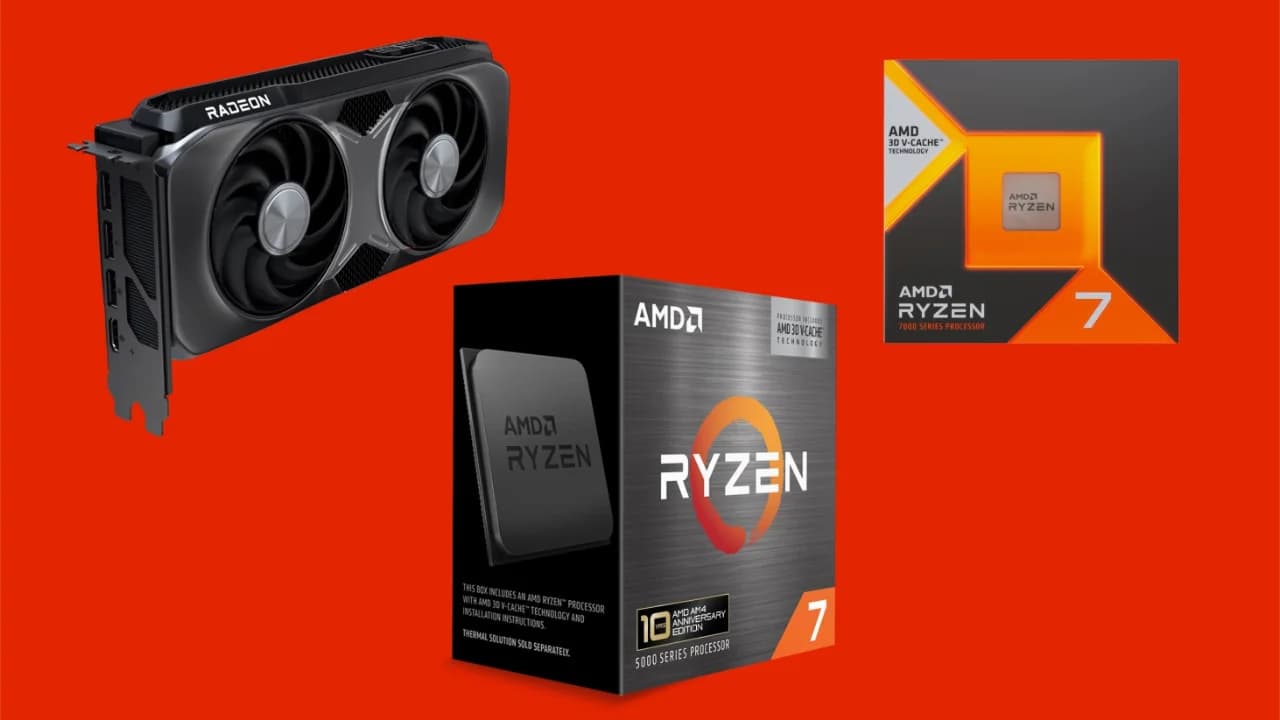
AMD took the stage at Computex 2026 in Taipei to introduce three new products: the Ryzen 7 5800X3D, Ryzen 7 7700X3D, and Radeon RX 9070 GRE. The announcements signal the company’s continued investment in both its AM4 socket and newer platforms. The Ryzen 7 5800X3D arrives as an updated version of the original 5800X3D, featuring 3D V-Cache technology. AMD claims the chip delivers up to 15% better gaming performance compared to its predecessor. The processor retains eight cores and 16 threads, with a base clock of 3.4 GHz and a boost clock of 4.5 GHz. The 96 MB of L3 cache remains unchanged, but AMD refined the voltage and thermal management for improved efficiency. The Ryzen 7 7700X3D targets the AM5 platform with similar 3D V-Cache benefits. This model offers eight cores and 16 threads, with a base clock of 4.0 GHz and a boost clock of 5.0 GHz. AMD stated that the 7700X3D outperforms the Intel Core i7-13700K in gaming benchmarks by an average of 12%. The chip supports DDR5 memory and PCIe 5.0, making it a direct competitor to Intel’s latest offerings. On the graphics side, the Radeon RX 9070 GRE enters the mid-range segment with a focus on 1440p gaming. The card is built on the RDNA 4 architecture and features 16 GB of GDDR7 memory on a 256-bit bus. AMD reported that the RX 9070 GRE achieves 60-80 frames per second in demanding titles like Cyberpunk 2077 and Starfield at high settings. The card includes hardware-accelerated ray tracing and FidelityFX Super Resolution 4.0 support. Pricing for the Ryzen 7 5800X3D is set at $329, while the Ryzen 7 7700X3D costs $449. The Radeon RX 9070 GRE launches at $499. All three products are scheduled to go on sale starting July 15, 2026. AMD also confirmed that the 5800X3D will be the final high-performance chip for the AM4 platform, signaling the end of an era for the socket. The company emphasized its commitment to providing long-term support for AM4 users, with BIOS updates rolling out to compatible motherboards. Pre-orders for the new hardware begin on June 15, 2026, through AMD’s official website and partner retailers.

Amazon Prime Day 2026 Scheduled for June 23-26, Earlier Than Last Year
Amazon announced that Prime Day 2026 will run from June 23 to June 26, a couple of weeks earlier than the previous year. The event will offer exclusive deals for Prime members.

Amazon has set the dates for its annual Prime Day shopping event, which will take place from June 23 to June 26 this year. The four-day sale is scheduled a couple of weeks earlier than it occurred in 2025. Prime members can expect exclusive discounts across a wide range of product categories during the event.
The company confirmed the timing in a press release, noting that the earlier date aims to provide customers with summer savings. Prime Day traditionally features deep discounts on Amazon devices, electronics, home goods, and more. The event is also a key driver for new Prime subscriptions.
Amazon has not yet disclosed specific deals or participating brands, but past events have included significant markdowns on Echo devices, Fire tablets, and Kindle readers. Third-party sellers often participate, offering promotions on apparel, toys, and household items.
Prime Day has become one of the largest online shopping events globally, rivaling Black Friday in terms of sales volume. In 2025, Amazon reported record sales during the event, though exact figures were not released. The earlier timing this year may shift consumer spending patterns during the summer months.
To access the deals, customers must have an active Amazon Prime membership, which costs $14.99 per month or $139 per year in the United States. Amazon typically offers a free 30-day trial for new members, allowing them to participate in Prime Day without immediate commitment.
The event will run for four consecutive days, starting at 12:01 a.m. PT on June 23 and ending at 11:59 p.m. PT on June 26. Deals will be available while supplies last, and some promotions may be limited to specific time windows or quantities.
Amazon encourages shoppers to check the Prime Day page regularly for new deals and to use the Alexa voice assistant to set reminders for upcoming discounts. The company also plans to offer lightning deals and limited-time offers throughout the event.
"Prime Day is our way of thanking Prime members with incredible savings," an Amazon spokesperson said in the announcement. "We're excited to bring this year's event earlier so members can kick off their summer with great deals."
ASUS Pad (T3201) with Tandem OLED Display Launched After Multi-Year Hiatus
ASUS has introduced the ASUS Pad (T3201), its first tablet in several years, featuring a 12.2-inch Tandem OLED display and running Android 16. The device marks the company's return to the tablet market with a focus on premium display technology.
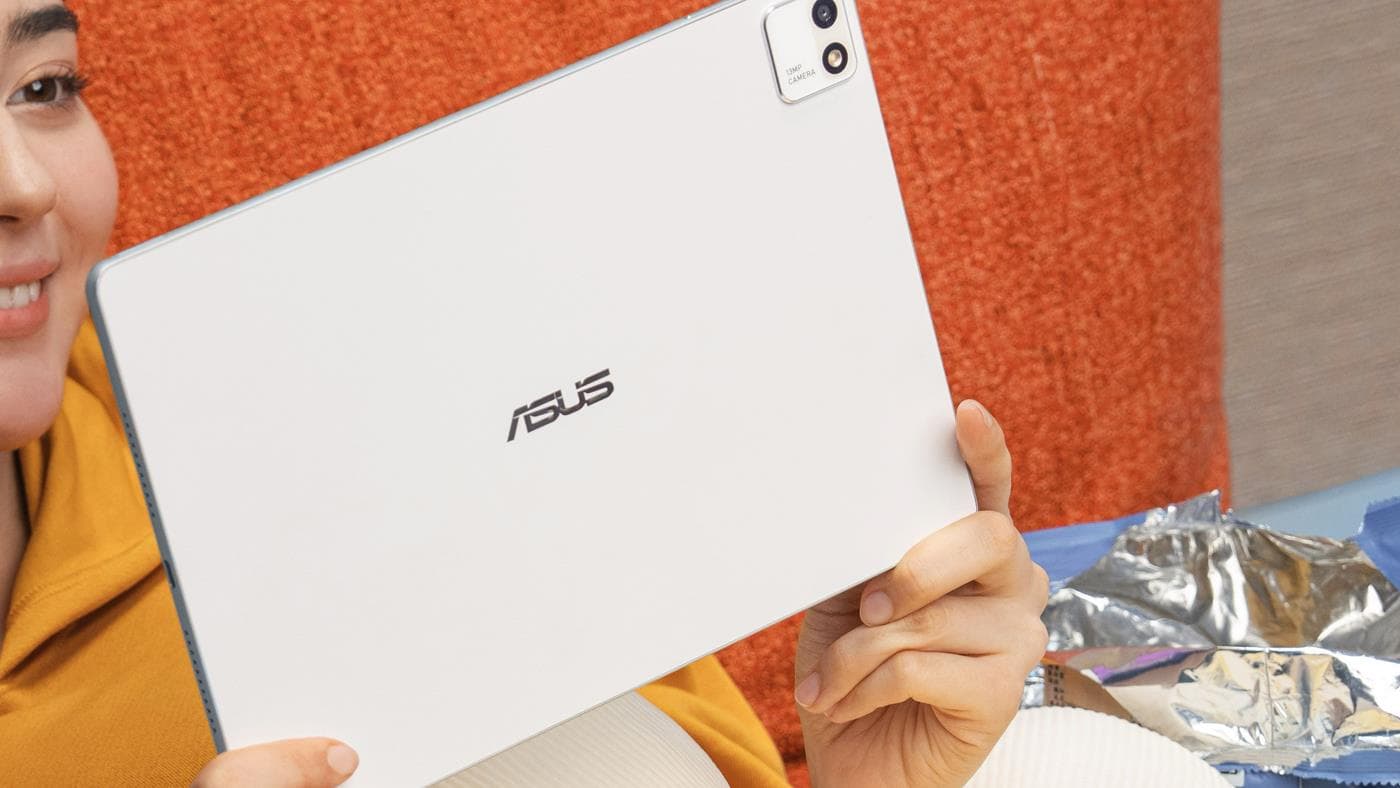
ASUS has officially unveiled the ASUS Pad (model T3201), marking the company's return to the tablet segment after a multi-year absence. The device runs on Android 16 and is distinguished by its 12.2-inch Tandem OLED panel, which the company claims is the best in its class. The announcement signals ASUS's renewed commitment to the tablet market.
The Tandem OLED display technology stacks two OLED layers to achieve higher brightness and improved longevity compared to conventional single-layer OLED panels. This design allows the screen to deliver up to 1,600 nits of peak brightness, making it suitable for outdoor use and HDR content. The display also supports a 120Hz refresh rate for smooth scrolling and responsive touch input.
Under the hood, the ASUS Pad is powered by a MediaTek Dimensity 9300+ processor, paired with 16GB of LPDDR5X RAM and up to 512GB of UFS 4.0 storage. The tablet includes a 13-megapixel rear camera and an 8-megapixel front-facing camera. A 10,000mAh battery supports 65W fast charging via USB-C, providing extended usage times.
For audio, the device features four speakers tuned by Harman Kardon, supporting Dolby Atmos spatial audio. Connectivity options include Wi-Fi 7, Bluetooth 5.4, and optional 5G cellular support. The tablet also includes a microSD card slot for expandable storage and a 3.5mm headphone jack.
The ASUS Pad comes with an optional detachable keyboard cover and a stylus that supports 4,096 levels of pressure sensitivity. The keyboard attaches via pogo pins and includes a trackpad, while the stylus magnetically attaches to the tablet's side for charging and storage. The device measures 7.8mm in thickness and weighs approximately 680 grams.
ASUS has not yet announced pricing or specific availability dates for the ASUS Pad. The company stated that the tablet will launch in select markets starting in the second quarter of 2025. More details regarding regional availability and pricing are expected to be revealed closer to the launch date.