
ASUS may unveil new ROG Ally handheld at Computex 2026
ASUS is rumored to introduce a next-generation ROG Ally handheld gaming device at Computex 2026. The new model has sparked curiosity among gaming enthusiasts.
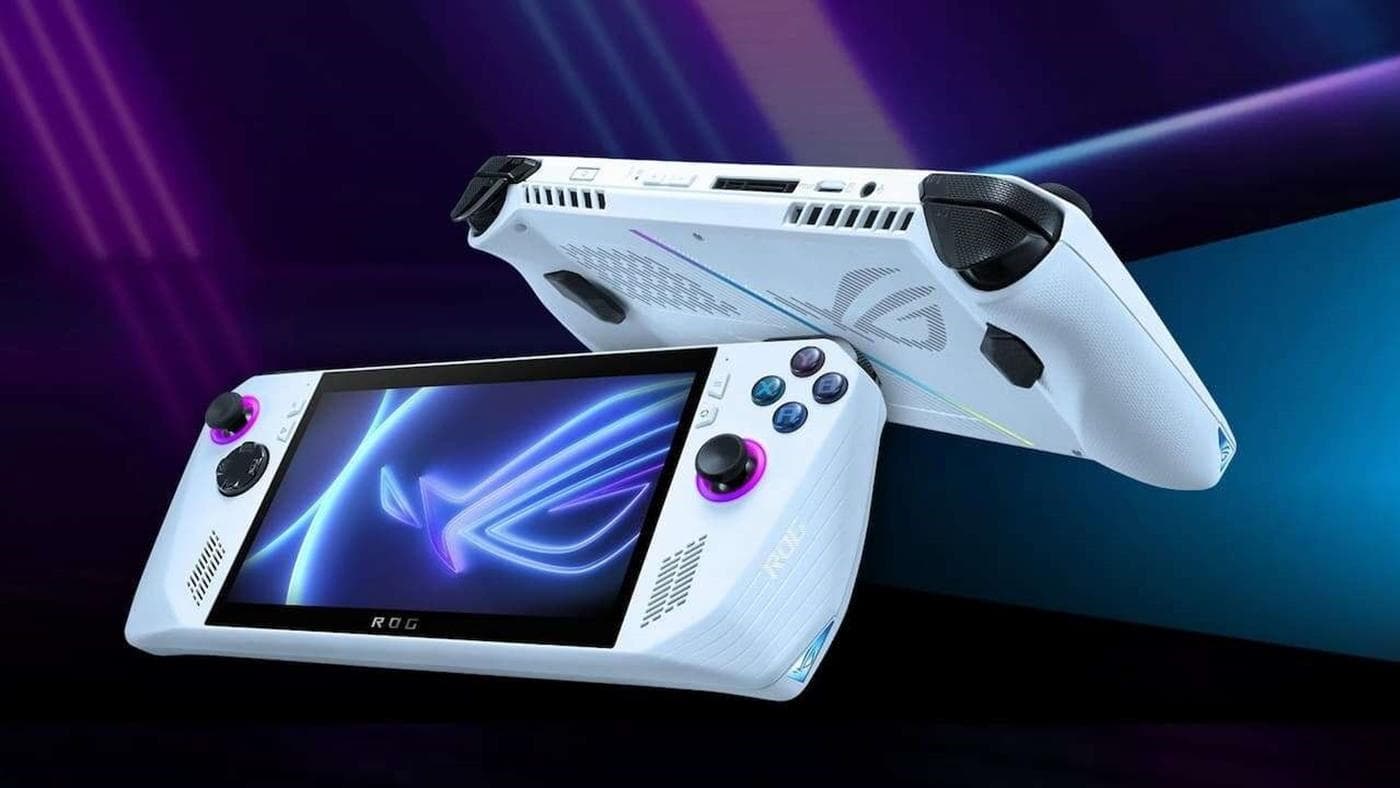
ASUS is reportedly preparing to launch a new ROG Ally handheld gaming console at Computex 2026. The event, scheduled for next year, could serve as the stage for the company's latest portable gaming hardware. Industry sources suggest the device is already in development.
The upcoming ROG Ally is expected to feature significant hardware upgrades over its predecessor. While specific specifications remain under wraps, leaks point to a more powerful processor and improved graphics capabilities. ASUS may also refine the device's ergonomics and display quality.
Computex, held annually in Taipei, has historically been a key venue for ASUS product launches. The company unveiled the original ROG Ally at Computex 2023, making a sequel at the same event a logical move. The timing aligns with typical product refresh cycles in the handheld gaming market.
The new handheld would compete directly with devices like the Steam Deck and Lenovo Legion Go. ASUS has positioned the ROG Ally as a premium Windows-based gaming handheld, and the next iteration is likely to double down on performance and ecosystem integration.
Details on pricing and exact release date are not yet available. The original ROG Ally launched at $699 for the top-tier model, and the new version may carry a similar price point. ASUS has not officially commented on the rumors.
Gamers and industry watchers will have to wait until Computex 2026 for confirmation. The event typically takes place in early June. Until then, speculation will continue regarding the device's specs and features.
ASUS has not issued any official statement regarding the rumored ROG Ally successor. The company remains focused on its current product lineup, including the recently released ROG Ally X. Any announcements will likely come closer to the Computex 2026 event.
AMD Radeon RX 9070 GRE May Launch Globally After China-Exclusive Debut
AMD's Radeon RX 9070 GRE, initially exclusive to China, is now appearing in global retail listings, suggesting a potential worldwide release. The card features a Navi 48 GPU with 3,840 stream processors and 16GB of GDDR6 memory.
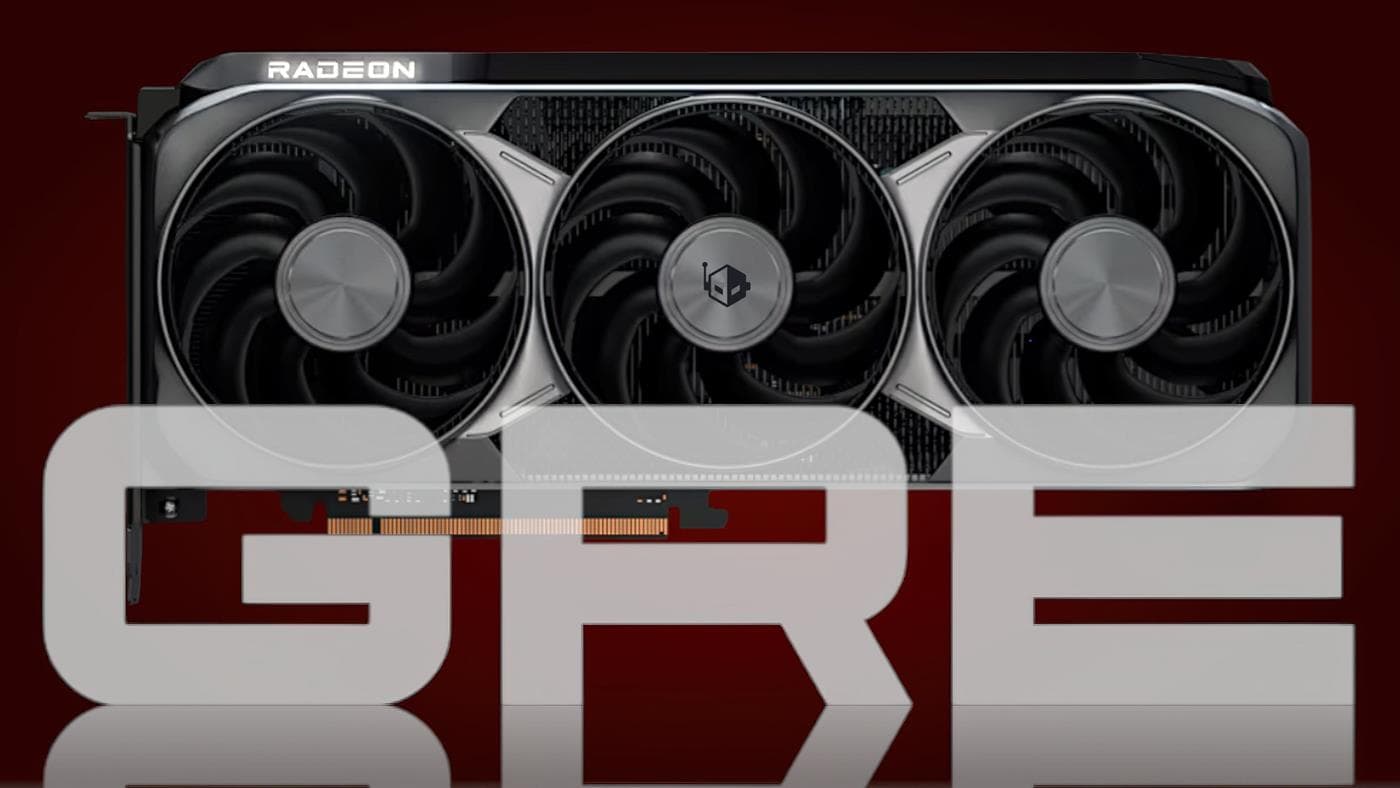
AMD's Radeon RX 9070 GRE graphics card, originally launched as a China-exclusive model, is showing signs of a global rollout. Retail listings for the card have surfaced in multiple regions, indicating that AMD may be preparing to offer the GPU to international customers. The RX 9070 GRE sits between the RX 9070 and RX 9070 XT in AMD's current lineup.
The card is built on the Navi 48 GPU architecture and features 3,840 stream processors. It comes equipped with 16GB of GDDR6 memory on a 256-bit memory bus, delivering a memory bandwidth of 640 GB/s. The GPU operates at a boost clock speed of up to 2.7 GHz, with a total board power rating of 220 watts.
In terms of connectivity, the RX 9070 GRE supports PCIe 5.0 x16 and includes three DisplayPort 2.1 outputs along with one HDMI 2.1 port. The card requires a single 8-pin power connector and has a dual-slot cooler design. These specifications position it as a mid-range offering for 1440p gaming.
Retail listings have been spotted in Europe and other markets, with prices ranging from approximately €550 to €600. In the United States, the card is expected to be priced around $550 to $600, though official pricing has not been confirmed. The listings suggest that third-party manufacturers are preparing custom models for global distribution.
AMD has not made an official announcement regarding the global availability of the RX 9070 GRE. However, the appearance of retail listings indicates that a launch may be imminent. The card is expected to compete with NVIDIA's GeForce RTX 4070 series in the mid-range segment.
The RX 9070 GRE was initially released in China in early 2025 as a response to regional market demands. Its potential global release would provide AMD with a competitive option in the mainstream GPU market. The card supports AMD's FidelityFX Super Resolution and other RDNA 4 features.
Consumers interested in the RX 9070 GRE should monitor major retailers for availability. The card is expected to ship with a standard warranty and driver support from AMD. No official release date has been provided, but listings suggest a launch within the coming weeks.
AMD has not commented on the global expansion of the RX 9070 GRE. The company continues to focus on its RDNA 4 architecture for both desktop and mobile graphics solutions. The RX 9070 GRE's global debut would mark a significant step in AMD's strategy to broaden its GPU portfolio.
SniffSub Launches AI-Powered Reddit Community Analysis Platform
SniffSub is a new platform that uses artificial intelligence to analyze Reddit communities for brands, products, and projects. It helps users track conversations, customer issues, sales opportunities, and feedback in real time.

SniffSub has launched as a platform dedicated to analyzing Reddit communities for brands, products, and projects. The service enables users to examine target audience conversations, customer problems, sales opportunities, complaints, and feedback with a single click. It aims to prevent data loss within crowded information streams by processing large datasets and allowing inspection of entire ecosystems from a central hub. This structure provides market research insights for teams seeking to understand what their target audience wants during product development.
The platform focuses on helping users interpret data directly rather than just performing searches. Users can group Reddit subreddits by interest or industry to create custom community portfolios. SniffSub offers real-time monitoring of growth and engagement rates within these communities. It tracks which communities are rising and where conversations are trending directly through the system.
With AI support, the system scans thousands of posts to extract prominent themes and trends. Users can view key topics without reading lengthy posts. The community analysis tool examines any subreddit in seconds, providing detailed insights. Beyond discovering rising themes, the platform reports optimal posting times and user engagement habits. An example inspection panel includes statistics such as the most discussed topic of the week, its engagement count, and average engagement rates.
SniffSub includes a question-answering assistant designed to explore niche areas and provide direct answers to queries. When a question is asked, the assistant responds quickly, making it easier to obtain specific details about the target audience. The system also offers specialized review pathways for validating software product ideas before development, identifying competitor complaints, and finding market gaps. Data is provided for strategic steps such as generating long-tail traffic.
The platform features publicly available free tools, including popular subreddit lists, trending topics, and prominent keywords on Reddit. Additional utilities like a large language model token price calculator are part of the ecosystem. SniffSub offers a free trial for users to test the platform.
Pricing plans include a Basic package with comprehensive data filtering at $15 per month, and a Pro package with unlimited AI operations and broad access at $83 per month. The Basic plan provides essential analysis and free tools, while the Pro plan targets professionals requiring detailed features and continuous data tracking.
SniffSub's official statement emphasizes that the platform is designed to streamline Reddit community analysis for businesses and developers. The service is available now through its website, with subscription options starting at $15 per month for the Basic plan and $83 per month for the Pro plan.

Huawei Targets 1.4nm Chips Within Five Years, Defying US Sanctions
Huawei announced plans to develop chips with 1.4nm-class transistor density within the next five years. The company aims to advance its Kirin processors despite ongoing US sanctions.
Huawei has set a goal to produce chips with 1.4nm-class transistor density within the next five years, the company announced. The target represents a significant leap in semiconductor technology, placing Huawei in direct competition with industry leaders like TSMC and Samsung. The announcement comes as the Chinese tech giant continues to operate under strict US export controls that limit its access to advanced chipmaking equipment.
The company plans to achieve this milestone through its own research and development efforts, leveraging its HiSilicon semiconductor division. Huawei's Kirin processors, which power its flagship smartphones, are expected to benefit from this advancement. The 1.4nm node would enable higher performance and energy efficiency compared to current 5nm and 3nm chips used in modern devices.
Huawei's chip ambitions face substantial hurdles due to US sanctions imposed since 2019, which restrict the company from purchasing advanced chips and equipment from American suppliers. Despite these restrictions, Huawei has continued to develop its own chip designs and manufacturing capabilities. The company recently introduced the Kirin 9000S processor, built using an advanced 7nm process, which surprised industry observers.
The 1.4nm target aligns with industry roadmaps from leading foundries. TSMC has announced plans for 1.4nm production by 2028, while Samsung aims for 1.4nm by 2027. Huawei's timeline suggests it intends to match or approach these industry leaders, though achieving this without access to extreme ultraviolet lithography machines from Dutch firm ASML remains a major challenge.
Huawei's chip development strategy includes exploring alternative technologies such as chip stacking and advanced packaging to improve performance without relying solely on transistor miniaturization. The company has also invested in domestic Chinese semiconductor supply chains to reduce dependence on foreign technology. These efforts are part of China's broader push for semiconductor self-sufficiency.
The announcement was made during a company event where Huawei also showcased its latest Kirin 9000S processor, which powers the Mate 60 series smartphones. The Kirin 9000S has been praised for its performance and efficiency, despite being manufactured using a 7nm process. Huawei claims the new chip offers competitive performance against current flagship processors from Qualcomm and Apple.
Huawei's Kirin processors are used exclusively in its own devices, including smartphones, tablets, and laptops. The company has not announced plans to sell its chips to other manufacturers. The success of the 1.4nm project will depend on Huawei's ability to secure necessary equipment and materials, as well as its progress in developing alternative manufacturing techniques.
Huawei did not provide a specific release date for the 1.4nm chips but stated that the goal is to achieve this within five years. The company emphasized that its chip development remains on track despite external challenges. Huawei's continued investment in semiconductor technology underscores its commitment to maintaining a competitive edge in the global tech market.
Huawei Unveils 1.4nm Process Technology and LogicFolding Architecture
Huawei announced its new LogicFolding architecture and 1.4nm process technology at the IEEE International Symposium on Circuits and Systems (ISCAS 2026) in Shanghai. The technology aims to overcome US sanctions by replacing traditional physical scaling with time-based logic folding.
Huawei took the stage at the IEEE International Symposium on Circuits and Systems (ISCAS 2026) in Shanghai to unveil its latest semiconductor innovation. He Tingbo, head of Huawei's semiconductor business unit, presented the company's new LogicFolding architecture to a global audience. The announcement marks a strategic shift for the Chinese tech giant, which has been cut off from major foundries like TSMC due to US sanctions.
The LogicFolding architecture represents a departure from conventional chip design methods. Instead of relying on physical miniaturization to increase transistor density, Huawei's approach uses time-based folding to achieve higher performance. This technique allows multiple logic operations to be executed in the same physical area over different time slices, effectively multiplying computational capacity without shrinking transistor dimensions.
Huawei claims the new architecture enables a 1.4nm equivalent process node. The company did not disclose specific performance metrics or power efficiency figures during the presentation. However, He Tingbo emphasized that LogicFolding is designed to work with existing mature manufacturing processes, potentially bypassing the need for advanced EUV lithography equipment that is restricted under US export controls.
The announcement comes as Huawei continues to face severe restrictions on accessing cutting-edge semiconductor manufacturing technology. Since being added to the US Entity List in 2019, the company has been unable to purchase chips from TSMC or other foundries using American equipment. Huawei has since focused on developing its own chip design capabilities and working with domestic Chinese foundries.
Industry analysts note that while LogicFolding could offer a path forward for Huawei, the technology faces significant challenges. Time-based computing introduces latency and synchronization issues that must be addressed for practical applications. Huawei has not provided a timeline for commercial deployment of the 1.4nm process or LogicFolding architecture.
Huawei's semiconductor unit has been developing alternative chip technologies since the sanctions took effect. The company previously introduced its Kunpeng server processors and Ascend AI accelerators, which are manufactured using older process nodes. The LogicFolding architecture could potentially be applied to future generations of these products.
The ISCAS 2026 presentation did not include specific product announcements or partnerships. Huawei stated that the technology is still in the research phase and that further development is required before mass production. The company plans to publish detailed technical papers on LogicFolding in the coming months.
He Tingbo concluded the presentation by stating that Huawei remains committed to semiconductor innovation despite external challenges. The company will continue to invest in alternative architectures and manufacturing techniques to maintain its competitive position in the smartphone and AI markets.