Bill Ackman's Pershing Square Takes Major Stake in Microsoft, Citing 'Deeply Embedded' Software
Bill Ackman's Pershing Square Capital Management has disclosed a significant stake in Microsoft, praising the company's 'deeply embedded' enterprise software and cloud computing businesses. The investment highlights the hedge fund's confidence in Microsoft's dominant position in productivity tools and Azure.

Billionaire investor Bill Ackman revealed that his hedge fund, Pershing Square Capital Management, has taken a substantial stake in Microsoft, betting on the tech giant's entrenched software and cloud computing businesses. In a detailed post on X (formerly Twitter), the 60-year-old activist investor outlined his bullish thesis, calling Microsoft's productivity suite and Azure cloud platform "two of the most valuable franchises in enterprise technology." The disclosure marks a significant shift for Pershing Square, which has historically focused on consumer-facing companies like Chipotle and Starbucks.
Ackman specifically highlighted Microsoft 365, which includes ubiquitous tools like Word, Excel, and Teams, as a "deeply embedded" ecosystem that provides recurring revenue and high switching costs for customers. He noted that these productivity apps are integral to how businesses operate globally, making them nearly indispensable. Additionally, he pointed to Azure, Microsoft's cloud computing platform, as a key growth driver that competes directly with Amazon Web Services and Google Cloud.
Pershing Square's investment comes at a time when Microsoft is aggressively expanding its artificial intelligence capabilities, particularly through its partnership with OpenAI. The hedge fund sees AI as a catalyst that will further entrench Microsoft's software across enterprises, potentially accelerating adoption of its cloud services. Ackman's post emphasized that Microsoft's combination of productivity software and cloud infrastructure positions it uniquely to capitalize on the AI revolution.
This move by Ackman follows a pattern of high-profile technology investments by Pershing Square, including a recent stake in Alphabet. The hedge fund has been increasing its exposure to mega-cap tech stocks, viewing them as relatively undervalued given their strong competitive moats and cash flows. Ackman's endorsement of Microsoft could influence other institutional investors, given his track record of successful activist campaigns.
The stake also reflects a broader trend of hedge funds gravitating toward large-cap technology companies amid market volatility. Microsoft's market capitalization has surged past $3 trillion, making it one of the most valuable companies globally. Pershing Square's position is likely a long-term bet on the company's ability to maintain its dominance in enterprise software while expanding into new areas like AI and cybersecurity.
For Microsoft, the investment provides a vote of confidence from a respected activist investor, though Ackman has not indicated any plans for a public campaign. The company has been benefiting from strong demand for its cloud services and AI tools, with recent earnings reports exceeding analyst expectations. Ackman's praise for Microsoft's "deeply embedded" software suggests he sees limited risk of disruption from competitors.
Ackman did not disclose the exact size of Pershing Square's stake, but regulatory filings are expected to reveal the details in the coming weeks. The investment is likely to be a multi-billion dollar position, given the fund's typical allocation sizes. Microsoft shares rose modestly following the announcement, reflecting positive market sentiment.
Looking ahead, Pershing Square's bet on Microsoft will be closely watched by investors as a bellwether for tech sector sentiment. Ackman's focus on enterprise software and cloud computing aligns with his value-oriented approach, and his public endorsement could bolster Microsoft's narrative as a steady growth story. The hedge fund has not ruled out increasing its position further, depending on market conditions.
Eros Innovation Unveils Asia's Sovereign AI Vision for Cinema at Cannes 2026
At Cannes 2026, Eros Innovation presented a sovereign AI framework for cinema, emphasizing cultural preservation and storytelling. The initiative aims to balance AI's creative potential with ethical safeguards for Asian narratives.

Cannes, France – At the 2026 Cannes Film Festival, Eros Innovation, the technology arm of Eros Media Group, unveiled a groundbreaking vision for artificial intelligence in cinema, positioning Asia as a leader in sovereign AI development. The presentation, held at the festival's Marché du Film, showcased how AI can enhance storytelling while preserving cultural identity, a timely discussion as the industry grapples with AI's disruptive impact. The event drew filmmakers, technologists, and cultural leaders from across Asia and beyond, eager to explore a future where technology serves creativity without erasing heritage.
Eros Innovation's sovereign AI framework is built on three pillars: cultural data sovereignty, ethical AI training, and collaborative human-AI workflows. The system uses curated datasets from Asian cinema archives, folklore, and linguistic traditions to train models that understand regional nuances in storytelling, such as the importance of collective narratives versus individual heroism. Unlike Western-centric AI tools, this approach ensures that generated content respects cultural contexts, from dialogue patterns to visual aesthetics. The company demonstrated a prototype that can assist screenwriters in generating plot points or dialogue that align with specific cultural traditions, such as the use of irony in Japanese cinema or the circular narrative structures common in Indian epics.
Technically, the framework employs a federated learning model, meaning data from different Asian countries remains on local servers, reducing the risk of cultural misappropriation. Eros Innovation also introduced a 'cultural fingerprint' watermarking system for AI-generated content, allowing creators to trace and verify the origin of any AI-assisted work. This addresses growing concerns about deepfakes and unauthorized use of cultural symbols. The company emphasized that the AI is designed as a 'co-pilot,' not a replacement, offering suggestions that filmmakers can accept, modify, or reject, thus maintaining human creative control.
The context of this announcement is critical: the global film industry is facing intense debate over AI's role, with the 2023 Hollywood strikes partly fueled by fears of job displacement and copyright erosion. Meanwhile, Asian markets, particularly India and China, are rapidly adopting AI in production, but often using tools trained on Western data, leading to homogenized content. Eros Innovation's sovereign AI aims to counter this trend, offering a model where countries can develop AI that reflects their own storytelling traditions. This aligns with broader geopolitical moves toward digital sovereignty, as seen in Europe's GDPR and India's data localization policies.
For users, the impact will be gradual but significant. Independent filmmakers in Asia, who often lack access to expensive Hollywood-grade VFX, could use Eros Innovation's tools to create culturally authentic effects at lower costs. The company plans to offer a subscription-based platform for script analysis, storyboarding, and even virtual casting, with pricing starting at $99 per month for individual creators. Larger studios can license the full framework for custom implementations. The initial rollout will focus on India, South Korea, and Japan, with expansion to Southeast Asia by 2027. Eros Innovation also announced partnerships with several film schools to train the next generation of 'AI-literate' storytellers.
However, many unknowns remain. The effectiveness of the cultural fingerprint system in preventing misuse is untested, and the cost of maintaining sovereign AI infrastructure may be prohibitive for smaller nations. Additionally, the framework's reliance on curated datasets raises questions about who decides what constitutes 'authentic' culture. Eros Innovation has promised to release an open-source version of the basic tools by late 2026, inviting community feedback. As the festival continues, the industry watches closely: this could be the blueprint for a future where AI amplifies, rather than erases, the world's diverse cinematic voices.
AI Stock Slump Drags Wall Street Down from Record Highs
Wall Street retreated from record levels on Friday, driven by a sell-off in AI-related stocks and rising oil prices that rattled bond markets. The decline mirrored a global downturn as investor enthusiasm for AI cooled.
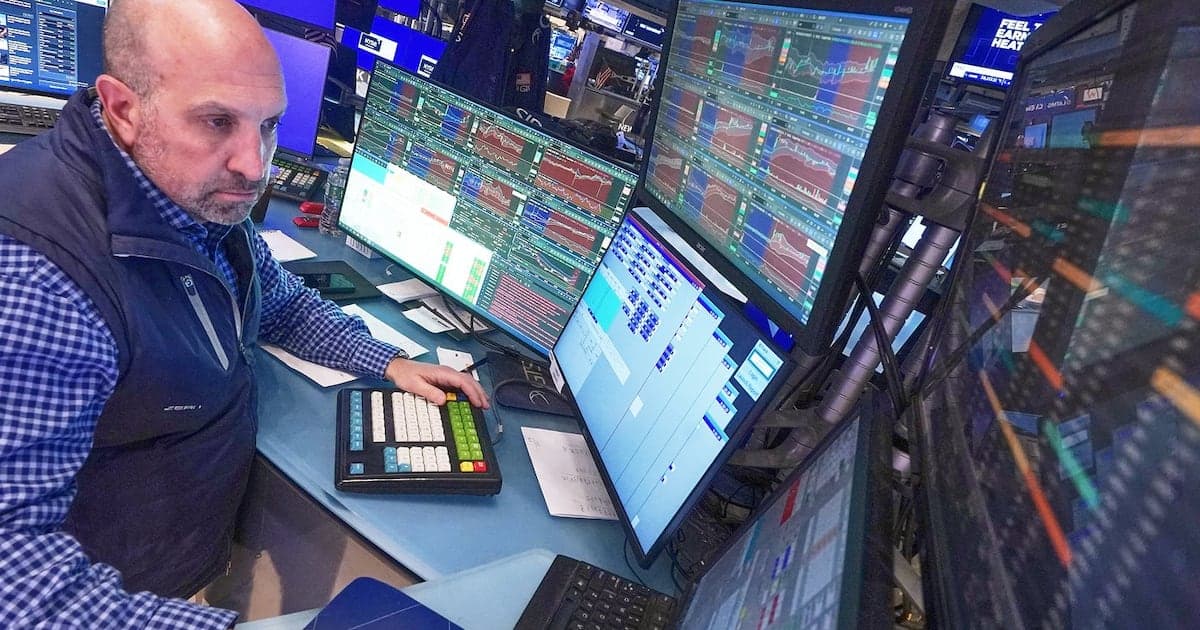
The U.S. stock market pulled back from its recent record highs on Friday, joining a broader global decline as higher oil prices sent shockwaves through bond markets. The downturn was led by a sharp sell-off in stocks that had been riding the wave of artificial-intelligence enthusiasm, with major tech names taking a hit. The S&P 500 and Nasdaq both fell more than 1% in afternoon trading, while the Dow Jones Industrial Average also slipped into negative territory.
Shares of AI darling Nvidia dropped over 5%, while other tech giants like Microsoft, Alphabet, and Amazon also saw significant losses. The sell-off was fueled by concerns that AI stocks had become overvalued after a months-long rally, with investors now questioning whether the lofty expectations for AI-driven profits can be met. The technology-heavy Nasdaq Composite was particularly hard hit, falling more than 2% at one point.
The decline was exacerbated by a spike in oil prices, which rose above $90 a barrel for the first time in months, stoking fears of persistent inflation and higher interest rates. The yield on the 10-year Treasury note climbed to its highest level since November, as bond investors priced in a more aggressive Federal Reserve. Higher yields make stocks less attractive, especially growth-oriented tech and AI stocks that rely on future cash flows.
The global sell-off began in Asia and Europe, with Japan's Nikkei 225 falling 2.5% and Germany's DAX dropping 1.8%. Analysts pointed to a combination of factors, including profit-taking after a strong first quarter and uncertainty about the pace of interest rate cuts. The AI stock slump was particularly notable given that the sector had been a key driver of market gains in 2024, with Nvidia alone up more than 80% year-to-date before Friday's decline.
For individual investors, the pullback serves as a reminder of the volatility inherent in high-growth sectors like AI. Many retail traders who piled into AI stocks in recent months are now facing paper losses, though some see the dip as a buying opportunity. The broader market impact could be significant if the sell-off continues, as AI and tech stocks account for a large portion of market capitalization.
The sell-off was broad-based, with all 11 S&P 500 sectors in the red, led by technology and communication services. Energy stocks were a rare bright spot, gaining as oil prices rose. The CBOE Volatility Index, known as Wall Street's fear gauge, jumped above 20 for the first time in two weeks, signaling increased investor anxiety.
Looking ahead, market participants will be watching for any signals from the Federal Reserve regarding its monetary policy stance. The next Fed meeting is scheduled for early May, and traders are now pricing in a lower probability of rate cuts this year. Meanwhile, earnings season is set to kick off next week, with major banks reporting results that could provide further direction. The AI stock sell-off may continue if upcoming earnings fail to justify the sector's high valuations.
Global AI Chip Demand Drives More Overseas Orders to China's SMIC
China's leading chipmaker SMIC reports a surge in overseas orders as the global AI boom strains capacity at foreign foundries. The company is benefiting from clients seeking alternative manufacturing sources.
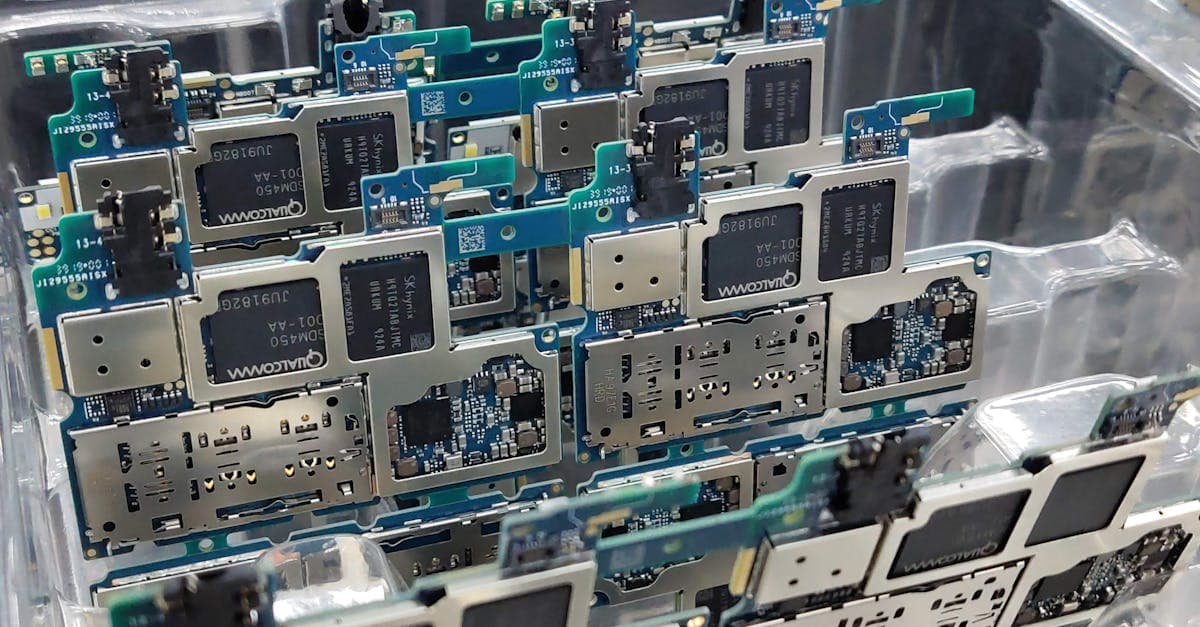
Semiconductor Manufacturing International Corp (SMIC), China's largest contract chipmaker, announced on Friday that it is experiencing a significant increase in orders from international clients. The surge is attributed to the global artificial intelligence boom, which has tightened capacity at foreign foundries and driven demand for alternative manufacturing sources. SMIC's comments highlight its growing role in the global semiconductor supply chain amid geopolitical tensions and capacity constraints elsewhere.
The company's overseas orders have risen as AI-related chips require advanced manufacturing processes that are in high demand globally. SMIC has been expanding its production capabilities, particularly for mature nodes, which are essential for many AI applications. The chipmaker's ability to serve international clients is seen as a strategic advantage, especially as US-led export controls limit access to cutting-edge technology for some Chinese firms.
SMIC's financial performance has improved, with recent quarters showing revenue growth driven by strong demand for consumer electronics and automotive chips. The company's focus on mature process technologies, such as 28nm and 40nm, has allowed it to capture a larger share of the market for chips used in IoT devices, power management, and image sensors. These chips are critical for AI edge computing and other applications.
The global semiconductor shortage, which began in 2020, has eased for some sectors but remains acute for advanced chips used in AI and high-performance computing. Foundries like TSMC and Samsung have been operating at full capacity, leading some clients to seek alternative suppliers. SMIC, despite being restricted from accessing extreme ultraviolet lithography (EUV) equipment, has managed to secure orders for less advanced but still essential chips.
Industry analysts note that SMIC's increased overseas orders reflect a broader trend of supply chain diversification. Companies are looking to reduce reliance on a single source, especially for chips that are not at the leading edge. SMIC's competitive pricing and expanding capacity make it an attractive option for clients in automotive, industrial, and consumer electronics sectors.
For now, SMIC's growth is constrained by its inability to produce the most advanced chips due to US export controls. However, the company is investing in domestic equipment suppliers and alternative technologies to enhance its capabilities. The Chinese government has also been supporting the semiconductor industry through subsidies and policy initiatives.
Looking ahead, SMIC expects continued demand from overseas clients as the AI boom persists. The company plans to increase its capital expenditure to expand production capacity, particularly for mature nodes. However, geopolitical uncertainties and technology restrictions remain key risks. SMIC's ability to navigate these challenges will determine its long-term role in the global chip market.
Nvidia and Major Retailers Set to Reveal AI Boom and Consumer Spending Trends
Nvidia and key retailers will report earnings next week, providing insights into the AI boom and consumer spending amid inflation. Investors are keen on Nvidia's AI chip demand and retail sales data for economic health signals.

Two pivotal themes for the U.S. stock market—the artificial intelligence boom and inflation-affected consumer spending—will be closely examined next week as Nvidia and major retailers release their quarterly earnings reports. Nvidia, a leading AI chipmaker, is expected to showcase robust demand for its graphics processing units (GPUs) used in AI applications, while retailers like Walmart and Home Depot will offer a glimpse into consumer behavior amid persistent price pressures.
Nvidia's earnings, scheduled for Wednesday, are anticipated to highlight continued growth driven by AI adoption across industries such as data centers, autonomous vehicles, and healthcare. Analysts project revenue increases of over 100% year-over-year, fueled by the company's H100 and upcoming Blackwell chips. The report will also provide updates on supply chain constraints and new product launches, which are critical for meeting surging AI demand.
On the retail front, Walmart will report on Tuesday, followed by Home Depot on Wednesday, offering a window into how higher interest rates and inflation are impacting household spending. Walmart's results may reflect shifts in consumer preferences toward value-oriented purchases, while Home Depot's numbers could indicate the health of the housing market and home improvement projects. Both reports are expected to show moderate sales growth, with margins under pressure from elevated costs.
The earnings season comes at a time when the Federal Reserve is closely monitoring economic data for signs of cooling inflation. Strong AI-related earnings could bolster market optimism, while weak retail numbers might reignite recession fears. Investors will parse management commentary for forward guidance on demand trends and pricing power.
Nvidia's performance is particularly crucial as it serves as a bellwether for the AI sector, which has driven much of the market's gains this year. The company's dominance in AI chips has made it a key player in the tech industry, with its products powering everything from chatbots to scientific research. Any signs of slowing demand or increased competition could dampen enthusiasm for AI stocks.
For retailers, the focus will be on how consumers are managing higher prices for essentials like food and fuel. Walmart, known for its low prices, may benefit from trade-down behavior, while Home Depot could face headwinds from a sluggish housing market. Both companies have been investing in e-commerce and supply chain efficiency to protect margins.
The earnings reports will also influence broader market sentiment, as they provide real-time data on two critical economic drivers. A strong showing from Nvidia could lift tech stocks, while disappointing retail results might weigh on consumer discretionary sectors. Investors should watch for any divergence between AI-related optimism and consumer spending realities.
Looking ahead, the market will also monitor updates on regulatory scrutiny of AI and potential trade restrictions affecting chip exports. Nvidia's outlook could be impacted by export controls to China, while retailers face ongoing challenges from labor shortages and inventory management. The coming week's reports will set the tone for market direction in the near term.
Unknowns remain, such as the sustainability of AI demand growth and the trajectory of consumer spending. The earnings season will provide crucial data points, but further clarity may require additional economic indicators and Fed policy signals. Investors are advised to stay tuned for the detailed reports and management comments.