
Dell Launches New XPS 13 with Competitive Pricing to Challenge MacBook Air
Dell has unveiled a new version of its flagship XPS 13 laptop, offering premium features at a more affordable price point to compete with Apple's MacBook Air.

Dell has introduced a refreshed iteration of its popular XPS 13 laptop, positioning it as a direct competitor to Apple's MacBook Air. The new model retains the premium design and build quality of its predecessors while arriving at a lower starting price. The company aims to attract users seeking high-end performance without the flagship price tag.
The latest XPS 13 features Intel's 13th Gen Core processors, up to 16GB of LPDDR5 RAM, and up to 1TB of PCIe Gen 4 SSD storage. The display options include a 13.4-inch Full HD+ or 4K+ InfinityEdge panel with a 16:10 aspect ratio, offering slim bezels and a 92.9% screen-to-body ratio. The laptop also includes Intel Iris Xe graphics for integrated GPU performance.
Dell has equipped the new XPS 13 with a redesigned thermal system featuring dual fans and dual heat pipes to manage heat dissipation. The device supports Wi-Fi 6E and Bluetooth 5.2 for wireless connectivity. Port selection includes two Thunderbolt 4 USB-C ports, a microSD card reader, and a 3.5mm headphone jack.
The laptop measures 11.6mm thick and weighs 1.17kg, making it highly portable. The battery capacity is 52Wh, which Dell claims can deliver up to 12 hours of video playback. The device also supports ExpressCharge, reaching 80% charge in about an hour.
Dell has priced the new XPS 13 starting at $999, undercutting the MacBook Air's $1,099 starting price. The company is offering configurations up to $1,999 for the highest-end model with 4K display and 1TB storage. The laptop is available for pre-order starting today on Dell's official website.
Shipping is scheduled to begin on March 15, 2024, in the United States, with global availability expected in the following weeks. The new XPS 13 comes in two color options: Platinum Silver with a black carbon fiber palm rest and Frost with an Arctic white woven glass fiber palm rest.
Dell's move to lower the entry price of its flagship XPS line reflects a broader strategy to capture market share in the premium ultrabook segment. The company stated that the new XPS 13 delivers "uncompromised performance and design at a more accessible price point."
BYD Unveils China's First In-House 4nm Autonomous Driving Chip Xuanji A3
BYD has introduced the Xuanji A3, China's first domestically developed 4nm autonomous driving chip. The chip supports L3 and L4 autonomous driving and has entered mass production.
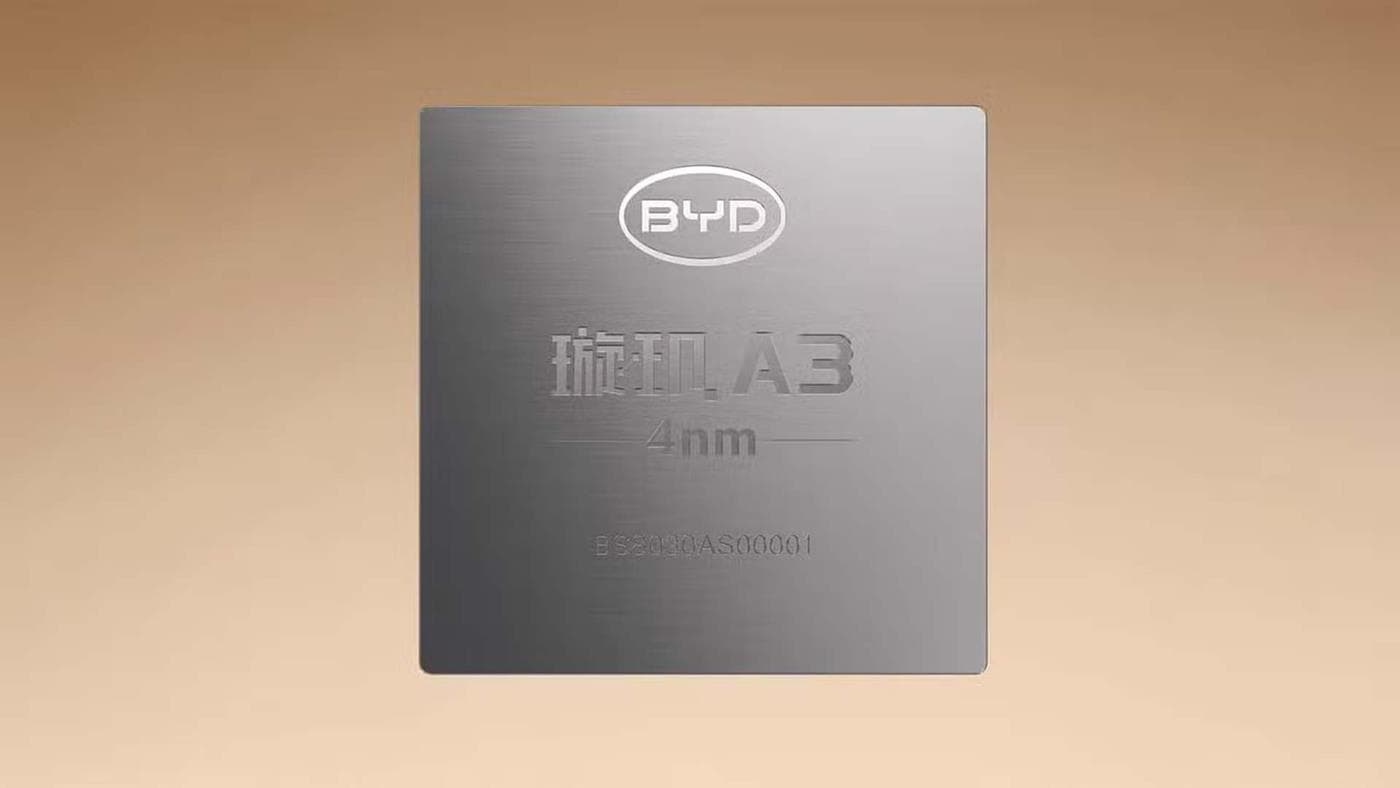
BYD has officially launched the Xuanji A3, a 4nm autonomous driving chip developed entirely in-house. The company claims this is China's first domestically produced chip of its kind, marking a significant milestone for the country's automotive semiconductor industry.
The Xuanji A3 is designed to support L3 and L4 levels of autonomous driving, offering high processing power for complex driving tasks. BYD stated that the chip has already entered mass production, though specific volume figures were not disclosed.
BYD developed the chip through its subsidiary, BYD Semiconductor, leveraging advanced manufacturing processes. The 4nm node allows for greater transistor density and energy efficiency compared to previous-generation chips.
The chip integrates multiple processing units, including a neural processing unit (NPU) for AI tasks, a graphics processing unit (GPU) for image processing, and a central processing unit (CPU) for general computing. This architecture enables real-time data processing from cameras, radar, and lidar sensors.
BYD plans to deploy the Xuanji A3 in its upcoming vehicle models, starting with high-end electric vehicles. The company emphasized that the chip meets stringent automotive safety and reliability standards.
Industry analysts view this development as a strategic move to reduce reliance on foreign chip suppliers, especially amid ongoing trade tensions. BYD joins other Chinese automakers in pursuing vertical integration of key technologies.
The Xuanji A3 is expected to compete with chips from Nvidia and Mobileye, which currently dominate the autonomous driving market. BYD has not disclosed pricing or specific performance benchmarks yet.
BYD confirmed that the chip is now in mass production and will be integrated into vehicles rolling off assembly lines later this year. The company aims to achieve full self-driving capabilities in its vehicles by 2025.

Nvidia targets $200B CPU market with AI agent PCs from Microsoft, Dell, HP
Nvidia is entering the CPU market with AI agent PCs developed alongside Microsoft, Dell, and HP. The company aims to capture a share of the $200 billion CPU market by integrating AI capabilities directly into personal computers.

Nvidia is making a strategic push into the $200 billion CPU market by partnering with Microsoft, Dell, and HP to launch a new category of AI agent PCs. The initiative aims to embed artificial intelligence directly into personal computers, enabling them to perform complex tasks autonomously. Nvidia's approach focuses on making AI agents accessible, secure, and practical for everyday users.
The AI agent PCs will leverage Nvidia's GPU technology combined with custom CPU designs to handle AI workloads locally. This architecture allows the systems to run AI models without relying on cloud connectivity, reducing latency and enhancing privacy. Microsoft, Dell, and HP will integrate these chips into their upcoming PC lines, targeting both consumer and enterprise markets.
Nvidia's entry into the CPU space represents a significant shift from its traditional focus on graphics processors. The company has developed a specialized chip that combines CPU cores with AI accelerators, optimized for running large language models and other AI applications. This hybrid design aims to outperform traditional CPUs in AI tasks while maintaining compatibility with existing software.
The partnership with Microsoft brings integration with Windows and Azure AI services, allowing seamless deployment of AI agents. Dell and HP will offer the PCs in various form factors, including desktops and laptops, with configurations tailored for different use cases. The companies emphasize security features such as hardware-based encryption and secure enclaves for AI processing.
Nvidia claims the AI agent PCs can handle tasks like real-time language translation, automated data analysis, and personalized virtual assistants without internet dependency. The systems are designed to learn user behavior over time, adapting to individual preferences. Early benchmarks suggest significant performance gains over traditional CPUs in AI-specific workloads.
The market for AI-enabled PCs is projected to grow rapidly, with analysts estimating it could reach $200 billion within the next few years. Nvidia's move positions it to compete directly with Intel and AMD in the CPU market, while also expanding its AI ecosystem. The company plans to offer multiple chip tiers to address different price points and performance requirements.
Pricing for the AI agent PCs will vary by configuration, with entry-level models starting around $1,000 and high-end versions exceeding $3,000. The first devices are expected to ship in the second half of 2025, with pre-orders opening in select markets earlier. Microsoft, Dell, and HP will announce specific models and availability dates in the coming months.
Nvidia CEO Jensen Huang stated that the AI agent PCs represent a new computing paradigm, bringing intelligence directly to users' fingertips. The company is working with software developers to create applications that leverage the hardware's AI capabilities. Nvidia also plans to release a software development kit for third-party AI agent creation.

May highlights: prehistoric mining, blue octopus, catnip preference, political polarization
May's overlooked scientific stories include a possible prehistoric copper mine in the Pyrenees, a new tiny blue octopus species, evidence that cats prefer silver vine to catnip, and a study suggesting political polarization behaves like a phase transition.

Each month, a number of compelling scientific stories fail to receive the attention they deserve. For May, editors have selected several noteworthy studies that nearly slipped through the cracks. Among them are discoveries ranging from ancient mining operations to feline behavior and political dynamics.
High in the eastern Pyrenees, a prehistoric cave excavated between 2021 and 2023 has yielded artifacts that suggest it may have been an ancient copper smelting site. Spanish archaeologists analyzed the finds and proposed that humans occupied the cave far more frequently than previously believed. The team published these preliminary findings in the journal Frontiers in Environmental Archaeology.
In marine biology, researchers described a new species of tiny blue octopus. The creature, notable for its vivid coloration and diminutive size, adds to the growing diversity of known cephalopods. Details of the discovery appeared in a recent taxonomic study.
A separate investigation into feline preferences found that cats appear to favor silver vine over catnip. The study, which observed behavioral responses to both plants, indicated that silver vine elicited stronger reactions in a majority of the test subjects. The findings may have implications for understanding feline sensory biology.
Political polarization was the subject of a study that modeled ideological divisions as a phase transition. Researchers drew parallels between the sudden shifts in political alignment and physical systems that undergo abrupt changes in state. The work was published in a peer-reviewed journal and has sparked discussion among social scientists.
Other stories from May include advances in renewable energy technology and a re-evaluation of historical climate data. Each of these studies, while not widely covered, offers significant insights into their respective fields.
The full articles for each highlighted story are available through the original sources. Readers are encouraged to explore the complete research for a deeper understanding of these findings.

Chinese researchers develop HG-STR algorithm for drone swarms with 100% kill rate in simulations
Chinese researchers have developed a new algorithm called HG-STR that enables drone swarms to achieve a 100% kill rate in simulations, even under communication disruptions and electronic jamming. The algorithm allows drones to autonomously detect and engage targets without relying on external commands.

Chinese researchers have unveiled a new algorithm designed to enhance the combat capabilities of drone swarms. The algorithm, named HG-STR, reportedly achieved a 100% kill rate in simulated battlefield scenarios. The development was announced by a team from a Chinese research institution, marking a significant advancement in autonomous drone warfare technology.
The HG-STR algorithm enables drone swarms to operate effectively even when communication links are severed or under heavy electronic jamming. In such conditions, individual drones can autonomously detect and engage targets without relying on centralized command. This capability addresses a critical vulnerability of drone swarms, which often depend on constant communication with a ground station.
During simulations, the algorithm demonstrated the ability to coordinate multiple drones to simultaneously attack a target. The drones used onboard sensors and artificial intelligence to identify and prioritize threats. The researchers claimed that the algorithm's decision-making process allowed for rapid adaptation to changing battlefield conditions.
The development comes amid growing global interest in drone swarm technology for military applications. Several countries, including the United States and China, have been investing in autonomous systems that can operate in contested environments. The HG-STR algorithm is seen as a potential game-changer in this field, as it reduces the reliance on vulnerable communication links.
However, experts caution that simulation results may not fully translate to real-world performance. Factors such as weather, terrain, and enemy countermeasures could affect the algorithm's effectiveness. The researchers acknowledged that further testing in realistic environments is necessary before the technology can be deployed.
The Chinese research team plans to conduct field trials with actual drones in the coming months. If successful, the HG-STR algorithm could be integrated into existing drone platforms used by the Chinese military. The algorithm's ability to operate under electronic warfare conditions could provide a strategic advantage in future conflicts.
Details of the algorithm's architecture and specific capabilities have not been publicly disclosed due to security concerns. The research was published in a Chinese academic journal, with limited technical information available to the public. The team stated that the algorithm is designed to be compatible with various types of drones, including small quadcopters and larger fixed-wing UAVs.
The announcement has drawn attention from defense analysts worldwide, who are closely monitoring advancements in autonomous weapons systems. The development of algorithms like HG-STR raises ethical and legal questions about the use of AI in combat. International discussions on regulating lethal autonomous weapons systems have intensified in recent years.
As of now, no official statement has been released by the Chinese government regarding the deployment of the HG-STR algorithm. The research team emphasized that the technology is still in the experimental stage and requires further validation. The algorithm's performance in real-world conditions remains to be seen, but the simulation results have already sparked considerable interest in the defense community.