India's Next-Gen Growth to Be Driven by Quantum, AI Sovereignty, and Indigenous Ecosystems
Union Minister Dr. Jitendra Singh stated that quantum technology, AI sovereignty, and indigenous ecosystems will define India's next-generation growth. He emphasized the need for a trusted integrated approach in deep-tech sectors.

Union Minister of State for Science & Technology, Earth Sciences, and other key portfolios, Dr. Jitendra Singh, announced on May 16 in New Delhi that quantum computing, artificial intelligence sovereignty, and indigenous ecosystems will be the cornerstones of India's next-generation growth. Speaking at an event, he highlighted the critical role of these technologies in shaping the country's future economic and technological landscape.
Dr. Singh elaborated that India's progress in deep-tech sectors hinges on adopting a trusted integrated approach that combines quantum technologies with AI sovereignty. He stressed the importance of developing homegrown capabilities to ensure data security, reduce dependency on foreign technologies, and foster innovation within the country. The minister noted that quantum computing, with its potential to revolutionize computing power, is particularly vital for solving complex problems in fields like cryptography, drug discovery, and climate modeling.
AI sovereignty, according to Dr. Singh, involves creating indigenous AI frameworks and algorithms that align with India's unique socio-economic needs. This includes developing large language models and machine learning systems tailored to Indian languages and contexts. He pointed out that such efforts would not only boost technological self-reliance but also create new opportunities for startups and research institutions.
The minister also emphasized the importance of indigenous ecosystems, referring to the network of startups, academia, and industry that can collaboratively drive innovation. He cited examples like the National Quantum Mission and the IndiaAI Mission, which aim to build robust infrastructure and talent pools. Dr. Singh argued that these initiatives would help India leapfrog in emerging technologies and compete globally.
Comparing India's approach to other nations, Dr. Singh noted that many countries are investing heavily in quantum and AI for strategic advantages. However, India's focus on indigenous development ensures that the benefits are widely distributed across society. He mentioned potential use cases in agriculture, healthcare, and smart cities, where quantum sensors and AI-driven analytics could transform service delivery.
For end-users, these advancements promise more secure digital services, personalized AI assistants, and efficient public systems. The minister indicated that the government is working on policies to accelerate adoption across sectors, with pilot projects already underway in areas like quantum key distribution for secure communications. No specific pricing was mentioned, but the focus remains on affordability and accessibility.
While the timeline for widespread deployment remains unclear, Dr. Singh expressed optimism about India's progress. He called for continued collaboration between government, industry, and academia to overcome challenges in talent development and infrastructure. The next steps include scaling up quantum computing labs and expanding AI research networks to ensure India's leadership in these transformative technologies.
Cerebras Secures $2.5B Deal, Marking Eclipse's Shift to Physical AI Investments
Eclipse Ventures' $2.5 billion investment in Cerebras Systems underscores a strategic pivot toward physical-world AI applications. The deal signals growing investor confidence in infrastructure that bridges digital intelligence with real-world operations.

Eclipse Ventures has made a landmark $2.5 billion investment in Cerebras Systems, marking a pivotal moment for the venture firm's long-standing thesis on physical-world technology. The deal, announced this week, positions Cerebras as a key player in the race to deploy AI beyond data centers and into tangible industrial applications. For Eclipse founder Lior Susan, the investment validates a decade of betting on hardware that intersects with the physical realm, a strategy that was once considered niche but is now attracting mainstream attention.
Cerebras Systems is known for its wafer-scale processors, which are designed to handle massive AI workloads more efficiently than traditional GPU clusters. The company's CS-2 system, built around the world's largest chip, offers unprecedented computational density for training large language models and scientific simulations. This hardware is particularly suited for tasks that require real-time processing in fields like autonomous vehicles, robotics, and medical imaging, where latency and power consumption are critical.
The $2.5 billion infusion will accelerate Cerebras's expansion into new markets, including edge computing and embedded AI systems. Unlike cloud-based AI services, Cerebras's technology can be deployed directly in factories, hospitals, and transportation hubs, enabling on-site decision-making without relying on remote servers. This aligns with Eclipse's thesis that the next wave of innovation will come from software that controls physical objects, from self-driving cars to industrial robots.
Eclipse's investment reflects a broader shift in venture capital toward deep tech and hard science startups. While software-as-a-service companies have dominated funding in recent years, investors are increasingly recognizing the value of companies that solve physical-world problems. Cerebras's technology, for instance, could reduce the carbon footprint of AI training by replacing thousands of power-hungry GPUs with a single chip, addressing both cost and environmental concerns.
For end users, the impact of Cerebras's technology could be profound. In healthcare, its processors can analyze medical scans in real time, aiding radiologists in detecting tumors. In manufacturing, they can optimize supply chains and predict equipment failures before they occur. The company's chips are also being tested in autonomous driving systems, where split-second decisions are crucial for safety. However, the high cost of Cerebras systems currently limits their adoption to large enterprises and research institutions.
The investment is expected to help Cerebras scale production and reduce costs over time, making its technology accessible to a broader range of industries. The company has already partnered with several government agencies and Fortune 500 companies, and the new funding will support global expansion, particularly in Asia and Europe. Eclipse's network in industrial sectors could also open doors for Cerebras in energy, aerospace, and defense.
Despite the excitement, challenges remain. Cerebras faces competition from established chipmakers like NVIDIA and emerging startups developing specialized AI accelerators. The company must also navigate supply chain constraints and geopolitical tensions affecting semiconductor manufacturing. Moreover, the effectiveness of its wafer-scale approach in diverse real-world scenarios is still being proven.
Looking ahead, Eclipse plans to continue investing in companies that bridge the digital and physical worlds. Susan believes that the convergence of AI, robotics, and advanced materials will redefine industries over the next decade. With the Cerebras deal, Eclipse has not only secured a significant return but also positioned itself as a leader in the physical AI revolution. The coming years will reveal whether this bet on hardware-first innovation pays off as the tech world increasingly turns its attention to the real world.
For Eclipse, the $2.5B Cerebras win is just the start of realizing its physical-world thesis
This development in Technology News signals new momentum in the technology agenda.

For Eclipse, the $2.5B Cerebras win is just the start of realizing its physical-world thesis has become a significant development in the technology sector. This advancement signals new momentum in the teknoloji haberleri space and carries important implications for both consumers and industry players.
The technical details surrounding this announcement suggest a deliberate strategy aimed at capturing market share while addressing existing user pain points. Industry analysts note that the timing of this release aligns with broader shifts in how technology is adopted at scale.
From a competitive standpoint, this move places additional pressure on established players who have dominated the segment for years. The introduction of these features could force rivals to accelerate their own roadmaps or risk losing relevance in an increasingly crowded marketplace.
Consumer reactions have been mixed but generally positive, with early adopters highlighting the practical benefits over marketing promises. The focus appears to be on solving real problems rather than introducing novelty for its own sake.
Looking at the broader ecosystem, this development may trigger ripple effects across adjacent categories. Partnerships, supply chains, and developer communities are all likely to feel the impact as adoption scales.
Whether this represents a lasting shift or a temporary market reaction will depend on execution quality and sustained innovation in the coming quarters.}
Osceola School Board Tackles AI Misuse with New Policies and Training
The Osceola County School District is addressing the challenges posed by artificial intelligence, including student misuse of ChatGPT and deepfakes. The School Board recently held a workshop to discuss policies and consequences for AI abuse.

The Osceola County School District is actively working to address the rapidly evolving landscape of artificial intelligence in education. During a workshop held last week, the School Board delved into the dual-edged nature of AI, focusing on both its potential benefits and the growing concerns over student misuse. The discussion highlighted incidents involving AI-generated content, such as essays produced by ChatGPT and manipulated deepfake images, which have raised questions about academic integrity and student safety.
Board members examined how students are leveraging AI tools to bypass traditional learning processes. Examples included using ChatGPT to complete homework assignments and creating deepfakes for malicious purposes, such as bullying or spreading misinformation. The workshop underscored the need for clear guidelines that distinguish between acceptable use of AI as a learning aid and outright academic dishonesty.
To combat these challenges, the district is considering a multi-pronged approach. This includes updating the student code of conduct to explicitly prohibit AI-assisted cheating, implementing AI detection software in classrooms, and providing professional development for teachers to identify AI-generated work. Additionally, the board discussed incorporating digital literacy lessons that teach students about the ethical implications of AI.
The conversation also touched on the broader context of AI in society, comparing the district's efforts to those of other school systems nationwide. Many districts are grappling with similar issues, and some have already banned ChatGPT on school devices. However, Osceola officials emphasized the importance of not outright banning AI but rather teaching responsible use.
For students, the new policies will mean clearer consequences for AI misuse, ranging from reduced grades to disciplinary action. The district plans to roll out these changes in the upcoming school year, starting with a pilot program in select high schools. Parents will be notified through school newsletters and information sessions.
While the board has outlined initial steps, several unknowns remain. The effectiveness of detection tools against evolving AI models is uncertain, and there are concerns about privacy implications of monitoring software. The district expects to refine its approach based on feedback from teachers, students, and parents over the next semester.
ElliQ Companion Robot Shows Promise in Improving Quality of Life for Older Adults
A caregiver for an older adult with Parkinson's disease found that the ElliQ companion robot unexpectedly helped improve her mother's daily engagement in activities. The robot provided reminders and encouragement for exercise, social interaction, and hobbies, contributing to a noticeable improvement in her mother's well-being.
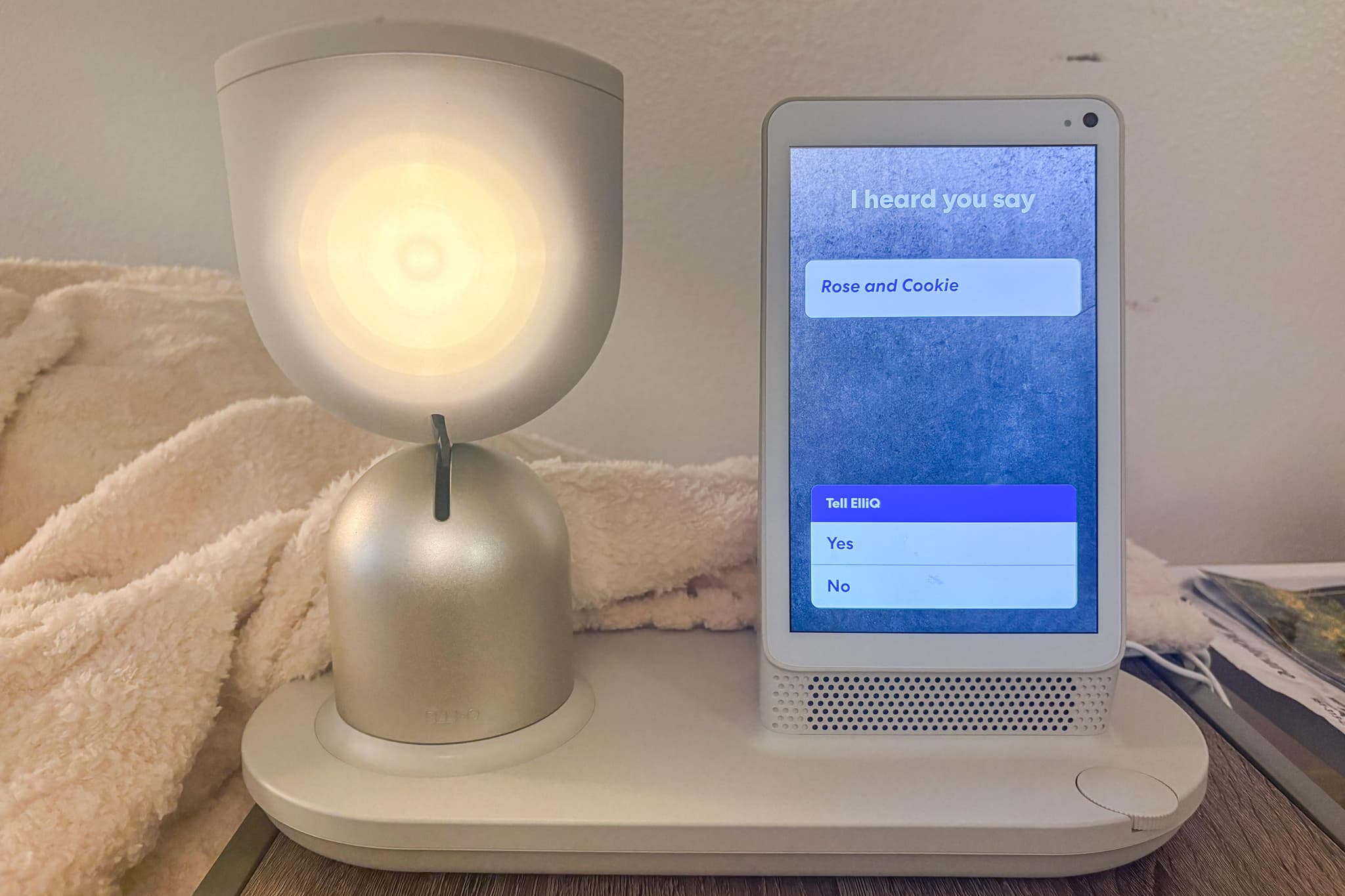
In a recent trial, the ElliQ companion robot demonstrated surprising effectiveness in helping older adults maintain an active lifestyle. The robot, designed by Intuition Robotics, is intended to combat loneliness and support healthy aging by providing companionship and reminders for daily activities. A caregiver for a 75-year-old woman with Parkinson's disease reported that the robot helped her mother re-engage with crucial activities like exercise, socializing, and hobbies, which had declined due to medication side effects. The caregiver noted that the robot's gentle prompts and conversational abilities made a significant difference in her mother's daily routine.
ElliQ is an AI-powered desktop robot that uses natural language processing to interact with users. It can remind older adults to take medications, suggest activities, play music, and engage in simple conversations. The robot learns from user interactions to personalize its suggestions over time. It also integrates with smart home devices and can make video calls, helping users stay connected with family and caregivers. The device is designed to be intuitive and non-intrusive, with a small footprint that fits easily on a counter or table.
The robot's impact was particularly notable in the context of Parkinson's disease management. The caregiver explained that her mother's Parkinson's medication had become less effective, leading to a decline in physical activity and social engagement. Before adjusting medication dosage, which can have serious side effects, the doctor recommended trying lifestyle interventions. ElliQ provided the structure and motivation needed to re-establish a routine. Within weeks, the caregiver observed improvements in her mother's mood and physical activity levels.
ElliQ is part of a growing trend of companion robots designed for older adults. Similar devices include Amazon's Alexa Care Hub and the Mabu personal healthcare companion. However, ElliQ distinguishes itself with a focus on proactive engagement and emotional support. The robot is not meant to replace human caregivers but to supplement care by providing consistent encouragement and reducing feelings of isolation. Early studies suggest that such robots can improve quality of life and even delay cognitive decline.
For caregivers, the robot offers peace of mind by providing real-time updates on the user's activities. The caregiver in this case received notifications about her mother's engagement with the robot and could check in via video calls. The robot also helped reduce the caregiver's stress by taking over some of the reminders and motivational tasks. However, the robot is not a medical device and cannot replace professional medical advice or emergency response systems.
ElliQ is currently available for purchase in the United States, with a monthly subscription fee for its AI services. The robot costs around $250 for the hardware and $30 per month for the subscription. It is designed for older adults living independently or with family caregivers. The company plans to expand to other regions and is exploring partnerships with healthcare providers to make the device more accessible.
While the initial results are promising, more research is needed to fully understand the long-term benefits of companion robots like ElliQ. The caregiver noted that the robot's effectiveness may vary depending on the user's personality and condition. Future updates may include more advanced health monitoring features and integration with telehealth services. For now, ElliQ represents a novel tool in the effort to support aging in place and improve the lives of older adults and their caregivers.