
Instagram Tests Limits on Teen Exposure to Body Image Content
Instagram is testing new restrictions on the types of posts teens can repeatedly see, focusing on content related to body image and mental health. The feature aims to limit exposure to potentially harmful material.
Instagram has begun testing a feature that restricts how often teenagers can view certain types of posts. The social media platform announced the trial on Tuesday, targeting content related to body image and mental health. The move is part of broader efforts to enhance safety for younger users.
The restrictions apply to posts that users aged 13 to 17 can see repeatedly in their feeds. Instagram will limit the visibility of content that may be considered sensitive, such as posts promoting extreme dieting or cosmetic surgery. The company said the feature uses machine learning to identify such material.
Teens will still be able to see these posts initially, but the algorithm will reduce their frequency if the user engages with them multiple times. Instagram emphasized that the goal is not to remove content entirely but to prevent overexposure. The feature is currently being tested in select countries.
This initiative follows previous steps Instagram has taken to protect teens, including defaulting new accounts to private settings and introducing parental controls. The platform has faced criticism for its potential negative impact on young users' mental health, particularly regarding body image.
Instagram's head of public policy, Karina Newton, stated that the company is committed to creating a safe environment for teens. She noted that the test will help Instagram understand how to better manage sensitive content. The feature is expected to roll out more broadly if the trial proves successful.
Parents and advocacy groups have welcomed the move but called for more transparency. Some experts argue that algorithmic changes alone may not be sufficient to address deeper issues. Instagram has not disclosed the exact criteria used to flag content for restriction.
The test is currently limited to a small number of users, and Instagram has not provided a timeline for a wider release. The company plans to gather feedback from teens, parents, and experts before making any permanent changes. Instagram reiterated that user safety remains a top priority.
Instagram's announcement comes amid ongoing scrutiny from lawmakers and regulators over child safety online. The platform has introduced several features in recent months to address these concerns, including tools to limit screen time and report harmful content. The new restrictions represent another step in that direction.
TikTok Expands Services to Become a Super App
TikTok is reportedly developing features to offer a wide range of digital services, aiming to become a super app. The platform is testing tools for food delivery, travel booking, and more.
TikTok is reportedly expanding its services beyond short-form video, aiming to become a super app that handles multiple digital activities. The company is testing new features that could allow users to order food, book travel, and access other services directly within the app. This strategy mirrors the approach of Asian super apps like WeChat and Grab, which offer integrated ecosystems for messaging, payments, and lifestyle services.
According to reports, TikTok has been quietly developing these capabilities over the past year. The platform is said to be working with third-party partners to integrate food delivery and travel booking options. Users in select markets may soon see options to order meals from local restaurants or book flights and hotels without leaving the app.
The move comes as TikTok seeks to increase user engagement and generate new revenue streams. The company already generates significant income from advertising and in-app purchases, but adding transactional services could open up additional monetization opportunities. TikTok has also been testing e-commerce features, allowing creators to sell products directly to followers.
TikTok's parent company, ByteDance, has experience with super app models through its Chinese counterpart, Douyin. Douyin already offers food delivery, group buying, and travel services in China. TikTok's expansion into these areas would bring similar functionality to international markets, though regulatory and competitive challenges may arise.
The super app strategy could also help TikTok compete with rivals like Instagram and YouTube, which are adding shopping and other features. By offering a broader range of services, TikTok aims to become a daily destination for users, increasing time spent on the platform and deepening user loyalty.
TikTok has not officially confirmed the super app plans, but the company has been hiring for roles related to food delivery and travel services. Job postings suggest TikTok is building teams to manage partnerships and operations for these new verticals. The company is also investing in payment infrastructure to support transactions within the app.
The rollout of these features is expected to begin in Southeast Asia, where super apps are already popular. TikTok may launch food delivery in Indonesia and travel booking in Thailand as early as next year. Expansion to other regions, including the United States and Europe, would likely follow after testing and regulatory approvals.
TikTok's super app ambitions face significant hurdles, including competition from established players like Uber Eats and Booking.com. The company will also need to navigate data privacy regulations and build trust with users who may be hesitant to share payment information. However, TikTok's massive user base and engagement levels provide a strong foundation for the expansion.
"We are always exploring new ways to enhance the user experience on TikTok," a company spokesperson said in a statement. "We have nothing to announce at this time, but we are committed to providing a safe and enjoyable platform for our community."

YouTube to Label AI-Generated Content Without Creator Disclosure
YouTube is expanding its labeling system for AI-generated videos, now marking content with heavy AI use even without creator disclosure. The platform will automatically apply labels to videos detected as significantly AI-produced.
YouTube announced an expansion of its labeling system for AI-generated content. The platform will now mark videos that show heavy use of artificial intelligence, even if the creator has not voluntarily disclosed this information. This move aims to increase transparency around AI-produced material on the video-sharing site.
The new policy applies to content that YouTube's systems detect as being substantially created or altered by AI tools. This includes videos where AI was used to generate realistic scenes, modify footage, or create synthetic voices. The labels will appear in the video description and may also be shown in the player interface.
Previously, YouTube relied primarily on creators to self-disclose when their videos contained AI-generated elements. The updated approach introduces automated detection to catch cases where creators fail to label their content. YouTube stated that the automated system will use machine learning models trained to identify common AI generation patterns.
Content that falls under the new labeling requirement includes deepfakes, AI-generated scripts or narration, and videos where AI was used to create realistic but fabricated events. The labels will specify that the content was "altered or generated by AI" to inform viewers about the nature of the material.
YouTube emphasized that the labels are not punitive but are meant to provide context. The company noted that some AI-generated content, such as clearly fictional animations or music videos, may not require labeling if the AI use is obvious to viewers. The policy focuses on content that could mislead viewers about its authenticity.
The rollout of the automated labeling system will begin in the coming weeks. YouTube plans to gradually expand detection capabilities to cover more types of AI-generated content. The company is also working on ways for creators to appeal labels if they believe their content was incorrectly flagged.
Creators who consistently fail to label AI-generated content may face penalties, including reduced visibility or removal from the YouTube Partner Program. However, YouTube stated that the initial focus will be on education and compliance rather than enforcement.
YouTube's announcement comes amid growing industry-wide efforts to address AI-generated content. Other platforms, including TikTok and Meta, have introduced similar labeling requirements. YouTube's automated system represents a step toward proactive identification rather than relying solely on user disclosures.
The new labeling policy applies globally to all YouTube users. The company did not provide a specific date for the full implementation but confirmed that the system is already being tested with a subset of creators.

Bluesky Introduces Long-Form Posts to Compete with X Articles
Bluesky has rolled out a new feature allowing users to publish long-form content directly on the platform, positioning itself as a competitor to X's Articles. The update aims to attract creators and journalists seeking an alternative for in-depth posts.

Bluesky announced a significant update on Tuesday, introducing support for long-form content on its social media platform. The feature enables users to write and publish posts that exceed the platform's previous character limit, directly challenging X's Articles functionality. This move marks Bluesky's latest effort to differentiate itself in the competitive social media landscape.
The new long-form posts allow users to embed images, videos, and links within extended text, similar to blog-style entries. Bluesky stated that these posts will appear in users' feeds with a distinct visual indicator, making them easily identifiable. The company emphasized that the feature is designed for in-depth discussions, storytelling, and sharing detailed information without leaving the platform.
Bluesky's development team built the long-form feature on top of the AT Protocol, the decentralized framework underlying the platform. This approach ensures that long-form posts remain interoperable with other services built on the same protocol. Users can compose these posts using a new editor interface accessible from the compose button, which supports formatting options like bold, italics, and headers.
The rollout comes as Bluesky continues to grow its user base, which surpassed 5 million active users in recent months. The platform has been iterating rapidly, adding features like direct messaging, video support, and custom feeds. Long-form content represents a strategic pivot to attract writers, journalists, and creators who have traditionally relied on platforms like Medium or Substack.
Bluesky's CEO Jay Graber stated that the company aims to provide tools for meaningful conversations, not just short bursts of text. "We want to give people the space to express themselves fully," Graber said in a blog post announcing the feature. The company also noted that long-form posts will be subject to the same moderation policies as regular posts, including content warnings and reporting mechanisms.
Early adopters have already begun testing the feature, with some publishing multi-paragraph essays and analysis pieces. Bluesky plans to refine the editor based on user feedback, potentially adding more advanced formatting options in future updates. The feature is available on both the web and mobile versions of the app, with support for all languages currently offered on the platform.
Bluesky's long-form posts are rolling out globally starting today. Users can access the feature by updating their app to the latest version. The company has not announced any monetization plans for long-form content, but industry observers speculate that future iterations could include tipping or subscription models to support creators.
TikTok Launches In-App Travel Booking Services for Users
TikTok has introduced travel booking features within its app, allowing users to search and book flights, hotels, and experiences directly. The service is initially rolling out in select markets.
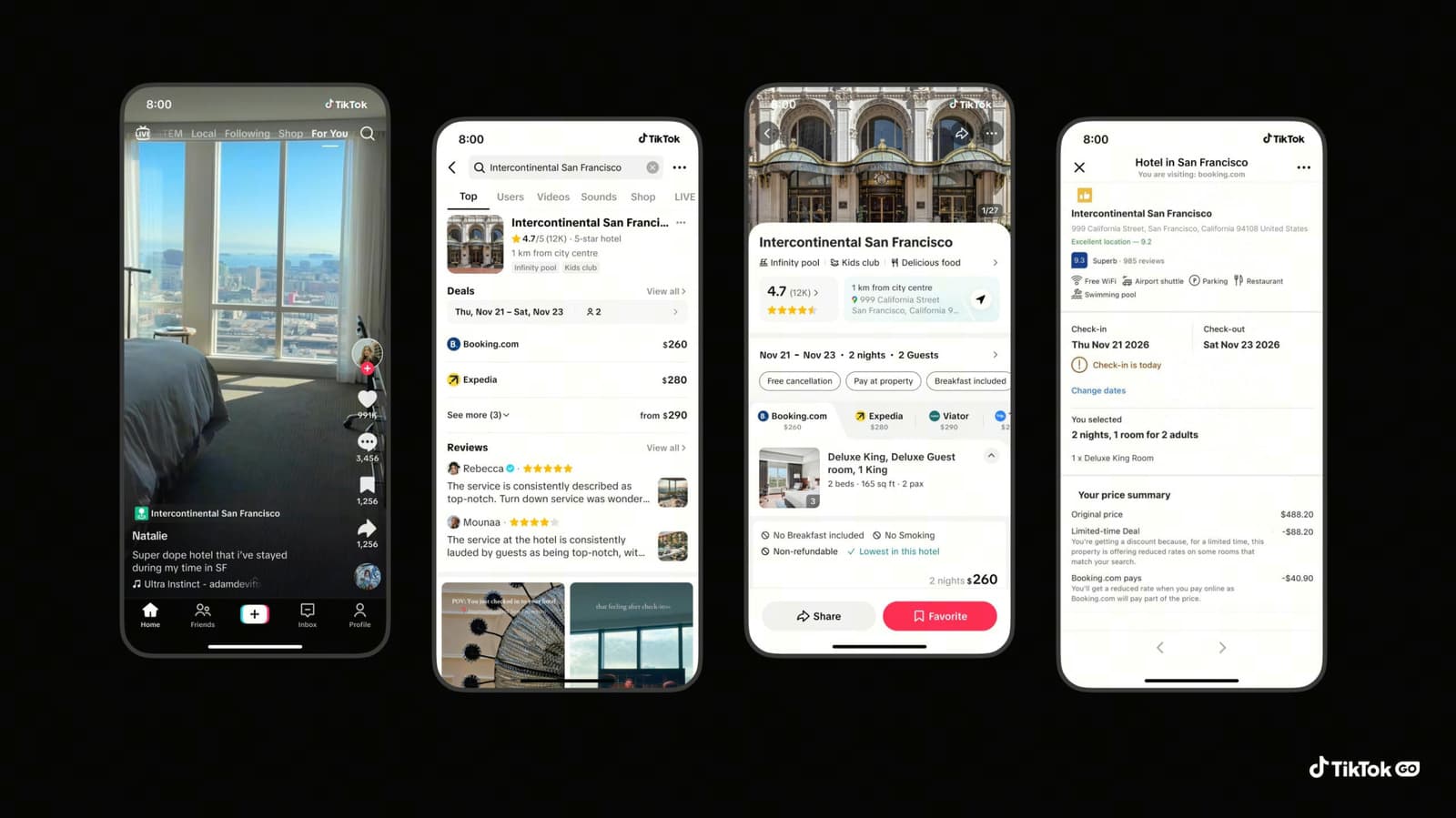
TikTok announced the launch of in-app travel booking services, enabling users to plan and book trips without leaving the platform. The feature integrates with third-party travel partners to offer flights, hotel accommodations, and activity reservations. Users can access the booking tools through dedicated tabs or links in travel-related videos.
The new service leverages TikTok's algorithm to recommend destinations and deals based on user interests and viewing history. When a user watches a travel video, they may see a "Book Now" button that leads to a booking interface within the app. The company partnered with several travel aggregators to provide pricing and availability data.
TikTok's move into travel booking follows a broader trend of social media platforms adding e-commerce and service features. The company aims to keep users engaged within its ecosystem rather than redirecting them to external sites. The booking process is designed to be seamless, with payment options including in-app wallets and credit cards.
Initial rollout covers the United States, the United Kingdom, and Canada, with plans to expand to additional countries later this year. The feature is available on both iOS and Android versions of the app. TikTok stated that the service complies with local travel regulations and data privacy laws.
Travel creators on the platform can now earn commissions on bookings made through their content. TikTok's affiliate program allows creators to tag products and services, including travel bookings, and receive a share of revenue. This incentivizes creators to produce more travel-related content.
Industry analysts note that TikTok's entry into travel booking could disrupt traditional online travel agencies. The platform's massive user base and engagement rates offer a new distribution channel for travel suppliers. However, challenges include building trust in booking reliability and handling customer service issues.
TikTok emphasized that the feature is optional and users can still access external booking sites. The company also introduced safety measures, such as verified listings and secure payment processing. Users can report issues with bookings directly through the app.
The travel booking service is part of TikTok's broader push into commerce, which already includes in-app shopping for physical goods. The company reported that users have shown strong interest in travel content, with hashtags like #TravelTok amassing billions of views. The new feature aims to capitalize on that trend by converting inspiration into bookings.
TikTok's official statement said, "We are excited to help our community discover and book their next adventure directly on TikTok. This feature makes travel planning more accessible and integrated with the content users love." The service is available starting today for users in the initial markets.