
MSI Claw 8 EX AI+ Launched with Intel Arc G3 Extreme GPU
MSI has officially announced the Claw 8 EX AI+ handheld console, based on Intel's new Panther Lake platform. It is one of the first devices to feature the Intel Arc G3 Extreme graphics architecture.
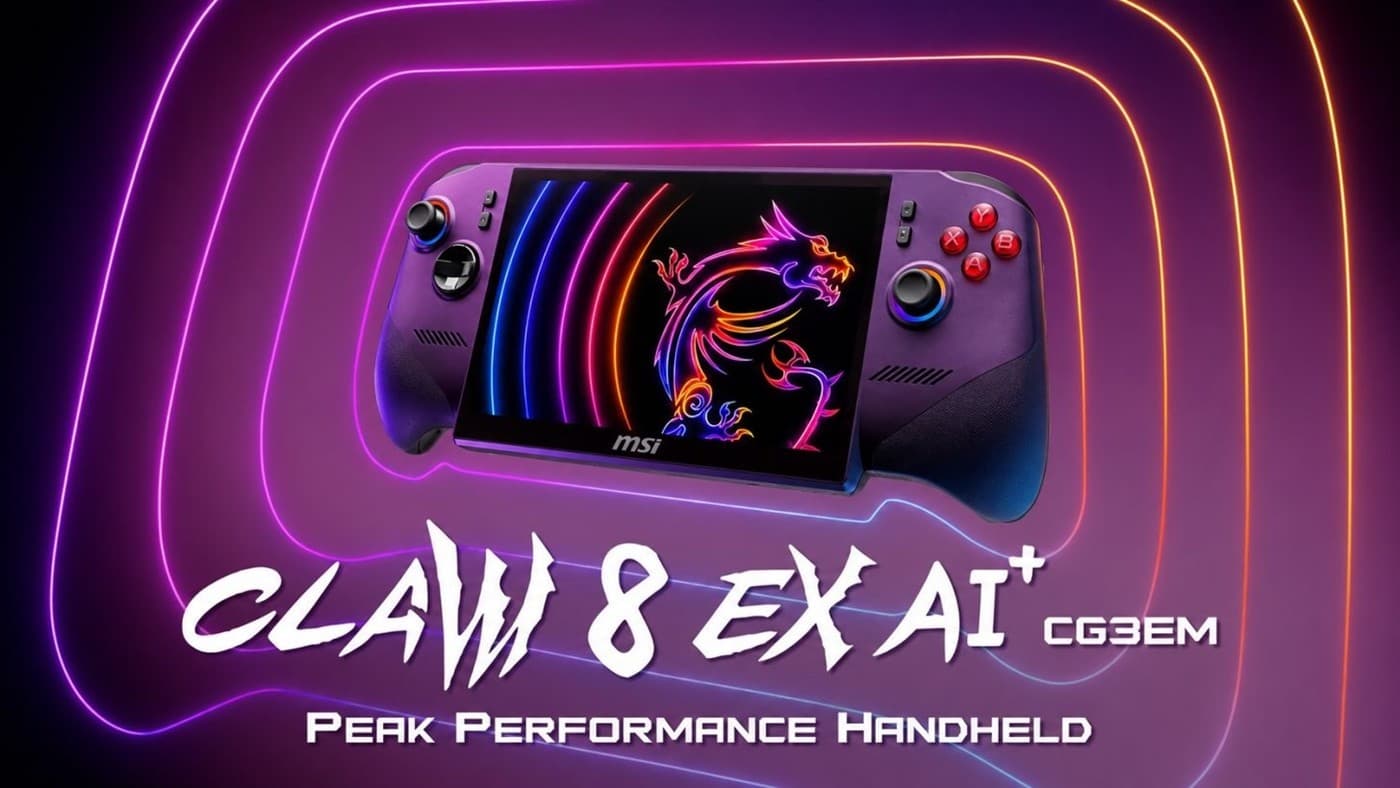
MSI has officially unveiled the Claw 8 EX AI+, a handheld gaming console built on Intel's Panther Lake platform. The device marks one of the first commercial implementations of Intel's Arc G3 Extreme graphics architecture. The announcement was made during a press event where MSI detailed the console's specifications and capabilities.
The Claw 8 EX AI+ features an 8-inch display with a 1920x1200 resolution and a 120Hz refresh rate. The screen supports touch input and is covered by Gorilla Glass for durability. Under the hood, the console is powered by an Intel Core Ultra 7 processor paired with the Arc G3 Extreme integrated GPU. MSI claims the graphics performance is comparable to entry-level discrete GPUs, enabling smooth gameplay at medium to high settings for many modern titles.
The device includes up to 32GB of LPDDR5X RAM and a 1TB PCIe Gen 4 NVMe SSD for storage. Connectivity options include Wi-Fi 7, Bluetooth 5.4, and two USB4 Type-C ports. The console also features a microSD card slot for expandable storage. MSI has equipped the Claw 8 EX AI+ with a 53Wh battery, which the company says can provide up to 6 hours of gaming on a single charge.
MSI has designed the Claw 8 EX AI+ with ergonomics in mind, featuring textured grips and Hall effect analog sticks to reduce drift. The console runs Windows 11 Home, giving users access to the full PC gaming library across platforms like Steam, Epic Games Store, and Xbox Game Pass. MSI has also included its MSI Center M software for system optimization and game management.
The Claw 8 EX AI+ is expected to compete with other handheld PCs such as the ASUS ROG Ally and Lenovo Legion Go. MSI has not yet announced pricing for the device, but it is expected to be positioned in the premium segment. The company has confirmed that the console will be available in select markets starting in the second quarter of 2025.
MSI has stated that the Claw 8 EX AI+ will ship with the latest Intel drivers optimized for the Arc G3 Extreme GPU. The company has also partnered with several game developers to ensure compatibility and performance tuning at launch. Pre-orders are expected to open in March 2025, with retail availability following in April.
MSI's announcement positions the Claw 8 EX AI+ as a high-performance handheld for gamers seeking PC-level experiences on the go. The company emphasized that the device's Panther Lake platform delivers improved power efficiency and AI capabilities compared to previous generations. MSI has not provided specific benchmark numbers but promised detailed performance data closer to the release date.
Astronomers Identify Source of Mysterious Long-Period Radio Signals
Astronomers have potentially identified the source of mysterious long-period radio signals: a newly discovered white dwarf system emitting both radio waves and X-rays.

Astronomers may have solved a long-standing cosmic mystery. The source of enigmatic long-period radio signals has been traced to a newly identified white dwarf system. This binary star emits both radio waves and X-rays, offering a plausible explanation for signals that have puzzled scientists for years.
The system in question consists of a white dwarf and a companion star. White dwarfs are the dense remnants of stars like our Sun. In this binary, the white dwarf pulls material from its companion, creating a hot accretion disk. This process generates the observed radio and X-ray emissions.
Researchers detected the signals using multiple observatories. The radio waves were picked up by the Low-Frequency Array (LOFAR) in the Netherlands. Follow-up observations with NASA's Chandra X-ray Observatory confirmed the X-ray component. The combination of these data allowed scientists to pinpoint the system's location and characteristics.
The signals exhibit a regular periodicity, repeating every few hours. This pattern matches the orbital period of the binary system. The radio emissions are likely produced by the interaction between the white dwarf's magnetic field and the accretion disk. The X-rays come from the hot gas falling onto the white dwarf.
This discovery provides a natural explanation for long-period radio transients. Previously, such signals were attributed to exotic objects like neutron stars or magnetars. The white dwarf scenario offers a more common and less extreme source. It suggests that many similar systems may exist in the galaxy.
The findings have implications for understanding stellar evolution and binary interactions. White dwarf binaries are thought to be precursors to Type Ia supernovae. Studying their radio and X-ray emissions could shed light on the processes leading to these cosmic explosions.
The research team plans to search for more such systems. They will use LOFAR and other radio telescopes to scan the sky for similar signals. Identifying additional examples will help confirm the white dwarf model and refine our understanding of these objects.
Details of the discovery were published in the journal Nature. The study involved an international collaboration of astronomers from institutions including the University of Amsterdam and the Harvard-Smithsonian Center for Astrophysics. The work was supported by grants from the European Research Council and NASA.

Asus ProArt P16 and P14 Laptops Feature RTX Spark, 128 GB Unified Memory
Asus announced the ProArt P16 and P14 laptops with Nvidia RTX Spark processors, 1 petaflop AI performance, and up to 128 GB unified memory. The devices target creative professionals seeking high-end computing power.
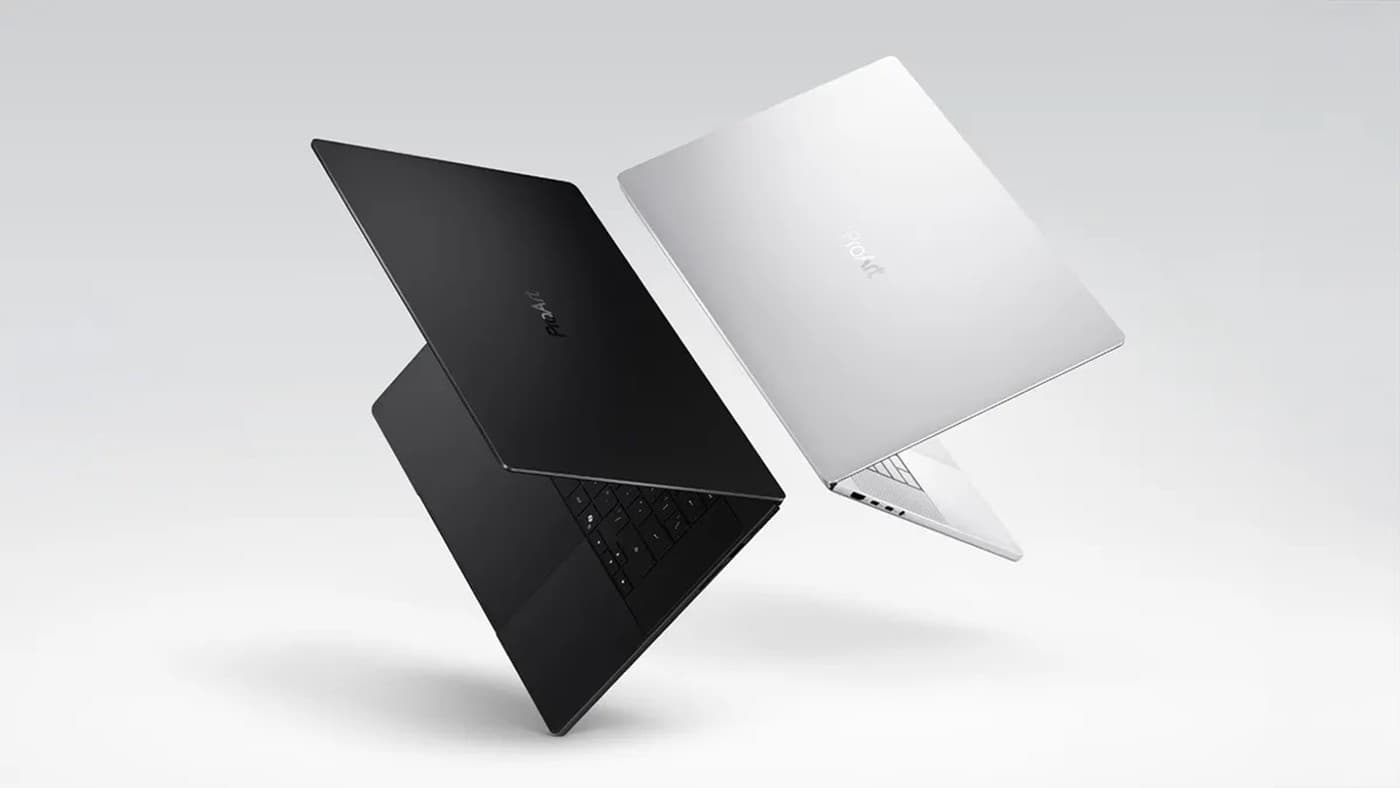
Asus unveiled two new laptops under its ProArt lineup, the P16 and P14, designed to compete with Apple's MacBook Pro. The devices incorporate Nvidia's RTX Spark processor, delivering 1 petaflop of artificial intelligence performance. Both models support up to 128 GB of unified memory, a configuration aimed at demanding creative workflows.
The ProArt P16 features a 16-inch display, while the ProArt P14 comes with a 14-inch screen. Asus did not disclose specific display resolutions or panel types at the announcement. The laptops are built around the RTX Spark architecture, which combines CPU and GPU capabilities for accelerated AI tasks.
Unified memory up to 128 GB allows the system to handle large datasets and complex rendering projects without performance bottlenecks. The 1 petaflop AI compute power enables real-time neural processing for applications like video editing, 3D modeling, and machine learning.
Asus positions the ProArt P16 and P14 as direct alternatives to Apple's MacBook Pro, which offers up to 128 GB of unified memory in its M3 Max configurations. The RTX Spark processor provides Nvidia's ecosystem of AI tools and CUDA acceleration, differentiating the devices from Apple's M-series chips.
The laptops target professionals in fields such as graphic design, video production, and scientific computing. Asus emphasized the portability of the 14-inch model for on-the-go creators, while the 16-inch variant prioritizes screen real estate for detailed work.
Pricing and exact availability dates were not announced during the initial reveal. Asus stated that the ProArt P16 and P14 will launch in select markets later this year. The company plans to share more details on configurations and regional availability closer to the release date.
Asus confirmed that both models will ship with Windows 11 Pro and include a range of ports, though specific I/O options were not detailed. The laptops are expected to compete in the premium workstation segment, with pricing likely to start above $2,000 based on comparable ProArt models.
"The ProArt P16 and P14 represent a new standard for mobile creative workstations," said an Asus spokesperson. "With RTX Spark and up to 128 GB of unified memory, we are delivering desktop-class performance in a portable form factor."

BYD Unveils China's First In-House 4nm Autonomous Driving Chip Xuanji A3
BYD has introduced the Xuanji A3, China's first domestically developed 4nm autonomous driving chip. The chip supports L3 and L4 autonomous driving and has entered mass production.
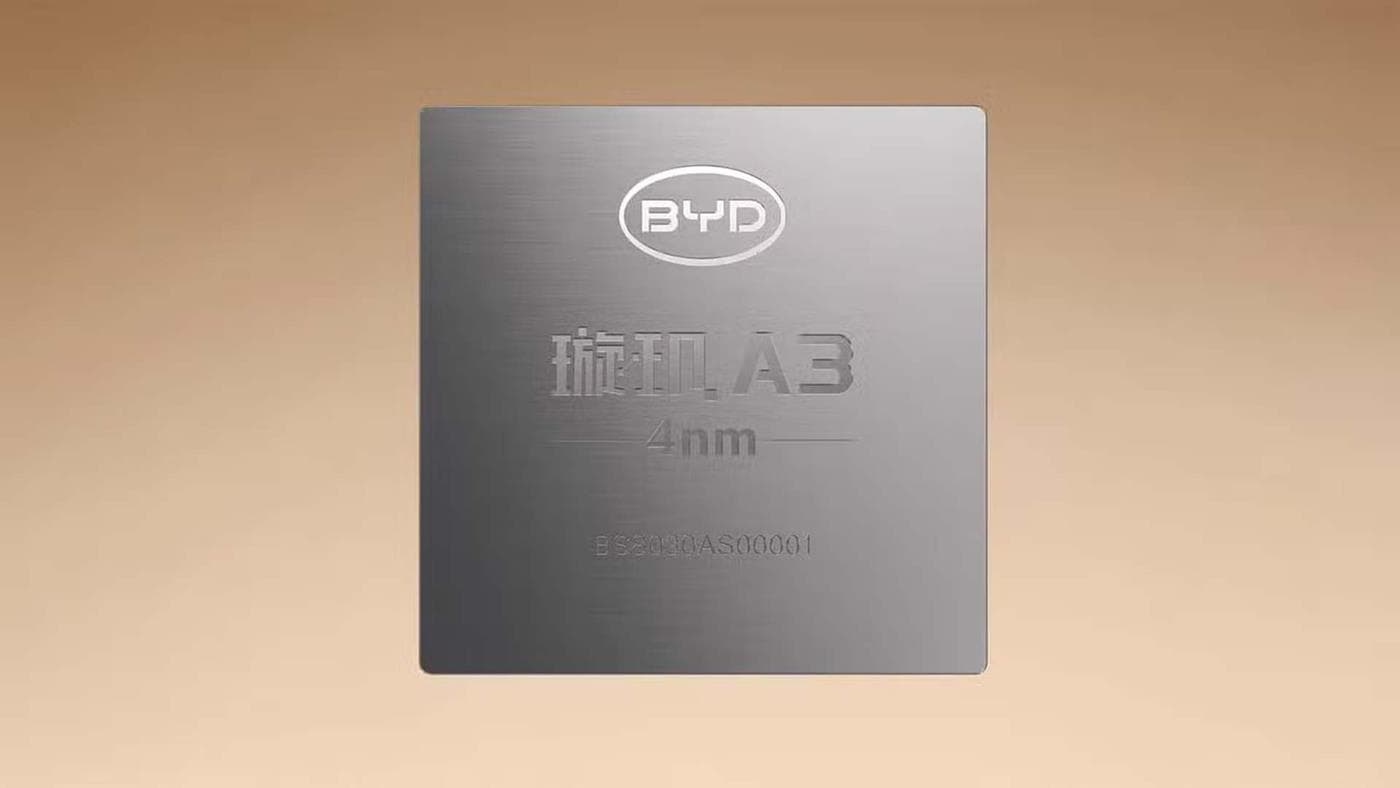
BYD has officially launched the Xuanji A3, a 4nm autonomous driving chip developed entirely in-house. The company claims this is China's first domestically produced chip of its kind, marking a significant milestone for the country's automotive semiconductor industry.
The Xuanji A3 is designed to support L3 and L4 levels of autonomous driving, offering high processing power for complex driving tasks. BYD stated that the chip has already entered mass production, though specific volume figures were not disclosed.
BYD developed the chip through its subsidiary, BYD Semiconductor, leveraging advanced manufacturing processes. The 4nm node allows for greater transistor density and energy efficiency compared to previous-generation chips.
The chip integrates multiple processing units, including a neural processing unit (NPU) for AI tasks, a graphics processing unit (GPU) for image processing, and a central processing unit (CPU) for general computing. This architecture enables real-time data processing from cameras, radar, and lidar sensors.
BYD plans to deploy the Xuanji A3 in its upcoming vehicle models, starting with high-end electric vehicles. The company emphasized that the chip meets stringent automotive safety and reliability standards.
Industry analysts view this development as a strategic move to reduce reliance on foreign chip suppliers, especially amid ongoing trade tensions. BYD joins other Chinese automakers in pursuing vertical integration of key technologies.
The Xuanji A3 is expected to compete with chips from Nvidia and Mobileye, which currently dominate the autonomous driving market. BYD has not disclosed pricing or specific performance benchmarks yet.
BYD confirmed that the chip is now in mass production and will be integrated into vehicles rolling off assembly lines later this year. The company aims to achieve full self-driving capabilities in its vehicles by 2025.

Dell Launches New XPS 13 with Competitive Pricing to Challenge MacBook Air
Dell has unveiled a new version of its flagship XPS 13 laptop, offering premium features at a more affordable price point to compete with Apple's MacBook Air.
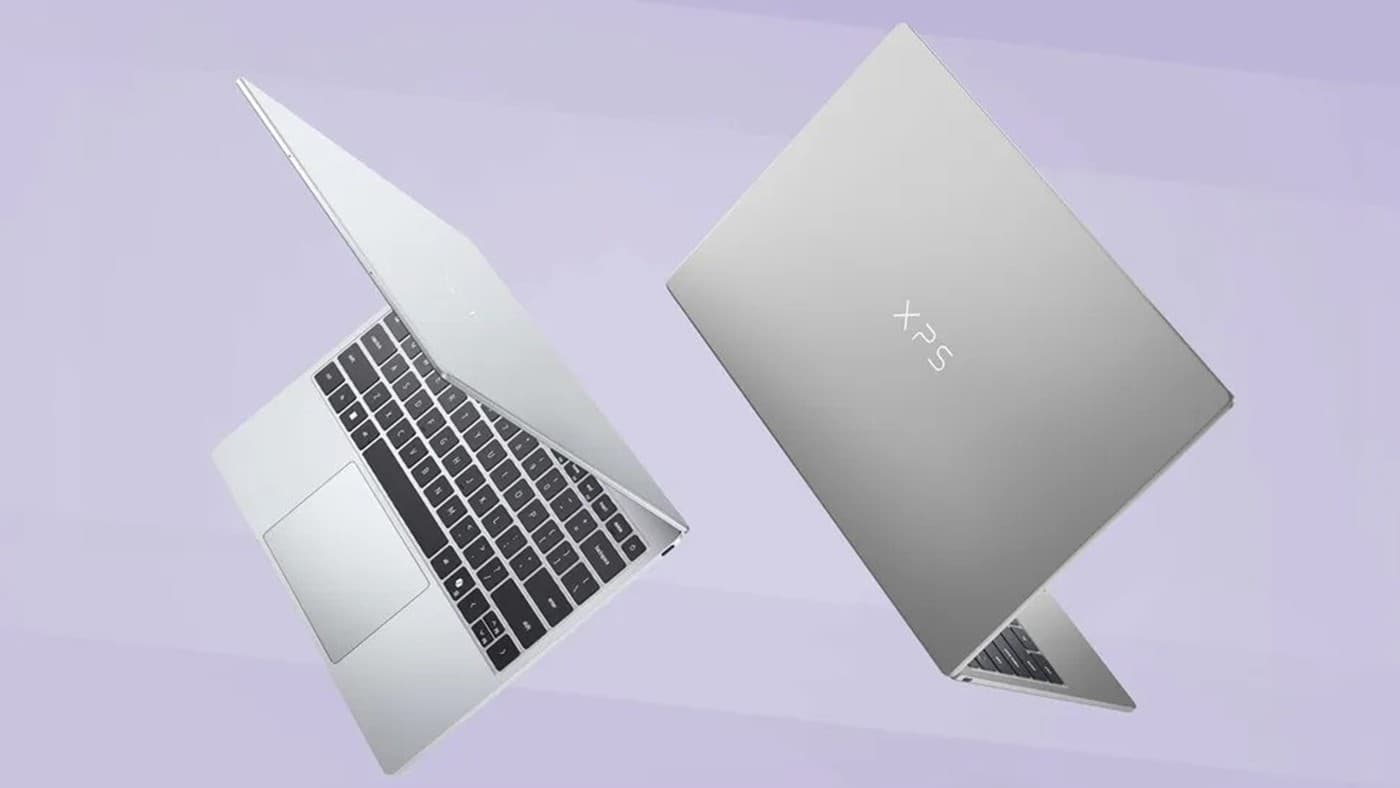
Dell has introduced a refreshed iteration of its popular XPS 13 laptop, positioning it as a direct competitor to Apple's MacBook Air. The new model retains the premium design and build quality of its predecessors while arriving at a lower starting price. The company aims to attract users seeking high-end performance without the flagship price tag.
The latest XPS 13 features Intel's 13th Gen Core processors, up to 16GB of LPDDR5 RAM, and up to 1TB of PCIe Gen 4 SSD storage. The display options include a 13.4-inch Full HD+ or 4K+ InfinityEdge panel with a 16:10 aspect ratio, offering slim bezels and a 92.9% screen-to-body ratio. The laptop also includes Intel Iris Xe graphics for integrated GPU performance.
Dell has equipped the new XPS 13 with a redesigned thermal system featuring dual fans and dual heat pipes to manage heat dissipation. The device supports Wi-Fi 6E and Bluetooth 5.2 for wireless connectivity. Port selection includes two Thunderbolt 4 USB-C ports, a microSD card reader, and a 3.5mm headphone jack.
The laptop measures 11.6mm thick and weighs 1.17kg, making it highly portable. The battery capacity is 52Wh, which Dell claims can deliver up to 12 hours of video playback. The device also supports ExpressCharge, reaching 80% charge in about an hour.
Dell has priced the new XPS 13 starting at $999, undercutting the MacBook Air's $1,099 starting price. The company is offering configurations up to $1,999 for the highest-end model with 4K display and 1TB storage. The laptop is available for pre-order starting today on Dell's official website.
Shipping is scheduled to begin on March 15, 2024, in the United States, with global availability expected in the following weeks. The new XPS 13 comes in two color options: Platinum Silver with a black carbon fiber palm rest and Frost with an Arctic white woven glass fiber palm rest.
Dell's move to lower the entry price of its flagship XPS line reflects a broader strategy to capture market share in the premium ultrabook segment. The company stated that the new XPS 13 delivers "uncompromised performance and design at a more accessible price point."