One in five US jobs faces high risk of AI automation, OpenAI finds
OpenAI's research indicates that approximately 20% of U.S. jobs are highly vulnerable to automation by AI systems. The findings highlight potential economic disruptions and the need for workforce adaptation.

OpenAI has released a study estimating that one in five jobs in the United States is at high risk of being automated by artificial intelligence. The research, conducted by the company behind ChatGPT, analyzed occupational data to assess exposure to AI-driven automation. The findings suggest significant labor market shifts could occur as AI capabilities expand.
The study evaluated over 1,000 occupations using criteria such as task overlap with AI systems and potential for substitution. Jobs in administrative support, data processing, and routine analytical roles were identified as most susceptible. Occupations requiring high levels of human interaction, creativity, or physical dexterity were deemed less vulnerable.
OpenAI's analysis draws on data from the U.S. Bureau of Labor Statistics and its own AI models. The company noted that automation risks are not evenly distributed across industries or income levels. Lower-wage jobs face a higher probability of being automated, while higher-wage roles involving complex decision-making are relatively safer.
The report emphasizes that AI could also augment many jobs rather than fully replace them. In some cases, AI tools may enhance productivity by handling repetitive tasks, allowing workers to focus on higher-value activities. However, the transition may require reskilling and policy interventions to support displaced workers.
Economic implications include potential wage stagnation and increased inequality if automation disproportionately affects certain groups. OpenAI called for proactive measures such as education reforms, social safety nets, and incentives for job creation in AI-resistant sectors. The company acknowledged that its findings are preliminary and subject to change as AI evolves.
OpenAI's research aligns with broader studies from institutions like McKinsey and the World Economic Forum, which have projected significant job displacement by AI. The pace of automation adoption will depend on factors including regulatory frameworks, technological advancements, and public acceptance.
The company plans to update its analysis as new data emerges and AI systems improve. OpenAI stressed the importance of transparent research to inform policy decisions and public discourse. The study is part of ongoing efforts to understand AI's societal impacts and guide responsible development.
OpenAI's findings were published on its website and are available for public review. The company encourages stakeholders to engage with the data and contribute to discussions on managing AI-driven economic transitions.
Google AI Overviews Fails to Generate Summary for 'Disregard' Search
Google's AI Overviews feature is malfunctioning when users search for the word 'disregard', displaying a single-line response instead of an AI-generated summary. The issue appears to be triggered by the word itself, causing the AI to skip its usual summarization.

Google's AI Overviews feature is encountering a peculiar glitch. When users search for the word 'disregard', the search results show a single-line response instead of the typical AI-generated summary. The issue was first reported by users on social media platforms, who noticed that the AI overview fails to produce its usual paragraph-length answer for this specific query.
The problem appears to be triggered by the word 'disregard' itself. When entered as a search term, Google's AI system seems to interpret it as a command to ignore or skip the AI-generated overview. Instead of providing a summary, the search results display a brief, one-line response that often reads 'Disregard' or a similar short phrase.
Google has acknowledged the issue, stating that the AI model is designed to follow user instructions, and the word 'disregard' is being treated as a directive to not generate an overview. The company is working on a fix to prevent the AI from misinterpreting common words as commands.
This glitch highlights the challenges of training AI models to understand context and intent. While the AI is programmed to respond to certain keywords, it sometimes fails to distinguish between a search query and a command. Google's AI Overviews, which launched earlier this year, aims to provide concise summaries for search queries, but this incident shows that the system still has limitations.
The issue is not widespread and only affects searches for the word 'disregard' and possibly similar terms. Users searching for other words or phrases do not experience the same problem. Google has not disclosed how many users have been affected or when the fix will be implemented.
Google's AI Overviews feature is available in select regions and languages, including the United States and English. The company has been gradually expanding the feature to more countries and languages since its launch. The 'disregard' glitch is expected to be resolved in a future update.
In a statement, Google said, 'We are aware of an issue where the AI Overviews feature does not generate a summary for the search term 'disregard'. Our team is working on a solution to ensure the AI correctly interprets search queries. We apologize for any inconvenience.' The company did not provide a specific timeline for the fix.
As of now, users searching for 'disregard' on Google will continue to see the single-line response instead of an AI-generated summary. Google advises users to be patient while the issue is being addressed.

Meta repurposes internal workflows as AI post-training lab
Meta has converted its internal processes into an AI post-training laboratory. The move aims to improve ad efficiency and revenue, though execution risks may limit genuine model advancements.
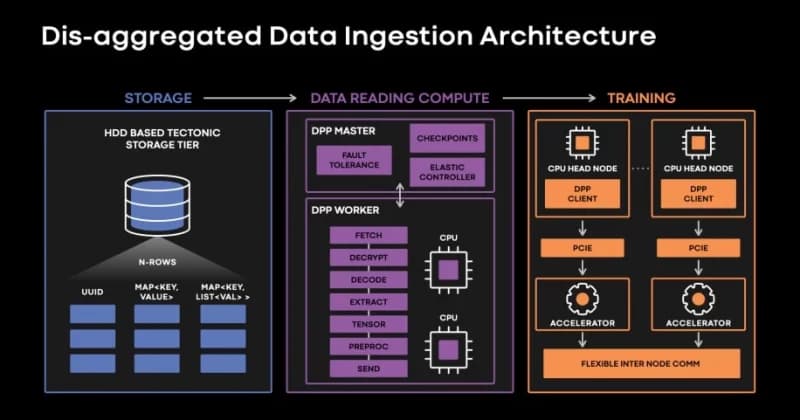
Meta announced it has transformed its internal workflows into a dedicated AI post-training lab. The initiative is designed to refine the company's artificial intelligence models using real-world operational data. By leveraging internal processes, Meta seeks to enhance the performance of its AI systems without relying solely on external datasets.
The post-training lab focuses on fine-tuning AI models after their initial training phase. This approach allows Meta to adjust algorithms based on actual usage patterns and business needs. The company believes this method can lead to more efficient ad targeting and increased revenue generation.
However, analysts caution that the strategy carries execution risks. Relying on internal processes may introduce biases or limit the diversity of training data. If not managed carefully, the lab could produce incremental improvements rather than substantial leaps in AI capability.
Meta's AI post-training efforts are part of a broader push to integrate artificial intelligence across its platforms. The company has invested heavily in AI research and infrastructure, aiming to stay competitive in the rapidly evolving tech landscape. The new lab represents a shift toward using proprietary data for model refinement.
The lab will initially focus on advertising-related AI models, given their direct impact on Meta's revenue. By optimizing these models through post-training, Meta hopes to deliver more relevant ads to users and improve return on investment for advertisers.
Meta has not disclosed specific timelines or performance targets for the lab. The company stated that the initiative is in its early stages and will evolve based on results. Further details are expected in upcoming earnings calls or product announcements.
The announcement comes as Meta faces increasing scrutiny over its data practices and AI ethics. The use of internal processes for AI training raises questions about transparency and potential biases. Meta has emphasized that it will adhere to its responsible AI principles throughout the lab's operations.
Meta's AI post-training lab is now operational, with the company monitoring outcomes closely. The success of the initiative will depend on balancing efficiency gains with robust model improvements.

Hark Secures $700M Series A for Universal AI Interface Development
Hark raised $700 million in Series A funding to develop a universal AI interface. The company plans to release multimodal models this summer and later launch dedicated hardware.

Hark has closed a $700 million Series A funding round, the company announced Tuesday. The investment will support development of what Hark describes as a universal artificial intelligence interface designed to work across existing products and services. The round is one of the largest early-stage financings in the AI sector this year.
The company expects to release its first multimodal models this summer. These models will underpin a personal AI platform that integrates with third-party applications and services without requiring custom integrations. Hark has not disclosed specific technical details about the architecture or training data for these models.
Following the model release, Hark plans to introduce hardware devices built specifically for its AI systems. The company has not provided a timeline for hardware availability or specifications. The devices are expected to be designed to optimize the performance of Hark's AI interface.
Hark has operated in stealth mode since its founding, with limited public information about its technology or team. The company has not named its CEO or founding team members. The Series A round was led by several undisclosed institutional investors, with participation from existing backers.
The funding will be allocated toward research and development, talent acquisition, and infrastructure scaling. Hark aims to build a platform that can serve as a universal layer between users and their digital tools, reducing friction in how people interact with technology.
Industry analysts note that the $700 million raise is significant for a company at the Series A stage, reflecting investor confidence in Hark's vision. The company faces competition from other AI interface startups and large tech firms developing similar capabilities.
Hark has not announced a specific release date for its multimodal models beyond a summer 2025 window. The company stated that it will share more details about its technology and roadmap in the coming months. Pricing for the platform and hardware has not been disclosed.

Spotify introduces AI-generated podcast briefs and Q&A features
Spotify has launched AI-powered features for podcasts, including daily or weekly briefing generation based on user prompts and an interactive Q&A function. The tools aim to enhance listener engagement and content discovery.
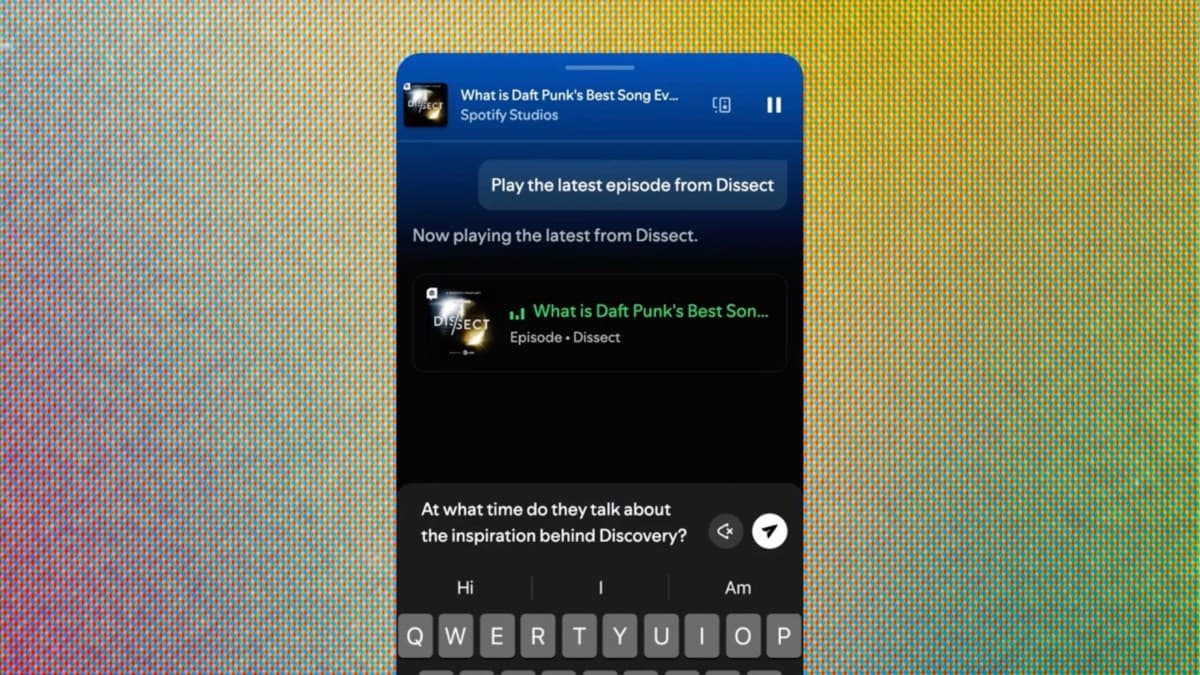
Spotify announced new artificial intelligence features for its podcast platform on Tuesday. The tools allow users to generate personalized daily or weekly briefs by entering prompts. The company also introduced an interactive Q&A capability that lets listeners ask questions about podcast episodes.
The briefing feature uses AI to summarize podcast content based on user-specified topics or interests. Listeners can set preferences for the type of news or information they want to receive. The system then compiles relevant segments from available podcasts into a concise audio summary.
Spotify's Q&A tool enables listeners to submit questions about a podcast episode during playback. The AI analyzes the episode's transcript and provides spoken answers in real time. This feature is designed to deepen understanding and engagement with podcast content.
Both features rely on Spotify's large language models and natural language processing technology. The company has been investing heavily in AI across its platform, including personalized playlists and voice-controlled search. These podcast tools represent the latest expansion of that strategy.
The briefing generation is available for both daily and weekly formats. Users can customize the length and focus of the briefs. The Q&A feature currently supports English-language podcasts, with additional languages planned for future updates.
Spotify said the features are rolling out gradually to users on iOS and Android. The briefing tool is accessible from the podcast library section, while the Q&A function appears during episode playback. Both features are free for all Spotify users, including those on the ad-supported tier.
The company emphasized that the AI tools are designed to complement human curation, not replace it. Podcast creators retain control over their content and can opt out of having their episodes included in AI-generated briefs. Spotify also noted that listener data from these features will not be used for advertising targeting without explicit consent.
These additions come as Spotify competes with other platforms like Apple Podcasts and Amazon Music for listener attention. The company reported that podcast consumption on its platform grew 40% year-over-year in the last quarter. The new AI features are expected to further drive engagement and discovery.
Spotify plans to expand the AI tools to additional languages and regions in the coming months. The company also hinted at future integrations with its music streaming service. For now, the features are available in select markets, with a global rollout expected by the end of the year.