Pope Francis warns of AI dangers, calls for stricter regulation
Pope Francis issued his first major manifesto on artificial intelligence, urging tighter oversight of the technology. He warned that AI risks cannot be left to the initiative of tech companies alone.
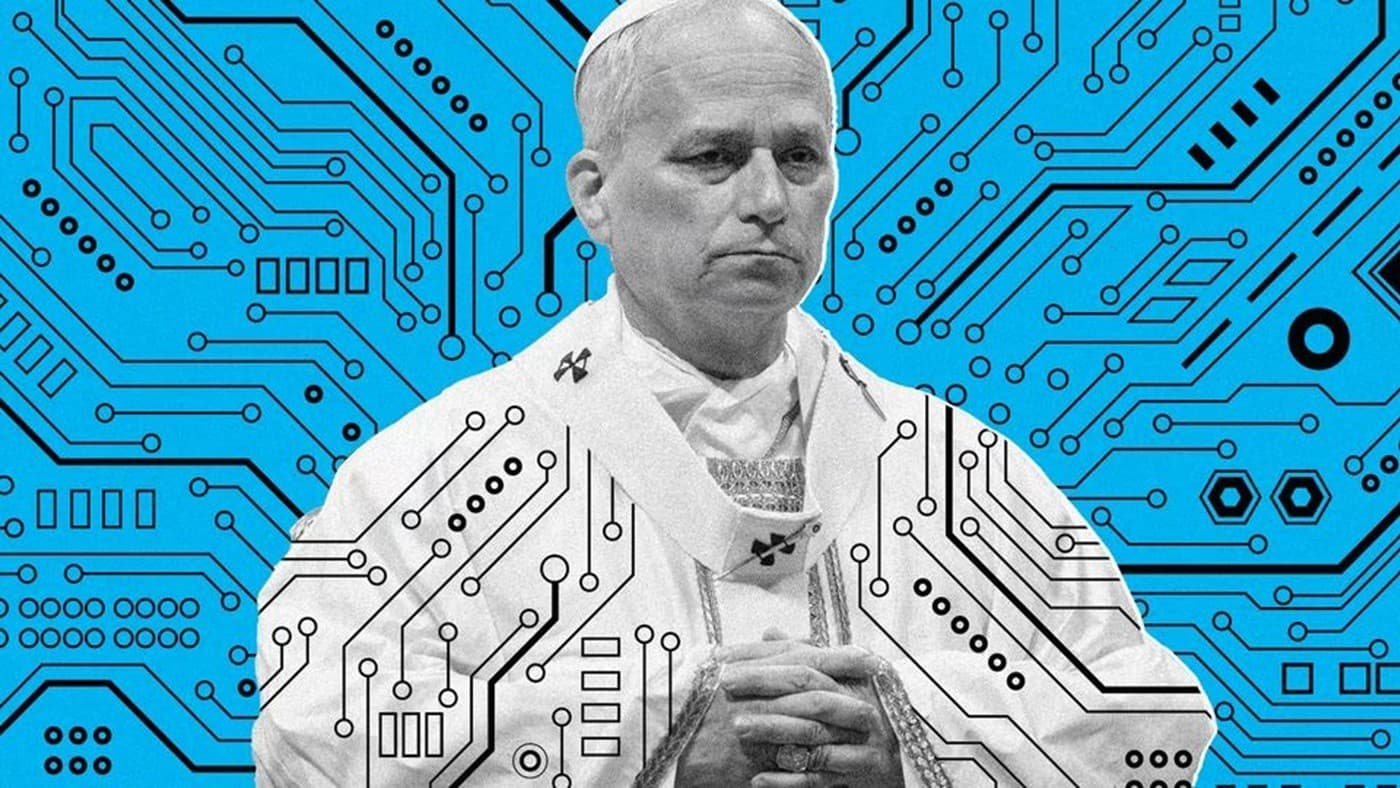
Pope Francis has joined the growing chorus of voices raising alarms about the dangers of artificial intelligence. In his first major manifesto on the subject, the pontiff called for stricter regulation of AI technologies.
The document, released by the Vatican, emphasizes that the risks posed by artificial intelligence cannot be left solely to the discretion of technology companies. The Pope argued that ethical boundaries must be established to prevent potential harm.
Francis highlighted concerns about AI's impact on human dignity, privacy, and social justice. He stressed that the development and deployment of AI systems should be guided by moral principles rather than market forces alone.
The manifesto calls for international cooperation to create binding regulations that ensure AI serves the common good. The Pope warned that without proper oversight, AI could exacerbate inequality and undermine human rights.
This intervention places the Vatican among a growing number of institutions and leaders demanding more robust governance of artificial intelligence. The Pope's message resonates with ongoing debates in global forums about AI safety and ethics.
The manifesto does not propose specific legislative measures but urges policymakers to prioritize human welfare over technological advancement. It also calls on tech companies to adopt responsible practices voluntarily.
Pope Francis's statement comes as governments worldwide grapple with how to regulate rapidly evolving AI technologies. The Vatican's position adds moral weight to calls for action, though its direct influence on policy remains limited.
The document concludes by emphasizing that the future of AI must be shaped by ethical considerations, not just commercial interests. The Pope's warning serves as a reminder of the profound societal implications of artificial intelligence.
Pope Leo XIV calls for AI disarmament in first encyclical, citing Gandalf
Pope Leo XIV released his first encyclical, 'Magnifica Humanitas,' calling for the disarmament of AI to serve the common good. The document critiques autonomous weapons, data colonialism, and the hoarding of digital assets.

Pope Leo XIV issued his first encyclical today in Rome, titled “Magnifica Humanitas” (“Magnificent Humanity”), accompanied by Anthropic co-founder Dario Amodei. The 40,000-word document calls for artificial intelligence to be “disarmed” in service of the common good. The Pope acknowledged the strength of the term, stating he chose the language of “disarmament” deliberately “because this moment needs words capable of attracting attention, awakening consciences, and indicating paths forward for humanity.”
The encyclical argues that AI must be “freed from logics that turn it into an instrument of domination, exclusion, and death.” It contains uncompromising critiques of AI-powered autonomous weapons, neo-colonial attitudes toward data collection, and the hoarding of “new forms of property, such as patents, algorithms, digital platforms, technological infrastructure, and data.” The document frames these issues as moral imperatives rather than mere policy debates.
Leo XIV invoked J.R.R. Tolkien’s character Gandalf, drawing a parallel between the wizard’s warning about the One Ring and the dangers of unchecked technological power. The Pope urged leaders to resist the temptation to use AI for control or oppression, echoing Gandalf’s admonition not to wield the Ring’s power for domination. This literary reference underscores the encyclical’s call for ethical restraint in AI development.
The encyclical also addresses the concentration of AI capabilities among a few powerful corporations and nations. It warns that without deliberate action, AI could exacerbate inequality and create new forms of colonialism, particularly through data extraction from developing countries. The Pope called for international cooperation to ensure AI benefits all of humanity, not just the wealthy and powerful.
Amodei, whose company Anthropic develops the Claude AI assistant, attended the release and expressed support for the encyclical’s themes. He noted that the document aligns with Anthropic’s mission to build AI systems that are safe and beneficial. The presence of a leading AI executive at a papal encyclical signals growing engagement between religious institutions and the tech industry on ethical AI.
The document does not propose specific regulations but sets forth principles for AI governance. It emphasizes human dignity, solidarity, and the common good as guiding values. The Pope called on governments, businesses, and civil society to work together to ensure AI serves humanity rather than undermining it.
“Magnifica Humanitas” is the first encyclical of Pope Leo XIV’s pontificate, marking a significant statement on technology and ethics. The Vatican plans to distribute the encyclical widely and host discussions with policymakers and tech leaders in the coming months. The document is available in multiple languages on the Vatican’s website.
The encyclical concludes with a call to action, urging all people of goodwill to “disarm” AI by redirecting its development toward peace and justice. The Pope wrote, “Let us not be afraid to use strong words for strong times. The future of humanity depends on the choices we make today.”

Anthropic's Claude Mythos Detects Over 10,000 Security Vulnerabilities in One Month
Anthropic announced that its Claude Mythos Preview model identified more than 10,000 critical security vulnerabilities within a month. The AI system autonomously discovered flaws across various software platforms.

Anthropic revealed on Tuesday that its Claude Mythos Preview model has detected over 10,000 critical security vulnerabilities in a single month. The announcement marks a significant milestone for the company's AI-driven cybersecurity efforts.
The Claude Mythos model operates by scanning source code and system architectures to identify potential security weaknesses. It uses advanced pattern recognition to find flaws that traditional tools might miss.
Anthropic stated that the vulnerabilities were discovered across a range of software platforms, including operating systems, web applications, and cloud infrastructure. The company emphasized that all findings were responsibly disclosed to the respective vendors.
The AI model's ability to autonomously identify such a high volume of critical flaws demonstrates its potential to augment human security researchers. Anthropic noted that the system can analyze codebases at scale, reducing the time needed for manual audits.
Claude Mythos is part of Anthropic's broader suite of AI safety tools. The company has been developing models focused on cybersecurity, aiming to help organizations proactively address threats before they are exploited.
Anthropic did not disclose the specific vulnerabilities found or the vendors involved, citing responsible disclosure protocols. The company plans to continue refining the model and expanding its capabilities.
The announcement comes amid growing concerns about software supply chain security and the increasing sophistication of cyberattacks. AI-driven vulnerability detection is seen as a promising approach to keep pace with evolving threats.
Anthropic confirmed that Claude Mythos Preview is currently available to select enterprise customers. The company expects to roll out broader access in the coming months, with pricing details to be announced at a later date.

Google Navigates AI Security Challenges in Real-Time Transition
Google is addressing AI security issues as the technology evolves rapidly. The company acknowledges that everyone, including itself, is learning to manage AI risks in real time.

Google is confronting the complexities of AI security as the technology undergoes a rapid transition. The company recognizes that the entire industry, including its own teams, is navigating these challenges without a predefined roadmap. This acknowledgment comes amid growing concerns about the safety and ethical implications of advanced AI systems.
In a recent statement, Google highlighted that AI security is not a static problem but one that evolves alongside the technology itself. The company emphasized that there are no established best practices for securing AI systems, as the field is still in its infancy. This reality forces organizations to adapt continuously as new vulnerabilities and threats emerge.
The tech giant pointed out that AI models, particularly large language models, introduce unique security risks that differ from traditional software. These include issues like prompt injection, data poisoning, and model inversion attacks. Google stressed that addressing these threats requires a proactive and iterative approach, rather than relying on legacy security frameworks.
Google's security teams are working on developing tools and methodologies to detect and mitigate AI-specific vulnerabilities. The company is also collaborating with external researchers and industry partners to share insights and establish common standards. However, Google cautioned that no single entity has all the answers, and the collective effort is essential.
The transition period for AI security is expected to last for the foreseeable future, as the technology continues to advance. Google urged organizations to prioritize security from the outset when deploying AI systems, rather than treating it as an afterthought. The company also recommended implementing robust monitoring and incident response plans tailored to AI workloads.
Google's own AI products, such as Bard and Search Generative Experience, are subject to ongoing security evaluations. The company has implemented safeguards like content filters and usage limits to reduce risks. Nevertheless, Google acknowledged that these measures are not foolproof and require constant refinement.
Industry observers note that Google's candid assessment reflects a broader shift in how tech companies approach AI security. Rather than downplaying risks, many are now openly discussing the challenges and uncertainties. This transparency is seen as a positive step toward building trust and fostering collaboration.
Google concluded by stating that the journey toward secure AI is a marathon, not a sprint. The company remains committed to investing in research and development to stay ahead of emerging threats. As the landscape evolves, Google plans to share its learnings publicly to help the entire ecosystem navigate this uncharted territory.

Mercer Survey: 99% of CEOs Expect AI-Driven Layoffs
A new Mercer report reveals that 99% of CEOs anticipate workforce reductions due to artificial intelligence. The survey highlights the accelerating impact of AI on corporate restructuring.

A sweeping majority of chief executives are bracing for job cuts tied to artificial intelligence, according to a recent report from human resources consultancy Mercer. The survey found that 99% of CEOs expect their organizations to reduce headcount as AI tools take over tasks previously handled by humans. The findings underscore a growing conviction among corporate leaders that AI will fundamentally reshape workforce structures.
Mercer’s report, based on responses from over 800 CEOs globally, indicates that the shift is not hypothetical. Many executives are already implementing AI-driven automation in areas such as customer service, data analysis, and administrative work. The survey suggests that the pace of adoption has accelerated over the past year, with companies prioritizing efficiency gains over maintaining current staffing levels.
The anticipated layoffs are not limited to any single sector. CEOs across industries including finance, technology, healthcare, and manufacturing reported similar expectations. However, the report notes that roles involving repetitive tasks or routine decision-making are seen as most vulnerable. In contrast, positions requiring creativity, strategic thinking, or emotional intelligence are considered less likely to be replaced.
Mercer’s analysis also highlights a paradox: while CEOs foresee job losses, many also plan to hire for new AI-related roles. Positions in AI development, data science, and machine learning oversight are expected to grow. Yet the net effect, according to the survey, will be a reduction in overall employment as automation eliminates more jobs than it creates in the near term.
The report comes amid broader debates about AI’s impact on labor markets. Some economists argue that AI will ultimately boost productivity and create new industries, while others warn of prolonged displacement. Mercer’s data leans toward the latter view, at least for the next few years. The consultancy advises companies to invest in reskilling programs to help workers transition into new roles.
Employee sentiment, however, appears mixed. The survey found that while many workers are anxious about job security, a significant portion see AI as a tool to enhance their work rather than replace it. Employers are encouraged to communicate transparently about automation plans to maintain trust and morale.
Mercer’s findings align with other recent studies. A McKinsey report earlier this year estimated that up to 30% of work activities could be automated by 2030. Similarly, Goldman Sachs projected that AI could replace the equivalent of 300 million full-time jobs globally. The Mercer survey adds a real-time perspective from the C-suite, confirming that these predictions are shaping corporate strategy today.
The report does not specify a timeline for the expected layoffs, but it notes that many companies are already restructuring. CEOs cited competitive pressure and shareholder expectations as key drivers for adopting AI quickly. The message from the corner office is clear: AI is not a future possibility but a present reality that will reshape employment.
Mercer’s full report, titled “AI and the Workforce: CEO Perspectives,” was released on March 15, 2025. It is available on the company’s website. The consultancy plans to update the survey annually to track evolving attitudes toward AI and employment.