Qualcomm Unveils Snapdragon C Chip for Budget Laptops
Qualcomm announced the Snapdragon C processor, designed for affordable laptops. The first device featuring the chip is the Acer Aspire Go 15.
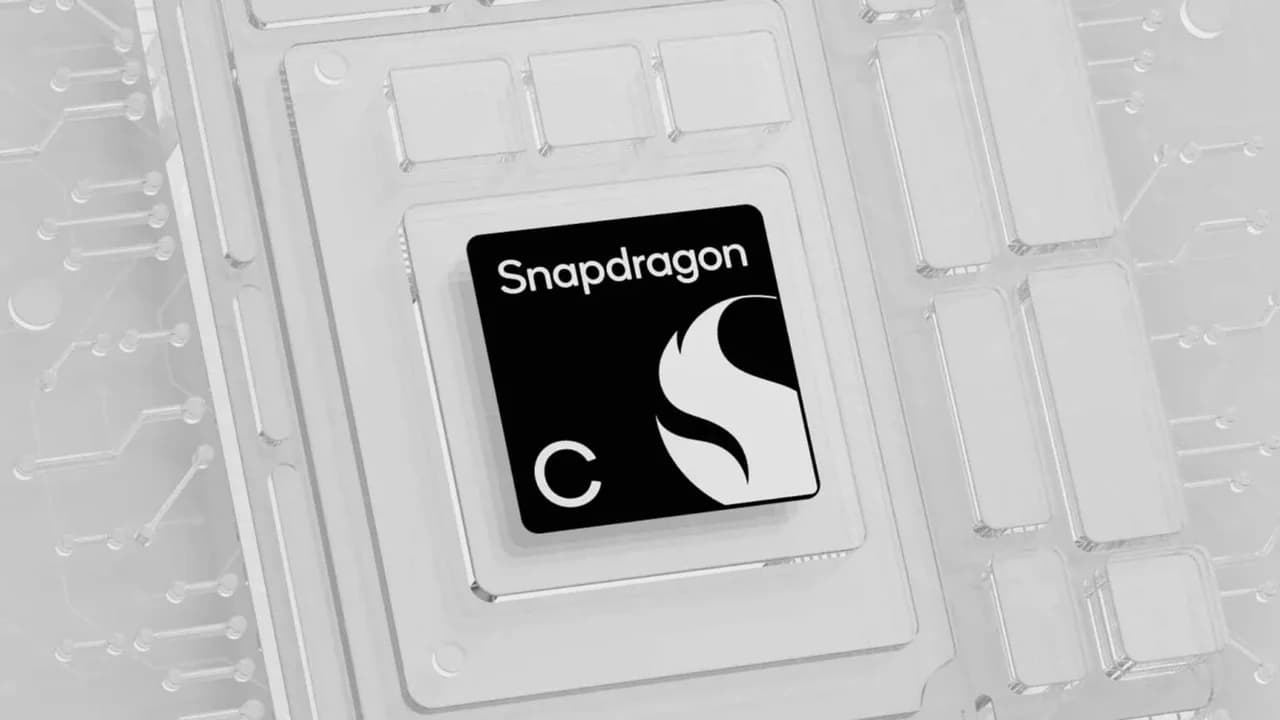
Qualcomm introduced the Snapdragon C processor, a new chip aimed at budget laptops. The announcement positions the chip as a cost-effective solution for entry-level portable computers. The first laptop to feature the Snapdragon C is the Acer Aspire Go 15, which targets users seeking basic computing performance at a lower price point.
The Snapdragon C is built on an efficient architecture, though Qualcomm did not disclose specific manufacturing process details. The chip integrates a CPU, GPU, and AI engine, enabling tasks such as web browsing, document editing, and video playback. Connectivity options include Wi-Fi and Bluetooth, with support for 4G LTE in select models.
Acer’s Aspire Go 15 comes with a 15.6-inch display, 4GB or 8GB of RAM, and storage options up to 256GB. The laptop runs Windows 11 and is designed for students and casual users. Pricing starts at $299, making it one of the more affordable Windows laptops on the market.
Qualcomm emphasized the chip’s power efficiency, claiming it can deliver all-day battery life. The Snapdragon C also supports fast charging, allowing users to quickly top up the battery. The processor is part of Qualcomm’s broader strategy to expand beyond smartphones into the PC market.
The Acer Aspire Go 15 with Snapdragon C will be available in select regions starting in April 2025. Qualcomm stated that additional laptop manufacturers are expected to adopt the chip in the coming months. The company aims to compete with Intel and AMD in the low-cost segment.
Pricing for the Snapdragon C itself was not disclosed, but Qualcomm indicated that laptops using the chip would typically cost between $250 and $400. The chip supports up to 8GB of LPDDR5 RAM and eMMC or UFS storage. Display output is limited to 1080p resolution.
Qualcomm’s move into budget PCs follows its earlier Snapdragon 8cx and 7c series, which targeted higher-end and mid-range devices. The Snapdragon C represents a further push into the entry-level market, where ARM-based processors have yet to gain significant traction. The chip’s success will depend on consumer adoption and software compatibility.
The Acer Aspire Go 15 is now listed on Acer’s website with a starting price of $299. Shipments are expected to begin in April 2025. Qualcomm confirmed that the Snapdragon C will also power devices from other OEMs later this year.
Imec produces world's first quantum dot qubit device using High-NA EUV lithography
Belgium-based research lab Imec has fabricated the world's first quantum dot qubit device using next-generation High-NA EUV lithography. The achievement marks a milestone in leveraging advanced semiconductor manufacturing for quantum computing.

Imec, a Belgian research laboratory, announced it has successfully produced the world's first quantum dot qubit device using High-NA extreme ultraviolet (EUV) lithography. The device was fabricated at Imec's state-of-the-art cleanroom facility in Leuven, Belgium.
High-NA EUV lithography represents the latest advancement in semiconductor manufacturing, offering higher resolution and precision compared to current EUV systems. Imec's achievement demonstrates the potential of this technology for creating quantum computing components.
The quantum dot qubit device was built using a 300mm silicon wafer platform, leveraging Imec's expertise in CMOS-compatible processes. The company said the device exhibits stable qubit operation at cryogenic temperatures.
Quantum dot qubits are a leading candidate for building scalable quantum processors. They confine single electrons in nanoscale structures, with their spin states representing quantum information. Imec's approach uses industry-standard fabrication techniques to create these structures.
Imec collaborated with ASML, the Dutch lithography equipment maker, to access the High-NA EUV tool. The system, which uses a 0.55 numerical aperture lens, enables patterning of features below 8nm critical dimensions.
The research lab noted that this breakthrough could accelerate the path toward large-scale quantum computers by leveraging existing semiconductor manufacturing infrastructure. Imec's quantum computing program aims to develop a full-stack quantum system.
Imec plans to present detailed results at the upcoming IEEE International Electron Devices Meeting (IEDM) in December 2023. The company is also working on further optimizing the qubit device performance and yield.
"This is a significant step in demonstrating that advanced lithography can be used for quantum device fabrication," said an Imec spokesperson. The organization continues to explore integration of quantum and classical components on a single chip.
Imec's quantum dot qubit device is currently in the research phase, with no commercial release timeline announced. The lab is seeking partnerships with quantum computing companies to develop the technology further.

Major Exchanges Develop Futures Contracts for AI Token Trading
Large exchanges are designing derivative products around AI tokens, which are increasingly viewed as a raw material input rather than a computational output. These futures contracts will allow trading similar to commodities like gold and oil.

Major financial exchanges are moving to create futures contracts for AI tokens, signaling a shift in how these digital assets are perceived. Traditionally seen as outputs of computational processes, AI tokens are now being treated as raw material inputs, akin to electricity or bandwidth. This reclassification opens the door for derivative trading products that mirror commodity markets.
The development comes as AI tokens gain traction in both technology and finance sectors. Exchanges are designing these derivative products to meet growing demand from institutional investors seeking exposure to the AI ecosystem. The futures contracts will enable traders to speculate on the future price of AI tokens, providing a new asset class for portfolio diversification.
AI tokens represent a unique intersection of blockchain technology and artificial intelligence. They are often used to access AI services, pay for computational resources, or participate in decentralized AI networks. By treating them as commodities, exchanges acknowledge their role as essential inputs in the AI supply chain, similar to how oil fuels transportation or gold serves as a store of value.
The move to list AI token futures is expected to bring more liquidity and price discovery to the market. It also introduces standardized contracts that can be traded on regulated platforms, attracting hedge funds and asset managers who previously avoided the space due to lack of infrastructure. This could lead to increased volatility in the short term but greater stability over time.
Several unnamed exchanges are reportedly in advanced stages of developing these products, with some aiming for launch within the next quarter. The contracts are likely to be cash-settled, avoiding the complexities of physical delivery. Regulatory approval will be a key hurdle, as authorities scrutinize the classification of AI tokens and their underlying assets.
The emergence of AI token futures reflects a broader trend of financialization of digital assets beyond cryptocurrencies. It also highlights the growing economic significance of AI, as businesses and governments invest heavily in the technology. The futures market could provide a benchmark for pricing AI resources, much like the Brent crude index does for oil.
Trading volumes in AI tokens have surged in recent months, driven by interest in generative AI and decentralized computing platforms. The introduction of futures is likely to accelerate this trend, attracting speculative capital and potentially leading to price swings. However, it also offers a hedging tool for companies that rely on AI tokens for their operations.
Exchanges have not disclosed specific launch dates or contract specifications, but sources indicate that the products will target both retail and institutional traders. The contracts may include monthly and quarterly expiries, with settlement based on an index of spot prices from major exchanges. Fees and margin requirements are still being finalized.
As the AI token market matures, the creation of futures contracts represents a significant milestone. It validates the asset class and provides a framework for risk management and investment. The success of these products will depend on regulatory clarity and market adoption, but the groundwork is being laid for AI tokens to become a staple in commodity trading. "We are seeing a paradigm shift where AI tokens are no longer just a niche digital asset but a fundamental resource," said an exchange executive involved in the development.

Elon Musk Contradicts Official Documents on Anthropic Data Center Lease
Elon Musk made statements about the duration of SpaceX's lease of the Colossus data center to Anthropic that contradict official documents. The discrepancy raises questions about the terms of the agreement between the two companies.

Elon Musk has publicly contradicted official documents regarding the lease of SpaceX's Colossus data center to Anthropic. The billionaire entrepreneur made statements about the lease duration that differ from what is recorded in official filings. The Colossus data center, owned by SpaceX, was leased to Anthropic, an artificial intelligence company. Musk's comments have created confusion about the actual terms of the agreement. The discrepancy between Musk's statements and the official documents has not been explained by either party. Anthropic has not commented on the matter. The lease of the Colossus data center is part of a broader partnership between SpaceX and Anthropic. The data center is used to support Anthropic's AI research and development. Musk's remarks were made during a public appearance, but he did not provide details on why his account differs from the documents. The official documents suggest a different timeline for the lease than what Musk described. It remains unclear which version is accurate. The situation highlights ongoing tensions between Musk's public statements and formal business records. SpaceX and Anthropic have not issued a joint statement to clarify the issue. The Colossus data center is one of the largest facilities of its kind, and its lease is a significant business deal. Musk's involvement with Anthropic has been a subject of interest given his own AI ventures. The contradiction may lead to further scrutiny of the agreement by regulators or investors. For now, the exact terms of the lease remain ambiguous.
Asana Acquires No-Code Agent-Builder StackAI for AI Workflow Tools
Asana has acquired StackAI, a no-code platform for building AI agents. The company plans to integrate StackAI's technology into its AI workflow tools.
Asana announced the acquisition of StackAI, a startup that provides a no-code platform for building AI agents. The deal was disclosed on Tuesday, though financial terms were not revealed.
StackAI's platform allows users to create AI agents without writing code, enabling automation of complex tasks. The technology will be folded into Asana's existing suite of AI-powered workflow tools.
Asana has been expanding its AI capabilities over the past year. The company launched Asana Intelligence in 2023, which includes features like smart suggestions and automated task assignments.
The acquisition of StackAI is expected to accelerate Asana's development of more sophisticated AI agents. These agents could handle multi-step workflows and integrate with other business applications.
Asana CEO Dustin Moskovitz said in a statement that the acquisition will help the company deliver on its vision of an AI-powered work management platform. He noted that StackAI's team will join Asana.
StackAI was founded in 2022 and had raised $2.5 million in seed funding. Its platform was used by companies to build custom AI assistants for customer support, data analysis, and other tasks.
The deal is expected to close in the coming weeks, subject to customary closing conditions. Asana did not provide a specific timeline for when StackAI's features would be integrated into its products.
Asana shares rose slightly in after-hours trading following the announcement. The company reported $171.5 million in revenue in its most recent quarter, up 14% year-over-year.