Snowflake signs $6B five-year deal with Amazon Web Services for AI chips
Snowflake has committed to a $6 billion, five-year agreement with Amazon Web Services to procure AI chips. The deal underscores Snowflake's reliance on AWS infrastructure for its data cloud platform.

Snowflake has entered into a significant five-year agreement with Amazon Web Services valued at $6 billion. The deal secures access to AWS's custom AI chips, including Trainium and Inferentia processors, for Snowflake's data cloud operations. This commitment marks one of the largest infrastructure deals in the data analytics sector.
The agreement provides Snowflake with dedicated capacity on AWS's custom silicon designed for machine learning training and inference. Snowflake plans to use these chips to power its core data platform and AI features, such as Cortex AI and Document AI. The deal ensures Snowflake can scale its compute resources to meet growing customer demand for AI workloads.
AWS's Trainium chips are optimized for training large language models, while Inferentia chips handle inference tasks. Snowflake will integrate these processors into its cloud infrastructure, replacing some reliance on Nvidia GPUs. The move signals a shift toward purpose-built AI hardware from cloud providers.
Snowflake CEO Sridhar Ramaswamy stated that the partnership with AWS allows the company to deliver high-performance AI capabilities at scale. He emphasized that the deal provides cost efficiency and flexibility for Snowflake's customers. The agreement also includes expanded use of AWS's networking and storage services.
This deal comes as Snowflake faces increasing competition from Databricks and other data platforms. By locking in long-term capacity with AWS, Snowflake aims to stabilize its infrastructure costs and accelerate AI product development. The company reported $2.8 billion in product revenue for fiscal 2024.
AWS CEO Matt Garman highlighted the collaboration as a testament to AWS's leadership in AI infrastructure. He noted that the custom chips offer better price-performance for AI workloads compared to general-purpose GPUs. The deal is expected to deepen the technical integration between Snowflake and AWS services.
The five-year term begins immediately, with Snowflake committing to a minimum spend of $6 billion over the period. The agreement includes provisions for Snowflake to access future generations of AWS AI chips. Financial terms beyond the minimum commitment were not disclosed.
Snowflake's stock rose 4% in after-hours trading following the announcement. The company stated that the deal aligns with its strategy to build a multi-cloud architecture while maintaining AWS as its primary cloud provider. The agreement is subject to customary closing conditions. Snowflake and AWS plan to jointly develop reference architectures for AI workloads. The deal is expected to close in the current fiscal quarter.
Roku OS Home Screen Gets Permanent Large Ad Space in Major Redesign
Roku has introduced the most significant update to its smart TV operating system in a decade, featuring a permanent large advertisement on the home screen. The new layout replaces the previous design where ads appeared only after navigation.

Roku has rolled out a major overhaul to its smart TV operating system, marking the most substantial update in ten years. The redesign introduces a permanent advertisement that occupies a large portion of the home screen's landing page. This change alters the user experience significantly, as ads were previously only visible after users began navigating the interface.
Before the update, the Roku OS home screen displayed a menu on the left side with categories such as "What to Watch," "Live," and "Search." The right side featured a row of tiles for "Recommended" content above several rows of tiles representing downloaded apps. When users started navigating, the menu would collapse, revealing a large ad on the right side of the screen.
With the new design, the ad space is now permanently visible on the home screen, even before any navigation occurs. This means users are immediately presented with an advertisement upon powering on their Roku device or smart TV. The ad occupies a significant portion of the screen, potentially reducing the space available for content recommendations and app tiles.
Roku has not disclosed specific details about the ad placement or whether users can customize or minimize the ad space. The company has been expanding its advertising business in recent years, and this update aligns with its strategy to increase ad revenue from its platform. Roku's OS powers millions of smart TVs and streaming devices worldwide.
The update is rolling out to Roku devices and Roku-powered smart TVs gradually. Users may see the new home screen design automatically as the update reaches their devices. Roku has not provided an option to revert to the previous layout, suggesting the new design is permanent.
Roku's move to embed a permanent ad on the home screen has drawn mixed reactions from users. Some appreciate the streamlined interface, while others express concern over the increased prominence of advertising. The company has not commented on potential user feedback or future adjustments to the ad placement.
The new Roku OS home screen is now available on select devices, with a broader rollout expected in the coming weeks. Roku has not specified whether the ad space will vary by region or device model. The company continues to emphasize its commitment to improving the user experience while monetizing its platform through advertising.

Nvidia to invest $150B in Taiwan, cementing its role as AI manufacturing hub
Nvidia CEO Jensen Huang announced a $150 billion annual investment in Taiwan to establish a new headquarters and reinforce the region's position as the center of AI manufacturing. The project is expected to break ground this year and become operational by 2030.
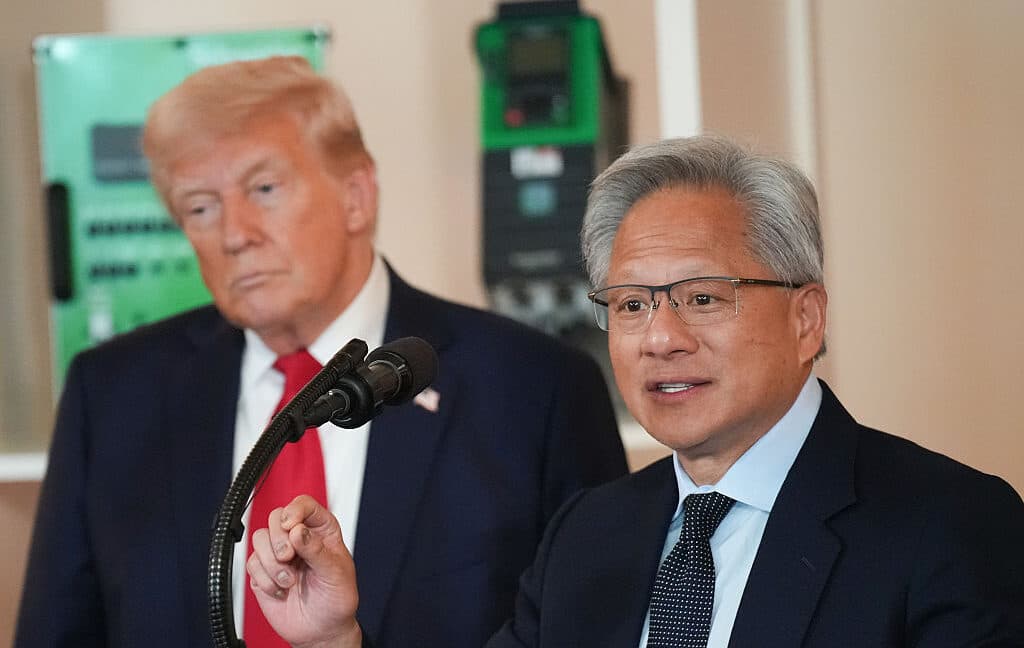
Nvidia CEO Jensen Huang declared Wednesday that the company will invest $150 billion annually to ensure Taiwan remains the epicenter of the AI industry. The announcement came during a press event where Huang emphasized Taiwan's irreplaceable role in chip production, packaging, and system assembly. "This is where the chips come, packaging comes, this is where the systems are made, this is where AI supercomputers were created," Huang said. He also highlighted the extensive network of partners Nvidia works with in Taiwan, calling it "incredible."
The substantial investment will fund a new Taiwan headquarters for Nvidia, a project expected to drive significant AI innovation. Huang stated that the partnership would cement Taiwan as "the world's tech manufacturing hub for a long time." The facility is slated to break ground this year and become operational by 2030, according to Nvidia's timeline.
This move underscores the ongoing reliance on Taiwan for advanced semiconductor manufacturing, despite geopolitical tensions and efforts by other countries, including the United States, to bolster domestic chip production. Nvidia's commitment signals that Taiwan's ecosystem remains unmatched for AI hardware production.
The investment comes as the U.S. government pushes to make America an AI hub through initiatives like the CHIPS Act. However, Nvidia's decision to deepen its roots in Taiwan suggests that the global supply chain for AI chips will continue to depend heavily on the island nation for the foreseeable future.
Huang's announcement also reflects the growing demand for AI infrastructure, as companies worldwide race to deploy generative AI and large language models. Nvidia's chips, such as the H100 and upcoming Blackwell series, are critical components in data centers and supercomputers.
The new headquarters will likely include research and development facilities, as well as manufacturing support operations. Nvidia already has a significant presence in Taiwan, working closely with partners like TSMC, the world's largest contract chipmaker.
Analysts note that the $150 billion annual figure is substantial, representing a significant portion of Nvidia's revenue. The company reported $60.9 billion in revenue for fiscal 2024, though its market capitalization has surged past $2 trillion amid the AI boom.
Nvidia's investment plan is subject to regulatory approvals and market conditions. The company expects the project to create thousands of jobs in Taiwan and further integrate its operations with local suppliers. Huang concluded the announcement by reaffirming Nvidia's long-term commitment to the region.

WhatsApp to Launch Incognito Chat for Private Meta AI Conversations
WhatsApp is introducing an Incognito Chat feature that ensures only the user can read messages exchanged with Meta AI. The feature aims to enhance privacy for AI interactions within the app.

WhatsApp announced a new privacy feature called Incognito Chat for conversations with Meta AI. The feature ensures that messages exchanged between users and the AI assistant remain private and inaccessible to others. This move comes as part of WhatsApp's broader effort to integrate AI while addressing user concerns about data security.
Incognito Chat will apply end-to-end encryption to all interactions with Meta AI, meaning no third party, including WhatsApp itself, can read the messages. The feature is designed to give users confidence that their private queries and conversations with the AI are protected. WhatsApp emphasized that this encryption is separate from standard chat encryption and is specifically tailored for AI interactions.
The feature will be optional, allowing users to choose between standard and incognito modes when chatting with Meta AI. In incognito mode, WhatsApp will not use the conversation data to improve Meta AI's models. This addresses privacy concerns about AI training on user data, a topic that has drawn scrutiny from regulators and privacy advocates.
WhatsApp has been gradually integrating Meta AI into its platform, offering features like smart replies and image generation. The incognito mode is expected to roll out in the coming weeks, starting with beta testers on Android and iOS. The company has not yet specified a global release date but confirmed that the feature will be available to all users eventually.
Meta AI, powered by Meta's large language model, can assist with tasks such as drafting messages, answering questions, and generating images. The incognito mode aims to encourage more users to try these features without worrying about their data being stored or analyzed. WhatsApp has faced criticism in the past over its privacy policies, particularly regarding data sharing with Facebook.
Industry analysts view this move as a strategic response to growing demand for private AI interactions. Competitors like Apple and Google have also introduced on-device AI processing to minimize data exposure. WhatsApp's approach combines cloud-based AI with strong encryption, a balance that may appeal to privacy-conscious users.
The feature will be accessible through the Meta AI chat interface, where users can toggle incognito mode on or off. When active, a visual indicator will appear to confirm the private status of the conversation. WhatsApp plans to expand incognito mode to other AI features in the future, though no timeline has been provided.
WhatsApp confirmed that the incognito chat feature will be available for free to all users. The company stated, "We believe everyone deserves private conversations, even with AI. Incognito Chat ensures your interactions with Meta AI are just between you and the assistant." The feature is expected to launch in the coming months.
xAI Adds 19 Unpermitted Methane Turbines to Data Center, Report Says
Elon Musk's xAI has reportedly installed 19 additional methane gas turbines without permits at its newest data center site. The move potentially violates the Clean Air Act, according to environmental regulators.
Elon Musk's artificial intelligence company xAI has added 19 more methane gas turbines to its latest data center without obtaining the required permits, according to a report published Tuesday. The turbines, which burn natural gas, were installed at a facility in Memphis, Tennessee, and are not covered by existing air quality permits, the report said. Environmental regulators have flagged the installations as a potential violation of the Clean Air Act.
The Memphis-Shelby County Health Department confirmed that it had not issued permits for the turbines. The department said it is investigating whether xAI violated local air quality regulations. The turbines are used to generate electricity for the data center, which powers xAI's Grok chatbot and other AI models.
This is not the first time xAI has faced scrutiny over its energy infrastructure. In July, the company was criticized for using gas turbines at another data center site without proper permits. At that time, xAI said it was working with regulators to address the issue. The new turbines appear to be part of an expansion of xAI's computing capacity, which Musk has said is critical for training advanced AI systems.
The Clean Air Act requires facilities that emit certain pollutants to obtain permits and install pollution control equipment. Methane, the primary component of natural gas, is a potent greenhouse gas. Environmental groups have raised concerns about the climate impact of data centers, which consume vast amounts of electricity.
xAI did not immediately respond to a request for comment. The company has previously defended its use of natural gas as a necessary step to meet the energy demands of AI training. Musk has argued that renewable energy sources are not yet sufficient to power large-scale AI operations.
The health department said it will conduct an inspection of the site and could issue fines or require xAI to apply for retroactive permits. The agency has the authority to order the removal of the turbines if they are found to be in violation of local laws.
The expansion comes as xAI races to compete with other AI companies like OpenAI and Google. Musk has said that xAI's data center capacity is essential for developing AI that can outperform existing models. The company recently raised $6 billion in funding to support its growth.
Regulators are expected to release a preliminary report on the turbine installations within the next two weeks. The outcome could set a precedent for how data center operators are held accountable for emissions in the region.