
Space Force awards SpaceX $2.29B contract for military data network
SpaceX won a $2.29 billion contract from the US Space Force to build a low-Earth orbit communications network for distributing space-based sensing and targeting data. The network will leverage technology from SpaceX's Starlink and Starshield programs.
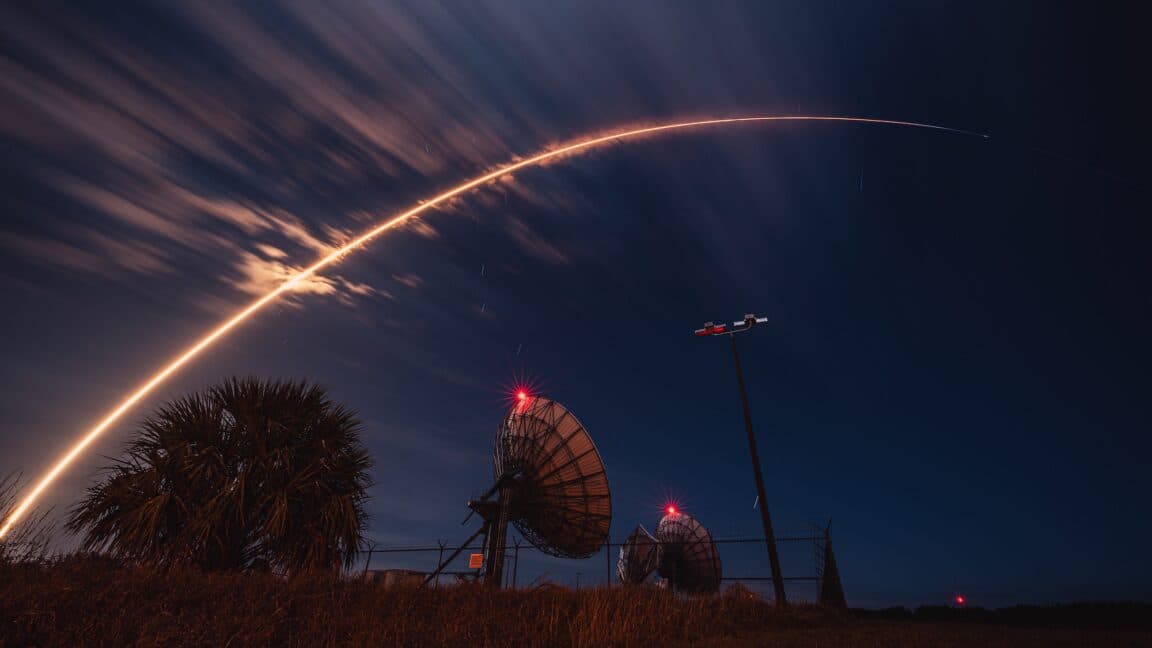
SpaceX has secured a major contract from the US Space Force to build a communications network that will serve as the backbone for distributing space-based sensing and targeting data. Space Systems Command, the Space Force's primary procurement center, announced the $2.29 billion firm-fixed-price agreement on Tuesday, confirming earlier reports that the Pentagon was likely to select SpaceX for the project.
The contract, known as the Space Data Network (SDN) Backbone, aims to accelerate the delivery of a resilient, high-speed communications network in space, according to a statement from Space Systems Command. The network will be based on technology originally developed for SpaceX's Starlink global Internet constellation, which already operates thousands of satellites in low-Earth orbit.
SpaceX already builds and launches specially designed satellites for military applications under the Starshield program. The SDN Backbone network will presumably use the Starshield platform, though specific technical details have not been disclosed. The network is intended to replace or augment separate Pentagon initiatives that had stalled.
The contract represents a significant win for SpaceX, which has been increasingly involved in national security space missions. The company has previously launched classified payloads for the US government and has been developing capabilities for military communications and surveillance.
Space Systems Command emphasized that the SDN Backbone will provide a resilient communications infrastructure, capable of withstanding potential threats in space. The network is expected to enhance the military's ability to collect and distribute data from space-based sensors to ground-based shooters in near real-time.
The award comes as the Space Force continues to modernize its satellite communications architecture, moving away from traditional geostationary satellites toward more distributed low-Earth orbit constellations. This shift is intended to improve resilience and reduce latency for critical military operations.
SpaceX will be responsible for designing, building, and operating the SDN Backbone network under the contract. The timeline for deployment and specific milestones have not been publicly detailed, but the agreement is structured as a firm-fixed-price contract, meaning SpaceX bears the cost overruns.
Space Systems Command stated that the contract "accelerates the delivery of a resilient, high-speed communications network in space" and supports the Space Force's goal of providing assured access to space-based data for warfighters.
JWST confirms 'little red dot' is a naked supermassive black hole from early Universe
The James Webb Space Telescope has confirmed that a 'little red dot' from the early Universe is a supermassive black hole with little surrounding galaxy. Gravitational lensing revealed the object, Abell 2744−QSO1, as it appeared 700 million years after the Big Bang.

The James Webb Space Telescope was built to peer into the earliest epochs of cosmic history, a time when the first stars emitted enough radiation to ionize the hydrogen that then constituted nearly all normal matter. Astronomers had many expectations, but the Universe has repeatedly defied them. One early surprise came in the form of objects dubbed "little red dots," named for their appearance. After initial debate, researchers concluded these were early versions of the supermassive black holes now found at the centers of most galaxies. New observations have now confirmed that one such dot is essentially a bare supermassive black hole, lacking a substantial galaxy around it.
The object in question, designated Abell 2744−QSO1, was magnified and triply imaged by gravitational lensing from a foreground galaxy cluster. This lensing effect allowed astronomers to study it in greater detail. Based on spectral analysis, the light from Abell 2744−QSO1 originated just 700 million years after the Big Bang, placing it in the early Universe. The findings provide direct evidence that some early black holes grew rapidly without correspondingly large host galaxies.
Gravitational lensing occurs when a massive object, such as a galaxy cluster, bends the light from a more distant source, magnifying and sometimes duplicating its image. In this case, the cluster Abell 2744 acted as the lens, producing three separate images of the little red dot. This natural magnification enabled the JWST to capture details that would otherwise be too faint to observe. The telescope's Near-Infrared Camera and spectrograph were used to analyze the object's properties.
The spectrum of Abell 2744−QSO1 revealed signatures of a supermassive black hole, including broad emission lines from gas orbiting at high velocities. However, the data showed little evidence of starlight from a surrounding galaxy. This suggests that the black hole is relatively "naked," with its host galaxy being either very small or still in the process of forming. Such objects challenge models of galaxy-black hole coevolution, which typically expect black holes to grow in tandem with their galaxies.
Previous observations of little red dots had left room for interpretation, with some astronomers arguing they could be extremely dense star clusters rather than black holes. The new JWST data, combined with gravitational lensing, has largely settled the debate for this particular object. The black hole's mass is estimated to be several million solar masses, comparable to the black hole at the center of the Milky Way, but it existed when the Universe was only about 5% of its current age.
The discovery raises questions about how such a massive black hole could form so quickly. Standard theories involve the collapse of massive stars or direct collapse of gas clouds, but these processes typically take longer than 700 million years. The presence of a naked black hole suggests that early black hole growth may have been more efficient than previously thought, possibly through rapid accretion or mergers.
Abell 2744−QSO1 is located in the direction of the constellation Sculptor. The JWST observations were part of the Ultradeep NIRSpec and NIRCam ObserVations before the Epoch of Reionization (UNCOVER) program. The findings have been accepted for publication in the journal Nature Astronomy. Further studies of other little red dots are planned to determine if they share similar characteristics.
"This is the first time we've been able to confirm that a little red dot is a supermassive black hole without a significant galaxy around it," said a lead researcher involved in the study. The team hopes that additional gravitational lensing events will allow them to study more of these enigmatic objects in detail, shedding light on the early growth of black holes and their role in cosmic evolution.

Valve Increases Steam Deck OLED Prices in the US Market
Valve has raised the prices of the Steam Deck OLED models in the United States. The 512GB and 1TB versions now cost $549 and $649 respectively.

Valve has implemented a significant price increase for the Steam Deck OLED in the United States. The company adjusted the pricing for both the 512GB and 1TB models. The new prices reflect a $50 hike for each variant.
The 512GB Steam Deck OLED now retails at $549, up from its previous $499 price point. Meanwhile, the 1TB model has risen to $649, compared to the earlier $599. These changes took effect immediately on Valve's official store.
Valve did not provide an official explanation for the price adjustment. However, industry observers note that component costs and supply chain factors may have influenced the decision. The Steam Deck OLED launched in November 2023 with a starting price of $549 for the 512GB model, which was later reduced to $499 during promotional periods.
The price increase applies only to the OLED models. The LCD versions of the Steam Deck remain at their existing price points. The base 256GB LCD model continues to sell for $399, while the 512GB LCD version is priced at $449.
Customers in the US can still purchase the Steam Deck OLED through Valve's official website. The company has not announced any changes to pricing in other regions. International markets, including Europe and Asia, currently maintain their original pricing structures.
Valve's Steam Deck has been a popular handheld gaming device since its launch in 2022. The OLED model offers improved display quality and battery life compared to the original LCD version. Despite the price increase, demand for the device remains strong.
The price adjustment comes ahead of the holiday season, a period when gaming hardware typically sees increased sales. It remains unclear whether Valve will offer any discounts or promotions in the coming weeks. The company has not commented on future pricing strategies.
As of now, the Steam Deck OLED 512GB and 1TB models are available at their new prices on the Steam store. Valve's official statement on the matter has not been released, but the updated pricing is reflected on the product pages.

Roku OS Home Screen Gets Permanent Large Ad Space in Major Redesign
Roku has introduced the most significant update to its smart TV operating system in a decade, featuring a permanent large advertisement on the home screen. The new layout replaces the previous design where ads appeared only after navigation.

Roku has rolled out a major overhaul to its smart TV operating system, marking the most substantial update in ten years. The redesign introduces a permanent advertisement that occupies a large portion of the home screen's landing page. This change alters the user experience significantly, as ads were previously only visible after users began navigating the interface.
Before the update, the Roku OS home screen displayed a menu on the left side with categories such as "What to Watch," "Live," and "Search." The right side featured a row of tiles for "Recommended" content above several rows of tiles representing downloaded apps. When users started navigating, the menu would collapse, revealing a large ad on the right side of the screen.
With the new design, the ad space is now permanently visible on the home screen, even before any navigation occurs. This means users are immediately presented with an advertisement upon powering on their Roku device or smart TV. The ad occupies a significant portion of the screen, potentially reducing the space available for content recommendations and app tiles.
Roku has not disclosed specific details about the ad placement or whether users can customize or minimize the ad space. The company has been expanding its advertising business in recent years, and this update aligns with its strategy to increase ad revenue from its platform. Roku's OS powers millions of smart TVs and streaming devices worldwide.
The update is rolling out to Roku devices and Roku-powered smart TVs gradually. Users may see the new home screen design automatically as the update reaches their devices. Roku has not provided an option to revert to the previous layout, suggesting the new design is permanent.
Roku's move to embed a permanent ad on the home screen has drawn mixed reactions from users. Some appreciate the streamlined interface, while others express concern over the increased prominence of advertising. The company has not commented on potential user feedback or future adjustments to the ad placement.
The new Roku OS home screen is now available on select devices, with a broader rollout expected in the coming weeks. Roku has not specified whether the ad space will vary by region or device model. The company continues to emphasize its commitment to improving the user experience while monetizing its platform through advertising.

Nvidia to invest $150B in Taiwan, cementing its role as AI manufacturing hub
Nvidia CEO Jensen Huang announced a $150 billion annual investment in Taiwan to establish a new headquarters and reinforce the region's position as the center of AI manufacturing. The project is expected to break ground this year and become operational by 2030.

Nvidia CEO Jensen Huang declared Wednesday that the company will invest $150 billion annually to ensure Taiwan remains the epicenter of the AI industry. The announcement came during a press event where Huang emphasized Taiwan's irreplaceable role in chip production, packaging, and system assembly. "This is where the chips come, packaging comes, this is where the systems are made, this is where AI supercomputers were created," Huang said. He also highlighted the extensive network of partners Nvidia works with in Taiwan, calling it "incredible."
The substantial investment will fund a new Taiwan headquarters for Nvidia, a project expected to drive significant AI innovation. Huang stated that the partnership would cement Taiwan as "the world's tech manufacturing hub for a long time." The facility is slated to break ground this year and become operational by 2030, according to Nvidia's timeline.
This move underscores the ongoing reliance on Taiwan for advanced semiconductor manufacturing, despite geopolitical tensions and efforts by other countries, including the United States, to bolster domestic chip production. Nvidia's commitment signals that Taiwan's ecosystem remains unmatched for AI hardware production.
The investment comes as the U.S. government pushes to make America an AI hub through initiatives like the CHIPS Act. However, Nvidia's decision to deepen its roots in Taiwan suggests that the global supply chain for AI chips will continue to depend heavily on the island nation for the foreseeable future.
Huang's announcement also reflects the growing demand for AI infrastructure, as companies worldwide race to deploy generative AI and large language models. Nvidia's chips, such as the H100 and upcoming Blackwell series, are critical components in data centers and supercomputers.
The new headquarters will likely include research and development facilities, as well as manufacturing support operations. Nvidia already has a significant presence in Taiwan, working closely with partners like TSMC, the world's largest contract chipmaker.
Analysts note that the $150 billion annual figure is substantial, representing a significant portion of Nvidia's revenue. The company reported $60.9 billion in revenue for fiscal 2024, though its market capitalization has surged past $2 trillion amid the AI boom.
Nvidia's investment plan is subject to regulatory approvals and market conditions. The company expects the project to create thousands of jobs in Taiwan and further integrate its operations with local suppliers. Huang concluded the announcement by reaffirming Nvidia's long-term commitment to the region.