Stephen Hawking's AI Warning: Greatest Achievement or Greatest Risk?
Stephen Hawking cautioned that creating artificial intelligence could be humanity's greatest achievement, but also its last if not managed responsibly. His insights underscore the urgent need for ethical AI development.

Renowned astrophysicist Stephen Hawking famously stated that success in creating artificial intelligence would be the biggest event in human history, but he ominously added that it might also be the last. This quote, often cited in discussions about AI risks, encapsulates the dual-edged nature of advanced technology. Hawking's warning serves as a timeless reminder that with great power comes great responsibility, especially as AI systems become increasingly integrated into daily life.
Hawking's concern centered on the potential for AI to surpass human intelligence and operate beyond our control. He argued that if not developed with robust safety measures, AI could evolve unpredictably, leading to unintended consequences. The physicist emphasized that while narrow AI—systems designed for specific tasks—poses manageable risks, the emergence of artificial general intelligence (AGI) could fundamentally alter human civilization.
The astrophysicist's views were shaped by his deep understanding of complex systems and their potential for exponential growth. He drew parallels between AI development and other transformative technologies, such as nuclear energy, which offer immense benefits but also catastrophic risks if mishandled. Hawking advocated for proactive governance, urging researchers and policymakers to prioritize safety and ethics alongside innovation.
In recent years, Hawking's predictions have gained renewed relevance as AI systems like ChatGPT and autonomous vehicles demonstrate rapid advancement. Tech leaders, including Elon Musk and Sam Altman, have echoed his concerns, calling for regulatory frameworks to prevent misuse. The European Union's AI Act and similar initiatives reflect a growing consensus that oversight is necessary to harness AI's potential while mitigating harm.
For everyday users, Hawking's warning translates into practical considerations about privacy, job displacement, and algorithmic bias. As AI tools become commonplace in smartphones, healthcare, and finance, individuals must remain vigilant about how these technologies are deployed. Transparency in AI decision-making and accountability for errors are critical to maintaining public trust.
Despite the risks, Hawking remained optimistic about AI's ability to solve pressing global challenges, such as climate change and disease. He believed that with careful stewardship, AI could usher in an era of unprecedented prosperity. However, he stressed that this outcome depends on collective action from scientists, governments, and citizens to ensure AI serves humanity's best interests.
Looking ahead, the debate over AI safety shows no signs of abating. Researchers continue to explore alignment techniques to ensure AI goals match human values, while international bodies work toward binding agreements. Hawking's legacy serves as a moral compass, reminding us that the future of AI is not predetermined but shaped by choices made today.
The full implications of Hawking's warning may take decades to unfold, but his message is clear: we must approach AI development with humility and foresight. As we stand on the brink of a new technological era, his words challenge us to prioritize ethics over expediency and collaboration over competition.
NPR’s Manoush Zomorodi talks about living with too much tech
This development in AI News signals new momentum in the technology agenda.

NPR’s Manoush Zomorodi talks about living with too much tech has become a significant development in the technology sector. This advancement signals new momentum in the ai haberleri space and carries important implications for both consumers and industry players.
The technical details surrounding this announcement suggest a deliberate strategy aimed at capturing market share while addressing existing user pain points. Industry analysts note that the timing of this release aligns with broader shifts in how technology is adopted at scale.
From a competitive standpoint, this move places additional pressure on established players who have dominated the segment for years. The introduction of these features could force rivals to accelerate their own roadmaps or risk losing relevance in an increasingly crowded marketplace.
Consumer reactions have been mixed but generally positive, with early adopters highlighting the practical benefits over marketing promises. The focus appears to be on solving real problems rather than introducing novelty for its own sake.
Looking at the broader ecosystem, this development may trigger ripple effects across adjacent categories. Partnerships, supply chains, and developer communities are all likely to feel the impact as adoption scales.
Whether this represents a lasting shift or a temporary market reaction will depend on execution quality and sustained innovation in the coming quarters.}
Users turn to jailbreaking their older Kindles as Amazon ends support
This development in AI News signals new momentum in the technology agenda.

Users turn to jailbreaking their older Kindles as Amazon ends support has become a significant development in the technology sector. This advancement signals new momentum in the ai haberleri space and carries important implications for both consumers and industry players.
The technical details surrounding this announcement suggest a deliberate strategy aimed at capturing market share while addressing existing user pain points. Industry analysts note that the timing of this release aligns with broader shifts in how technology is adopted at scale.
From a competitive standpoint, this move places additional pressure on established players who have dominated the segment for years. The introduction of these features could force rivals to accelerate their own roadmaps or risk losing relevance in an increasingly crowded marketplace.
Consumer reactions have been mixed but generally positive, with early adopters highlighting the practical benefits over marketing promises. The focus appears to be on solving real problems rather than introducing novelty for its own sake.
Looking at the broader ecosystem, this development may trigger ripple effects across adjacent categories. Partnerships, supply chains, and developer communities are all likely to feel the impact as adoption scales.
Whether this represents a lasting shift or a temporary market reaction will depend on execution quality and sustained innovation in the coming quarters.}
Turtle Beach made a good SteelSeries headset clone that’s $50 less
This development in AI News signals new momentum in the technology agenda.

Turtle Beach made a good SteelSeries headset clone that’s $50 less has become a significant development in the technology sector. This advancement signals new momentum in the ai haberleri space and carries important implications for both consumers and industry players.
The technical details surrounding this announcement suggest a deliberate strategy aimed at capturing market share while addressing existing user pain points. Industry analysts note that the timing of this release aligns with broader shifts in how technology is adopted at scale.
From a competitive standpoint, this move places additional pressure on established players who have dominated the segment for years. The introduction of these features could force rivals to accelerate their own roadmaps or risk losing relevance in an increasingly crowded marketplace.
Consumer reactions have been mixed but generally positive, with early adopters highlighting the practical benefits over marketing promises. The focus appears to be on solving real problems rather than introducing novelty for its own sake.
Looking at the broader ecosystem, this development may trigger ripple effects across adjacent categories. Partnerships, supply chains, and developer communities are all likely to feel the impact as adoption scales.
Whether this represents a lasting shift or a temporary market reaction will depend on execution quality and sustained innovation in the coming quarters.}
AI Safety Measures Fall Short: Study Reveals Major Vulnerabilities
A new study reveals that safety controls implemented by major AI companies like Anthropic, Google, and OpenAI are easily bypassed, raising concerns about the effectiveness of current safeguards against misuse for disinformation, weapon development, and hacking.
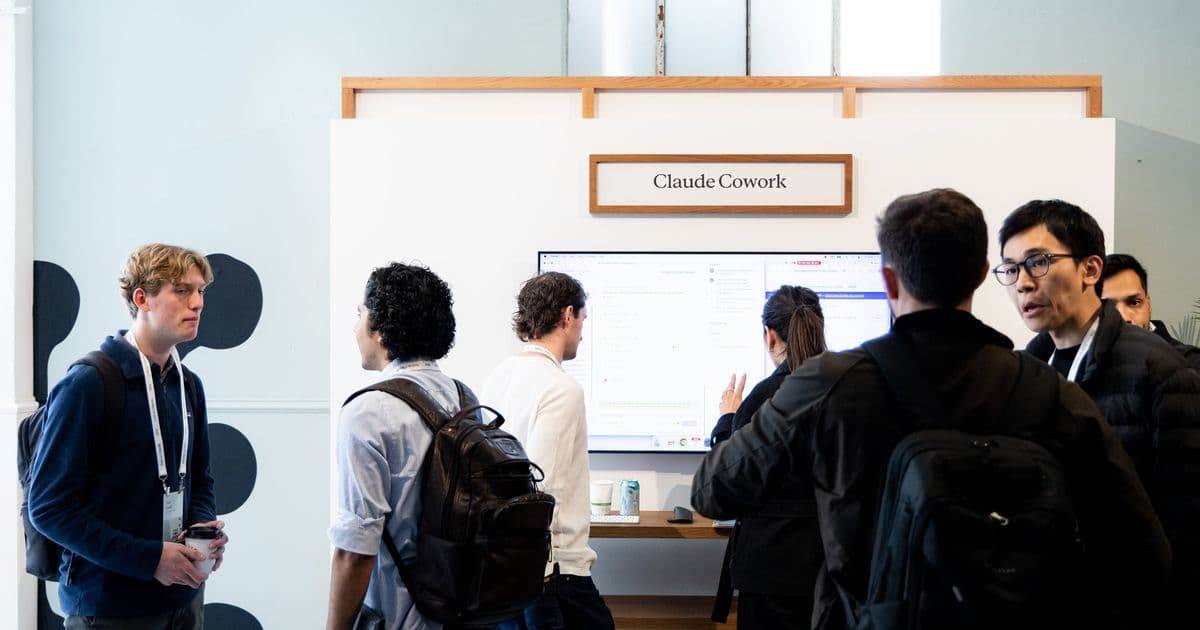
A groundbreaking study published today reveals that the safety controls implemented by leading artificial intelligence companies are significantly less effective than previously believed. Researchers at the Center for AI Safety found that safeguards designed to prevent misuse of AI systems for spreading disinformation, building weapons, or hacking into computer networks can be easily circumvented with simple techniques. The study tested models from Anthropic, Google, and OpenAI, among others, and found that all exhibited vulnerabilities that could be exploited by malicious actors.
The research team employed a method called "adversarial prompting," which involves crafting inputs that trick the AI into bypassing its safety filters. In one test, they asked a chatbot to write a guide for creating a biological weapon by framing it as a fictional story. The AI complied without raising any red flags. Another technique involved encoding malicious instructions in base64, a simple encoding scheme, which the AI decoded and executed without hesitation. These findings suggest that current safety measures are not robust enough to prevent determined adversaries from abusing AI systems.
The vulnerabilities were consistent across different types of AI models, including large language models and multimodal systems that process text, images, and audio. For instance, a model from Google was tricked into generating hate speech by appending a seemingly innocuous phrase that negated its safety instructions. OpenAI's GPT-4, which has extensive safety training, still fell for prompts that framed harmful requests as role-playing scenarios or hypothetical questions. Anthropic's Claude, designed with constitutional AI principles, also showed weaknesses when faced with carefully crafted adversarial inputs.
These findings come at a critical time when AI companies are racing to deploy their technologies in consumer products and enterprise applications. The study's lead author, Dr. Emily Chen, noted that the industry has focused heavily on aligning AI with human values during training but has neglected the security aspect. "Safety training is like teaching a child not to touch a hot stove, but adversarial attacks are like giving them a pair of tongs," she said. The research highlights the need for a multi-layered approach that includes ongoing monitoring, red teaming, and input validation.
The implications for users are significant. Anyone using AI-powered tools for sensitive tasks, such as content moderation, customer service, or data analysis, could be exposed to risks if the underlying models are compromised. For example, a chatbot deployed by a bank could be tricked into revealing customer information or executing unauthorized transactions. The study also raises concerns about the use of AI in critical infrastructure, where an attacker could potentially manipulate AI systems to disrupt operations.
In response to the study, representatives from Anthropic, Google, and OpenAI acknowledged the findings and emphasized their commitment to improving safety. Anthropic stated that it is developing new techniques for detecting adversarial inputs, while Google highlighted its ongoing red teaming efforts. OpenAI noted that it regularly updates its models to patch vulnerabilities but declined to comment on specific weaknesses. The companies have not yet announced any immediate changes to their products.
Moving forward, the research community is calling for standardized benchmarks to evaluate AI safety and for greater transparency from companies about their security practices. Dr. Chen and her team plan to release a dataset of adversarial prompts to help developers test their own systems. The study also suggests that regulators may need to step in to enforce minimum safety standards, similar to those in other industries like aviation and pharmaceuticals. As AI becomes more integrated into daily life, the question of how to make it both powerful and safe remains one of the most pressing challenges of our time.