Vivo Launches Over-Ear Headphones with 75-Hour Battery Life, Challenging AirPods Max
Vivo has officially introduced its first over-ear noise-canceling headphones, offering up to 75 hours of battery life at a budget-friendly price of 499 yuan in China. The device aims to compete with premium models like Apple's AirPods Max.

Vivo has entered the over-ear headphone market with a new model that directly targets Apple's AirPods Max. The company officially unveiled the Vivo Over-Ear Noise-Canceling Headphones, its first product in this category. The headphones are priced at 499 yuan in China, significantly undercutting competitors while offering premium features.
The headphones boast an impressive 75 hours of battery life with noise cancellation turned off. When active noise cancellation is enabled, the battery life drops to 40 hours. This positions the device as one of the longest-lasting options in its class. Vivo also included fast charging support, providing 10 hours of playback from a 10-minute charge.
Active noise cancellation is a core feature, with Vivo claiming the headphones can reduce ambient noise by up to 40 decibels. The device uses multiple microphones to capture and cancel external sounds. Users can switch between transparency mode and full noise cancellation through a dedicated button on the ear cup.
The headphones feature 40mm dynamic drivers with a frequency response range of 20Hz to 20kHz. Vivo has tuned the sound signature to emphasize clarity and bass response. The ear cups are made from memory foam covered in protein leather, designed for long listening sessions. The headband is adjustable with a stainless steel frame.
Connectivity is handled via Bluetooth 5.2, supporting AAC and SBC codecs. There is no mention of aptX or LDAC support. The headphones also include a 3.5mm wired connection for use with devices lacking Bluetooth. A built-in microphone array enables hands-free calling with voice pickup technology.
Vivo has integrated its own companion app for the headphones, available on Android and iOS. The app allows users to adjust the equalizer, switch between noise cancellation modes, and update firmware. The headphones also support multipoint connection, allowing simultaneous pairing with two devices.
The Vivo Over-Ear Noise-Canceling Headphones are currently available for pre-order in China through Vivo's official online store and major e-commerce platforms. The retail price is set at 499 yuan, which converts to approximately $70 USD. The company has not announced international availability or pricing for other markets.
Sales in China begin on March 10, 2025, with units shipping shortly after. The headphones come in two color options: black and white. Each purchase includes a carrying case, USB-C charging cable, and 3.5mm audio cable. Vivo has not disclosed sales targets or production volumes for the new device.
Proposed US rules would let agencies cancel grants at any time
The US Office of Management and Budget has proposed new rules that would allow federal agencies to cancel any grant at any time if it is deemed not in the 'national interest.' The rules also deprioritize peer review and ban grants on certain culture war topics.
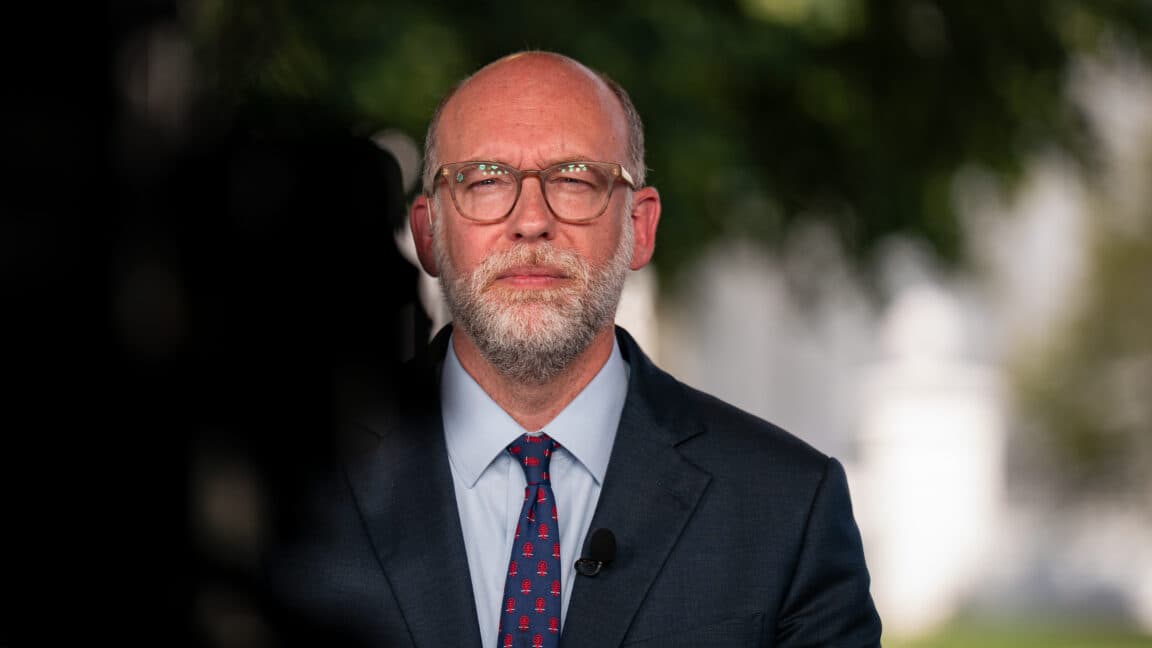
The US Office of Management and Budget has proposed new rules that would fundamentally alter how federal grant funding is managed. Under the proposal, political appointees would have the final say on grant decisions, and peer review would become a secondary consideration. The rules would also allow any federal agency to cancel any grant at any time based on a vague assertion that it is not in the "national interest."
The proposed rules stem from an executive order issued by the Trump administration last August. That order aimed to change the grant funding system, which had relied on peer reviewers rating applications based on scientific quality and feasibility. Subject-matter experts within funding agencies used those ratings to determine which grants received funding.
The administration lost multiple court cases after issuing the executive order, as courts found that executive orders cannot circumvent legal requirements and can be vacated without strong justification. To avoid a similar fate, the Office of Management and Budget decided to merge the executive order with other administration priorities and send it through the formal federal rulemaking process.
The resulting document has been described as a horror show for US science research. In addition to making peer review a secondary consideration, the rules would ban grants on a number of culture war topics. They would also limit international collaborations and block spending on activities such as publishing papers and attending conferences.
The proposed rules would apply to all federal agencies that issue grants. The Office of Management and Budget has not specified a timeline for finalizing the rules, but the formal rulemaking process typically involves a public comment period before any final action is taken.
Critics of the proposal argue that it would undermine the scientific integrity of the US research enterprise. They contend that allowing political appointees to override peer review and cancel grants at will would introduce political bias into funding decisions and discourage long-term research projects.
The Office of Management and Budget has defended the proposal as necessary to ensure that grant funding aligns with national priorities. The agency has stated that the rules would provide greater flexibility and accountability in how taxpayer dollars are spent on research.
The proposed rules are now open for public comment before any final decision is made.

Inside the 'Steroid Olympics': Why Silicon Valley Embraces Peptides
The Enhanced Games, a competition where most athletes use performance-enhancing drugs, signals a new business model gaining traction in Silicon Valley. The tech industry's interest in peptides and biohacking is driving this shift.

A sporting event dubbed the 'steroid Olympics' has drawn attention from Silicon Valley, highlighting the tech industry's growing fascination with peptides and performance-enhancing substances. The Enhanced Games, a competition where the majority of athletes openly use banned substances, may represent a new business model that tech entrepreneurs are eager to adopt. This event, held recently, showcased athletes who rely on drugs like peptides to boost performance, challenging traditional sports norms.
The Enhanced Games operate without anti-doping regulations, allowing participants to use substances typically prohibited in professional sports. Peptides, which are short chains of amino acids, are among the favored compounds. These molecules can stimulate muscle growth, improve recovery, and enhance cognitive function, making them attractive to both athletes and biohackers in the tech sector.
Silicon Valley's interest in peptides stems from a broader culture of optimization and longevity. Tech workers often seek ways to enhance productivity and physical performance, turning to supplements and experimental treatments. The Enhanced Games provide a platform to showcase these substances in a competitive setting, potentially normalizing their use beyond athletics.
Critics argue that the event promotes dangerous drug use and undermines fair competition. However, proponents see it as a step toward medical freedom and innovation. The games have attracted investors and entrepreneurs who view the unregulated use of peptides as a frontier for business opportunities, from supplement sales to personalized health regimens.
The event's founder, Aron D'Souza, has positioned the Enhanced Games as a celebration of human potential unbound by traditional rules. He claims the competition reflects a future where performance enhancement is accepted and regulated differently. The games have drawn participants from various countries, all eager to compete without fear of disqualification.
Peptides are not new to the tech world; they have been used in research and by biohackers for years. However, the Enhanced Games bring them into the spotlight, potentially accelerating their adoption. Companies in Silicon Valley are already developing peptide-based therapies and supplements, targeting both athletes and everyday consumers seeking an edge.
The Enhanced Games are scheduled to return next year, with plans to expand to more locations. Organizers are in talks with potential sponsors from the tech industry, signaling a growing alignment between the event and Silicon Valley's values. The games may serve as a testing ground for new substances and business models that could reshape sports and wellness.
As the line between medical treatment and enhancement blurs, the Enhanced Games offer a glimpse into a future where performance-enhancing drugs are mainstream. For now, the event remains controversial, but its appeal to tech investors suggests it is more than a fringe spectacle. The next edition is set for 2025, with details on location and participants to be announced.

Nvidia Unveils N1 and N1X Processors at Computex 2026
Nvidia announced its new N1 and N1X processors at Computex 2026 on June 1. The chips target different performance segments, with the N1X offering higher clock speeds and additional cores.

Nvidia introduced its next-generation N1 and N1X processors during the Computex 2026 keynote on June 1. The company positioned the chips as solutions for high-performance computing and AI workloads. Both processors are built on a new architecture that Nvidia claims delivers significant improvements in efficiency and throughput.
The N1 processor features 12 performance cores and 8 efficiency cores, supporting up to 32 threads. It operates at a base clock of 3.2 GHz with a boost clock reaching 4.5 GHz. The chip includes 24 MB of L3 cache and supports DDR5 memory with speeds up to 6400 MT/s. Nvidia stated that the N1 targets mainstream desktop and workstation users.
The higher-end N1X model doubles the core count with 24 performance cores and 16 efficiency cores, supporting up to 64 threads. Its base clock is 3.5 GHz, boosting to 5.0 GHz. The N1X includes 48 MB of L3 cache and supports DDR5 memory at 7200 MT/s. Nvidia highlighted that the N1X is designed for demanding tasks such as 3D rendering, scientific simulations, and AI model training.
Both processors integrate Nvidia's latest generation tensor cores and ray tracing units. The N1 includes 128 tensor cores and 32 RT cores, while the N1X features 256 tensor cores and 64 RT cores. Nvidia claims these improvements enable up to 2x performance gains in AI inference and real-time ray tracing compared to previous generations.
The chips also feature an updated memory controller and support for PCIe 5.0. Nvidia emphasized power efficiency, with the N1 having a TDP of 125W and the N1X at 250W. The company noted that the processors are manufactured on a 3nm process node, contributing to the efficiency gains.
Nvidia announced that the N1 and N1X will be available starting September 2026. The N1 is priced at $599, while the N1X costs $1,299. Both processors will be compatible with the existing LGA 1700 socket, allowing users to upgrade without changing motherboards. Nvidia also confirmed that the chips will support Windows 11 and Linux distributions.
During the presentation, Nvidia demonstrated the N1X running a real-time AI video upscaling application and a complex fluid dynamics simulation. The company claimed that the N1X outperforms its predecessor by 40% in multi-threaded workloads. Nvidia also announced partnerships with several PC manufacturers to offer systems featuring the new processors.
The N1 and N1X represent Nvidia's continued push into the CPU market, competing with offerings from Intel and AMD. With these chips, Nvidia aims to provide integrated solutions for both consumer and enterprise customers. The company expects the processors to be widely adopted in gaming PCs, workstations, and data centers.

Environmental advocates oppose Trump EPA coal ash rule rollbacks at hearing
At a virtual public comment hearing hosted by the US Environmental Protection Agency on Thursday, environmental advocates voiced strong opposition to proposed regulations weakening coal ash cleanup requirements. The Trump administration seeks to repeal a 2024 Biden-era rule and loosen groundwater protections, relying more on state enforcement.

A virtual public comment hearing hosted by the US Environmental Protection Agency on Thursday drew a long line of environmental advocates who voiced strong opposition to proposed new regulations. The regulations would weaken requirements that utilities must follow in cleaning up toxic coal ash residue at hundreds of sites across the country where coal was burned to produce electricity. Lisa Evans, senior counsel at Earthjustice and a former EPA attorney, said in a statement that the Trump administration has jeopardized the nation’s drinking water supplies as a favor to polluters. She added that it is just not right.
The Trump administration announced in April that it would repeal a rule put in place in 2024 by the Biden administration’s EPA. That rule required utilities to monitor coal ash sites at inactive coal plants. The Trump EPA also said it would loosen requirements for protecting groundwater near those sites. Now the Trump administration wants to rely on states for coal ash monitoring and enforcement, enabling them to bypass national standards in some cases.
Coal ash is a byproduct of burning coal for electricity and contains toxic heavy metals such as arsenic, lead, and mercury. Improper disposal can contaminate groundwater and surface water, posing risks to human health and the environment. The Biden-era rule aimed to ensure consistent monitoring and cleanup across the country, particularly at inactive sites that may not have been subject to previous regulations.
Environmental groups argue that the proposed rollbacks would undermine public health protections and shift the burden to states that may lack resources or political will to enforce strict standards. They also contend that the changes could lead to increased contamination of drinking water sources near coal ash disposal sites. The hearing provided a platform for advocates to express their concerns directly to EPA officials.
The Trump administration has defended its proposal as a way to reduce regulatory burdens on utilities and give states more flexibility. Officials argue that states are better positioned to address local conditions and that the previous rule imposed unnecessary costs. However, critics counter that the move prioritizes industry interests over environmental and community health.
The EPA is accepting public comments on the proposed rule through a specified deadline. After reviewing comments, the agency will decide whether to finalize the changes. The outcome could have significant implications for the management of coal ash at hundreds of sites nationwide, many of which are located near communities already burdened by pollution.
Thursday’s hearing was one of several opportunities for public input. Environmental advocates urged the EPA to maintain strong federal oversight and reject the proposed rollbacks. They emphasized that coal ash contamination is a long-lasting problem that requires consistent national standards to protect drinking water supplies for millions of Americans.