Anthropic Raises $65 Billion in Series H, Surpassing OpenAI Valuation
Anthropic, the developer of the AI assistant Claude, has raised $65 billion in a Series H funding round, surpassing OpenAI's valuation. The round marks one of the largest in tech history.

Anthropic, the company behind the popular AI assistant Claude, has completed a Series H funding round that raised $65 billion in cash, according to official statements. The round represents one of the largest single fundraising events in technology history.
The funding round pushes Anthropic's valuation past that of OpenAI, its primary competitor in the generative AI space. The company did not disclose the specific investors involved in the round, but the scale of the raise signals strong institutional confidence in Anthropic's technology and business model.
Anthropic has positioned Claude as a safety-focused alternative to other AI assistants, emphasizing alignment and responsible development. The company was founded by former OpenAI employees and has consistently raised large sums to fund its research and infrastructure.
The $65 billion figure includes both primary capital for the company and secondary transactions for existing shareholders. The round is structured as a Series H, indicating that Anthropic has gone through multiple earlier funding stages.
Anthropic plans to use the new capital to expand its compute capacity, hire additional research staff, and accelerate the development of future Claude models. The company has been scaling rapidly, with Claude gaining adoption across enterprise and consumer markets.
The funding round comes amid a broader boom in AI investment, with major tech companies and venture firms pouring billions into the sector. Anthropic's ability to raise such a large sum reflects the intense demand for advanced AI systems and the competitive dynamics between leading labs.
Anthropic has not announced any changes to its product roadmap or pricing following the raise. The company continues to offer Claude through its API and consumer-facing chatbot, with both free and paid tiers available.
"This funding will allow us to pursue our mission of building safe, beneficial AI systems at an unprecedented scale," an Anthropic spokesperson said in a statement. The company expects to deploy the capital over the next several years as it works toward its next-generation models.
Meta Plans AI Agent to Shop on Instagram, Compete with OpenClaw
Meta is developing an AI agent capable of shopping on Instagram, aiming to compete with OpenClaw. The project aligns with Mark Zuckerberg's goal of making AI agents more accessible.
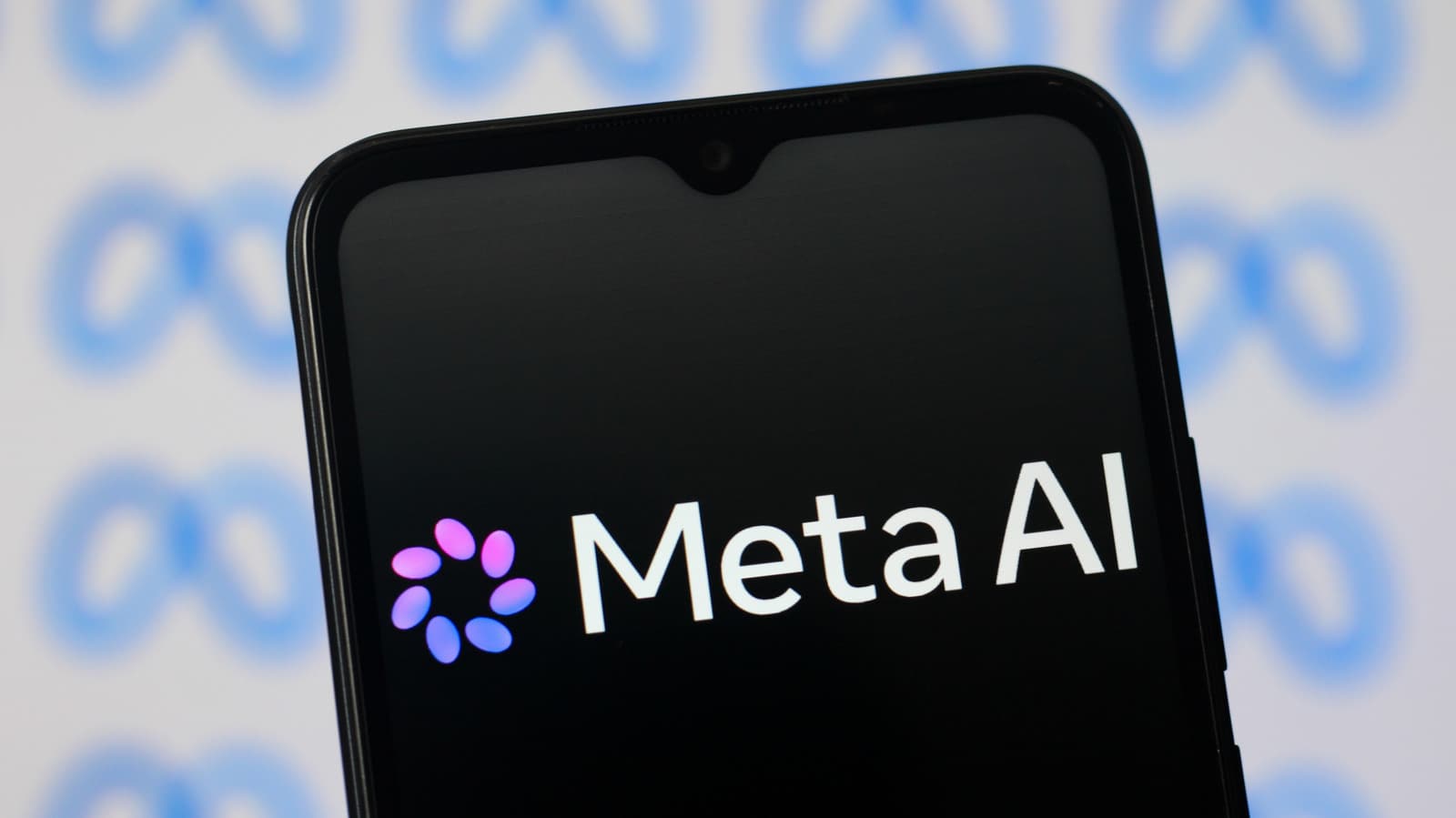
Meta is developing an AI agent that can shop on Instagram, according to a report. The agent is designed to compete with OpenClaw, a platform that automates online shopping tasks. Mark Zuckerberg has previously stated his ambition to make AI agents more widely available.
The AI agent would allow users to browse and purchase products directly through Instagram. It could handle tasks such as searching for items, comparing prices, and completing transactions. The feature is expected to integrate with Meta's existing e-commerce tools.
Meta has been investing heavily in AI capabilities across its platforms. The company recently launched AI-powered chatbots and image generation tools. The shopping agent represents a further expansion into AI-driven commerce.
OpenClaw, the reported competitor, offers similar functionality for general web shopping. Meta's version would be tailored specifically to Instagram's ecosystem, leveraging the platform's user data and social features. This could give Meta an advantage in personalized recommendations.
The development is still in early stages, with no confirmed release date. Meta has not officially announced the project. The report suggests the agent could be integrated into Instagram's existing shopping tab or appear as a standalone feature.
Zuckerberg has emphasized the importance of AI agents in Meta's long-term strategy. He envisions a future where AI assistants handle routine tasks for users. The shopping agent is one of several AI projects underway at the company.
Instagram already supports in-app purchases and product tagging. The AI agent would automate the shopping process, potentially increasing conversion rates for businesses. It could also encourage more users to shop on the platform.
Meta faces competition from other tech giants developing AI shopping tools. Amazon and Google have similar projects in development. The success of Meta's agent will depend on its accuracy, ease of use, and integration with Instagram's user experience.
A Meta spokesperson declined to comment on the report. The company has not provided a timeline for when the AI agent might launch. Further details are expected as development progresses.

Anthropic Launches Claude Opus 4.8 with Enhanced Performance and New Features
Anthropic has released Claude Opus 4.8, a new AI model offering higher performance and additional capabilities. The update introduces improved reasoning, longer context windows, and better safety features.

Anthropic announced the release of Claude Opus 4.8, its latest AI model, on Tuesday. The new iteration brings significant performance improvements and a suite of new features designed to enhance user experience. The model is now available to users through the Claude API and the claude.ai platform.
Claude Opus 4.8 introduces a 200,000-token context window, allowing the model to process and analyze large documents in a single session. This represents a substantial increase from previous versions, enabling more comprehensive analysis of lengthy texts, codebases, or research papers.
The model demonstrates improved reasoning capabilities, particularly in complex tasks such as mathematics, coding, and multi-step problem solving. Anthropic reported that Claude Opus 4.8 achieved higher scores on several benchmark tests compared to its predecessor, including GSM8K for math and HumanEval for code generation.
Safety features have been expanded with the new release. Claude Opus 4.8 includes enhanced guardrails against harmful outputs and better alignment with user intent. The model also incorporates feedback from earlier deployments to reduce hallucinations and improve factual accuracy.
Anthropic highlighted that the model excels in enterprise use cases, including document analysis, customer support automation, and content generation. The expanded context window allows businesses to process entire contracts, legal documents, or technical manuals without needing to split them into smaller chunks.
Claude Opus 4.8 is available immediately through the Claude API for developers, with pricing set at $15 per million input tokens and $75 per million output tokens. The model is also accessible via the claude.ai subscription plans, including the Pro tier at $20 per month and the Team tier at $25 per user per month.
The company stated that the model will gradually roll out to all users over the coming week. Existing Claude users will automatically gain access to the new model without any action required. Anthropic also confirmed that Claude Opus 4.8 supports multiple languages, including English, Spanish, French, German, Japanese, and Chinese.
"Claude Opus 4.8 represents a meaningful step forward in our mission to build safe and capable AI systems," said Dario Amodei, CEO of Anthropic, in a statement. "The improvements in reasoning and context handling will unlock new possibilities for our users across industries."

Stan Lee’s Voice Returns Digitally Through ElevenLabs Partnership
ElevenLabs has partnered with the estate of Stan Lee to bring the late Marvel icon's voice to its Iconic Marketplace. The digital recreation allows fans to hear Lee's voice in new contexts, with his family's approval.

ElevenLabs announced a partnership with the estate of Stan Lee to make the late Marvel legend's voice available through its Iconic Marketplace. The collaboration allows users to generate audio using a digital recreation of Lee's distinctive voice, which was developed with the consent of his family. The company stated that the voice model was trained on archival recordings to ensure authenticity.
The Iconic Marketplace, launched by ElevenLabs earlier this year, offers licensed voice recreations of notable figures. Stan Lee's voice joins a roster that includes other deceased celebrities, such as the actor James Dean and the singer Judy Garland. Each voice is created using the company's AI speech synthesis technology, which analyzes existing audio samples to produce new speech.
Lee's daughter, J.C. Lee, expressed support for the project, noting that her father always embraced innovation and storytelling. She said in a statement that the digital voice would allow fans to hear him in new ways, preserving his legacy for future generations. The family retains control over how the voice is used, with ElevenLabs requiring approval for each project.
The voice model is available for licensing through the Iconic Marketplace, with pricing starting at $1,000 for a single project. Larger packages are available for commercial use, including advertising, video games, and audiobooks. ElevenLabs emphasized that the technology is not intended to replace human voice actors but to offer new creative possibilities.
Critics have raised ethical concerns about using AI to recreate the voices of deceased individuals, even with family consent. ElevenLabs has implemented safeguards, including a review process for each request and a prohibition on using the voices for political or harmful content. The company also requires clear disclosure that the audio is AI-generated.
The Stan Lee voice model is available immediately for licensing through the ElevenLabs website. The company plans to expand its Iconic Marketplace with additional voices in the coming months, though it has not disclosed which figures will be added next. Lee's voice joins a growing list of digital recreations that have sparked debate about the boundaries of AI and legacy.

China Retains More Top AI Talent as Domestic Industry Booms
China's artificial intelligence sector is producing world-class researchers, and the government is increasingly discouraging them from working abroad. This shift is driven by a booming domestic AI industry and policies aimed at retaining top talent.

China's artificial intelligence boom is generating a growing pool of highly skilled researchers, and Beijing is showing less willingness to let them pursue careers overseas. The country's AI industry has expanded rapidly, creating abundant opportunities for local talent. Government policies and incentives are also playing a role in keeping researchers within China's borders.
The shift marks a change from previous years, when many Chinese AI experts sought education and employment in the United States and other countries. Now, a combination of factors is reversing that trend. China's domestic AI companies, such as Baidu, Alibaba, and Tencent, offer competitive salaries and cutting-edge research environments. Additionally, government-funded initiatives and national AI development plans provide further incentives for researchers to stay.
Beijing has implemented policies that make it more attractive for AI talent to remain in China. These include streamlined visa processes for foreign experts, increased funding for AI research, and the establishment of national AI laboratories. The government has also tightened restrictions on technology transfers and overseas collaborations, making it harder for Chinese researchers to work abroad without government approval.
The retention of top AI talent is seen as crucial for China's goal of becoming a global leader in artificial intelligence by 2030. The country has already made significant strides in areas such as facial recognition, natural language processing, and autonomous vehicles. Keeping leading researchers at home is expected to accelerate progress in these and other fields.
Some experts note that the trend is not absolute. A number of Chinese AI researchers continue to work at top universities and companies in the United States and Europe. However, the flow has slowed, and an increasing number are choosing to return to China after completing their studies or gaining experience abroad.
The implications for global AI development are significant. China's growing pool of homegrown talent could reduce its reliance on foreign expertise and potentially shift the balance of AI innovation. Other countries may face increased competition for top researchers as China continues to invest heavily in its AI ecosystem.
For now, the trend appears to be strengthening. China's AI industry shows no signs of slowing, and government support for retaining talent remains strong. As a result, the country is likely to hold onto more of its best and brightest minds in the years ahead.