Airbnb expands beyond homes with luggage storage and car rental bookings
Airbnb is adding luggage storage and car rental services to its platform, expanding beyond short-term rentals. The company also introduced AI tools for host onboarding and customer support.

Airbnb announced plans to offer luggage storage and car rental bookings through its app, marking a significant expansion beyond its core vacation rental business. The new services will be available in select markets starting later this year, the company said during its quarterly earnings call.
The luggage storage feature will allow travelers to drop off bags at partner locations, such as hotels or local shops, for a fee. Car rentals will be integrated through a partnership with an unnamed provider, enabling users to book vehicles directly within the Airbnb app. Pricing details have not been disclosed.
In addition to the new travel services, Airbnb is rolling out artificial intelligence tools to streamline host onboarding. The AI system will guide new hosts through listing creation, pricing suggestions, and house rules setup, reducing the time required to get a property live on the platform.
The company also deployed AI for customer support, using machine learning to handle common inquiries and escalate complex issues to human agents. Airbnb said the technology has already improved response times and resolution rates in pilot tests.
CEO Brian Chesky described the moves as part of a broader strategy to become a full-service travel platform. "We want to be the one-stop shop for every part of your trip," Chesky said on the earnings call. The luggage and car rental additions follow earlier experiments with experiences, restaurant reservations, and guided tours.
Airbnb reported strong financial results for the past quarter, with revenue growing 18% year over year to $2.7 billion. The company said it expects continued growth driven by international travel demand and new service offerings.
The luggage storage and car rental features will first launch in the United States and Europe, with a global rollout planned for 2025. Airbnb did not specify exact launch dates or partner names for the car rental service.
Hosts will not be directly involved in the new services, as Airbnb will manage the partnerships and logistics. The company emphasized that the expansions are designed to enhance the traveler experience without adding complexity for property owners.
Airbnb shares rose 3% in after-hours trading following the announcement. The company faces competition from traditional hotel booking sites and travel aggregators, but Chesky said the new services differentiate Airbnb by offering a cohesive trip planning experience.
Arteris FlexNoC and Magillem Deployed in Li Auto L9 SUV
Arteris announced that its FlexNoC network-on-chip IP and Magillem software have been adopted by Li Auto for the L9 Livis flagship SUV. The technology is used in Li Auto's proprietary autonomous driving SoCs.
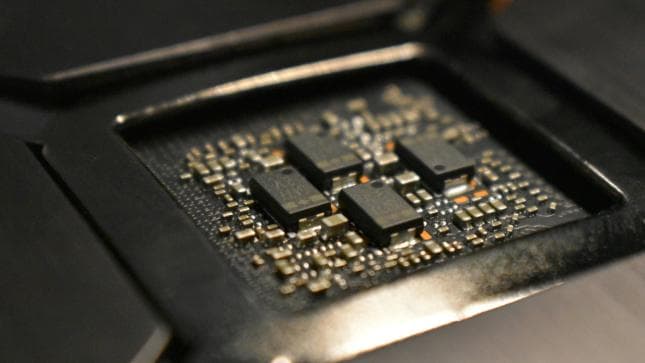
Arteris, a provider of network-on-chip interconnect IP and software, announced on May 19, 2026, that its FlexNoC NoC IP and Magillem software have been deployed in the Li Auto L9 Livis high-tech flagship SUV. The technology is integrated into Li Auto's proprietary autonomous driving systems-on-chip (SoCs).
The FlexNoC network-on-chip IP enables efficient on-chip communication between multiple processing elements in complex SoCs. Magillem software provides system-level design automation and management capabilities. Together, they support the high-performance and low-latency requirements of autonomous driving systems.
Li Auto's L9 SUV is a flagship model featuring advanced driver-assistance and autonomous driving functions. The proprietary SoCs leverage Arteris technology to handle sensor fusion, planning, and control tasks. The deployment marks a significant adoption of Arteris IP in the Chinese electric vehicle market.
Arteris CEO K. Charles Janac stated that the collaboration with Li Auto demonstrates the scalability and reliability of their interconnect solutions for automotive applications. The company emphasized that FlexNoC and Magillem help reduce design risk and time-to-market for complex SoCs.
The L9 SUV is already in production and available in China. Li Auto has not disclosed specific performance metrics or the number of SoCs per vehicle. However, the integration of Arteris technology is expected to enhance the vehicle's autonomous driving capabilities.
Arteris has a growing portfolio of automotive customers, including several major OEMs and Tier 1 suppliers. The company's IP is used in ADAS, infotainment, and powertrain applications. This deployment with Li Auto further strengthens its presence in the autonomous driving segment.
Financial terms of the agreement were not disclosed. Arteris shares traded at $12.45 on the Nasdaq following the announcement, up 2.3% from the previous close. The company continues to expand its customer base in the Asia-Pacific region.
Li Auto plans to integrate the same SoC architecture into future models, according to a company spokesperson. The L9 SUV remains the flagship vehicle in its lineup, with deliveries ongoing since 2025.

Apple TV’s new shows explore OnlyFans world from different angles
Apple TV is airing two shows that delve into the world of OnlyFans creators and cam models. 'Margo’s Got Money Troubles' is currently streaming, while 'Maximum Pleasure Guaranteed' is set to premiere soon.

Apple TV, known for its sci-fi series and feel-good comedies, has recently shifted focus. The streaming service now features two buzzy shows centered on OnlyFans creators and cam models. The timing of these releases aligns closely, with one show concluding as another begins.
'Margo’s Got Money Troubles' is currently available on Apple TV. The series explores the life of a young woman navigating the world of online content creation. It offers a narrative perspective on the challenges and dynamics of the OnlyFans platform.
'Maximum Pleasure Guaranteed' is set to premiere shortly after. The show was created and is run by David J. Rosen. He described the concurrent release as coincidental but reflective of the current cultural climate.
Rosen noted that there is growing acceptance of finding companionship through digital platforms. He suggested that the subject matter resonates with contemporary audiences. The show aims to explore themes of connection and intimacy in the digital age.
Both series approach the topic from different angles. 'Margo’s Got Money Troubles' focuses on the financial and personal struggles of a creator. 'Maximum Pleasure Guaranteed' examines the broader implications of digital companionship.
Apple TV has not disclosed viewership numbers for these shows. However, the platform has invested in original content that tackles modern social phenomena. The streaming service continues to diversify its library beyond traditional genres.
'Margo’s Got Money Troubles' is streaming now on Apple TV. 'Maximum Pleasure Guaranteed' will debut on the platform at a date yet to be announced. Both shows are available exclusively to Apple TV+ subscribers.

SpaceX Plans to Acquire AI Coding Startup Cursor 30 Days Post-IPO
SpaceX intends to acquire artificial intelligence coding startup Cursor 30 days after its initial public offering, according to sources familiar with the matter. The deal would integrate Cursor's AI-powered development tools into SpaceX's engineering operations.

SpaceX is preparing to acquire Cursor, an artificial intelligence startup focused on code generation, three sources with knowledge of the plans told reporters. The transaction is scheduled to close 30 days after SpaceX completes its initial public offering, the people said, requesting anonymity to discuss private deliberations.
Cursor develops AI tools that assist software engineers in writing and debugging code. The startup's platform uses large language models to suggest code completions, detect errors, and automate repetitive programming tasks. SpaceX engineers have been testing the technology internally for several months, according to one of the sources.
The acquisition would mark SpaceX's first major purchase of an AI company. The rocket manufacturer has been expanding its software capabilities as it works on projects including the Starship spacecraft and Starlink satellite internet constellation. Cursor's technology could help accelerate development of flight software and ground systems.
Financial terms of the deal were not disclosed. Cursor had raised $85 million in venture funding prior to the acquisition talks, with investors including Andreessen Horowitz and Sequoia Capital. The startup was valued at approximately $400 million in its most recent funding round.
SpaceX filed confidentially for an IPO earlier this year, with plans to list on the Nasdaq under the ticker SPCE. The company is expected to seek a valuation exceeding $150 billion in the public offering, which could occur as soon as the fourth quarter of 2024, according to previous reports.
Cursor's 45 employees are expected to join SpaceX's software division, with founder and CEO Michael Truell reporting directly to SpaceX's chief information officer. The startup will continue to serve its existing customers during a transition period following the acquisition's close.
SpaceX declined to comment on the acquisition plans. Cursor representatives did not respond to requests for comment. The deal remains subject to regulatory review and standard closing conditions.
The acquisition would give SpaceX ownership of Cursor's proprietary AI models and training data, which include billions of lines of code from open-source repositories. SpaceX plans to use this data to fine-tune models for aerospace-specific programming tasks, the sources said.

Meta Shifts 7,000 Employees Into AI Roles Amid 10% Workforce Reduction
Meta is reassigning 7,000 employees to artificial intelligence positions as part of a broader restructuring that includes laying off 10% of its workforce. The affected staff will be consolidated into four new organizations focused on AI development.

Meta is reassigning 7,000 employees to artificial intelligence roles as part of a broader restructuring that includes laying off approximately 10% of its workforce, according to a source familiar with the matter. The move signals the company's intensified focus on AI technologies amid ongoing cost-cutting measures. The affected employees will be consolidated into four newly formed organizations dedicated to AI research and product development.
The restructuring comes as Meta continues to streamline operations following a period of rapid hiring during the pandemic. The company has been under pressure from investors to improve efficiency and profitability. By shifting a significant portion of its workforce to AI, Meta aims to accelerate its efforts in areas such as generative AI, machine learning, and natural language processing.
The four new organizations will focus on different aspects of AI, including foundational research, applied AI, and AI infrastructure. Employees moving into these roles will work on projects ranging from improving recommendation algorithms to developing new AI-powered features for Meta's platforms, including Facebook, Instagram, and WhatsApp. The company has been investing heavily in AI to enhance user engagement and advertising effectiveness.
Meta's CEO Mark Zuckerberg has previously emphasized the importance of AI as a key priority for the company. In recent earnings calls, he highlighted investments in AI infrastructure and talent. The reorganization is expected to help Meta compete more effectively with rivals like Google and Microsoft, which have also made significant AI investments.
The layoffs, which affect about 10% of Meta's workforce, are part of a broader cost-cutting initiative that includes reducing office space and scaling back on non-core projects. The company has already eliminated thousands of positions in previous rounds of layoffs. The latest cuts are expected to impact teams across various departments, including recruiting, engineering, and business operations.
Employees being moved into AI roles will undergo training to ensure they have the necessary skills for their new positions. Meta has not disclosed the specific criteria for selecting which employees will be reassigned. The company is also offering severance packages to those who are laid off, in line with its previous restructuring efforts.
The reorganization is expected to be completed over the coming months. Meta has not provided a specific timeline for when the new AI organizations will be fully operational. The company's stock has seen fluctuations amid the restructuring, but investors have generally responded positively to the focus on AI and cost discipline.
Meta's shift toward AI reflects a broader trend in the tech industry, where companies are reallocating resources to capitalize on the growing demand for AI technologies. The company's ability to successfully integrate these employees into AI roles will be critical to its long-term competitiveness. Meta has stated that the changes are necessary to position the company for future growth and innovation.