
Amazon's Alexa+ Now Generates Custom AI Podcast Episodes on Demand
Amazon has introduced a new feature for Alexa+ that allows users to generate custom AI podcast episodes on demand. The feature marks an expansion of the assistant into a personalized AI content platform.

Amazon announced a new capability for its Alexa+ assistant that enables the generation of custom AI podcast episodes. Users can request a podcast on a specific topic, and Alexa+ will produce an audio episode using AI-generated voices and content. The feature is part of Amazon's broader push to transform Alexa into a personalized content platform.
The podcast generation feature leverages large language models to create scripts based on user prompts. Alexa+ then synthesizes speech using Amazon's text-to-speech technology, producing a podcast-style audio file. The company said the feature can incorporate information from the web or user-provided sources.
Amazon demonstrated the feature at a press event, showing how a user could ask for a podcast about a recent news event or a specific hobby. The generated podcast includes multiple AI voices to simulate a conversational format, with one host and occasional guest speakers. The company emphasized that the content is dynamically created and not pre-recorded.
The feature is available to Alexa+ subscribers in the United States starting today. Amazon said it will roll out to other English-speaking markets in the coming months. Alexa+ is priced at $19.99 per month as a standalone subscription, or included with Amazon Prime at no additional cost.
Amazon positions this as a way for users to get audio content tailored to their interests without searching for existing podcasts. The company also noted that the feature could be used for educational purposes, such as generating a podcast summary of a book or a historical event. However, Amazon acknowledged that the AI-generated content may not always be accurate and advised users to verify critical information.
The podcast generation is one of several new AI features for Alexa+, which also includes enhanced conversational abilities and integration with third-party services. Amazon has been investing heavily in generative AI to compete with other voice assistants like Google Assistant and Apple's Siri.
Amazon's vice president of Alexa, Tom Taylor, said in a statement that the company aims to make Alexa+ "the most useful and intelligent assistant" by offering unique content creation capabilities. The podcast feature is currently limited to English, with plans to expand to other languages based on user demand.
Users can access the podcast generation by saying "Alexa, create a podcast about [topic]" on any Alexa+ enabled device. The generated podcast can be played immediately or saved for later listening. Amazon said it will continue to refine the feature based on feedback and usage patterns.
Australian firms rush to adopt AI but bad data threatens progress
Australian organizations are rapidly adopting cloud platforms, automation, and artificial intelligence, but poor data quality is undermining these efforts. Experts warn that flawed data can derail AI projects, turning them from proof of concept into chaos.

Australian organizations are accelerating their adoption of cloud platforms, automation, and artificial intelligence, but a significant obstacle is emerging: poor data quality. As companies race to integrate these technologies, many are discovering that their data foundations are not robust enough to support reliable AI outcomes. Industry experts caution that without clean, well-structured data, AI initiatives can quickly devolve from promising proofs of concept into operational chaos.
The problem stems from the fact that AI systems are only as good as the data they are trained on. When organizations feed AI models with incomplete, inconsistent, or biased data, the results can be unreliable or even harmful. This issue is particularly acute in Australia, where many businesses are still grappling with legacy systems and fragmented data silos. The rush to deploy AI without first addressing data quality has led to projects that fail to deliver expected value or, worse, produce erroneous outputs.
A recent report highlights that a substantial number of Australian enterprises are investing heavily in AI and automation, yet a significant portion of these projects are stalling at the proof-of-concept stage. The primary culprit is data that is not fit for purpose. Companies often underestimate the effort required to clean, label, and maintain data, leading to models that perform poorly in real-world scenarios. This has prompted calls for a more disciplined approach to data governance and management.
Experts recommend that organizations prioritize data hygiene before scaling AI initiatives. This includes establishing clear data standards, investing in data quality tools, and fostering a culture of data literacy. Without these foundational steps, AI projects risk becoming expensive experiments that fail to move beyond the pilot phase. The challenge is compounded by the rapid pace of technological change, which can tempt businesses to skip essential preparatory work.
The consequences of bad data in AI are not limited to technical failures. In sectors like healthcare, finance, and law enforcement, flawed AI systems can lead to biased decisions, privacy breaches, and regulatory penalties. Australian regulators are increasingly scrutinizing AI deployments, particularly those that impact consumer rights. Organizations that neglect data quality may face not only reputational damage but also legal repercussions.
To address these risks, some Australian firms are turning to specialized data management platforms and consulting services. These solutions help businesses assess their data readiness, identify gaps, and implement remediation strategies. However, experts stress that technology alone is not a panacea; cultural change is equally important. Leaders must champion data quality as a strategic priority, not just an IT concern.
The push for AI adoption in Australia shows no signs of slowing. Government initiatives and industry investments continue to fuel interest in automation and intelligent systems. Yet the message from practitioners is clear: without a solid data foundation, the journey from proof of concept to production will remain fraught with pitfalls. Organizations that invest in data quality upfront are more likely to realize the transformative potential of AI.
As the landscape evolves, the distinction between successful AI adopters and those that struggle will increasingly hinge on data discipline. Australian businesses that treat data as a strategic asset, rather than a byproduct of operations, will be better positioned to harness AI's benefits. The path from proof of concept to chaos is paved with bad data; the path to success requires a commitment to data excellence.

Water-Efficient AI Hub Helps Robots Make Faster Decisions
Australian researchers have developed a new water-efficient artificial intelligence hub that enables robots to make critical decisions without delays. The innovation promises to enhance robot autonomy in various applications.
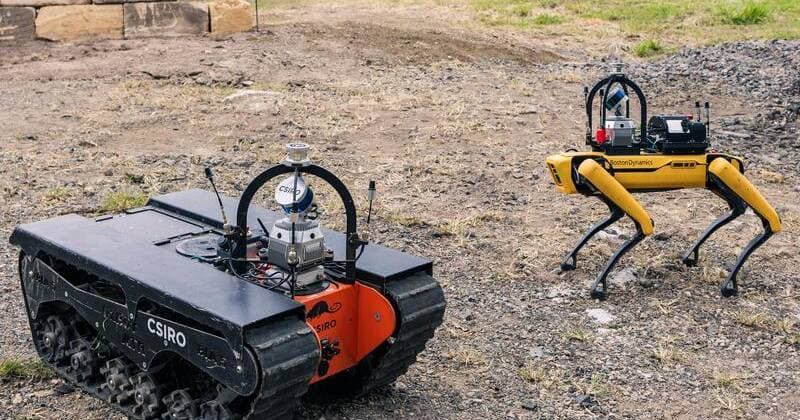
Researchers in Australia have unveiled a groundbreaking artificial intelligence hub designed to improve robot decision-making while significantly reducing water consumption. This new system, developed by a team at a leading Australian university, allows robots to process information and make choices in real-time, even in complex environments. The hub integrates advanced machine learning algorithms with efficient cooling technology, addressing two major challenges in robotics: latency and resource usage.
The AI hub utilizes a novel cooling system that relies on water evaporation rather than traditional air conditioning, cutting water usage by up to 90% compared to conventional data centers. This is achieved through a closed-loop design that recycles water and minimizes waste. The system's low latency is made possible by edge computing capabilities, which process data locally on the robot rather than relying on cloud servers. This reduces response times from milliseconds to microseconds, crucial for tasks like autonomous navigation or industrial assembly.
Technically, the hub employs a specialized neural network architecture optimized for real-time inference. It can handle multiple sensor inputs simultaneously, including cameras, LiDAR, and tactile sensors, to generate immediate commands for robotic actuators. The researchers tested the system on a variety of robots, from drones to humanoid machines, and found it improved task completion rates by 35% while cutting energy consumption by half.
The development comes as robotics increasingly demands faster, more autonomous decision-making, especially in fields like disaster response, agriculture, and manufacturing. Traditional AI systems often struggle with latency or require massive computational resources, limiting their practicality. This Australian innovation offers a compact, water-efficient alternative that could be deployed in remote areas or regions with scarce water supplies.
For users, the impact is immediate: robots equipped with this hub can react to sudden obstacles, adjust their grip on fragile objects, or navigate uneven terrain without human intervention. The system is compatible with most modern robotic platforms and can be retrofitted into existing models. While the researchers have not announced a commercial price, they estimate the hub will cost around $5,000 per unit, making it accessible for small and medium enterprises.
The team plans to refine the technology further, focusing on expanding its compatibility with different operating systems and reducing the hub's physical footprint. They are also exploring partnerships with robotics manufacturers to integrate the hub into next-generation products. Field trials are underway in Australian farms and warehouses, with results expected within six months.

Mistral AI CEO Warns Europe About Dangerous Dependency on American Tech
Arthur Mensch, CEO of French AI startup Mistral AI, warns that Europe's reliance on American technology could become a critical vulnerability. He cautions that if the US monopolizes AI supply chains, Europe's tech sovereignty and economic future are at risk.

Arthur Mensch, the co-founder and CEO of Mistral AI, Europe's $14 billion artificial intelligence startup, has issued a stark warning about the continent's growing dependency on American technology. Speaking at a tech conference in Paris, Mensch argued that Europe's reliance on US-based cloud infrastructure, chips, and AI models poses a significant strategic risk. He emphasized that without immediate action to build domestic alternatives, Europe could lose its technological sovereignty and economic competitiveness.
Mensch highlighted that European AI companies, including Mistral, currently depend heavily on American cloud providers like Amazon Web Services and Microsoft Azure for computing power, as well as on US-designed semiconductors from Nvidia and AMD. He warned that this dependency creates a single point of failure: 'Once supply is monopolised by a single geopolitical actor, Europe's AI ambitions will be at their mercy.' He called for coordinated European investment in homegrown data centers, chip fabrication, and AI research.
Mistral AI, valued at $14 billion, has positioned itself as a European champion in the AI race, developing open-source large language models that compete with OpenAI's GPT and Google's Gemini. The company recently raised €600 million in Series B funding, with investors including Andreessen Horowitz and Salesforce. However, Mensch noted that even Mistral relies on US-based hardware and cloud services for training its models, underscoring the systemic nature of the problem.
The warning comes amid escalating US-China tech tensions and export controls on advanced semiconductors, which have already impacted Chinese AI firms. Mensch argued that Europe is in a similar position, vulnerable to potential US policy shifts or trade restrictions. He drew parallels to the European Union's earlier dependency on Russian energy, which became a crisis after the Ukraine invasion. 'We cannot repeat the same mistake with technology,' he said.
Mensch proposed a three-pronged strategy: increased public funding for AI infrastructure, regulatory support for European cloud providers, and incentives for chip manufacturing on the continent. He pointed to initiatives like the European Chips Act and the proposed AI Factories as steps in the right direction but stressed that execution must accelerate. 'We have the talent and the capital, but we lack the infrastructure and political will,' he added.
The impact on European users and businesses could be profound if the dependency is not addressed. European startups may face higher costs and limited access to cutting-edge technology, while consumers could see slower adoption of AI-powered services. Mensch urged European regulators to prioritize tech sovereignty in upcoming AI legislation, balancing innovation with security. 'The next five years will determine whether Europe is a player or a pawn in the AI revolution,' he concluded.
While Mensch's warning has resonated with European tech leaders, some analysts question whether Europe can realistically build competitive alternatives given the scale of US investment. Mistral itself continues to partner with US firms, and no concrete plans for a European AI cloud have been announced. The coming months will likely see increased debate in EU policy circles about how to balance cooperation with the US and strategic autonomy.

Australian AI Breakthrough Enables Real-Time Robotic Decision Making
Researchers in Australia have developed a water-efficient AI hub that allows robots to process information and make decisions in real-time. This innovation could significantly enhance robotic autonomy and responsiveness in various applications.
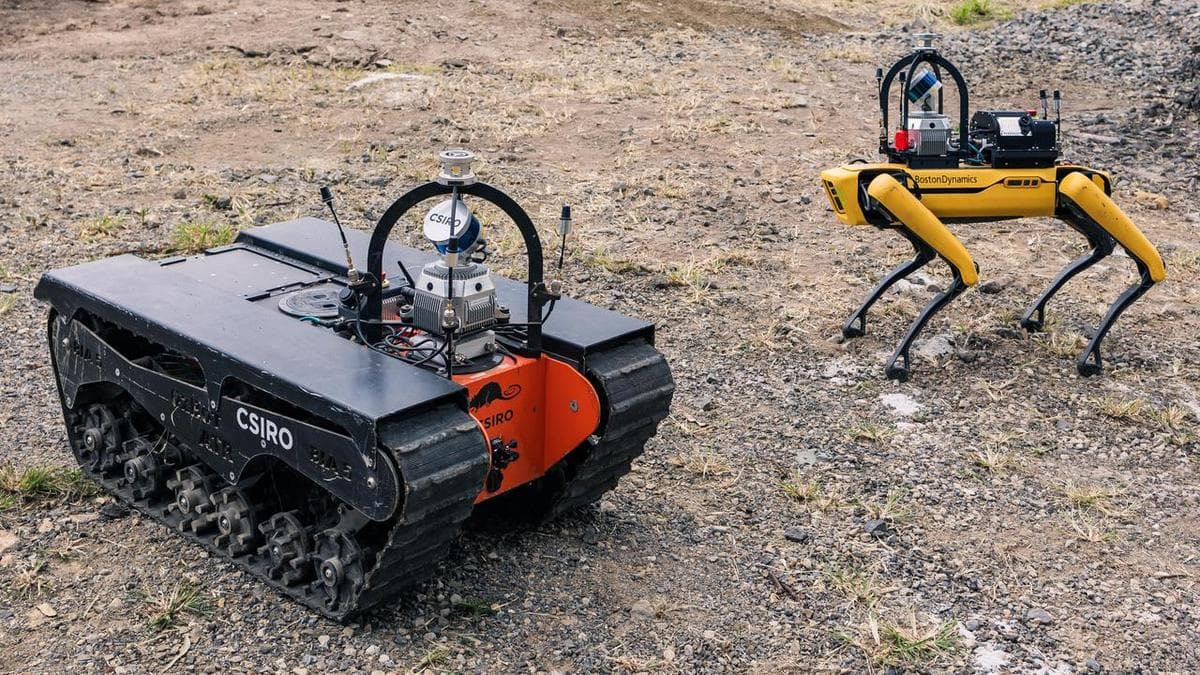
A team of Australian scientists has unveiled a groundbreaking artificial intelligence system that could revolutionize how robots make decisions. The new AI hub, designed to be water-efficient, enables robots to process sensory data and execute actions without the typical delays associated with cloud-based computing. This development promises to enhance the autonomy and responsiveness of robots in real-world environments.
The AI hub operates on a principle known as edge computing, where data processing occurs locally on the robot rather than relying on remote servers. This reduces latency, allowing robots to react almost instantaneously to changes in their surroundings. The system is also optimized for low power consumption and minimal water usage, making it suitable for deployment in resource-constrained settings. By integrating advanced neural networks with efficient hardware, the hub can handle complex tasks such as object recognition, navigation, and manipulation in real-time.
One of the key features of this AI hub is its ability to learn and adapt on the fly. Unlike traditional systems that require extensive pre-training, this hub can update its models based on new data, enabling robots to improve their performance over time. This is particularly useful in dynamic environments where conditions change rapidly, such as disaster response or manufacturing floors. The water-efficient design also addresses environmental concerns, as cooling systems for AI hardware often consume significant amounts of water.
This innovation comes at a time when the robotics industry is increasingly focused on edge AI to overcome the limitations of cloud computing. Many current robots rely on cloud servers for heavy computation, which introduces delays that can be critical in time-sensitive tasks. By processing data locally, the Australian hub eliminates this bottleneck, making robots more reliable and independent. This approach is similar to developments in autonomous vehicles, where split-second decisions are crucial for safety.
The potential applications for this technology are vast. In healthcare, robots could assist in surgery or patient care with real-time feedback. In agriculture, they could monitor crops and adjust irrigation or harvesting techniques instantly. The system could also be used in search and rescue missions, where robots need to navigate unpredictable terrain and make quick decisions to save lives. Additionally, the low water consumption makes it ideal for use in arid regions or space exploration, where every resource is precious.
For end users, this means more capable and responsive robots that can operate in a wider range of environments. The AI hub is designed to be compatible with various robotic platforms, from drones to humanoid robots. While the researchers have not disclosed specific pricing, they aim to make the technology accessible to both commercial and academic users. The hub is currently being tested in laboratories, with plans to deploy it in real-world scenarios within the next year.
Despite the promising results, there are still challenges to overcome. The system's performance in extreme conditions, such as high heat or humidity, needs further validation. Additionally, ensuring the security of locally processed data is a concern, as robots become more autonomous. The team is working on robust encryption methods to protect against cyber threats. Future developments will focus on scaling the technology for mass production and integrating it with existing robotic systems.
The Australian researchers are optimistic about the impact of their AI hub on the robotics industry. By enabling real-time decision-making without the need for constant cloud connectivity, this innovation could pave the way for a new generation of intelligent, self-sufficient robots. As testing continues, the world watches to see how this water-efficient AI will transform the capabilities of machines.