Anthropic Projects First Profitable Quarter with Revenue Doubling to $10.9B
Anthropic informed investors it expects to achieve its first profitable quarter, with revenue projected to more than double to approximately $10.9 billion in Q2. The milestone marks a significant financial turnaround for the AI company.

Anthropic has communicated to its investors that the company is on track to post its first profitable quarter. The artificial intelligence firm projects revenue will more than double to roughly $10.9 billion in the second quarter of the fiscal year. This financial milestone represents a notable shift for the company, which has historically operated at a loss.
The revenue surge is driven by strong demand for Anthropic's AI models and enterprise services. The company has expanded its customer base, particularly among large corporations seeking advanced AI capabilities. Anthropic's Claude family of models has gained traction in sectors such as finance, healthcare, and technology.
Anthropic's path to profitability comes amid intense competition in the AI industry. Rivals like OpenAI and Google have also seen rapid revenue growth, but many AI startups continue to burn cash. Anthropic's ability to achieve profitability earlier than some peers could give it a strategic advantage in attracting further investment.
The company's revenue growth has been fueled by both subscription services and usage-based pricing for its API. Enterprise clients have increasingly adopted Anthropic's models for tasks such as content generation, data analysis, and customer service automation. The company has also benefited from long-term contracts with major tech firms.
Anthropic's cost structure has improved as it scales its infrastructure and optimizes model training efficiency. The company has invested heavily in computing resources and research, but these costs are now being offset by rising revenue. Management has focused on operational discipline to reach profitability.
The profitable quarter forecast comes ahead of a potential initial public offering. Anthropic has been exploring public market options, and a strong financial performance could bolster its valuation. The company last raised funding at a valuation of over $18 billion.
Anthropic has not publicly commented on the financial projections. The information was shared with investors in a private briefing. The company's board and leadership team have expressed confidence in the trajectory, citing robust demand and operational improvements.
The second quarter ends June 30. Anthropic is expected to report official financial results in the following weeks. The company's achievement of profitability would mark a significant milestone in the competitive AI landscape.
Young Workers Express Skepticism as AI Reshapes Job Market
A growing number of young professionals and students are voicing concerns about artificial intelligence's impact on employment and career prospects. Surveys indicate that this demographic, often called digital natives, is more apprehensive than enthusiastic about AI's integration into the workplace.
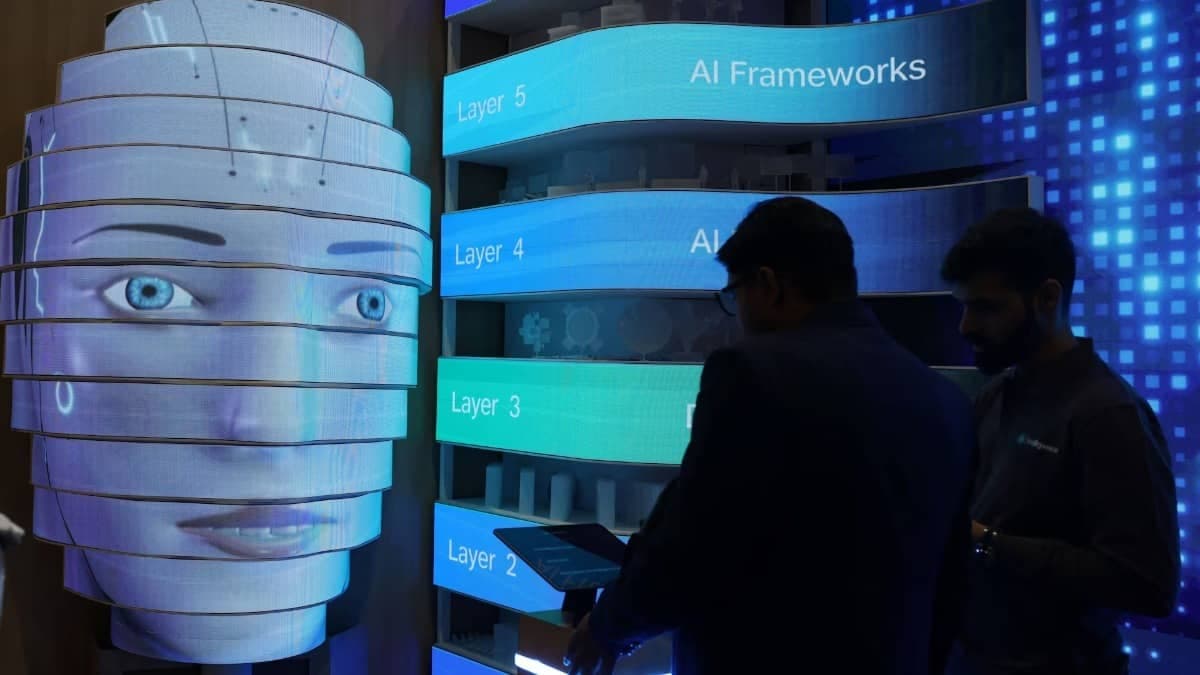
A new wave of sentiment is emerging among young adults entering the workforce: skepticism toward artificial intelligence. Despite being raised in an era of rapid technological change, many in this demographic express unease about AI's role in their professional futures. Surveys and interviews reveal a pattern of concern rather than excitement, challenging the assumption that younger generations automatically embrace new technologies.
Research conducted by several organizations indicates that a significant portion of 18- to 29-year-olds believe AI will lead to job losses or reduced opportunities in their fields. A recent poll found that nearly 60% of respondents in this age group worry that automation will replace human workers in the next decade. This anxiety is particularly acute among those pursuing careers in creative industries, customer service, and administrative roles.
Experts point to several factors driving this apprehension. Many young workers have witnessed firsthand the displacement of jobs in retail, media, and manufacturing due to automation. Additionally, the rapid adoption of generative AI tools like ChatGPT has raised questions about the value of entry-level positions that often serve as stepping stones for career development. Students and recent graduates report feeling pressure to acquire skills that may become obsolete before they can fully leverage them.
Educational institutions are responding to these concerns by incorporating AI literacy into curricula. Some universities now offer courses on the ethical implications of AI and its societal impact. Career counselors advise students to focus on developing uniquely human skills such as critical thinking, emotional intelligence, and adaptability. However, many young people remain skeptical that these measures will be sufficient to protect their livelihoods.
The technology industry itself is divided on how to address these fears. Some companies emphasize the potential for AI to augment human capabilities rather than replace them. Others acknowledge the need for retraining programs and social safety nets to support workers during transitions. Yet, critics argue that these efforts are insufficient given the pace of change.
Government policymakers are also taking note. Several countries have proposed regulations requiring companies to assess the impact of AI on employment before deploying new systems. In the United States, the Biden administration has issued an executive order on AI safety that includes provisions for workforce development. Similar initiatives are underway in the European Union and Japan.
Despite these efforts, the sentiment among young people remains cautious. A recent survey by the Pew Research Center found that only 35% of Americans aged 18 to 29 believe AI will help them in their careers, compared to 55% of those aged 50 and older. This generational divide suggests that the narrative of AI as a tool for progress is not universally accepted.
As AI continues to evolve, the voices of young workers will likely grow louder. Their concerns may shape how technologies are developed and deployed in the coming years. For now, the message from this demographic is clear: they are not ready to applaud the arrival of AI without assurances that their futures will not be compromised.

xAI Lost $6.4 Billion in 2025, SpaceX Filing Reveals Grok Expansion Plans
SpaceX's IPO filing discloses that Elon Musk's xAI incurred a $6.4 billion loss last year, with plans for significant investment in its Grok AI model. The document provides the first public glimpse into xAI's financials and Musk's AI ambitions.
SpaceX's initial public offering filing has unveiled that xAI, Elon Musk's artificial intelligence venture, burned through $6.4 billion in 2025. The disclosure marks the first time the company's financial performance has been made public, shedding light on the scale of investment required to develop its Grok AI model.
The filing indicates that xAI's spending is far from over, with plans for a massive expansion of Grok. The document details substantial capital requirements for computing infrastructure, talent acquisition, and research and development. xAI has been racing to compete with established players like OpenAI and Google in the generative AI space.
Grok, xAI's flagship product, is a conversational AI system designed to provide real-time knowledge and assist with tasks. The company has been investing heavily in training larger models and improving capabilities. The $6.4 billion loss reflects the high costs of computing power, data center operations, and engineering talent.
SpaceX's IPO filing includes xAI's financials because the two companies are under common control by Elon Musk. The disclosure provides investors with a clearer picture of Musk's broader business empire and the financial commitments tied to his AI ambitions. xAI has raised significant funding from private investors, but the losses underscore the capital-intensive nature of AI development.
The filing also reveals that xAI plans to expand Grok's availability beyond its current user base. The company aims to integrate the AI into more products and services, potentially including SpaceX's operations. However, no specific timeline or revenue projections were provided in the document.
xAI's losses come amid a broader AI arms race, where companies are spending billions on infrastructure and talent. The company faces stiff competition from well-funded rivals, but Musk's track record with Tesla and SpaceX has attracted investor confidence. The IPO filing does not specify when xAI might achieve profitability.
The SpaceX IPO filing was submitted to the Securities and Exchange Commission on March 15, 2025. It lists xAI as a related party and details the $6.4 billion net loss for the fiscal year ended December 31, 2025. The document is available for public review on the SEC's EDGAR database.

Anthropic and OpenAI escalate rivalry ahead of US midterm elections
Anthropic and OpenAI are intensifying their competition as the US midterm elections approach, with both AI companies positioning themselves on issues of election integrity and content moderation.

Anthropic and OpenAI are taking their ongoing rivalry into the political arena as the US midterm elections draw near. The two leading artificial intelligence companies have been ramping up their efforts to address concerns about AI-generated misinformation and its potential impact on electoral processes. Both firms have released new policies and tools aimed at ensuring their technologies are not used to deceive voters or undermine democratic institutions.
OpenAI, the creator of ChatGPT, recently announced a series of measures focused on election integrity. The company said it would implement stricter content moderation policies and deploy new detection systems to identify AI-generated political content. OpenAI also pledged to work with election officials and fact-checking organizations to monitor and mitigate potential abuses of its technology during the campaign season.
Anthropic, founded by former OpenAI employees, has similarly moved to position itself as a responsible actor in the AI space. The company introduced its own set of guidelines for the use of its Claude AI model in political contexts. Anthropic emphasized its commitment to transparency and safety, stating that it would actively prevent the generation of misleading or harmful content related to elections.
The competition between the two firms extends beyond policy announcements. Both companies are vying for influence in Washington, DC, as lawmakers consider new regulations for artificial intelligence. OpenAI has hired a team of lobbyists and policy experts to engage with Congress and federal agencies, while Anthropic has also expanded its government affairs presence.
Industry observers note that the midterm elections represent a critical test for AI companies, which face scrutiny over their ability to prevent their tools from being weaponized for disinformation. The stakes are high, as previous elections have seen foreign and domestic actors use social media and other digital platforms to spread false information.
OpenAI and Anthropic have both acknowledged the challenges of policing AI-generated content at scale. OpenAI's CEO Sam Altman has called for a regulatory framework to address the risks posed by advanced AI systems. Anthropic has advocated for industry-wide standards and collaboration with policymakers to ensure responsible development and deployment of AI technologies.
As the midterms approach, the two companies are likely to continue jockeying for position, each seeking to demonstrate its commitment to election security and responsible AI use. Their efforts reflect a broader trend among tech firms to proactively address political concerns ahead of major electoral events.
Anthropic and OpenAI have not disclosed specific details about their election-related initiatives, but both have indicated that they will provide updates as the campaign season progresses. The companies are expected to release more information about their partnerships with election authorities and civil society groups in the coming weeks.

OpenAI Reportedly Resumes IPO Preparations After Musk Lawsuit Dismissal
OpenAI is reportedly moving forward with plans for an initial public offering that could take place as soon as September, following the dismissal of Elon Musk's lawsuit that challenged the company's structure and finances.

OpenAI has resumed preparations for an initial public offering that may occur as early as September, according to sources familiar with the matter. The development comes a day after a judge dismissed Elon Musk's lawsuit, which had threatened the company's corporate structure, leadership, and financial standing. The dismissal removed a significant legal obstacle that had cast uncertainty over OpenAI's future plans.
The company is reportedly working with investment banks to underwrite the IPO, though no formal agreements have been finalized. OpenAI's valuation in the public offering could exceed $80 billion, reflecting its dominant position in the generative AI market. The company's flagship product, ChatGPT, has attracted hundreds of millions of users since its launch in late 2022.
OpenAI's corporate structure has been a point of contention, as it operates as a capped-profit entity under a nonprofit parent. The IPO would require converting to a for-profit corporation, a move that Musk's lawsuit sought to block. The court's ruling cleared the path for this transition, though regulatory approvals and shareholder votes are still needed.
The company has been expanding its revenue streams beyond consumer subscriptions, including enterprise deals and API access for developers. OpenAI reported annualized revenue of $1.6 billion in late 2023, with projections of significant growth this year. The IPO proceeds would likely fund further AI research, compute infrastructure, and talent acquisition.
Musk, a co-founder of OpenAI who left the board in 2018, had alleged that the company breached its nonprofit mission by prioritizing profits. The lawsuit also claimed that OpenAI's partnership with Microsoft violated antitrust laws. The court dismissed these claims, allowing OpenAI to proceed with its restructuring plans.
OpenAI has not publicly commented on the IPO timeline. The company's board, which includes CEO Sam Altman and representatives from Microsoft, will need to approve the final offering details. If the IPO proceeds in September, it would be one of the largest tech IPOs in recent years, rivaling the debuts of companies like Arm and Instacart.
The IPO market has shown signs of recovery in 2024, with several high-profile companies going public. OpenAI's offering could further boost investor confidence in the AI sector. However, the company faces regulatory scrutiny in the U.S. and Europe over AI safety and data privacy concerns.
OpenAI's IPO preparations are expected to intensify in the coming weeks, with roadshows and investor meetings likely scheduled for late summer. The company's financial disclosures will provide the first detailed look at its profitability and growth metrics since its founding in 2015.