Democrats hold shadow hearing to criticize DOJ's Live Nation-Ticketmaster settlement
A group of Democrats convened an unofficial hearing on Monday to denounce the Department of Justice's settlement with Live Nation-Ticketmaster, calling it insufficient. The event previews how the party might challenge Trump-era antitrust agreements if they regain control of Congress in November.

A handful of Democrats convened an unofficial hearing on Capitol Hill Monday to criticize the Department of Justice's settlement with Live Nation-Ticketmaster, labeling it "trivial" and "pathetic." The event offered a preview of how the party might challenge Trump administration antitrust agreements if they regain congressional power in November.
The DOJ settlement with Live Nation, announced one week into trial, includes a promise of up to $280 million. Despite receiving widespread pushback, Democrats currently lack the majority in either chamber to set committee agendas, forcing them to hold what they called a "shadow hearing."
Unlike most official proceedings, Monday's hearing took a different format. Instead of sitting at a dais, lawmakers gathered in a more informal setting to voice their objections.
The settlement has drawn criticism from both sides of the aisle, but Democrats argue it fails to address the company's market dominance. They contend the fine is too small to deter future anticompetitive behavior.
Live Nation-Ticketmaster has long faced scrutiny over its control of the live entertainment industry. Critics say the company's practices harm consumers through high fees and limited competition.
The shadow hearing signals that antitrust enforcement could become a major issue if Democrats win back control of the House or Senate in the upcoming elections. Lawmakers indicated they would push for stricter oversight and more aggressive action against dominant firms.
No official action was taken at Monday's event, as it lacked the authority of a formal committee hearing. However, participants said it was intended to draw attention to what they see as a failure of the current administration to hold corporations accountable.
The DOJ has defended the settlement, stating it provides meaningful relief to consumers. But Democrats vowed to continue pressing the issue, with some calling for further investigations into Live Nation-Ticketmaster's business practices.
The Vergecast dissects Google I/O 2026: agents, Spark, and the singularity
The Vergecast analyzed Google I/O 2026 highlights, including a conversational Gmail bot and DeepMind's singularity claim. Senior AI Reporter Hayden Field joined to discuss Google's new agent-focused services like Spark and Antigravity upgrades.
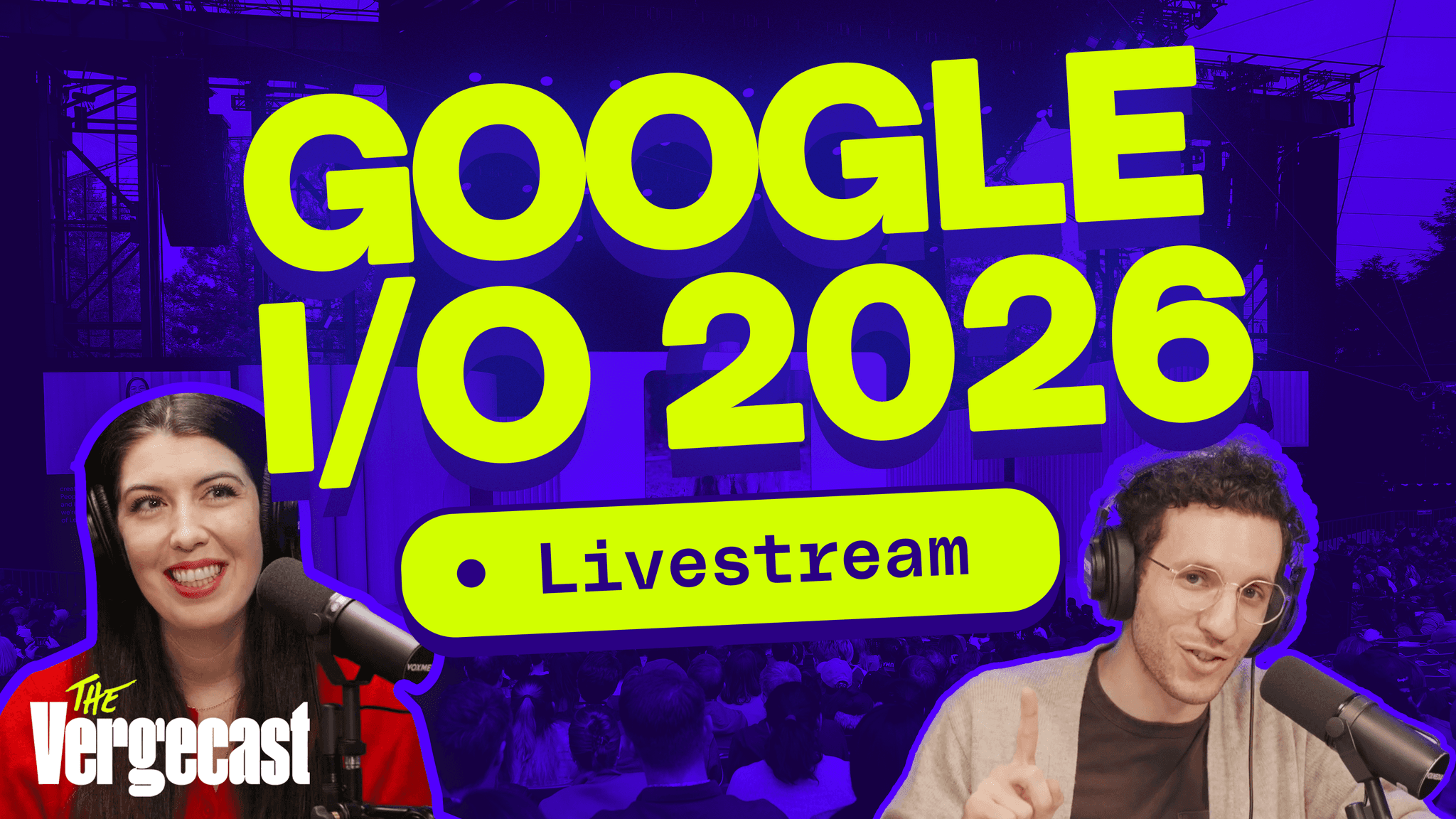
The Vergecast went live immediately after Google I/O 2026's two-hour keynote, offering a deep dive into the event's most notable announcements. Senior AI Reporter Hayden Field joined the show to break down the key moments, from a Gmail bot capable of natural conversation to DeepMind's leader declaring the singularity is near.
Agents emerged as the central theme of the keynote, positioning them as Google's latest strategy for making AI practical. The company introduced Spark, a service that bears resemblance to a Gemini-infused version of OpenClaw, alongside enhancements to its Antigravity platform. A suite of agents designed to handle shopping and track search topics was also unveiled.
The discussion also touched on the broader implications of these developments, including how Google's agent-based approach could reshape user interactions with AI. The Vergecast panel examined the potential impact of these tools on daily tasks and productivity.
DeepMind's singularity comment sparked particular interest, with the panel weighing its significance in the context of Google's AI trajectory. The conversation highlighted the tension between ambitious long-term goals and immediate product releases.
Google's focus on agents reflects a shift toward more autonomous AI systems that can perform complex tasks on behalf of users. The new services aim to integrate AI more deeply into everyday workflows, from email management to online shopping.
The Vergecast also explored how Spark compares to existing AI tools, noting its potential to compete with other platforms in the space. The Antigravity upgrades were described as a significant step forward for Google's cloud AI offerings.
Full coverage of Google I/O 2026 is available on The Verge, including detailed breakdowns of each announcement and analysis of their market implications.

Ugreen FineTrack 2 soccer ball-shaped tracker offers up to 7 years battery life
Ugreen launched the FineTrack 2, an Apple Find My-compatible tracker shaped like a soccer ball. It costs $19.99 and features a 600mAh CR2450 battery lasting five to seven years.
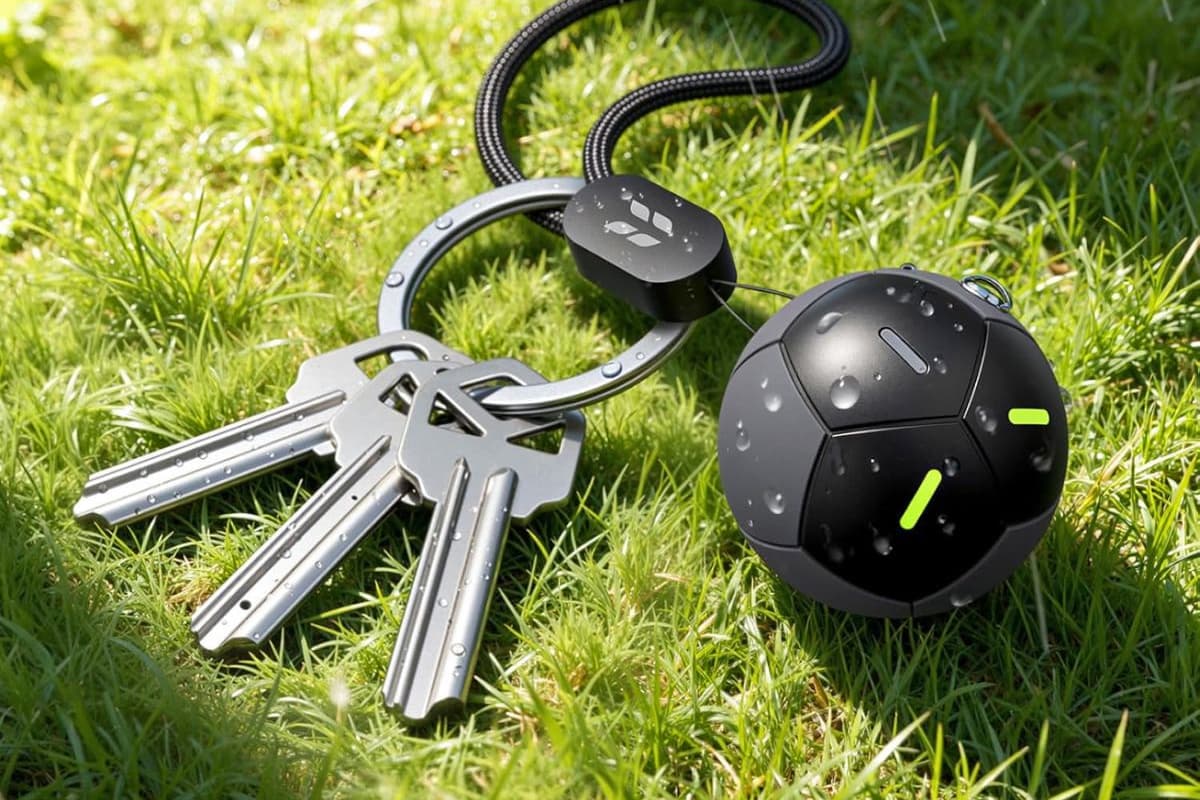
Ugreen has introduced a new tracker compatible with Apple's Find My network, featuring a design that prioritizes battery life over discretion. The FineTrack 2 takes the shape of a soccer ball, a nod to major football tournaments the company refrains from naming explicitly. This form factor makes it suitable for hanging off keychains or bags, though its size limits concealment options compared to an Apple AirTag or credit card-style trackers.
The device measures larger than typical coin-shaped trackers but remains compact enough to stow inside a suitcase or a car's glove compartment. Ugreen designed the FineTrack 2 with water resistance, allowing it to withstand exposure to rain or splashes during everyday use. The tracker relies on a 600mAh CR2450 battery, which the company estimates can power the device for five to seven years under normal usage with Apple's Find My network.
Apple's Find My integration enables the FineTrack 2 to leverage the vast network of Apple devices for location tracking. Users can locate the tracker through the Find My app on iPhones, iPads, or Macs, receiving proximity alerts and directional guidance. The soccer ball shape also serves a functional purpose, providing a larger surface area for the battery and potentially improving signal transmission.
Ugreen positions the FineTrack 2 as a practical accessory for travelers and those who frequently misplace items. The device's extended battery life reduces the need for frequent replacements, a common pain point with smaller trackers that use standard coin cells lasting about a year. The trade-off is a bulkier form that may not suit every use case, such as slipping into a wallet or attaching to a pet collar.
The FineTrack 2 is available for purchase immediately through Ugreen's official channels and select retailers. Priced at $19.99, it undercuts Apple's AirTag, which retails for $29, while offering a similar feature set with a distinct design. Ugreen did not announce plans for Android compatibility, limiting the tracker's appeal to users within Apple's ecosystem.
Ugreen's announcement did not specify regional availability, but the product is expected to ship globally through online stores. The company's decision to adopt a themed design aligns with the upcoming football tournaments, though the tracker remains functional year-round. Customers can choose from multiple color options, though Ugreen has not detailed the full range.
"The FineTrack 2 combines long-lasting battery life with a fun, sporty design," a Ugreen spokesperson said in a statement. The company emphasized the tracker's durability and ease of use, targeting consumers seeking a reliable Find My accessory without frequent battery changes. The product is backed by Ugreen's standard warranty, though specific terms were not disclosed.

Kickstarter reverses new mature content guidelines after backlash
Kickstarter has removed its recently updated mature content rules, which included a ban on certain sexual wellness products. The company cited requirements from payment processor Stripe as the reason for the changes.

Kickstarter has walked back its newly implemented content guidelines for mature projects, just days after introducing them. The rules, which took effect last week, included a prohibition on "sexual wellness products that are not designed for insertion or penetration and are not marketed primarily for sexual gratification." The company has now restored an earlier version of its guidelines.
In an apology letter issued today, Chief Operating Officer Sean Leow confirmed that the updated rules were driven by requirements from the platform's payment processor, Stripe. "The updates to the rules were primarily driven by requirements from our payments processor, Stripe," Leow wrote. "Stripe operates under its own legal and regulatory obligations, and we must comply with those to continue processing payments."
The original guidelines had drawn criticism from creators and backers who argued they were overly broad and could stifle legitimate projects. The ban on certain sexual wellness products, in particular, was seen as confusing and inconsistent with Kickstarter's history of supporting adult content.
Kickstarter's decision to revert to the previous rules means that projects involving sexual wellness products will again be evaluated under the older, more permissive standards. The company emphasized that it remains committed to supporting a wide range of creative projects while complying with legal requirements.
Leow's letter also acknowledged the communication misstep. "We recognize that we did not do a good job of explaining the rationale behind these changes or giving the community a chance to provide input," he wrote. "We apologize for the confusion and frustration this caused."
The reversal applies immediately, and projects that were affected by the now-repealed rules will be reassessed. Kickstarter has not indicated whether it plans to revisit the guidelines in the future with more community input.
Stripe, which processes payments for Kickstarter, has its own policies regarding adult content and sexual wellness products. The company's acceptable use policy prohibits certain types of sexual content, but the specifics of its requirements for platforms like Kickstarter are not publicly detailed.
Kickstarter's original content guidelines had been in place since 2012, with periodic updates. The brief experiment with stricter rules highlights the tension between platform governance and the demands of payment processors, which often have their own compliance obligations.
"We are committed to being transparent with our community about the constraints we operate under," Leow stated. "We will continue to work with Stripe to find ways to support as many projects as possible while meeting their requirements." The company has not announced any further changes to its content policy at this time.
Google and Volvo integrate Gemini AI with external cameras for parking sign interpretation
Google and Volvo announced at the I/O conference that Gemini will access external cameras in the upcoming Volvo EX60 SUV to interpret parking signs. The feature leverages Volvo's Android Automotive OS.

Google and Volvo announced a new integration at the I/O conference on Wednesday. The Gemini AI assistant will gain access to external cameras in the upcoming Volvo EX60 SUV. This capability will allow Gemini to interpret and explain the vehicle's surroundings to drivers.
The feature is made possible by Volvo's use of Google's embedded Android Automotive operating system. Google identified the first use case as translating difficult-to-understand parking signs. The company sees potential for additional applications in the future.
Gemini will be able to recall road signs and provide explanations to the driver. The AI assistant processes camera input to deliver real-time information. This marks a step toward more context-aware in-car assistance.
Volvo's EX60 SUV is the first vehicle to support this functionality. The integration demonstrates how Android Automotive can enable advanced AI features. Google and Volvo have collaborated on in-car technology for several years.
The announcement was made during Google's annual developer conference. No specific release date for the feature was provided. Pricing for the EX60 has not been announced.
Google envisions the camera-enabled Gemini assisting with various driving scenarios. The company emphasized the parking sign translation as an initial use case. Further details on future applications were not disclosed.
The Verge reported the news from the I/O conference. Google and Volvo did not immediately respond to requests for additional comment.